How Do I Specify Custom Frozen Food Packaging?
We begin with the packed product, because an empty pouch cannot show the stresses that matter. This category commonly includes frozen fruit, vegetables, dumplings, seafood, meat, ready meals, ice products, and portioned ingredients. Each product behaves differently in a seal, during storage, and in transport. We ask what can fail first. Typical risks include low-temperature brittleness, ice puncture, flex cracking, freezer burn, seal failure, condensation, abrasion, and heavy handling. That risk list guides the material, closure, format, and validation plan.
For frozen food, we also ask for the target fill weight and the product density. Two products with the same weight can need different volumes. A filled-pack test shows whether the front panel stays readable, the bottom opens correctly, and the seal area remains clean. It also reveals case-packing waste and pressure on corners. We do not recommend approving dimensions from a flat drawing alone.
What is different for this application?
- The specification should start from the real product, not a generic pouch name.
- Size, material, closure and print choices should be confirmed with a filled sample before production.
- Food-contact and environmental claims should match the exact structure, destination market and intended use.
Information that makes a quote useful
- Product type, ingredients or compatibility concerns, and target fill weight.
- Expected shelf life, storage temperature, shipping route, and destination market.
- Preferred pouch format, opening method, closure, and filling process.
- Estimated quantity per design, artwork status, finish, and launch date.
Which Bag Formats and Features Fit This Application?
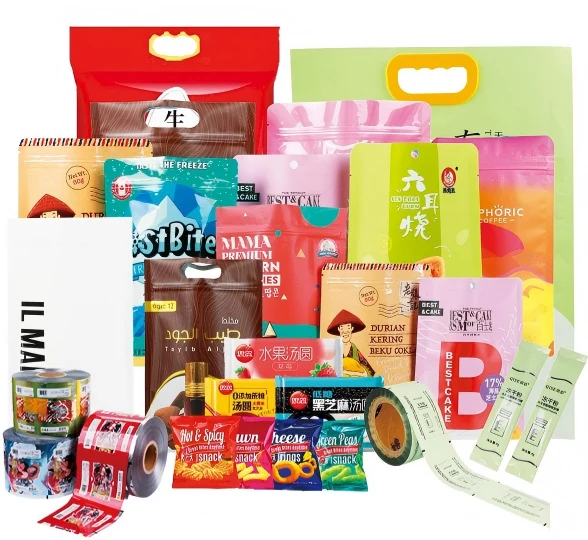
Common directions include stand-up zipper pouches, pillow bags, quad-seal packs, vacuum pouches, three-side-seal bags, and form-fill-seal rollstock. We compare them by filling access, shelf stability, printable area, case efficiency, and consumer handling. The most impressive shape is not always the best production choice. A format should protect the product and move through filling, sealing, packing, shipping, display, opening, and reuse without creating avoidable work.
Useful feature options include freezer-grade zippers, anti-fog windows, easy-open cuts, vacuum compatibility, microwave venting when validated, and strong carry areas. Every feature changes the specification. A zipper needs headspace and seal clearance. A valve, spout, or handle creates a local stress area. A window can reduce light barrier. A laser score needs opening-force control. We place each feature on a filled mockup before artwork approval.
| Decision | What we need to know | What we confirm |
|---|---|---|
| Format | Fill weight, shelf space, filling method | Filled shape, stability, case fit |
| Closure | Single use or repeated opening | Opening force and seal clearance |
| Special feature | Functional purpose and position | Compatibility, stress, and consistency |
How Do We Choose a Material Structure?
Possible building blocks include freezer-grade PE, PA or nylon, PET, CPP, EVOH, and carefully selected adhesive and ink systems. We treat these as a starting set, not a universal recipe. The correct structure depends on measured protection needs, sealing, product contact, storage, printing, and local requirements. A thick film is not automatically a high-barrier film. A metallic appearance is not proof of performance. We request data tied to the proposed structure and test conditions.
For frozen food, the complete pouch matters more than one layer. The relevant risks include low-temperature brittleness, ice puncture, flex cracking, freezer burn, seal failure, condensation, abrasion, and heavy handling. Seals, folds, zippers, fitments, windows, and converted edges can become the weakest point. We therefore review the whole package and not only an oxygen or moisture value from a flat film. We also discuss end-of-life goals carefully. A mono-material direction may improve compatibility with some collection systems, but it still needs to protect the product and work on the line. Environmental claims should match the exact structure and target market.
What Should I Check Before Printing and Production?
For frozen food, we use the approved production dieline after size and features are fixed. The artwork must protect safe zones around seals, folds, zippers, valves, spouts, tear notches, and registration marks. We reserve room for date coding and any variable data. We keep barcodes away from curves and edges when possible. A physical filled proof is useful because graphics move when a pouch becomes three-dimensional.
For frozen food, digital printing can support lower quantities and frequent design changes. Rotogravure can support stable large runs and strong repeat production. The best route depends on quantity per design, color targets, finish, forecast, and inventory risk. We price the full program, including setup, proofs, tooling, waste, and the cost of packaging that may become obsolete.
How Do We Validate Quality?
For frozen food, we normally discuss cold drop and impact, flex crack resistance, puncture, seal strength at temperature, leak testing, migration, and frozen distribution trials. The final plan depends on the product and market. A laboratory result is useful, but a filled-pack trial adds real product oils, powders, edges, temperature, pressure, and handling. Shelf-life responsibility should be based on the final product, complete package, and real distribution conditions.
For frozen food, we record the approved size, material sequence, thickness, print standard, finish, features, seal requirements, tolerances, and physical reference. Repeat orders should use the same controlled specification. Any change to resin, film, adhesive, ink, fitment, thickness, or process should be reviewed before it reaches production.
Which Frozen Food Applications Need Different Decisions?
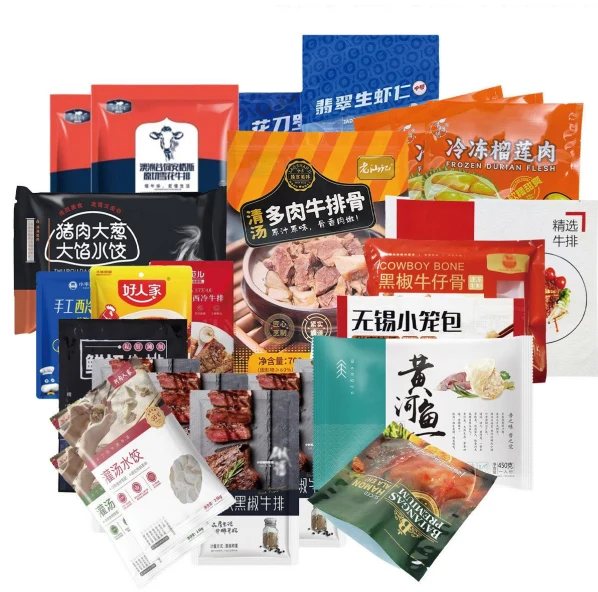
Buyers use several search terms for this category, including custom frozen food packaging, freezer bags, frozen seafood pouches, frozen dumpling packaging. Those phrases may describe the same pouch shape while hiding different products, filling methods and risks. We separate the application before recommending a construction.
| Application | Starting format direction | Critical questions |
|---|---|---|
| Frozen fruit and vegetables | Cold-tough pouch or rollstock matched to line | Ice edges, flex cracking, condensation and freezer handling |
| Dumplings and prepared food | Format with puncture and seal-contamination control | Sharp corners, oil, product in seals and case compression |
| Seafood and meat | High-integrity pack selected for contact and temperature | Leakage, bones, migration scope and frozen distribution |
| Portioned ingredients | Resealable or single-use pouch by consumer workflow | Low-temperature zipper use, coding and repeated freezer cycles |
Room-temperature handling can hide freezer brittleness, flex cracking and damage from ice or sharp food edges. Seal strength should be assessed at relevant temperatures and after realistic conditioning. A warm empty pouch is not a useful substitute for the frozen filled pack.
What Should the Validation and Approval Record Contain?
Keep freezing profile, storage temperature, fill and seal conditions, contact documentation, cold-drop and puncture observations, flex-crack review, case configuration, thaw or condensation risks and shelf-life ownership.
For frozen food, the validation plan should distinguish film evidence from finished-pouch evidence. Film data can support material screening. The converted package adds seals, folds, gussets, zippers, valves, spouts, windows and printed surfaces. Filling adds the real product, contamination, pressure and temperature. Distribution adds drops, vibration, abrasion and case compression. Shelf-life work adds time and storage conditions. Approving one stage does not automatically approve the others.
| Approval stage | Question answered | Record to retain |
|---|---|---|
| Blank size sample | Does the real product fit, fill, close and display correctly? | Finished dimensions, fill weight, density, headspace and filled photographs |
| Material and feature review | Can the proposed structure and components address the identified risks? | Layer or performance basis, feature identity, positions and open assumptions |
| Artwork proof | Are copy, dieline, safe zones, barcode, coding and claims correct? | Approved artwork version, color reference and claim evidence checkpoint |
| Filled trial | Does the package work on the process and intended distribution route? | Settings, observations, failures, test results and responsible approvers |
| Repeat-order check | Does the new order match the controlled reference? | Purchase specification, retained sample and documented changes |
Pre-production checklist
- Confirm the product, worst-case SKU, fill weight, density and target shelf life.
- Approve finished dimensions, gusset, opening method and feature coordinates on the current dieline.
- Identify the complete material direction, sealant, total thickness basis and evidence still required.
- Record filling, sealing, coding, storage and distribution conditions.
- Resolve artwork safe zones, barcode position, finish, color standard and destination-market claims.
- Name the sample or proof that becomes the physical reference and connect it to the purchase order.
- Define what changes require reapproval before a repeat run.
For frozen food, this record turns a broad product-page inquiry into a quote that purchasing can compare and quality can verify. Unknown values can remain open during the first conversation, but they should be resolved or clearly assigned before production approval.
What Happens From Sample to Repeat Order?
For frozen food, we divide the project into checkpoints so that each approval answers a different question. A stock sample shows general film feel, print finish, zipper quality, and converting workmanship. A blank size sample answers whether the chosen dimensions hold the real product and work with the filling method. A digital artwork proof checks copy, position, dieline version, color callouts, white ink, and special-finish instructions. A printed prototype or production proof adds a physical reference when color and presentation are critical. These stages reduce uncertainty, but they do not replace product compatibility or shelf-life testing.
For frozen food, after approval, we keep the signed specification and reference sample connected to the purchase order. Incoming material, printing, lamination, curing, slitting, pouch making, fitment or valve application, and final inspection should follow that record. Before shipping, we confirm count, carton marks, packing method, and any agreed test reports. For a repeat order, we compare the new order with the controlled reference and record every requested change. Forecast updates also matter. Stable core designs may justify a different print process or larger run, while seasonal and test designs often need lower inventory exposure. This workflow keeps technical decisions, brand decisions, and purchasing decisions visible instead of allowing them to drift between emails.
Which Buying Page Should I Use Next?
Use the focused page that matches the current decision. Product pages define the pouch category; buying pages cover quantity, pricing, application risk and evidence in more detail.
Frequently Asked Questions
Which bag style is best for frozen food?
The best style depends on fill weight, shelf presentation, filling equipment, closure, shipping, and consumer use. We compare stand-up zipper pouches, pillow bags, quad-seal packs, vacuum pouches, three-side-seal bags, and form-fill-seal rollstock after we understand the actual product and process.
How do you choose materials for frozen food packaging?
We start with the main risks: low-temperature brittleness, ice puncture, flex cracking, freezer burn, seal failure, condensation, abrasion, and heavy handling. We then select a trial structure and confirm performance with the complete filled pouch instead of relying on appearance or thickness alone.
What is the MOQ for custom printed pouches?
For frozen food, typical custom printed pouch MOQ starts from 500 pieces per design. Selected digitally printed structures may start from 100 pieces, subject to size, material, artwork, finish, and current production route. Stock bags can be requested separately.
Can I order a printed sample before mass production?
Yes. A blank size sample can confirm fit and filling. A digital mockup checks layout. A printed prototype or production proof can confirm color direction, finish, feature position, and converting details.
What information should I send for a quote?
Send the product, fill weight, target size, quantity, market, shelf life, preferred style, filling method, artwork, and required features. For this category, also share minimum storage temperature, product edges, freezing method, fill state, seal contamination, distribution time, thawing, and cooking instructions.