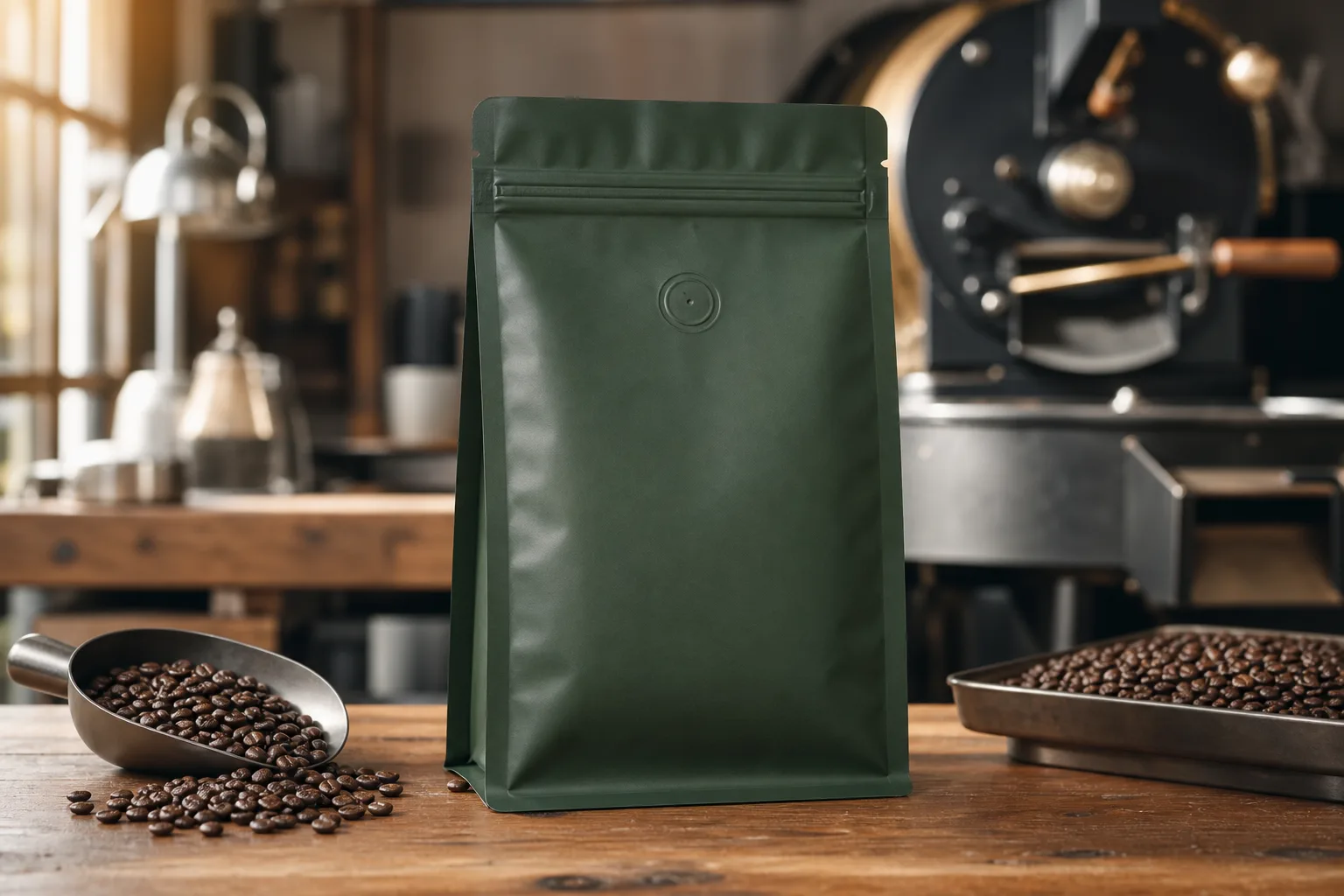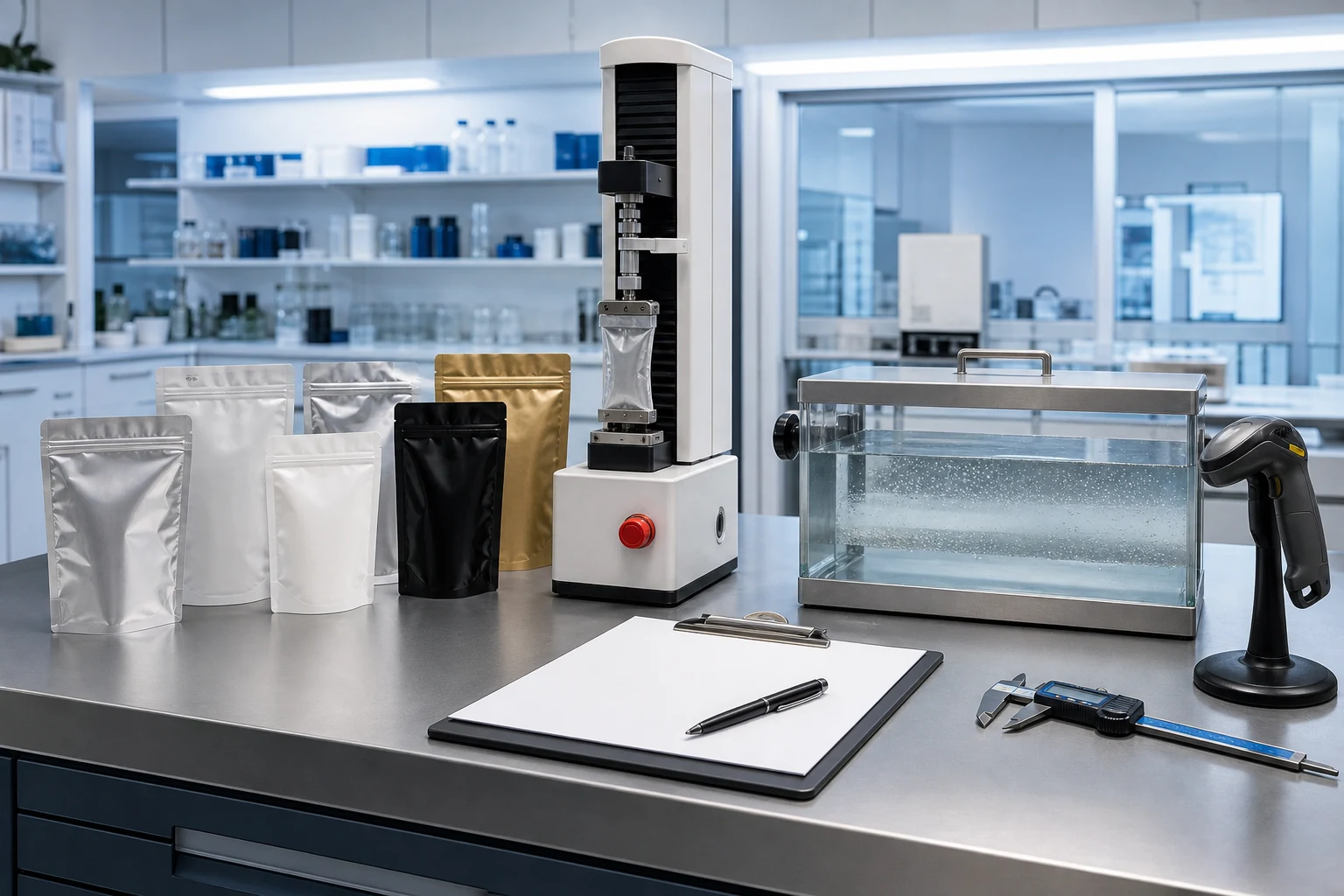
A pouch can look perfect in a sample photo while a weak seal, pinhole, print error, or shipping failure waits until the order is already packed.
I request packaging tests by mapping the product and route to measurable risks, then approve filled samples, documented methods, acceptance criteria, and change control before production.
I treat the pouch as a complete system. I confirm the product, material, filling, handling, and customer experience before I approve production.
Which Tests Match the Risk I Need to Control?
A long checklist wastes time when it tests the wrong failure and skips the condition that can actually hurt the product or customer.
I match test selection to product protection, seal integrity, physical damage, print usability, food-contact documentation, and the exact filling, storage, and distribution route.
I start by writing the product risks in plain words: oxygen pickup, moisture change, oil exposure, seal contamination, puncture, crushing, barcode failure, color mismatch, or poor opening. Then I identify which condition can cause that failure. A dry, oily, sharp, frozen, hot-filled, or nitrogen-flushed product does not need the same evidence.
How I make this decision specific
For “Which Tests Match the Risk I Need to Control?” in this which packaging tests should i request before production review, I define the actual product, pouch configuration, intended use, and decision owner before I ask a supplier or tester for evidence. I keep the selected structure, component details, sample condition, and any stated test method together, then compare the result with the buyer’s actual route rather than a catalogue promise. That record lets me use the barrier-film selection guide as a decision aid and retain a specification that another team member can check.
For Which Packaging Tests Should I Request Before Production, I state what is known, the condition it applies to, and what must still be checked with the actual product. I do not transfer a number, a test result, or a feature choice from another product simply because its pouch looks similar. The result of “Which Tests Match the Risk I Need to Control?” should give the buyer a clear next check, the supplier a precise request, and the project owner a record of the remaining uncertainty.
For Which Packaging Tests Should I Request Before Production, I request the exact pouch structure, component specification, and test conditions from the supplier. A broad material name or catalogue claim is not a production specification. The right next step is a representative filled sample, where relevant, with observations recorded before production is approved.
How Do I Verify Barrier, Seal, and Leak Performance?
A supplier can quote barrier or seal performance, but a useful result needs the actual structure, method, condition, and acceptance limit behind it.
I request named methods and conditions for barrier, seal, and leak checks, then confirm them with filled production-style samples rather than relying on a generic certificate.
For film comparisons, I note reported oxygen and water-vapor transmission with temperature, humidity, thickness, and direction where relevant. For package integrity, I inspect seals visually and use an appropriate seal-strength or gross-leak method when the project needs measured evidence. If bubbles, whitening, edge lift or layer separation appear, I use the delamination diagnosis guide to identify the separating interface and controlled corrective sample instead of treating every symptom as a leak. I treat laboratory data as one part of the release decision, not a substitute for the finished product.
How I make this decision specific
For “How Do I Verify Barrier, Seal, and Leak Performance?” in this which packaging tests should i request before production review, I define the actual product, pouch configuration, intended use, and decision owner before I ask a supplier or tester for evidence. I keep the selected structure, component details, sample condition, and any stated test method together, then compare the result with the buyer’s actual route rather than a catalogue promise. That record lets me use the barrier-film selection guide as a decision aid and retain a specification that another team member can check.
For Which Packaging Tests Should I Request Before Production, I state what is known, the condition it applies to, and what must still be checked with the actual product. I do not transfer a number, a test result, or a feature choice from another product simply because its pouch looks similar. The result of “How Do I Verify Barrier, Seal, and Leak Performance?” should give the buyer a clear next check, the supplier a precise request, and the project owner a record of the remaining uncertainty.
What Should My Pre-Production Release Record Include?
Testing loses value when results sit in an email, details change silently, and nobody can tell which material or process the passed sample actually used.
My release record names the pouch structure, dimensions, artwork revision, product and fill condition, test method, result, acceptance criterion, retained sample, carton pack, and change-control owner.
I review a physical, filled sample after it has been sealed, cooled, stored, packed, and handled as the product will be handled. I also check practical details such as opening, zipper or tear function, barcode readability, rub resistance, and carton fit. When a film, thickness, coating, zipper, artwork, or process setting changes, I decide which checks must be repeated before release.
How I make this decision specific
For “What Should My Pre-Production Release Record Include?” in this which packaging tests should i request before production review, I define the actual product, pouch configuration, intended use, and decision owner before I ask a supplier or tester for evidence. I keep the selected structure, component details, sample condition, and any stated test method together, then compare the result with the buyer’s actual route rather than a catalogue promise. That record lets me use the barrier-film selection guide as a decision aid and retain a specification that another team member can check.
For Which Packaging Tests Should I Request Before Production, I state what is known, the condition it applies to, and what must still be checked with the actual product. I do not transfer a number, a test result, or a feature choice from another product simply because its pouch looks similar. The result of “What Should My Pre-Production Release Record Include?” should give the buyer a clear next check, the supplier a precise request, and the project owner a record of the remaining uncertainty.
For Which Packaging Tests Should I Request Before Production, I treat the filled pack as a separate check from the material data. I record the fill condition, seal area, opening or closure behavior, carton arrangement, handling observations, and limits of the comparison. That prevents a favourable bench result from becoming an unsupported claim about shelf life, transport, or every product route.
Conclusion
I choose packaging through evidence, filled-pack testing, and clear specifications. That process protects the product, the launch, and the customer experience.
Sources and Further Reading
- ASTM F02 Primary Barrier Packaging fact sheet.
- Reddit r/foodscience, shelf-life validation community discussion.
- ASTM F88/F88M, seal strength of flexible barrier materials.
- ASTM F2096, gross leaks by internal pressurization.
- ASTM D3985, oxygen transmission through plastic film.
- ASTM F1249, water-vapor transmission through plastic film.
- FDA, food packaging and food-contact substances.
- Unique Packaging custom services.
- Unique Packaging contact.
Need a pouch specification?
I can review your product, size, quantity, artwork, and target market.