A coffee bag can look finished yet fail when gas swells it, the zipper frustrates buyers, or the valve and seal were never tested together.
I specify a coffee valve and zipper after I confirm roast-to-pack timing, coffee volume, pouch format, shelf-life target, opening use, and filled-pack tests with the actual bag.
I treat both parts as functional components. I do not approve them from a catalogue photo or an empty pouch alone.
Why Does a Coffee Bag Need a Valve?
Freshly roasted coffee can create pressure, while oxygen exposure works against the aroma the roaster wants to protect.
I use a one-way valve when roast timing, bean degassing, pouch headspace, and distribution conditions show that controlled gas release is needed without opening the pack to outside air.
I begin with the coffee, not the valve. Roast degree, time after roasting, batch size, fill weight, headspace, and the planned sale window change the pressure story. The Specialty Coffee Association explains that oxygen exposure contributes to coffee staling and that roasted coffee aroma compounds are susceptible to oxidation.1 That is a reason to manage oxygen. It is not a reason to claim that every valve or every pouch gives the same shelf life.
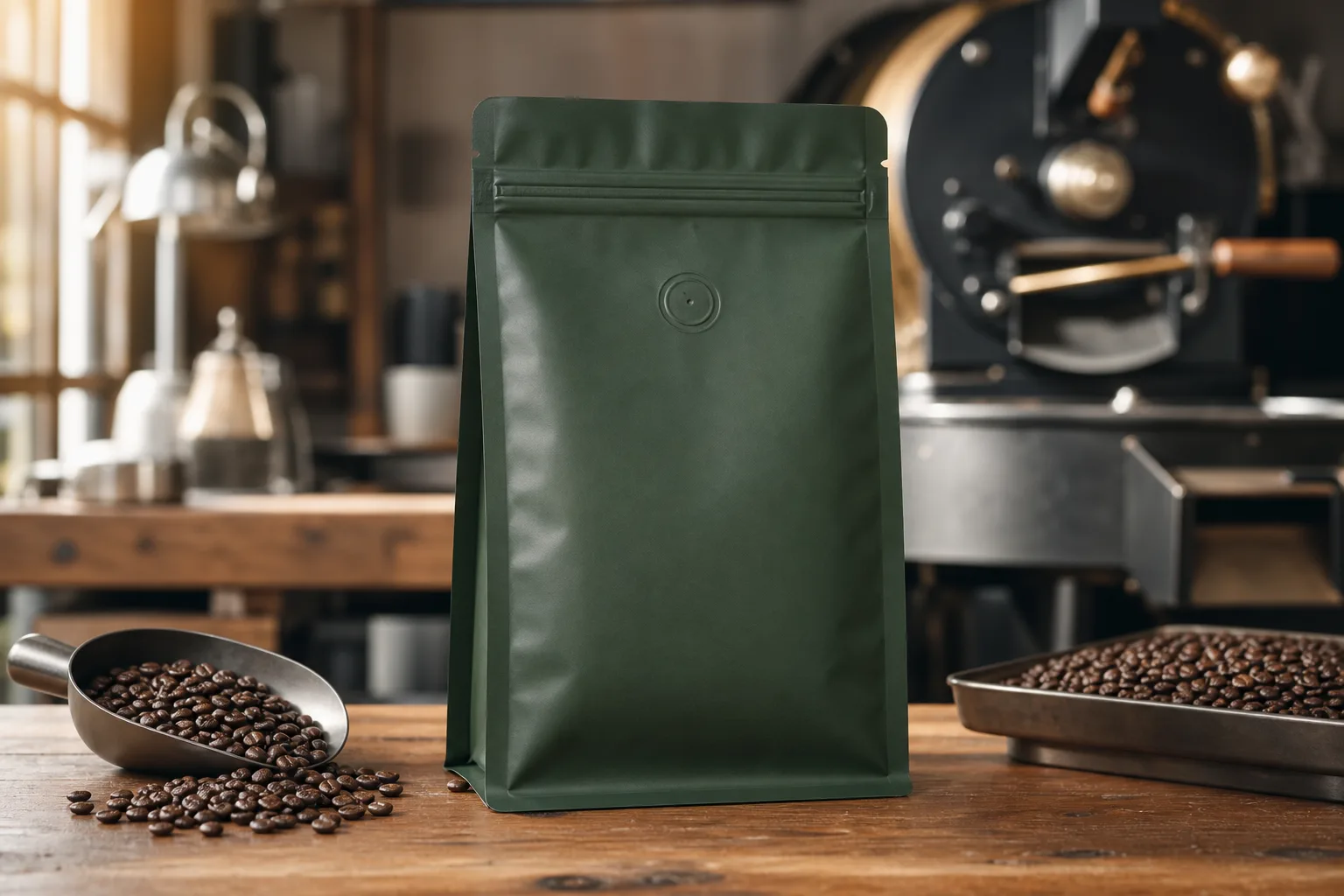
A one-way valve is useful when coffee will still release gas after it is sealed. I ask the roaster when beans are cooled, when they are bagged, and how the bags travel. I then fill a sample at the real target weight and watch it. I look for swelling, headspace change, seal stress, and carton pressure. I also compare an early-filled sample with a later-filled sample. The answer can change by roast profile and route.
I separate evidence from community practice
In a r/roasting discussion, several small roasters described bagging after cooling when a vent is present, while another commenter said their choice depends on packing conditions. That is a useful operator insight, not proof of universal performance.2 I still validate the selected valve, laminate, fill weight, and delivery route together.
I check valve placement before artwork approval. It must sit clear of the seal, zipper, folds, and barcode. I also want a traceable valve specification and a filled sample that has been handled, packed, and opened. For a broader coffee structure decision, I compare this with the coffee bag design guide and the project-specific quality-control process. The correct valve is the one that matches the actual launch, rather than a default feature copied from another bag.
Which Zipper Works for the Customer and the Line?
A zipper can improve repeat use, but a poorly placed or weak closure can create spills and a bad second-open experience.
I choose the zipper by pouch format, fill height, opening force, expected reuse, heat-seal position, product dust, and the real hands that will open and reclose it.
I first decide whether customers should open through a tear notch, a laser score, or a cut top. Then I place the zipper below the opening area with enough room for a dependable top seal. A zipper that is too high gives little sealing room. One that is too low can waste label space and make the pouch awkward to pour from. The filled pouch matters because beans change the top shape and the pressure behind the closure.
I test the opening sequence with people who did not design the bag. They should find the opening without scissors, avoid tearing into the zipper, and reclose the pack after taking coffee out. I repeat the test with different hand sizes and after the pouch has travelled in a carton. I also check whether loose beans or coffee dust interfere with the tracks. The result is a practical specification, not a generic promise that a zipper is resealable.
I specify the usable geometry
| Check | Why I check it | Evidence I keep |
|---|---|---|
| Zipper height | It changes seal room and pouring access. | Marked dieline and filled sample. |
| Opening force | It affects first opening and repeat use. | Multiple user-opening checks. |
| Dust tolerance | Beans and fines can disrupt reclosure. | Open-close trial after filling. |
| Seal interaction | Features can interrupt pressure at the top. | Sealed production-style sample. |
A recent coffee-roaster thread includes a specific complaint about the look and pouring experience after a side zipper strip is torn away.3 I use that as a prompt to test, not as a rule. The exact pouch format, notch, zipper track, and consumer all matter. I compare the result with our flat-bottom pouch options and request a new sample whenever a zipper type or pouch geometry changes.
What Must I Lock Before Coffee Bag Production?
A valve and zipper look simple until they meet heat bars, coffee dust, fold lines, carton pressure, and real production speed.
Before production, I lock the finished dimensions, fill weight, headspace, laminate, valve location, zipper type and height, seal zones, artwork safe areas, carton pack, and acceptance tests.
I ask the converter for a complete specification, not a marketing name. It should state the pouch format, width, height, gusset or bottom dimensions, structure, thickness, valve type, zipper type, top-seal width, tear feature, and the positions of functional parts. I also record the target fill weight and the range the roaster expects. The same nominal weight can occupy a different volume when the bean density changes.
Food-contact packaging is not a single generic status. FDA explains that food-contact substances include packaging and its components, and intended use is part of the safety assessment.4 I therefore ask for relevant material documentation for the selected structure and market. I also make sure graphics do not cover valve placement, seals, folds, or mandatory product information. If a supplier shifts a component, I ask for a revised dieline and proof.
I turn the specification into a release check
I run filled samples through the packing steps. I inspect valve seating, top-seal continuity, zipper alignment, side gussets, corner stress, and pack appearance after a simple carton simulation. ASTM F88/F88M describes a method for measuring seal strength of flexible barrier materials, so it is a useful reference when a project requires comparable seal data.5 I do not assume a good empty-bag seal proves the filled bag will work.
I also protect the operations team from surprises. A coffee bag with a valve may need a defined carton orientation. A very full pack may need more headspace. A new zipper may need different jaw clearance. I connect these decisions to the seal-leak guide and retain approved samples. That record lets the roaster, converter, and buyer discuss a real configuration rather than rely on memory after a problem appears.
How Do I Validate the Final Coffee Bag Experience?
A component can pass a bench check and still disappoint after shelf handling, shipping, first opening, and repeated kitchen use.
I validate a coffee bag with filled, sealed, packed, transported, shelved, opened, and reclosed samples, then document what passed, what changed, and what remains conditional.
I use a small but disciplined validation plan. First, I fill bags with the actual coffee at the intended timing. I inspect them after cooling and again after a realistic hold period. Next, I pack them in the planned carton and check the units after controlled handling. I look for bag swelling, rub marks, squeezed valves, damaged zippers, weak seals, and unstable standing. The purpose is to find the connection between product, pouch, and route before a large order.
At the shelf stage, I place several filled bags next to each other. I view them from the front and side. I check whether they stand, whether their panels wrinkle, and whether the valve or zipper breaks the visual hierarchy. A flat-bottom bag can give more usable panels, but only if the filled footprint supports it. I use the flat-bottom bag guide and stand-up pouch size guide to keep that review grounded in filled dimensions.
I include the customer opening moment
I ask people to open, pour, and reclose the pouch without coaching. I record where they hesitate, whether the tear starts cleanly, whether beans spill, and whether the zipper feels fully engaged. This is not a laboratory claim. It is direct usability evidence. I separate it from shelf-life or migration claims, which need their own verified methods and documentation.
My final report states the configuration, sample count, test conditions, observations, and limits. If the format changes from a stand-up pouch to a flat-bottom pouch, or if the product moves to a different roast schedule, I rerun relevant checks. That modest discipline is cheaper than assuming a familiar valve or zipper will behave the same in every coffee program. For a first order, I prefer a sample path before I scale to the final quantity.
Conclusion
I choose packaging through evidence, filled-pack testing, and clear specifications. That process protects the product, the launch, and the customer experience.
Sources and Further Reading
- Specialty Coffee Association, coffee freshness and oxygen review.
- Reddit r/roasting, Packaging freshly roasted coffee community discussion.
- Reddit r/coffee_roasters, Coffee bag packaging community discussion.
- FDA, Food Packaging and Other Substances that Come in Contact with Food.
- ASTM F88/F88M, Seal Strength of Flexible Barrier Materials.
- Unique Packaging coffee bag design guide.
- Unique Packaging quality control.
Need a pouch specification?
I can review your product, size, quantity, artwork, and target market.