A coffee pouch can look premium and still swell, tip, leak, pour badly, or frustrate repeat use when beans, components, filling, and route are never checked together.
I package whole-bean coffee in a flat-bottom pouch by defining the beans and pack timing, comparing the pouch, valve, zipper, and film, then reviewing filled packs and a written specification before quotation.
I treat the pouch as a complete system. I confirm the product, material, filling, handling, and customer experience before I approve production.
What Coffee and Pack Conditions Should I Define First?
A request for a coffee bag is incomplete when it leaves bean type, roast-to-pack timing, fill range, target market, route, carton plan, and customer opening routine unspecified.
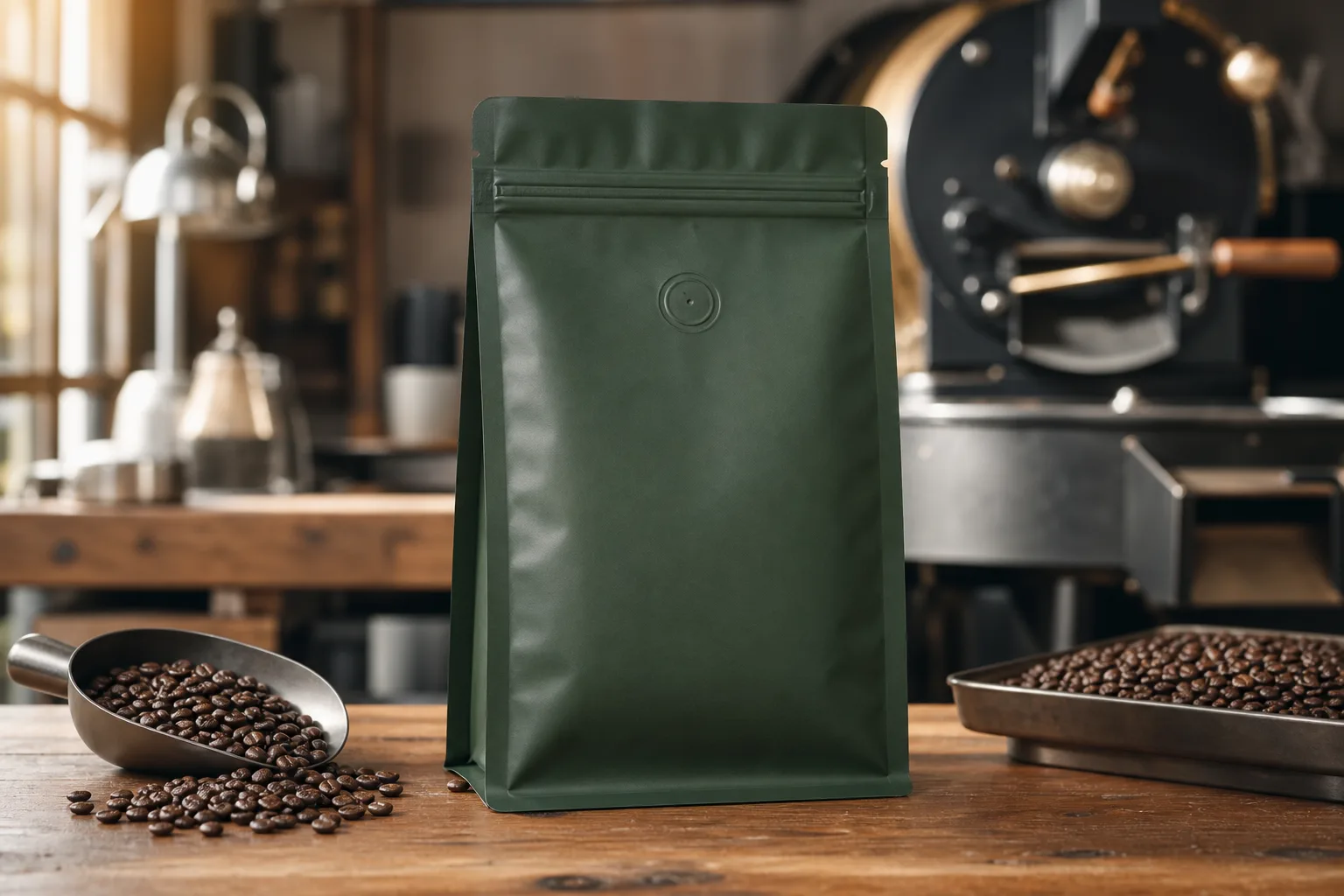
I define the whole beans, roast and packing timing, fill range, market, route, carton arrangement, standing requirement, and consumer opening routine before I compare a flat-bottom pouch.
I record the actual bean, roast profile, intended pack timing, fill range, headspace, route, carton orientation, expected sale window, and how the customer will open and reclose the bag. A current packaging discussion connects flat-bottom versus stand-up format with barrier, valve, and zipper decisions.5 That is a useful project prompt, not a performance rule. The Specialty Coffee Association notes that oxygen exposure contributes to roasted-coffee staling.1 I use that fact to ask for a defined package review, not to promise a shelf life.
How I make this decision specific
For “What Coffee and Pack Conditions Should I Define First?” in this how do i package whole-bean coffee in a flat-bottom pouch review, I define the actual product, pouch configuration, intended use, and decision owner before I ask a supplier or tester for evidence. I keep the selected structure, component details, sample condition, and any stated test method together, then compare the result with the buyer’s actual route rather than a catalogue promise. That record lets me use the food barrier-film guide as a decision aid and retain a specification that another team member can check.
For How Do I Package Whole-Bean Coffee in a Flat-Bottom Pouch, I state what is known, the condition it applies to, and what must still be checked with the actual product. I do not transfer a number, a test result, or a feature choice from another product simply because its pouch looks similar. The result of “What Coffee and Pack Conditions Should I Define First?” should give the buyer a clear next check, the supplier a precise request, and the project owner a record of the remaining uncertainty.
For How Do I Package Whole-Bean Coffee in a Flat-Bottom Pouch, I request the exact pouch structure, component specification, and test conditions from the supplier. A broad material name or catalogue claim is not a production specification. The right next step is a representative filled sample, where relevant, with observations recorded before production is approved.
Which Pouch, Valve, and Closure Details Should I Compare?
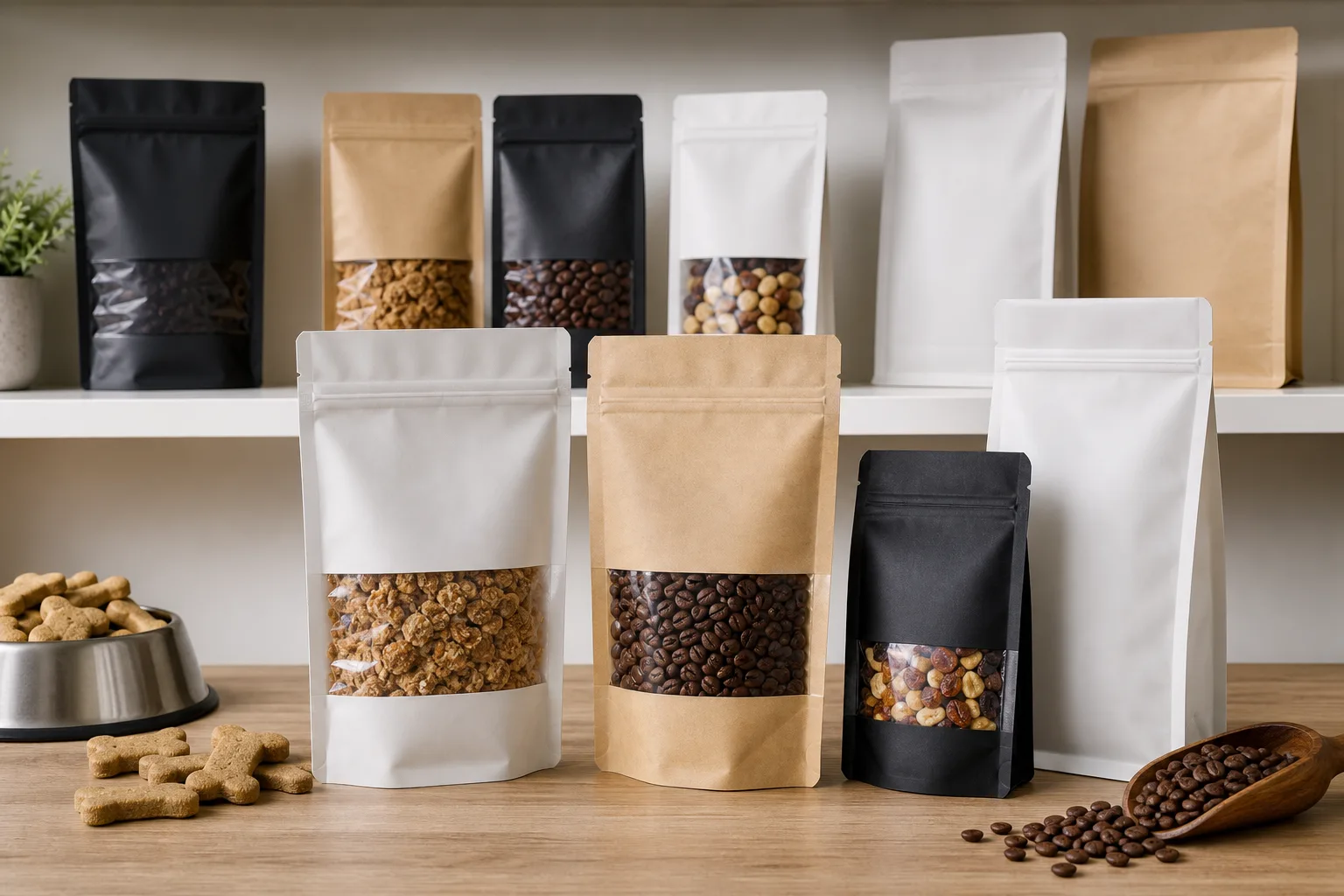
A pouch name alone cannot identify the finished dimensions, layer sequence, valve placement, zipper clearance, seal zones, food-contact scope, and test conditions a buyer needs.
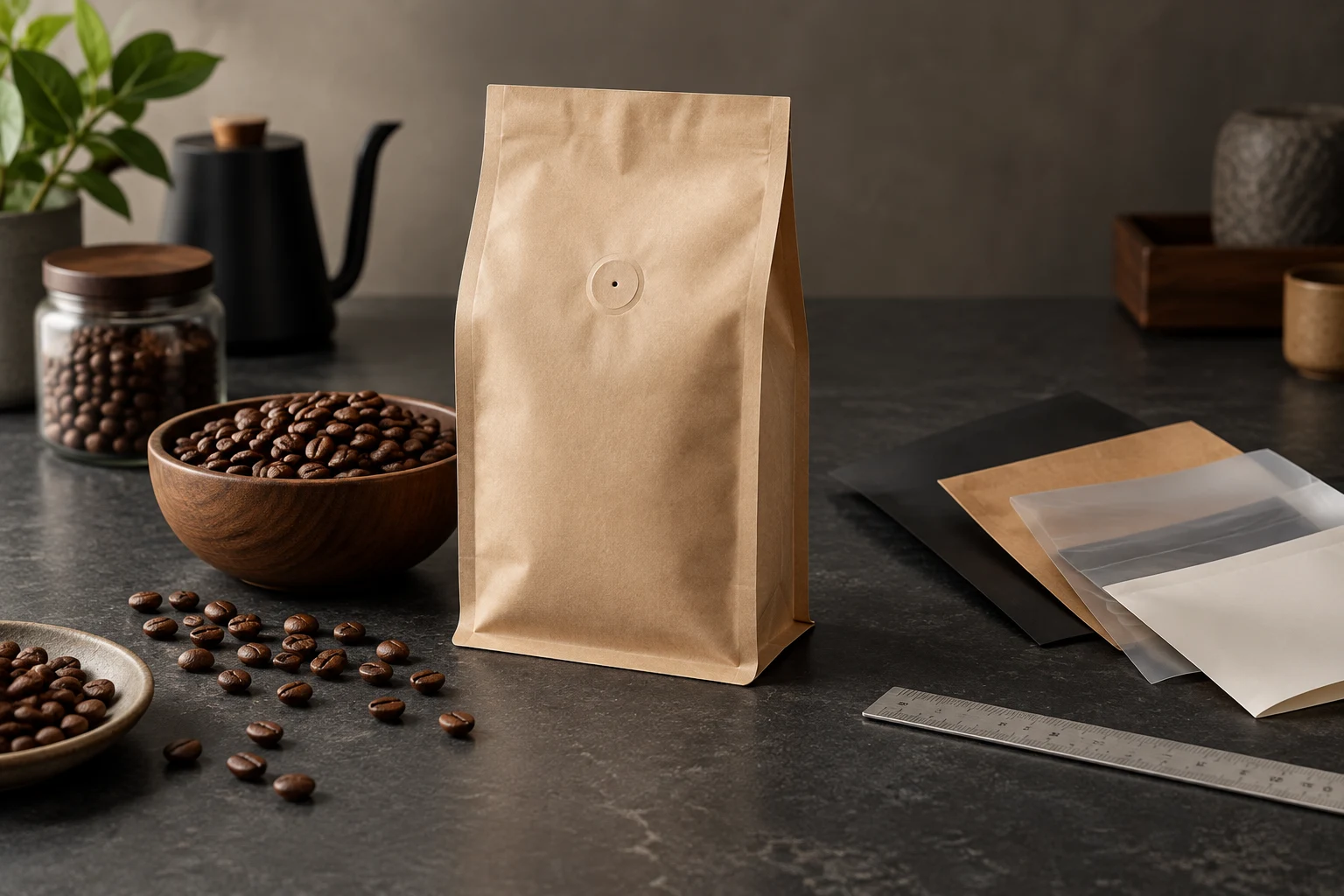
I compare the filled dimensions, layer sequence, sealant, valve position, zipper geometry, top-seal room, physical samples, material documentation, and stated test conditions before approving a pouch.
I request a written construction and physical blanks. I inspect the base, side gussets, valve location, zipper height, tear path, top-seal clearance, panel stiffness, and carton fit with real coffee. FDA explains that packaging and its components are food-contact substances evaluated for intended use.2 I therefore request documentation tied to the selected structure, intended market, and conditions rather than a generic food-grade statement. I use the barrier-film guide to compare relevant evidence without converting a film number into a shelf-life claim.
How I make this decision specific
For “Which Pouch, Valve, and Closure Details Should I Compare?” in this how do i package whole-bean coffee in a flat-bottom pouch review, I define the actual product, pouch configuration, intended use, and decision owner before I ask a supplier or tester for evidence. I keep the selected structure, component details, sample condition, and any stated test method together, then compare the result with the buyer’s actual route rather than a catalogue promise. That record gives the buyer a decision aid and a specification that another team member can check.
For How Do I Package Whole-Bean Coffee in a Flat-Bottom Pouch, I state what is known, the condition it applies to, and what must still be checked with the actual product. I do not transfer a number, a test result, or a feature choice from another product simply because its pouch looks similar. The result of “Which Pouch, Valve, and Closure Details Should I Compare?” should give the buyer a clear next check, the supplier a precise request, and the project owner a record of the remaining uncertainty.
How Do I Check Filled Flat-Bottom Coffee Pouches?
An empty pouch cannot show valve seating, seal stress, standing shape, zipper use, carton pressure, rub, or the real opening experience after coffee is packed.
I inspect representative filled, sealed, cartoned, handled, opened, poured, and reclosed pouches under documented project conditions before I approve the selected configuration.
I fill samples at the planned range and inspect the standing footprint, gusset shape, valve seating, zipper engagement, top-seal appearance, corners, carton orientation, surface rub, and opening sequence. ASTM F88/F88M provides a method for measuring flexible-barrier seal strength and identifying failure mode when a defined comparison is needed.3 It does not establish coffee freshness or distribution performance. ISTA describes screening and shipment-simulation procedure categories.4 I use the filled-pouch distribution-testing guide when the route needs its own controlled answer.
How I make this decision specific
| Decision | What I inspect | Evidence I retain |
|---|---|---|
| Filled geometry | Base, gussets, headspace, and standing shape. | Filled samples and dimensions. |
| Valve and zipper | Placement, opening, reclosure, and seal clearance. | Component specification and use checks. |
| Material review | Layer description and named conditions. | Supplier documents and blanks. |
| Carton route | Orientation, rub, handling observations, and limits. | Trial record and retained pack. |
For “How Do I Check Filled Flat-Bottom Coffee Pouches?” in this how do i package whole-bean coffee in a flat-bottom pouch review, I define the actual product, pouch configuration, intended use, and decision owner before I ask a supplier or tester for evidence. I keep the selected structure, component details, sample condition, and any stated test method together, then compare the result with the buyer’s actual route rather than a catalogue promise. That record gives the buyer a decision aid and a specification that another team member can check.
For How Do I Package Whole-Bean Coffee in a Flat-Bottom Pouch, I state what is known, the condition it applies to, and what must still be checked with the actual product. I do not transfer a number, a test result, or a feature choice from another product simply because its pouch looks similar. The result of “How Do I Check Filled Flat-Bottom Coffee Pouches?” should give the buyer a clear next check, the supplier a precise request, and the project owner a record of the remaining uncertainty.
For How Do I Package Whole-Bean Coffee in a Flat-Bottom Pouch, I treat the filled pack as a separate check from the material data. I record the fill condition, seal area, opening or closure behavior, carton arrangement, handling observations, and limits of the comparison. That prevents a favourable bench result from becoming an unsupported claim about shelf life, transport, or every product route.
What Should a Flat-Bottom Coffee Pouch Specification Include?
A promising coffee sample becomes hard to repeat when the purchase brief omits beans, fill, construction, components, carton plan, trial evidence, and change triggers.
I specify the coffee and fill, pouch dimensions and construction, valve and zipper, market scope, approved filled sample, carton plan, observations, acceptance limits, and reapproval triggers in one brief.
I follow a practical sequence: assess the material and components against the defined coffee and route, run a representative filled-pack review, document the accepted configuration, and request a quote on that record. The brief names beans, packing timing, fill range, dimensions, layer sequence, sealant, valve, zipper, artwork revision, market, carton arrangement, sample condition, observations, and limits. I list likely failures: poor standing shape, valve or zipper interference, weak seals, hard opening, carton abrasion, and material-document mismatch. I do not invent MOQ, price, lead time, certification, shelf life, or barrier performance. The coffee valve-and-zipper guide keeps the component choices visible.
How I make this decision specific
For “What Should a Flat-Bottom Coffee Pouch Specification Include?” in this how do i package whole-bean coffee in a flat-bottom pouch review, I define the actual product, pouch configuration, intended use, and decision owner before I ask a supplier or tester for evidence. I keep the selected structure, component details, sample condition, and any stated test method together, then compare the result with the buyer’s actual route rather than a catalogue promise. That record gives the buyer a decision aid and a specification that another team member can check.
For How Do I Package Whole-Bean Coffee in a Flat-Bottom Pouch, I state what is known, the condition it applies to, and what must still be checked with the actual product. I do not transfer a number, a test result, or a feature choice from another product simply because its pouch looks similar. The result of “What Should a Flat-Bottom Coffee Pouch Specification Include?” should give the buyer a clear next check, the supplier a precise request, and the project owner a record of the remaining uncertainty.
For How Do I Package Whole-Bean Coffee in a Flat-Bottom Pouch, I preserve the final decision in a written brief that names the approved sample, conditions, observations, open risks, and change triggers. I then use the packaging specification-sheet guide to keep the quotation tied to the evidence rather than to a remembered sample or a generic product name.
Conclusion
I choose packaging through evidence, filled-pack testing, and clear specifications. That process protects the product, the launch, and the customer experience.
Sources and Further Reading
- Specialty Coffee Association, coffee freshness and oxygen review.
- FDA, Food Packaging and Other Substances that Come in Contact with Food.
- ASTM F88/F88M, Seal Strength of Flexible Barrier Materials.
- ISTA, packaged-product test procedure categories.
- Reddit r/Packaging, coffee pouch format community discussion.
- Unique Packaging coffee valve-and-zipper guide.
Need a pouch specification?
I can review your product, size, quantity, artwork, and target market.