A pouch can look premium online and still sag, tip, waste shelf space, or disappoint a retailer after filling.
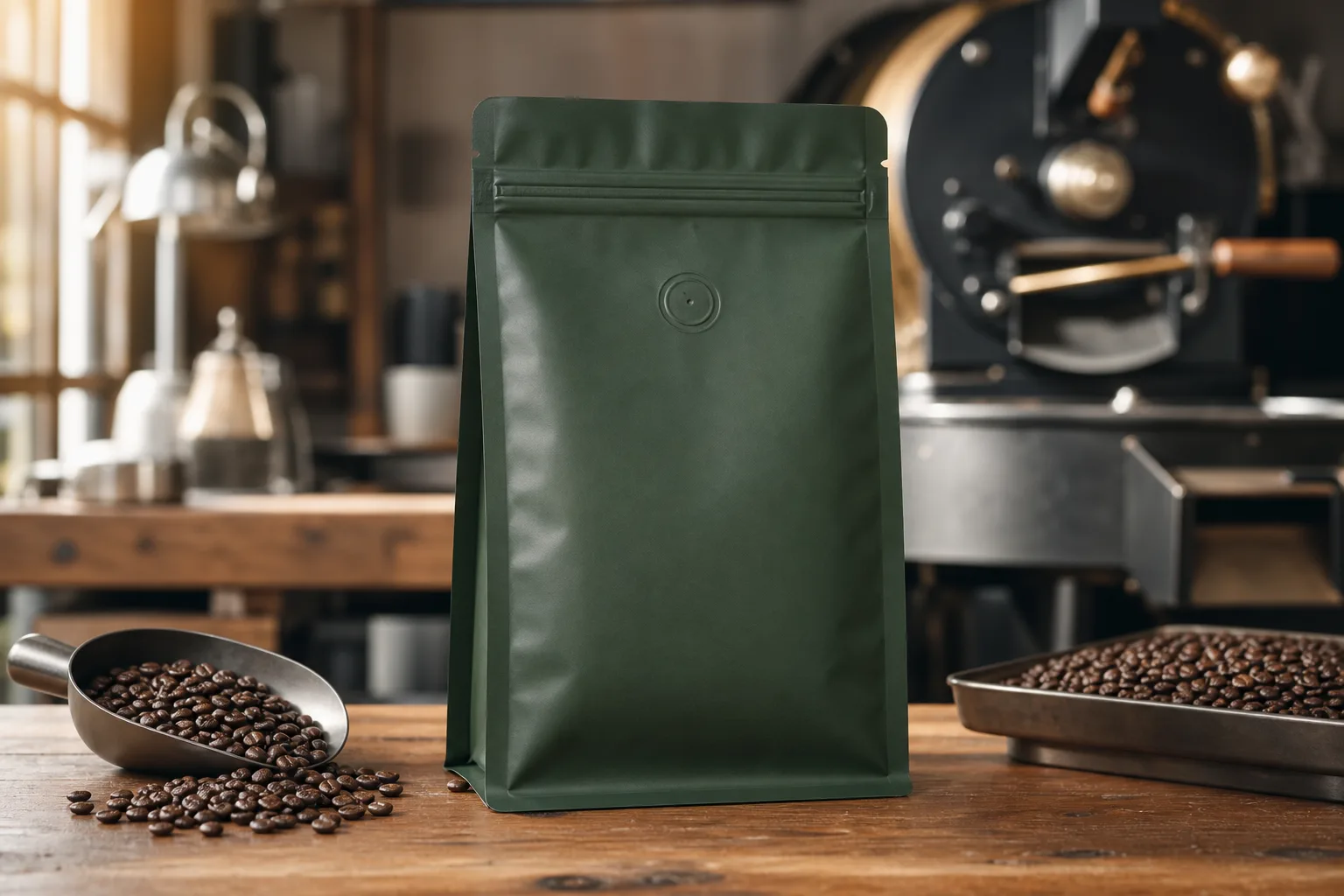
A flat-bottom bag is a flexible pouch with a rectangular base and side gussets, so I use it when a product needs strong shelf presence, stable standing, larger fill volume, and clean premium panels.
I treat the format as a business choice first. Then I check product fit, shelf goals, filling behavior, shipping cost, and approval evidence.
How Is a Flat-Bottom Bag Different from a Stand-Up Pouch?
Format names can blur together, and that confusion leads to weak samples, wrong dielines, and poor shelf tests.
A flat-bottom bag has a box-like base, two side gussets, and broad front, back, bottom, and side panels, while a standard stand-up pouch usually relies on a bottom gusset.
I use the term flat-bottom bag for a pouch that opens into a squared base. Many buyers also call it a box pouch, block-bottom pouch, eight-side-seal bag, or flat-bottom pouch. The exact seal layout can vary by supplier, so I do not approve a project from the name alone. I ask for a dieline, filled sample, seal drawing, zipper location, and finished dimensions.
The main difference is how the pouch stands and uses its panels. A standard stand-up pouch can be excellent for many foods. It uses a bottom gusset to create a standing base after filling. A flat-bottom bag creates a more rectangular footprint. It can stand with a stronger box-like shape, and it often gives me more usable side-panel area for flavor cues, roast notes, feeding instructions, or variant color. That matters when a product sits beside cartons, cans, and rigid jars.
I compare the filled shape, not the empty sample
An empty flat-bottom bag can look stiff and perfect. A real pack changes after product enters it. Coffee beans settle differently from powder. Granola creates edges. Pet treats can push into the corners. I fill the sample to the target weight, close the zipper, shake it, and place it on the intended shelf. I compare lean, panel bulge, headspace, side-gusset shape, and how the front design reads from eye level.
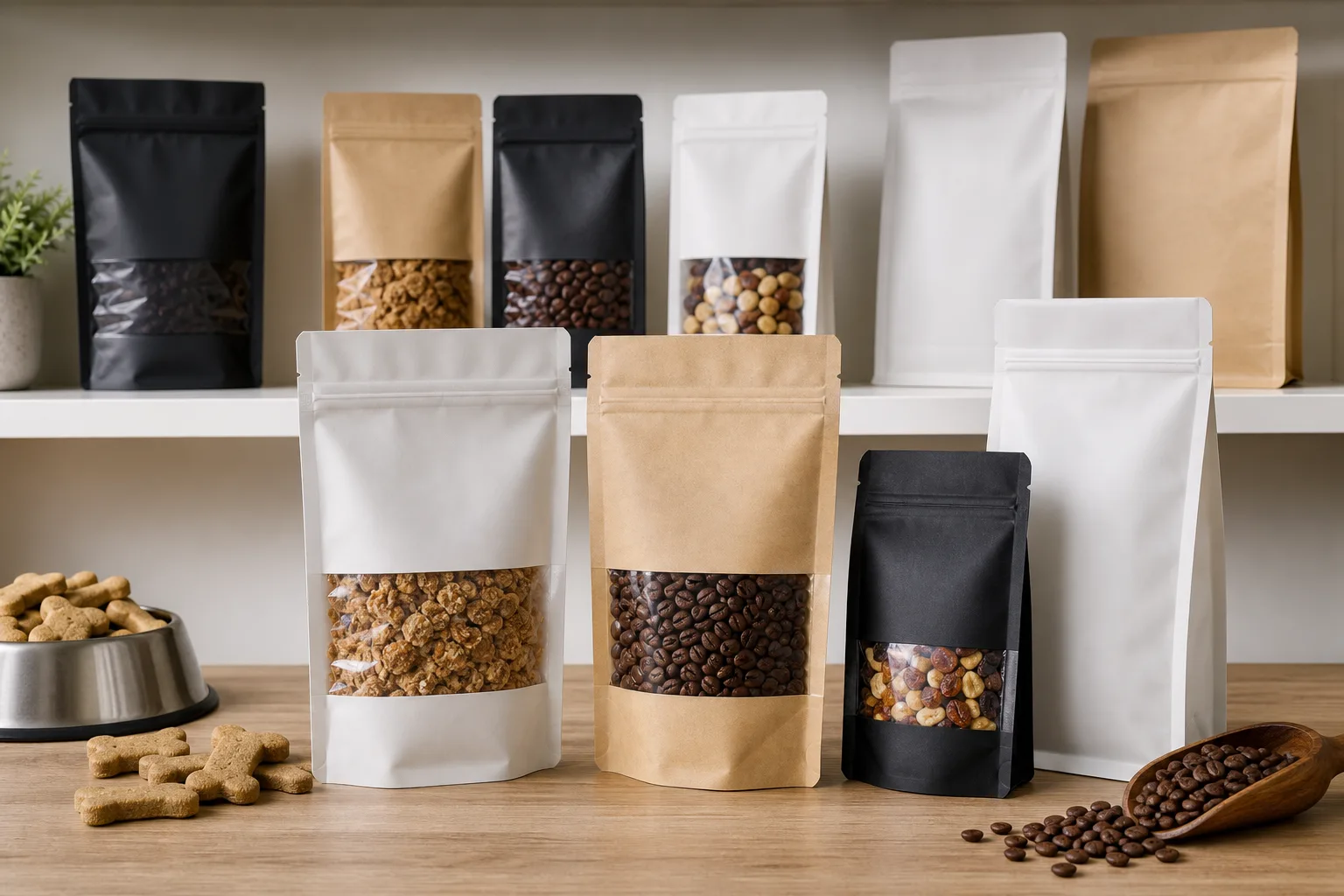
I also compare the format with the existing stand-up pouch range and the flat-bottom pouch page. If the brand needs lower cost and simple shelf presence, a regular stand-up pouch may be enough. If the pack must feel closer to a carton while staying flexible, the flat-bottom format becomes more attractive. I choose the structure that solves the real retail and filling problem, not the one with the trendier name.
When Should I Choose a Flat-Bottom Bag for My Product?
A premium format can raise cost and complexity when the product does not need the extra shelf control.
I choose a flat-bottom bag for products that benefit from upright stability, larger front panels, side branding, heavier fills, premium presentation, and repeat opening.
I start with the product and the sales channel. Coffee is a common fit because the format can stand well, carry a valve and zipper, and give roasters clean panels for origin, roast level, and story. Granola, cookies, protein powder, nuts, supplements, confectionery, and freeze-dried pet treats can also work well. I am more cautious with very low fill weights, sharp products, highly liquid products, or goods that need a spout or retort process. The format can be adapted, but it should earn the added setup.
I also check shelf behavior. Retailers care about tidy facing, case packing, and quick restocking. A flat-bottom bag can present like a small box, but it still weighs less than rigid packaging in many programs. The Flexible Packaging Association explains that flexible packaging can use materials such as film, foil, and paper to create packages that can change shape when filled or closed.1 That flexibility is useful, but it also means I must test the filled shape instead of assuming carton-like rigidity.
I use a simple fit table
| Product situation | Flat-bottom fit | What I verify |
|---|---|---|
| Coffee or tea | Strong candidate. | Valve, zipper, aroma barrier, and shelf block. |
| Granola, nuts, snacks | Often useful. | Moisture barrier, product corners, and fill height. |
| Pet treats | Useful for premium lines. | Puncture, grease, zipper cycles, and carton fit. |
| Low-weight samples | Usually weaker. | Whether the bag can stand without excess headspace. |
The best use case is not only a product type. It is a goal. If I need stronger blocking on shelf, more graphic surface, and better upright stability after opening, I study a flat-bottom bag. If the project is a first market test with uncertain demand, I compare the extra cost against learning speed. A simpler pouch can be smarter for an early trial, while a flat-bottom bag can become the right upgrade after the brand knows its velocity.
What Specifications Should I Confirm Before Production?
Flat-bottom bags fail when a buyer approves artwork before size, fill, zipper, barrier, and seal details are locked.
I confirm filled weight, target dimensions, material structure, barrier, zipper, valve, seal width, bottom shape, artwork panels, carton pack, and test samples before production.
I begin with size and fill. Width, height, side gusset, bottom depth, and seal allowance all affect the final standing shape. I do not copy a competitor size unless the product density and fill weight are similar. A 250 gram coffee bag, a 500 gram granola bag, and a 1 pound pet treat bag can need different headspace and panel stiffness. I ask the supplier to make a blank sample, then I fill it with the real product.
Next I define the material structure. Food products may need oxygen, moisture, light, aroma, grease, or puncture protection. FDA explains that food-contact substances include packaging components and that authorized use depends on the intended food-contact use and conditions.2 So I request documents for the actual film, ink, adhesive, coating, and sealant structure where relevant. I do not accept a generic food-grade statement as the only evidence.
I lock functional details before artwork
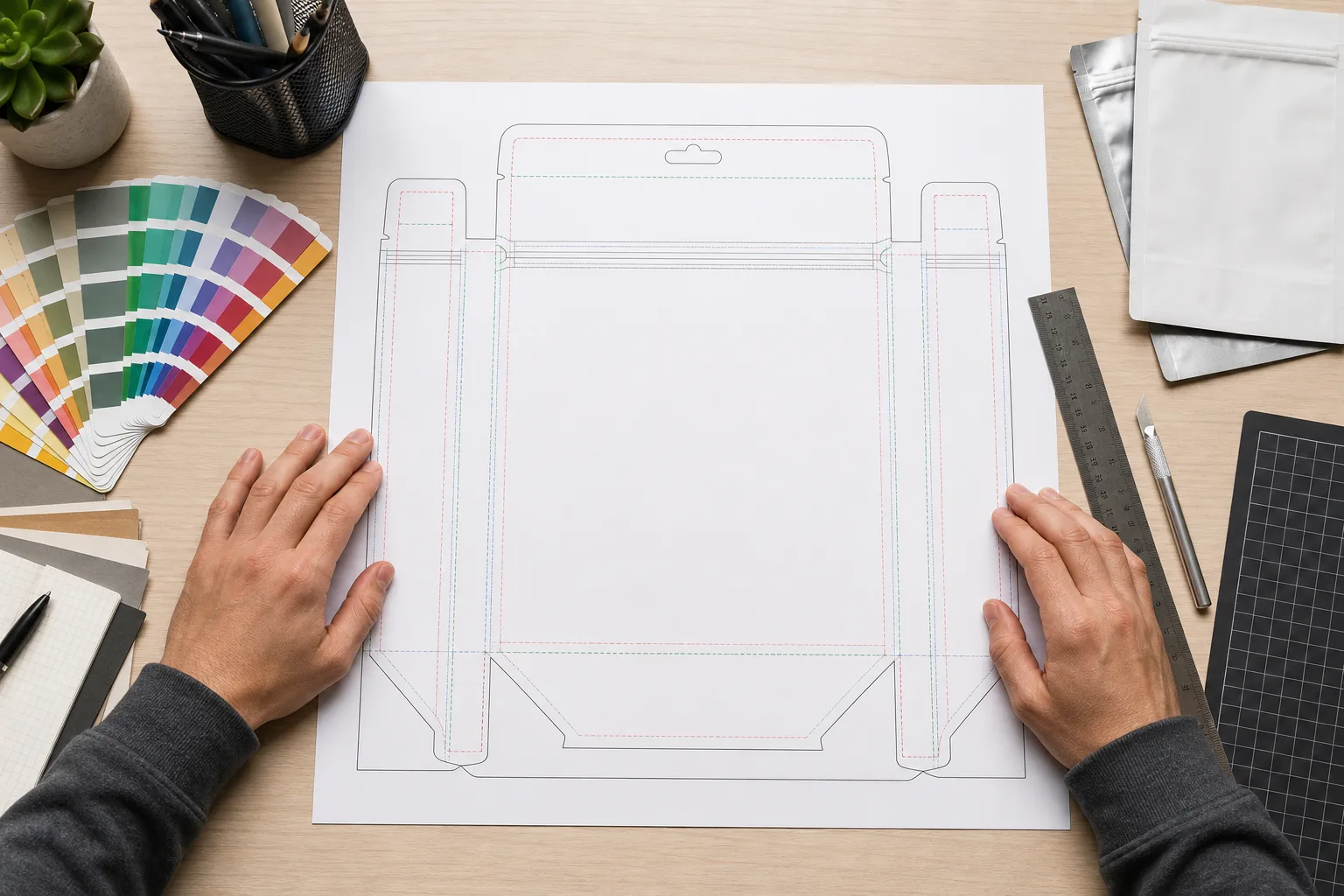
Zipper height changes the usable front panel. A coffee valve changes artwork and case orientation. Tear notches, rounded corners, hang holes, laser scores, and degassing needs all affect the dieline. I also check barcode position on the filled pouch. GS1 US guidance says consistent symbol placement is critical for successful scanning and gives placement principles for packages and containers.3 I keep the barcode away from folds, seals, rounded gusset edges, and unstable surfaces when possible.
I then ask for a final order specification. It should include structure, thickness, size, tolerance, zipper type, valve type, finish, print process, color reference, packing method, carton count, sample approval, and inspection points. I connect this with the quality control process because the format has more edges and panels to inspect than a simple three-side-seal bag. If the supplier changes material, size, zipper, or seal layout after proofing, I require a revised sample. That discipline costs less than discovering weak standing or bad zipper placement after production.
How Do I Test Shelf, Filling, and Shipping Performance?
A beautiful pouch still needs to survive filling dust, zipper use, case packing, freight, and customer handling.
I test filled stability, seal strength, leak risk, zipper cycles, barcode scanning, carton packing, drop handling, and landed cost before I approve a flat-bottom bag.
I test the pouch as a small system. First I fill it at the target weight and with realistic product flow. Powders can contaminate the zipper or seal area. Oily snacks can mark paper-look structures. Coffee can release gas. Large pet treats can press into corners. I check seal strength, top closure, opening feel, and whether the bag still stands after repeated handling. I also check whether the customer can pour or scoop without fighting the format.
Then I test shelf and case packing. I place several filled bags in a row, pull one out, and see whether the others keep a neat block. I put them into the proposed shipper carton. I count units per carton, gross weight, carton size, and empty space. UPS explains that dimensional weight is based on package volume and that billable weight can use actual or dimensional weight, whichever is greater.4 That is why I compare case cube, not just pouch unit price.
I turn tests into approval evidence
My approval list is practical. I want a filled sample photo, standing test, zipper cycle check, seal inspection, carton pack plan, barcode scan check, and written material specification. For export or ecommerce, I add drop, vibration, compression, and temperature exposure when the route needs it. I do not need every lab test for every small project, but I do need evidence for the main failure modes.
I also calculate the cost of the format. A flat-bottom bag can need more film, more converting control, and sometimes higher minimums than a simpler pouch. It may also reduce display problems and improve perceived value. I compare those trade-offs with the custom packaging MOQ and cost guide. When the business case is clear, I request a production sample or short run. When it is not clear, I keep the first order smaller or test a simpler format first. That is the safer path for cash, operations, and brand trust.
Conclusion
I choose packaging through evidence, filled-pack testing, and clear specifications. That process protects the product, the launch, and the customer experience.
Sources and Further Reading
Need a pouch specification?
I can review your product, size, quantity, artwork, and target market.