A rushed material switch can weaken seals, shorten shelf life, and create a recycling claim that customers cannot use.
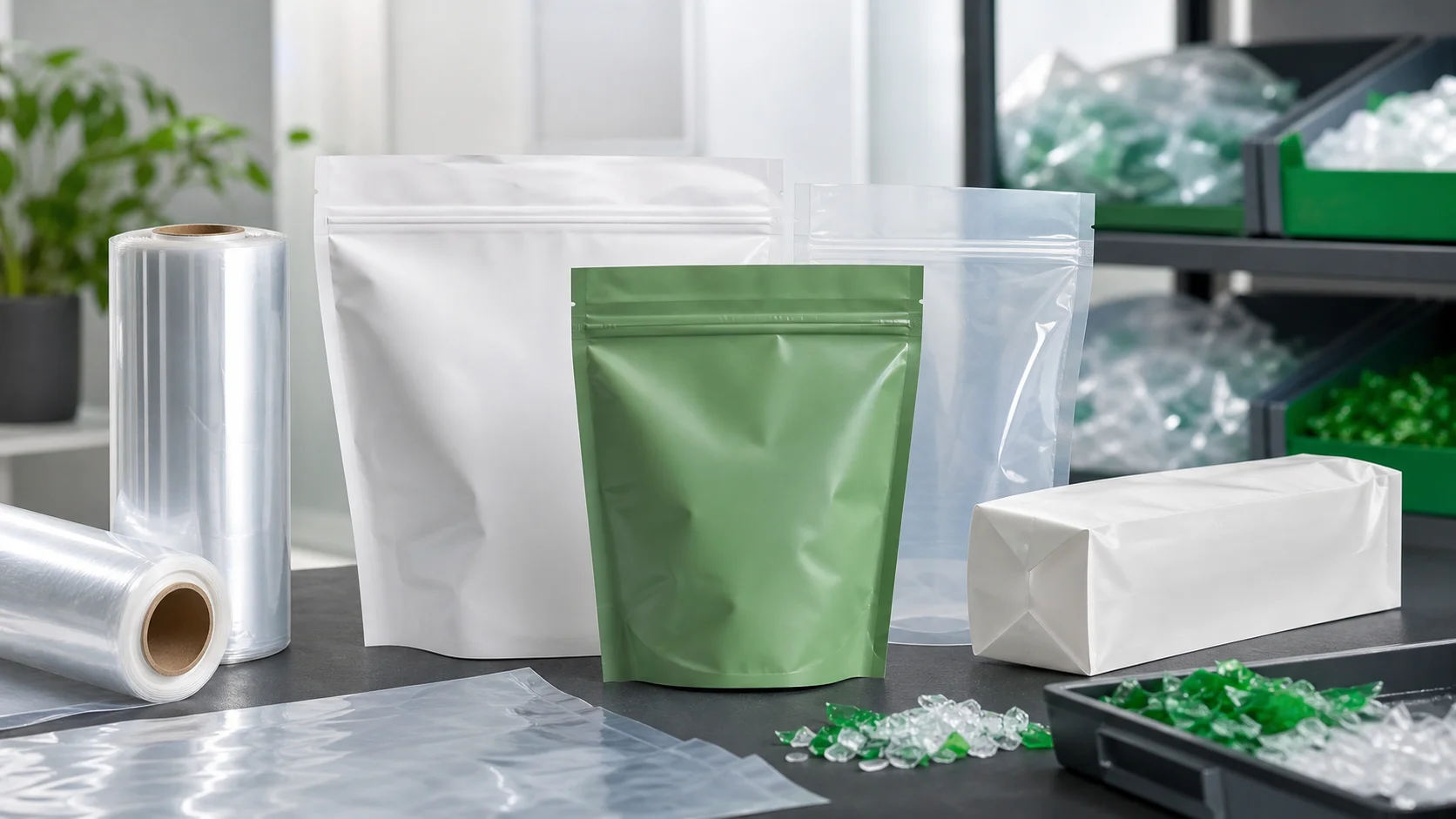
Mono-PE packaging keeps the main flexible components in the polyethylene family so the pack can better fit compatible recycling streams, but local acceptance and performance still need proof.
I treat mono-PE as an engineering direction, not a logo. I test protection, converting, filling, distribution, collection, and claim wording together.
What Does Mono-PE Actually Mean?
The label sounds simple, but coatings, inks, adhesives, zippers, and valves can change the real recycling result.
I use mono-PE to describe a pouch designed mainly from compatible polyethylene components, while I document every non-PE element and check a recognized design guideline.
Mono-PE, all-PE and PE mono-material packaging are often used as search or sales terms for a polyethylene-focused design, but the assessment must follow the actual bill of materials and target recycling route. A conventional high-barrier pouch may combine PET, aluminum, nylon, and PE. Each layer provides a useful function, but the mixed structure can be difficult to recycle in flexible-film systems. A mono-PE direction replaces major layers with polyethylene-based films and compatible functional technologies. The pouch can still include inks, adhesives, coatings, zipper, valve, and label. Those elements must remain within accepted limits for the target assessment.
I define the claim before I design
I ask whether the project needs “designed for recycling,” a third-party recyclability assessment, or a market-specific store-drop-off instruction. These statements are not equal. I identify the destination countries and the collection path. RecyClass publishes design-for-recycling guidelines for PE flexible film and a methodology for assessing compatibility.1 I use the current guideline that fits the pack, and I record the version.
I request a full bill of materials. I include film grades, tie layers, coatings, adhesive, ink coverage, zipper, valve, spout, and any metallization. I ask whether the supplier has test evidence for the complete structure. A base film certificate does not automatically cover a printed, converted pouch. I also compare the proposed construction with a high-barrier mono-material pouch option without treating one product page as proof for every application.
I keep the consumer instruction specific. I do not use the chasing-arrows symbol as a general decoration. I state where the pack may be collected and what preparation is needed only when evidence supports that instruction. I also look at product residue: a theoretically compatible pouch may still be hard to recycle when it remains heavily contaminated after use. I review the claim with local legal or compliance advice before launch.
Can Mono-PE Match the Barrier of Traditional Laminates?
A recyclable structure has little value when it cannot protect the food for the promised shelf life.
Modern mono-PE can serve many dry products, but I validate oxygen, moisture, aroma, light, seal, and puncture needs against the actual product and route.
Polyethylene provides good moisture resistance and reliable heat sealing. Oxygen and aroma barrier can need coatings or specialized PE films. Light protection can need pigment or another compatible approach. The final performance depends on material grade, thickness, orientation, coating, converting, and the details of the pouch. I never accept a broad statement that mono-PE is “the same” as foil for every product. The barrier-film selection guide explains why test method and conditions must travel with any performance number.
I rank the performance gaps
Dry snacks, powders, pet treats, frozen foods, and some coffee formats may be candidates. Products with very long shelf life, strong aroma, high oil content, sharp edges, or strict light sensitivity need closer study. I compare target oxygen and moisture transmission, but I also test seals, drops, flex cracking, zipper cycles, and pallet conditions. I include hot or cold storage when the route requires it.
| Requirement | I test | I watch |
|---|---|---|
| Barrier | OTR, WVTR, aroma, light. | Coating damage at folds. |
| Sealing | Seal window, strength, leak rate. | Dust and line-speed variation. |
| Distribution | Drop, compression, vibration. | Creep and hot storage. |
| Use | Zipper cycles and tear opening. | Panel stiffness and feel. |
I run a controlled shelf-life study with the real product and use the packaging test guide to turn the dominant failure into an evidence plan. I compare a current pack and the new pack under the same conditions. I record sensory, moisture, oxidation, appearance, and seal results. I use accelerated tests only as supporting evidence because they do not replace every real-time effect. I approve the switch only when protection remains suitable.
How Should I Make a Recyclability Claim?
One vague green claim can damage trust and attract regulatory attention in several markets.
I use narrow wording that states the material, collection route, geographic limits, and independent assessment, and I keep evidence behind every claim.
I begin with the actual consumer. I ask where the package will be sold and what collection options exist there. A pouch may pass a technical design assessment but still lack broad collection. Another pouch may fit a retailer program that is not available in every region. I make this distinction visible.
I avoid claims that overreach
The FTC Green Guides explain that unqualified recyclable claims can be misleading when suitable facilities are not available to a substantial majority of consumers.2 I therefore qualify the statement when access is limited. I also avoid a general “green” or “environmentally friendly” claim. I use plain wording such as “made primarily from polyethylene; check local flexible-film collection” only when the evidence and local rules support it.
In Europe, I follow the PPWR timeline and later implementing rules. The European Commission describes new requirements for packaging design, waste prevention, and recyclability.3 I do not assume one label works in all member states. I review extended producer responsibility, sorting labels, and language requirements for each market.
I keep a claim file. It contains the bill of materials, assessment scope, laboratory reports, supplier declarations, artwork version, countries, collection evidence, and approval date. I set a review date because infrastructure and rules change. If I change ink coverage, zipper, coating, or film, I check whether the assessment still applies. This record makes marketing more credible and helps my team answer customer questions without improvising.
How Do I Convert to Mono-PE Without Disrupting Production?
A material change can alter machine settings, pouch stiffness, print color, and packing speed at the same time.
I convert through a controlled trial: lock the specification, run samples, test on the filling line, validate shelf life, approve artwork, then scale gradually.
I write a performance brief before I request a quote. I include product, net weight, dimensions, shelf life, storage, filling speed, seal-jaw type, current structure, failure history, and destination markets. I also rank which features can change. A side zipper, clear window, valve, or very soft feel can narrow the material choices.
I use gates instead of one final approval
First, I review the proposed structure and its recycling assessment. Second, I test blank pouches for stiffness, sealing, opening, and fill volume. Third, I run printed samples and inspect color, scuffing, odor, blocking, and coefficient of friction. Fourth, I run the filling line at normal speed. I measure rejects and seal quality. Fifth, I start the shelf-life and distribution tests. I do not order the full annual volume after one hand-filled sample.
| Conversion gate | Buyer provides | Approval evidence |
|---|---|---|
| Material assessment | Product, route, current structure and target claim | Bill of materials, assessment scope and stated trade-offs |
| Blank sample | Size, fill weight, features and line details | Fit, stiffness, seal, opening and fill-volume record |
| Printed trial | Approved artwork and finish | Color, rub, odor, blocking and line-run observations |
| Specification and quote | Quantity per design, market and delivery destination | Locked structure, tests, sample, commercial assumptions and change control |
I also prepare customer communication. The new pouch may feel softer or look less metallic. I explain the change in accurate, simple language. I avoid presenting it as perfect. I give disposal instructions only for markets where they apply. I ask customer service to record questions after launch.
I scale in a controlled way. I keep approved samples and production data. I compare the first commercial run with the trial. I set acceptance limits for dimensions, print, seal, and appearance. I organize the input through the packaging specification sheet, compare the suitable custom pouch formats, and send the current structure through the mono-PE material assessment request. The commercial path is material review, representative sample, specification confirmation and then a quotation tied to the approved construction; it does not assume a universal MOQ, lead time, certification, performance or price.
Conclusion
I choose packaging through evidence, filled-pack testing, and clear specifications. That process protects the product, the launch, and the customer experience.
Sources and Further Reading
Need a pouch specification?
I can review your product, size, quantity, artwork, and target market.