The wrong food-packaging barrier film can shorten shelf life, dull flavor, soften texture, or make a good launch look careless.
The best barrier film for food packaging is the verified structure that protects the specific food from oxygen, moisture, light, aroma loss, grease and handling while still sealing reliably for the intended use.
I compare low-, medium- and high-barrier film directions from the product risk first, then match the laminate, sealant, tests and supply plan.
Which Food Risks Should I Define Before Choosing Film?
Barrier choices fail when the product risk is vague and every supplier is asked for a generic high-barrier pouch.
I define oxygen sensitivity, moisture gain or loss, light exposure, aroma loss, grease, sharp edges, filling temperature, shelf life, and distribution before I compare films.
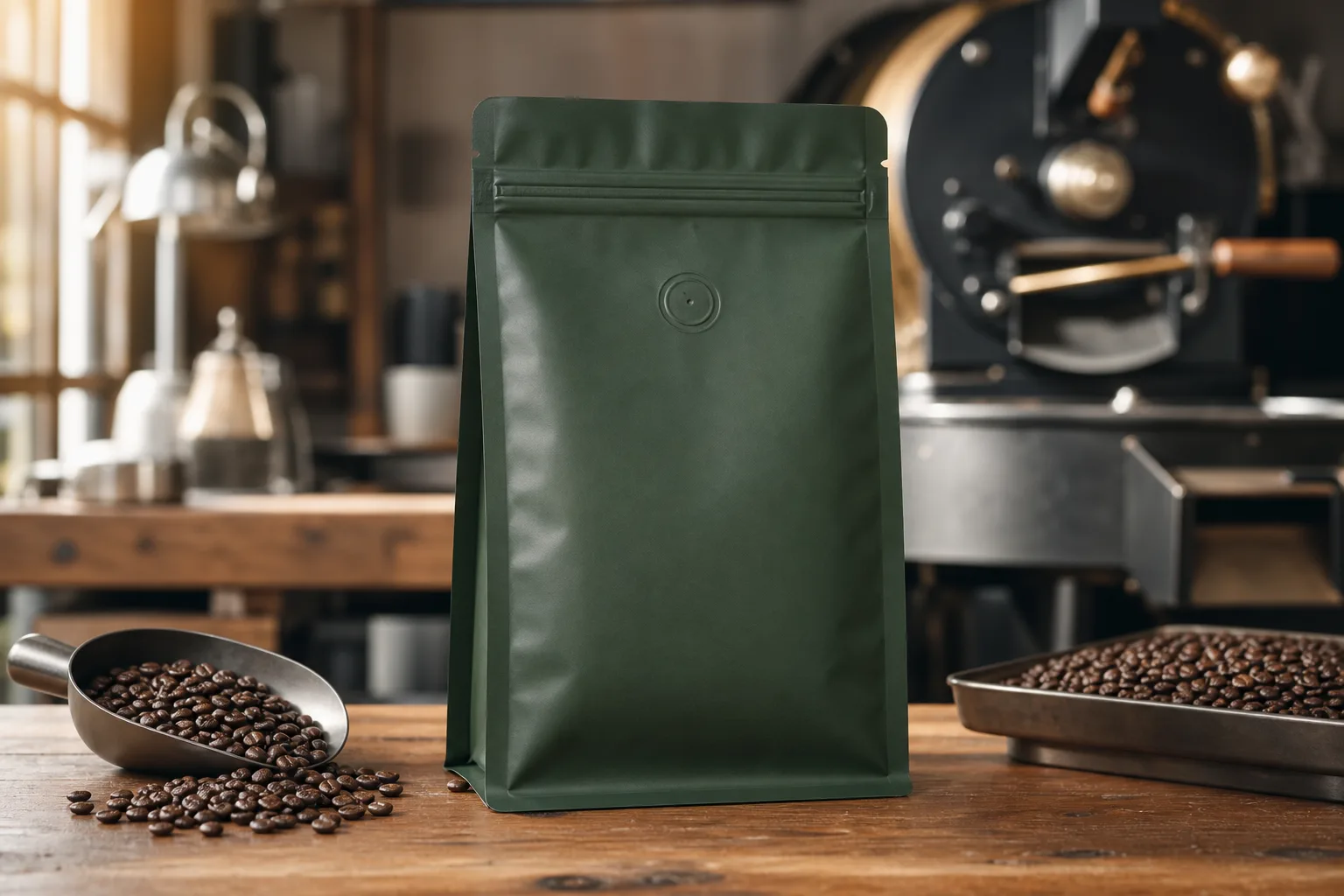
I start by writing down what can damage the food first. A roasted coffee, a crisp chip, a freeze-dried fruit, a protein powder, and a sauce refill do not need the same protection. Coffee cares about oxygen, aroma, carbon dioxide, valve decisions, and seal quality. Chips care about moisture and oxygen. Powder may care about moisture, dust in the seal, and static. Oily foods can stain weak paper looks and can challenge seal layers. Sharp pet treats can puncture a thin film even when the lab barrier number looks strong.
I also define the shelf-life target in plain terms. I ask how long the product must stay acceptable before opening, how it will be stored, and how quickly it will be used after opening. Then I ask where the pack will travel. Heat, humidity, altitude, ecommerce compression, and long ocean freight can expose weak points that a showroom sample hides. I do this before I ask for a quote, because otherwise I only receive material names and price levels.
I separate barrier from package performance
A flat film data sheet is useful, but the finished pouch is what the customer receives. Seals, folds, zippers, valves, windows, laser scores, and gussets can change real performance. ASTM D3985 is used to determine steady-state oxygen gas transmission rate through plastic films and laminates, while ASTM F1249 covers water vapor transmission through flexible barrier materials.12 Those tests help me compare film options, but I still ask how the finished pouch is made, sealed, and handled.
I keep the risk list short enough to use. I usually group it into oxygen, water vapor, light, aroma, mechanical damage, seal contamination, food-contact status, and end-of-life goals. That list tells me whether I should study clear high-barrier films, metallized structures, aluminum foil laminates, EVOH coextrusions, coated films, or a simpler structure. It also tells me when I should not overbuy. A dry product with a short local shelf life may not need the same structure as a premium export snack that must survive humid storage. The best film is the one that solves the real failure mode without creating a new one.
How Do Oxygen, Moisture, and Light Change the Material Choice?
A film can block oxygen well and still fail when moisture, light, or aroma loss is the real problem.
I compare OTR, WVTR, light protection, aroma retention, puncture strength, and seal behavior together because foods rarely fail from only one exposure.
I first decide which barrier number matters most. Oxygen transmission rate, often called OTR, matters when oxidation can damage flavor, color, nutrients, or aroma. Water vapor transmission rate, often called WVTR, matters when the food becomes soggy, dries out, cakes, or loses texture. Light protection matters when oils, pigments, vitamins, or premium appearance can change under retail lighting. Aroma retention matters when the food sells through smell, such as coffee, spices, tea, and flavored snacks.
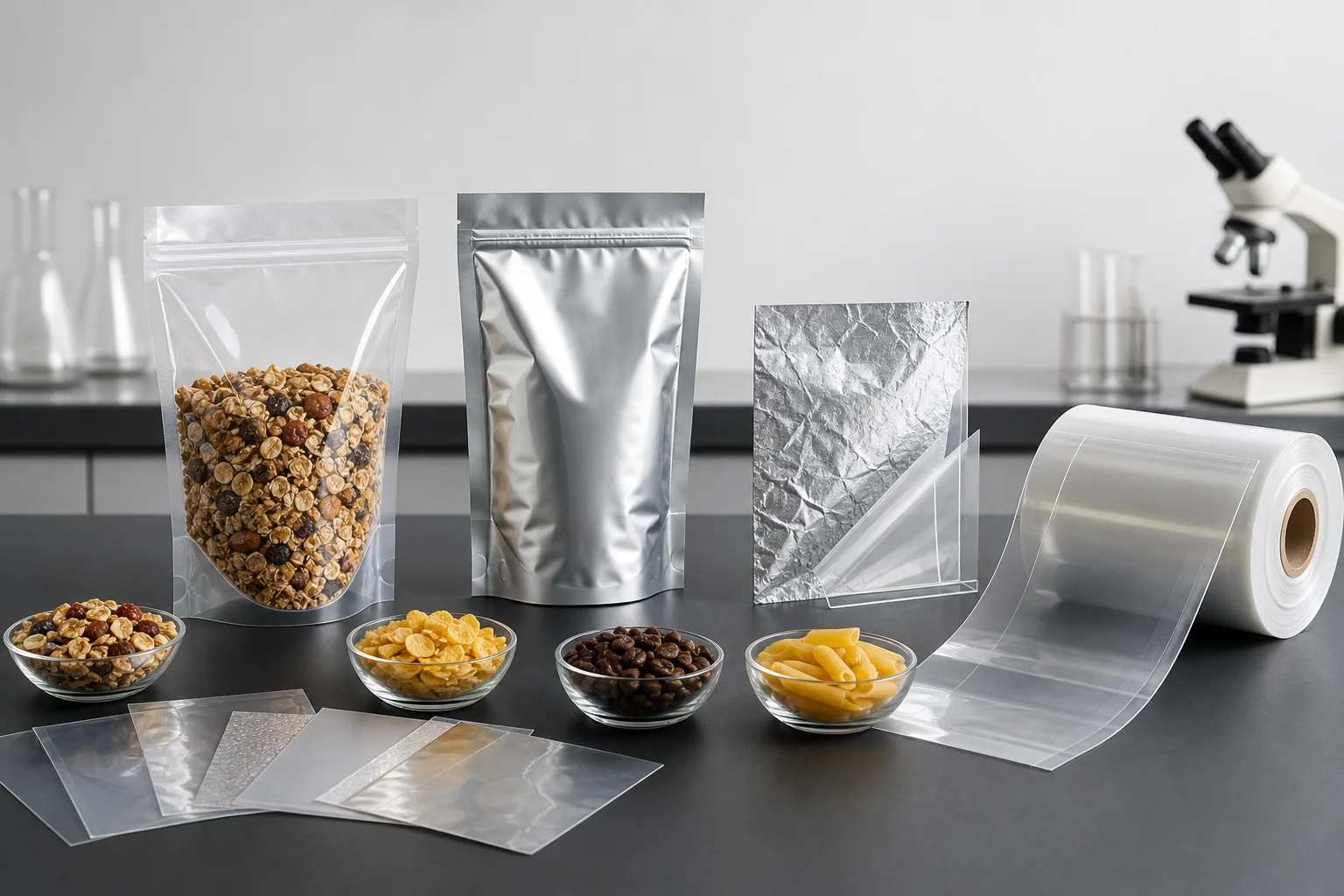
Clear high-barrier films can help when the buyer wants product visibility. Metallized PET can improve oxygen, moisture, and light protection while keeping weight lower than foil. Aluminum foil can offer very strong light and gas protection, but it can crease, feel stiffer, and reduce recyclability options. EVOH can be useful inside coextruded structures, but moisture, layer percentage, and the target recycling stream matter. Coatings can also improve barrier, but I need to understand rub, cracking, converting, and supplier controls. For the usual outer, barrier and sealant roles behind material abbreviations, I use the PET, PE, BOPP and CPP film comparison before I compare complete structures.
I use a comparison table before I ask for samples
| Barrier need | Common direction | What I verify |
|---|---|---|
| Oxygen control | EVOH, metallized film, foil, or coated film. | OTR test condition and finished-pouch leaks. |
| Moisture control | Polyolefin sealant, metallized film, foil, or coated film. | WVTR, storage humidity, and seal integrity. |
| Light protection | Metallized film, foil, opaque ink, or paper-look laminate. | Retail exposure, window size, and brand needs. |
| Aroma retention | High-barrier laminate with strong seals. | Product trial, storage time, and opening experience. |
I do not treat one number as a universal answer. Test conditions matter. Temperature and relative humidity can change results, and some barrier materials are more humidity-sensitive than others. I also check whether the supplier is quoting a film, a laminate, or a converted pouch. The value I need is tied to the exact structure and the way it will be converted.
For a food brand, I also think about how the material supports the purchase moment. A clear window can build trust for colorful snacks, but it can weaken light protection. A foil look can signal premium protection, but it may hide product quality. A matte paper-look surface can feel natural, but the hidden layers still decide barrier. I compare these trade-offs in a filled sample. Then I check related format choices through the food packaging bags and custom Mylar-style bags pages before I finalize the structure.
When Should I Use Foil, Metallized Film, EVOH, or Mono-Material?
Material names sound decisive, but each option brings a different cost, stiffness, appearance, sealing, and recycling trade-off.
I use foil for maximum protection, metallized film for balanced opaque barrier, EVOH for selected clear or coextruded structures, and mono-material only when it still passes performance checks.
I see buyers ask for foil when they really mean strong barrier. Foil can be excellent for oxygen, moisture, and light protection, especially for sensitive dry foods. But it can make a pouch stiffer, more opaque, and less compatible with many recycling paths. It can also crease. If the product needs a window or a soft hand feel, foil may not be the first answer. I use it when the protection need justifies the trade-off.
Metallized film often gives a useful middle ground. It can improve barrier and create an opaque silver layer without using a full foil web. It is common in snack and dry-food laminates. But it is not the same as foil, and small defects, cracks, or conversion stress can matter. I ask for data from the proposed material, not a generic metallized claim. I also check whether the metallized layer will sit away from seal heat and mechanical abuse.
I make recyclability a requirement, not a slogan
EVOH can help clear or polyolefin-based structures reach stronger oxygen barrier. It may appear in PE or PP flexible packaging directions. But I do not assume compatibility. The Association of Plastic Recyclers says barriers, coatings, additives, and layers can improve performance and must be evaluated for their effect on the recycling stream.3 That means I need the exact structure, layer percentages when relevant, adhesive system, ink coverage, and local collection path before I make a claim.
Mono-material pouches can reduce material complexity. A PE-based pouch may be attractive when the target market accepts PE flexible films and when the food does not need extreme barrier. But mono-material is not magic. It still has to seal on the filling line, resist puncture, protect texture, and survive distribution. If a mono-material pouch causes food waste or returns, the project has not improved. I test it against the same shelf-life and handling requirements.
I usually build a short option set. One option is a proven high-barrier laminate for performance. One is a balanced metallized or coated structure. One is a recyclable-direction structure if the food risk allows it. Then I compare cost, MOQ, lead time, print route, shelf life, and claim risk. This is also where I connect material to print planning with the digital printing versus rotogravure guide. The print process can affect MOQ, inventory risk, and how quickly I can test a new structure.
How Should I Validate a Barrier Film Before Production?
A sample can look premium on a desk and still fail after filling, sealing, shipping, or humid storage.
I validate barrier film with supplier data, food-contact documents, filled-pack trials, seal checks, leak checks, shelf-life testing, and a written specification before mass production.
I ask for documents before I approve production. For food-contact projects in the United States, FDA explains that a food-contact substance that is a food additive must be authorized for its intended use before marketing.4 FDA also publishes food types and conditions of use tables for food-contact substance notifications.5 I use that idea in a practical way. I do not accept a vague statement that a film is food grade for every product. I ask whether the structure fits the food type, temperature, contact time, and market.
Then I move to physical validation. I request a blank sample in the proposed size and film. I fill it with the real product. I seal it with the expected method. I inspect the seal area for powder, oil, crumbs, wrinkles, and zipper interference. I squeeze the pack gently, check corners, and look for puncture points. For ecommerce or export, I pack it in the shipping carton and check rubbing, compression, and case fit. A high barrier laminate still fails if the pouch leaks at the top seal.
I write the specification before I buy volume
The specification should list the film sequence, thickness or gauge, barrier targets, test conditions, pouch size, zipper or valve details, seal width, print route, finish, approved artwork, coding area, and any required documents. I also record approved samples and change-control rules. If the supplier changes resin, adhesive, film grade, metallization, coating, sealant, or converting route, I want that change reviewed before it reaches production.
I keep the shelf-life decision separate from the packaging sales claim. The brand owns the food and shelf-life target. The converter supplies material and manufacturing evidence. I may ask for accelerated or real-time shelf-life testing, but I do not replace food science with a barrier number. I also compare the chosen film against launch risk. If the project is a first order, I may use a more conservative proven laminate. If demand is stable and the product risk is well understood, I may test a lower-complexity structure. For final sourcing, I use the flexible packaging supplier checklist and then send the exact project details through the quote request page. That keeps the conversation specific and makes supplier answers easier to compare.
Which Barrier-Film Failures and RFQ Details Should I Check?
A vague request for high barrier film hides the conditions, weak points, and approval evidence that purchasing needs to compare suppliers.
I turn the project into a failure map and RFQ checklist covering product risk, exact structure, test conditions, finished-pouch checks, samples, documents, change control, and quotation assumptions.
I begin with the failure that would make the product unacceptable. Crisp snacks may soften after moisture pickup. Coffee can lose aroma or oxidize. Freeze-dried food may gain moisture. Oily products can challenge seals and surface appearance. Sharp pieces can puncture a structure. A transparent window can weaken light protection. A strong flat-film result can also be defeated by a pinhole, flex crack, contaminated top seal, zipper channel, valve, fold, or poorly controlled conversion step.
I then connect each failure to a condition and a check. OTR and WVTR values are useful only when the supplier states the exact structure, thickness, method, temperature, and relative humidity. Seal results need the sealant, dwell time, temperature, pressure, contamination condition, and sample orientation where relevant. Filled-pack storage needs the real product, target fill, closure, storage environment, review interval, and acceptance criteria. Distribution checks need the actual carton, pack orientation, route, and handling risk. I do not compare two numbers measured under different conditions as if they prove the same performance.
I use one purchasing checklist
| RFQ field | What I provide | What I ask the supplier to confirm |
|---|---|---|
| Product and route | Food type, fill weight, shelf-life target, storage, distribution, market. | Open compatibility assumptions and required evidence. |
| Structure | Barrier priority, visibility, feel, recycling direction, format. | Layer sequence, total thickness, sealant, coating or metallization. |
| Performance | Failure modes and acceptance criteria. | OTR, WVTR or other data with method and test conditions. |
| Finished pouch | Size, zipper, valve, window, seal and filling method. | Sample route, seal and leak plan, tolerances and retained reference. |
| Commercial scope | Quantity per design, artwork status, destination and timing target. | Applicable MOQ, print route, proof path, quotation boundary and change control. |
The commercial path follows the evidence. First I request a material assessment against the product and route. Next I obtain a representative stock or blank sample to check fit and handling. Then I confirm the written structure, features, artwork, tests, documents, quantity per design, and approval sample. Only after those facts are visible do I request a comparable quotation. This sequence does not promise a universal MOQ, lead time, price, certification, or barrier result. It makes each of those items conditional on the approved project specification.
When the project is ready, I send the checklist through the barrier-film assessment request. For a concrete application, I also compare the high-barrier pet-treat case and the packaging test guide. Those pages show how material choice, filled-pack risk, and procurement evidence stay connected.
Conclusion
I choose packaging through evidence, filled-pack testing, and clear specifications. That process protects the product, the launch, and the customer experience.
Sources and Further Reading
- ASTM D3985 oxygen gas transmission rate test method.
- ASTM F1249 water vapor transmission rate test method.
- APR Design Guide for PE flexible packaging.
- FDA food packaging and food-contact substances.
- FDA food types and conditions of use for food-contact substances.
- Food packaging bag options.
- Request a barrier film recommendation.
Need a pouch specification?
I can review your product, size, quantity, artwork, and target market.