A milk powder pouch can look secure yet become awkward after opening. I check protection and everyday scooping before a small problem becomes a repeated complaint.
I choose nonfat dry milk pouches by the exact powder, storage route, fill weight, moisture and oxygen evidence, and dry scoop access. I approve the laminate and closure through a filled-pack trial, then request a quote against the written specification.
I separate unopened distribution from repeated household use. Those two jobs need different evidence.
Which Milk Powder and Pack Size Am I Specifying?
A general milk powder brief can hide different formulas and usage patterns. I identify the product before choosing a pack that buyers cannot use comfortably.
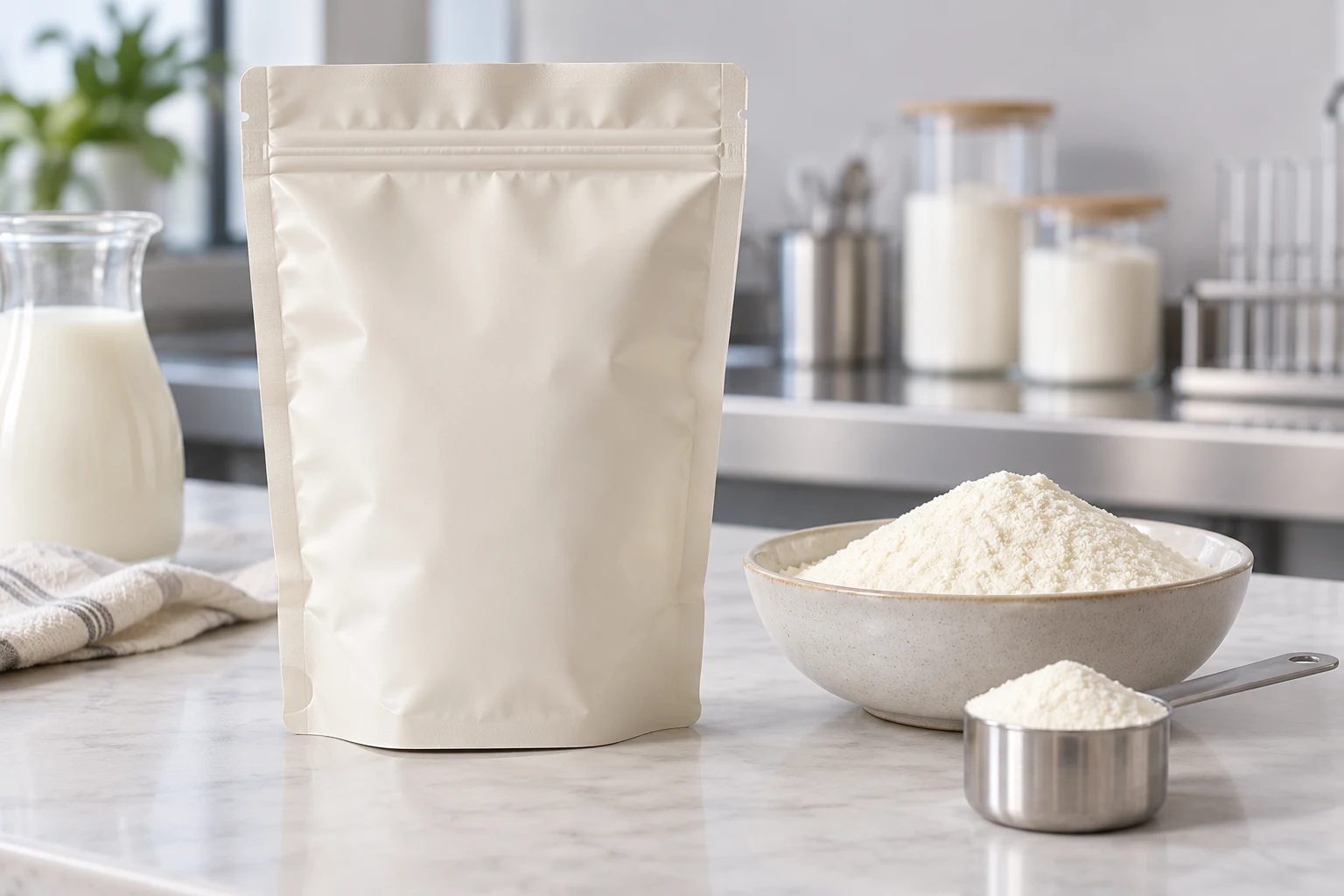
I specify nonfat dry milk separately from whole milk powder, dairy blends, and infant products. I choose a single-use sachet, resealable pouch, or refill size around the intended portion and expected opening pattern.
I start with the ingredient supplier's description. Is the product nonfat dry milk, instantized nonfat dry milk, or a formulated beverage mix? I record that identity instead of assuming every white powder behaves alike. Utah State University discusses nonfat dried milk separately from dried whole milk and stresses protection from moisture, oxygen, and light.1 I use that guidance to frame the brief. I do not turn a household storage publication into a commercial shelf-life guarantee.
I also define the intended use. This guide concerns dry nonfat milk powder that the customer removes from its pouch. It does not specify infant formula packaging or a pack designed for adding hot water inside. Those applications need their own assessment. FDA distinguishes food types and contact conditions.2 I ask the responsible supplier to confirm which intended use the finished construction supports.
I compare formats by the opening pattern
| Candidate format | Useful application | Trial question |
|---|---|---|
| Heat-sealed sachet | One measured dry portion | Can the user open and empty it cleanly? |
| Wide-mouth zipper pouch | Repeated household scooping | Can a dry scoop clear the opening and closure? |
| Larger refill pouch | Transfer into a separate container | Can the customer pour without spilling? |
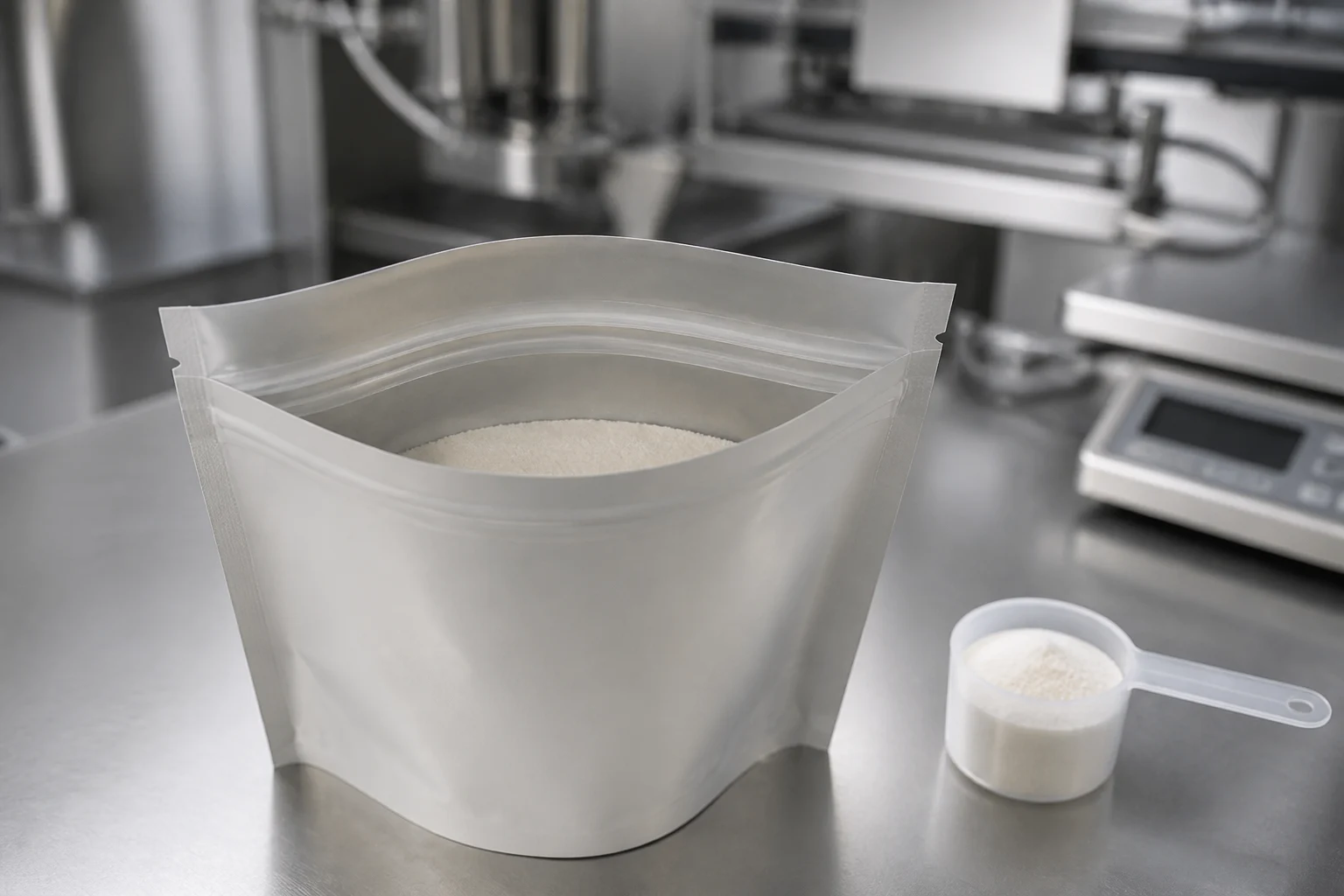
I fill each candidate with the actual powder at the proposed weight. I check settled volume after handling, because a tidy empty sample says little about access when full. I leave enough room for the scoop and top seal. I also examine the final portions. A bag that stands when full may fold into the scoop path when nearly empty. The stand-up pouch sizing guide helps organize those dimensions.
I record the customer's likely routine alongside the pack size. A small household may open a large refill only occasionally. A foodservice operator may empty it in one shift. I do not give both buyers the same closure merely because the artwork fits. I ask which handling steps the pouch must support, which container may receive the refill, and who will provide the final storage instructions. That gives the material supplier a real brief before samples are selected.
How Do I Compare Protection with Daily Scoop Access?
A strong film cannot make a dirty zipper close well. I compare unopened protection and dry handling so the pouch remains usable through its intended routine.
I compare documented film barrier under matched conditions, then test dry scooping, closure cleanliness, pouring, and resealing on filled pouches. I keep the unopened heat seal and the household zipper as separate approval questions.
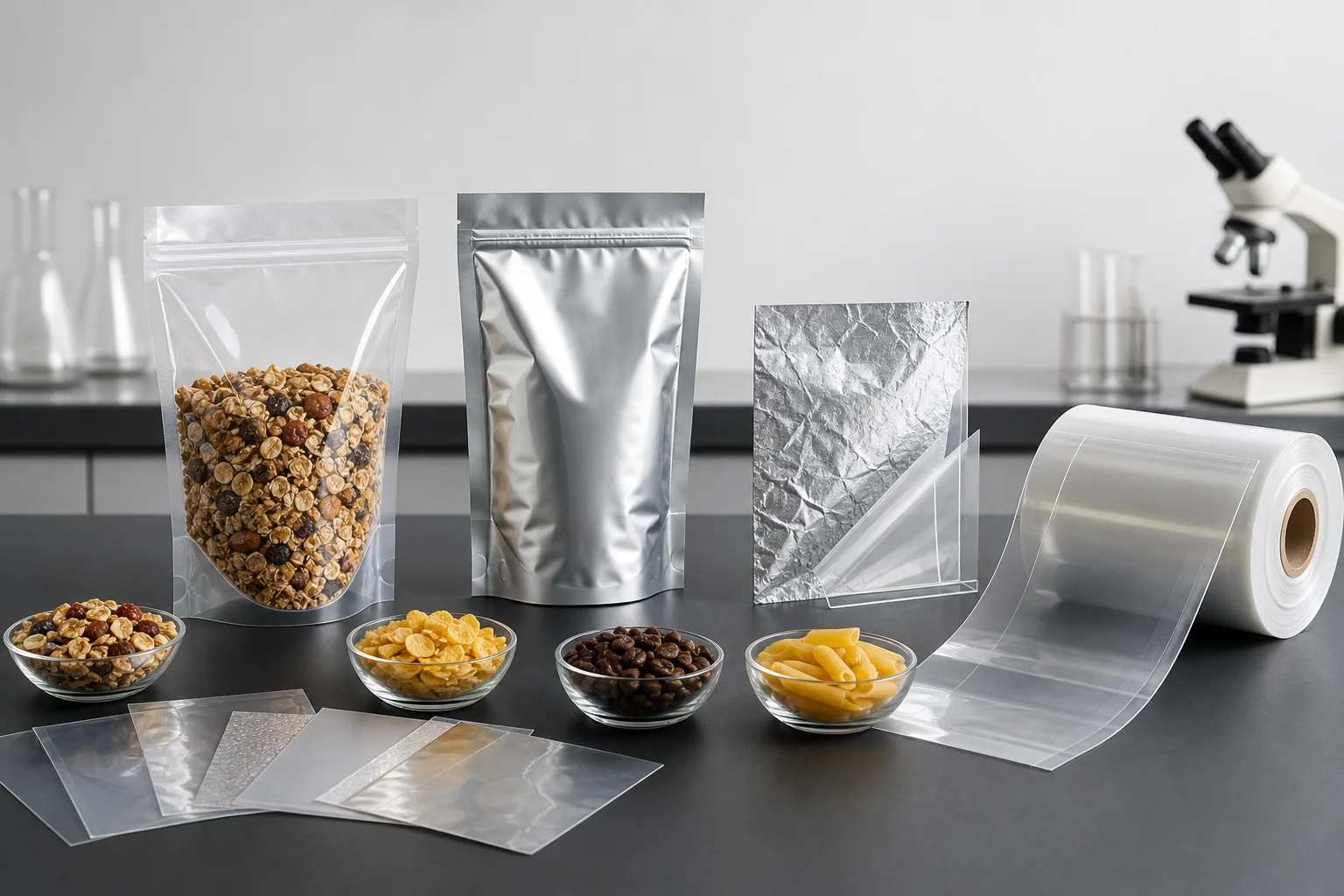
I ask for the complete laminate rather than a name such as premium barrier. I want layer identification, total thickness, the proposed sealant, and the exact construction used for the report. A clear outer surface, opaque print, or paper appearance is not a complete specification. I review the candidates through the core food barrier-film guide, then ask which evidence addresses this powder and its route.
For water vapor transmission, ASTM F1249 provides a film and sheeting test method.3 I require the report to name temperature, relative humidity on each side, units, sample thickness, and method edition. I compare results only when those conditions match. The moisture value is a film measurement. It does not describe an opened zipper or establish how long my powder stays acceptable.
I also ask for oxygen transmission evidence if the product assessment requires it. The report must identify its own method, temperature, humidity, and oxygen conditions. I do not invent a target from a different milk product. The brand's product specialist sets acceptance limits and a storage trial that reflects the intended market. If a candidate needs protection from light, I check the whole pouch, including any proposed window.
I turn community concerns into handling tests
A Reddit r/preppers contributor asked whether powdered milk could remain in its original bag inside a closet without summer air conditioning.5 That is a specific user scenario, not proof that any bag can preserve milk. It reminds me to include the warm storage route in the brief rather than approve a pouch only for a cool sample room.
I run a dry scoop trial at full, half, and near-empty levels. I observe powder reaching the zipper, powder catching in the gusset, and the amount spilled during pouring. I close the pouch without flattening its contents into the tracks. I then ask another user to repeat the same tasks. The powder closure contamination guide provides useful questions for the trial.
I separate a comfortable opening from a reliable original top seal. I inspect the tear notch and the distance between the tear and zipper. I reject a geometry that forces the user to cut through the closure or reach through a narrow opening. I document the chosen width and headspace so the approved behavior survives the next artwork or size revision.
What Evidence Should the Milk Pouch Purchase Include?
A quote can hide untested assumptions about powder, closure, and storage. I tie approval to the sample and test record before placing the production order.
I request food-contact scope, construction details, named barrier tests, seal data, and filled-pack handling records. I lock the accepted dimensions, closure, artwork, sampling, and change rules before seeking a specification-based quote.
I arrange a material review before the production quantity is discussed. The brief includes powder identity, supplier handling advice, fill weight, settled volume, storage climate, sales channel, and intended pack use. I attach the filling and sealing equipment details. If the line team expects a zipper pouch, I ask how it will keep the original top seal clear of powder. That question belongs in sampling, not after finished cartons arrive.
I request a representative filled-pack trial with the intended powder and proposed laminate. I record machine temperature, dwell time, pressure, line speed, and the sample's origin. ASTM F88 measures seal strength in flexible barrier materials.4 For a useful comparison, I ask the laboratory to document specimen width, test speed, conditioning, support technique, and failure mode. I do not prescribe a universal force that every dairy pouch must achieve.
I write the release checklist before the quote
- Exact nonfat milk powder identity and intended contact conditions.
- Layer construction, thickness, dimensions, gusset, and zipper position.
- Barrier methods, temperature, humidity, units, and agreed limits.
- Top-seal settings, test conditions, sampling, and acceptance decisions.
- Dry scoop access, pour behavior, and repeated closure observations.
- Artwork version, storage wording, retained samples, and change approval.
I distinguish failures that need different actions. Powder in the top seal points to filling control or seal-zone geometry. A closure that feels shut but has powder in its tracks calls for access and resealing review. Awkward emptying may require a different pouch width. Off-flavor during a product trial requires investigation with the food specialist; it is not automatically proof that the film is the cause. I keep those observations in the same record as the sample construction.
I use the packaging specification sheet to organize the approved fields. I include the chosen carton and storage trial so the quotation covers the whole packaging job. I also state what remains unapproved. A sample review can approve dimensions while the product's shelf-life work continues. I do not merge those decisions into one vague pass.
Only then do I request a quote for the confirmed milk pouch specification. I provide quantity per design, destination, and artwork status as project inputs. I ask the supplier to state commercial terms for that project in writing. I keep unverified MOQ, delivery, and lifespan numbers out of the guide and out of my approval record.
Conclusion
I choose packaging through evidence, filled-pack testing, and clear specifications. That process protects the product, the launch, and the customer experience.
Sources and Further Reading
- Utah State University Extension — storing nonfat dried milk.
- FDA — food types and conditions of use for food-contact substances.
- ASTM F1249-25 — water vapor transmission through film and sheeting.
- ASTM F88/F88M-23 — seal strength of flexible barrier materials.
- Reddit r/preppers — powder storage in a warm closet and original bag.
Need a pouch specification?
I can review your product, size, quantity, artwork, and target market.