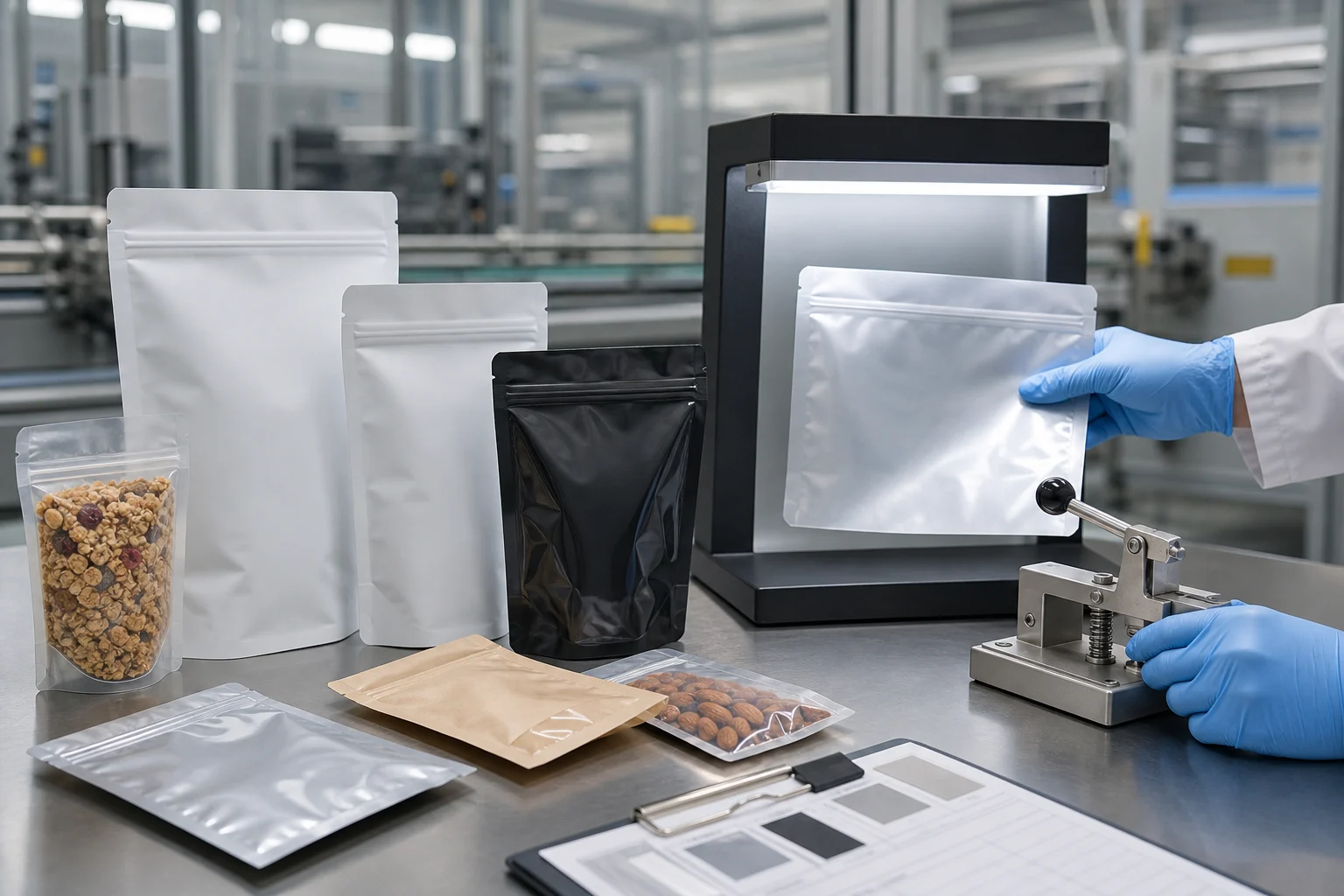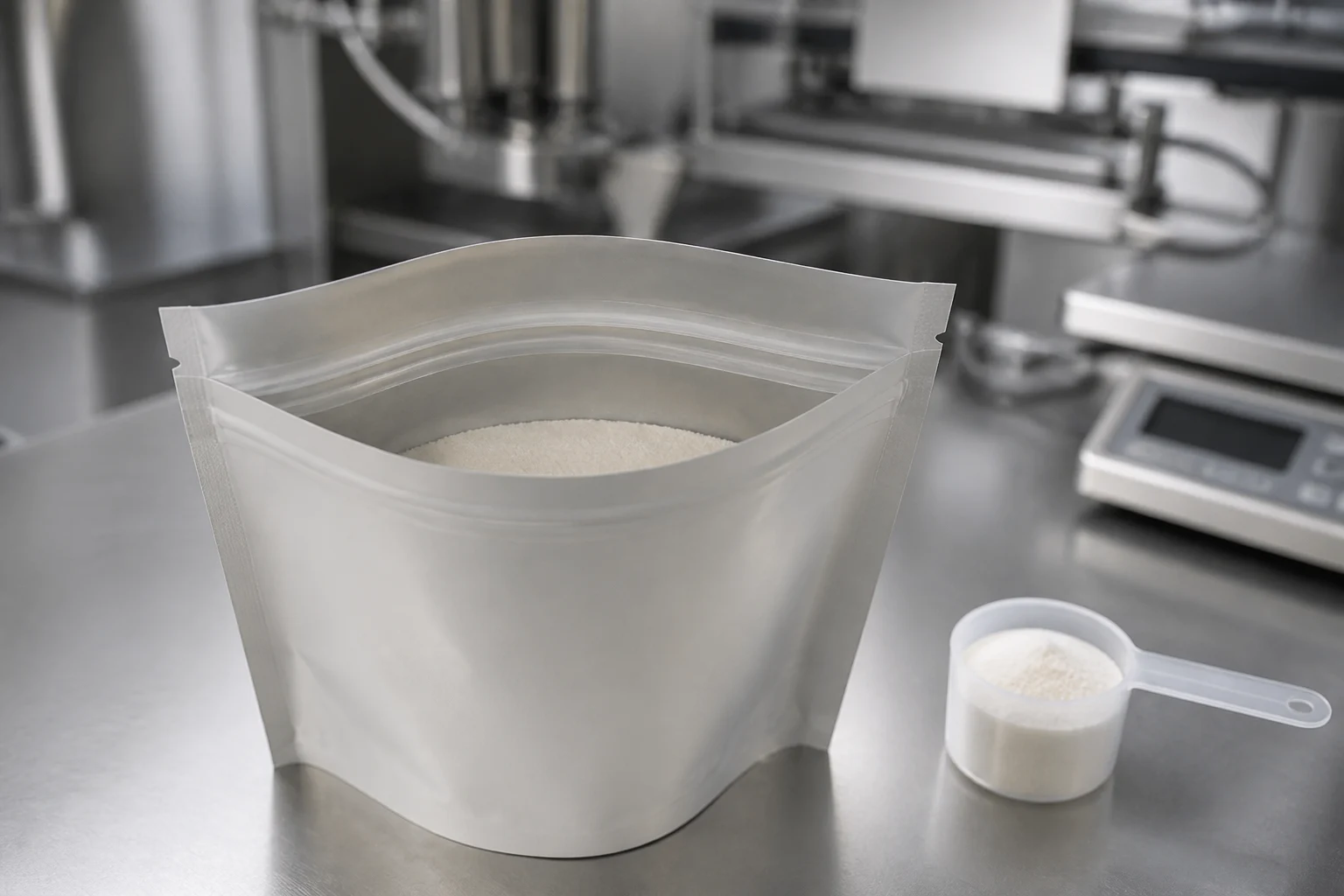
A powder pouch can look fine at filling, then leak, fail to reclose, or create a bad opening moment when dust reaches the zipper or seal zone.
I reduce powder contamination risk by defining clearance above the zipper, controlling the fill and settling sequence, keeping the seal zone clean, and validating representative filled packs before release.
I treat the pouch as a complete system. I confirm the product, material, filling, handling, and customer experience before I approve production.
Where Does Powder Create a Seal or Zipper Risk?
Powder risk is often designed into the pack when there is little usable clearance between the fill level, zipper, opening feature, and final top seal.
I map the powder path from hopper to pouch and reserve project-specific clearance for filling, settling, zipper placement, and the final top seal before I approve a size or dieline.
I separate the reclose zone and final seal zone. A pouch may have a zipper below the top seal, a tear notch above it, and a limited area where powder can settle after dosing. The exact clearance depends on the powder, fill volume, pouch width, fill method, and machine. I do not publish a universal millimeter rule. Instead, I fill samples at the target condition and inspect where fines collect. I compare the geometry with the powder-format guide and lock functional zones on the current dieline. The Reddit thread provides an end-user reason to care: commenters described difficulty reclosing a press zipper when powder entered the groove.3 That prompts a real filled-pack test; it does not diagnose a particular supplier or zipper.
How I make this decision specific
For “Where Does Powder Create a Seal or Zipper Risk?” in this how do i prevent powder from contaminating a pouch zipper and top seal review, I define the actual product, pouch configuration, intended use, and decision owner before I ask a supplier or tester for evidence. I keep the selected structure, component details, sample condition, and any stated test method together, then compare the result with the buyer’s actual route rather than a catalogue promise. That record lets me use the seal-leak prevention guide as a decision aid and retain a specification that another team member can check.
For How Do I Prevent Powder from Contaminating a Pouch Zipper and Top Seal, I state what is known, the condition it applies to, and what must still be checked with the actual product. I do not transfer a number, a test result, or a feature choice from another product simply because its pouch looks similar. The result of “Where Does Powder Create a Seal or Zipper Risk?” should give the buyer a clear next check, the supplier a precise request, and the project owner a record of the remaining uncertainty.
For How Do I Prevent Powder from Contaminating a Pouch Zipper and Top Seal, I request the exact pouch structure, component specification, and test conditions from the supplier. A broad material name or catalogue claim is not a production specification. The right next step is a representative filled sample, where relevant, with observations recorded before production is approved.
Which Filling Controls Help Keep the Top Area Clean?
A material change cannot solve a dust problem when the filling sequence, settling time, pouch presentation, or seal-area cleaning has not been observed.
I observe the actual filling sequence, then control pouch presentation and product settling so the top-seal area is inspected cleanly before sealing under approved project conditions.
I watch the product rather than guessing from the pouch. I record whether the powder bridges, creates airborne dust, rebounds at impact, clings to the sidewall, or settles differently after a short pause. I check pouch alignment, fill nozzle position, fill speed, and how the top area is presented to the sealing jaws. Any adjustment belongs to the co-packer or equipment team’s approved process; this guide does not prescribe a universal setting. FDA explains that food packaging components can include adhesives and colorants and that intended use matters to the safety assessment.1 That is why I keep a process fix separate from a broad claim that any pouch is suitable for every powder.
How I make this decision specific
For “Which Filling Controls Help Keep the Top Area Clean?” in this how do i prevent powder from contaminating a pouch zipper and top seal review, I define the actual product, pouch configuration, intended use, and decision owner before I ask a supplier or tester for evidence. I keep the selected structure, component details, sample condition, and any stated test method together, then compare the result with the buyer’s actual route rather than a catalogue promise. That record gives the buyer a decision aid and a specification that another team member can check.
For How Do I Prevent Powder from Contaminating a Pouch Zipper and Top Seal, I state what is known, the condition it applies to, and what must still be checked with the actual product. I do not transfer a number, a test result, or a feature choice from another product simply because its pouch looks similar. The result of “Which Filling Controls Help Keep the Top Area Clean?” should give the buyer a clear next check, the supplier a precise request, and the project owner a record of the remaining uncertainty.
How Do I Verify Seal Integrity Without Overclaiming?
A clean-looking seal can still hide a channel, wrinkle, weak area, or gross leak when the project has no agreed inspection method and sample condition.
I inspect representative filled pouches and use agreed methods appropriate to the risk, documenting sample condition, settings, observations, and acceptance limits instead of relying on appearance alone.
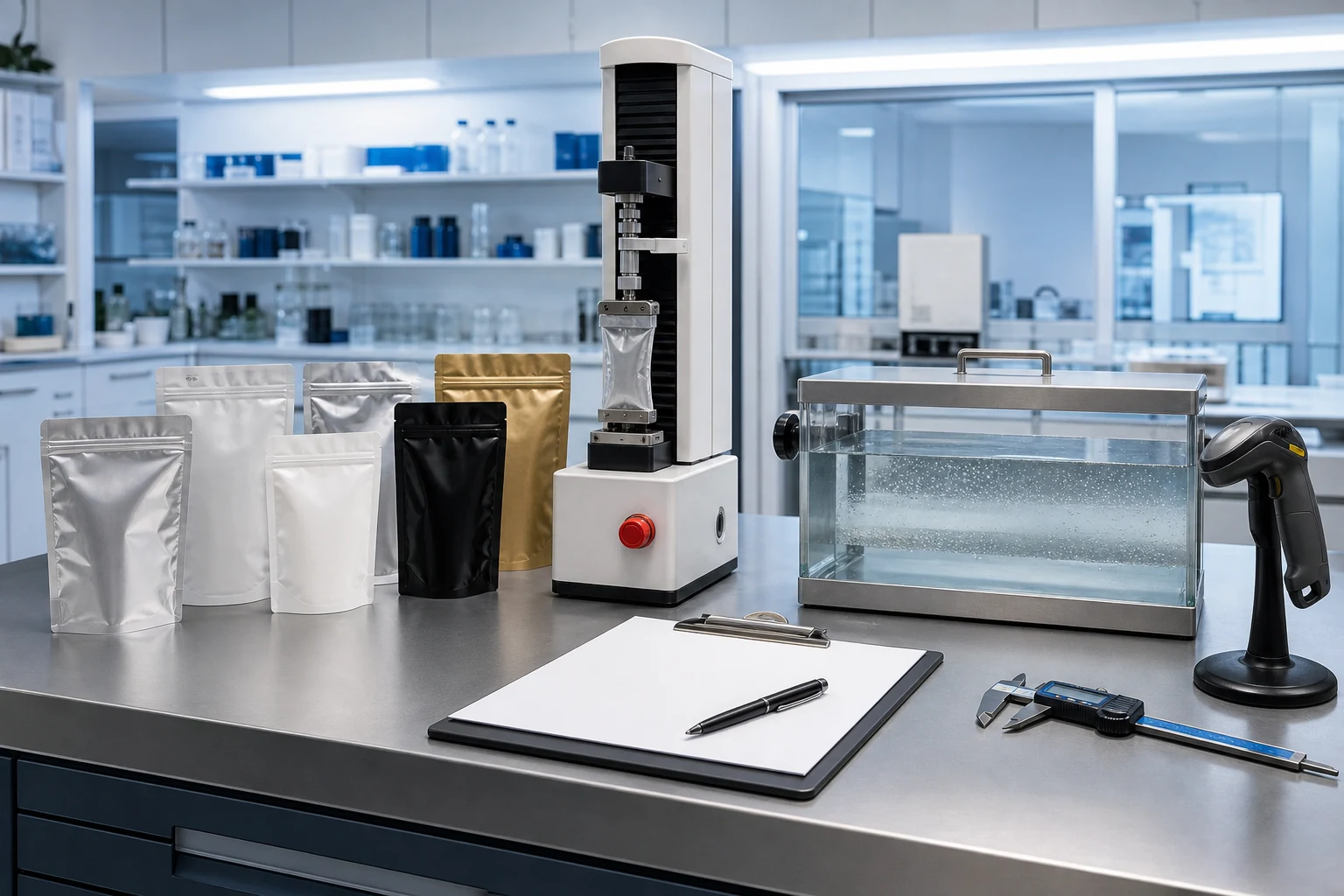
I inspect actual seals for powder, wrinkles, gaps, folds, zipper interference, and visual irregularity. When a project requires measured seal data, ASTM F88/F88M covers measurement of seal strength in flexible barrier materials and identifies specimen failure mode.2 When a gross-leak check is appropriate, ASTM D3078 covers flexible packages containing headspace gas by bubble emission, while noting that detection depends on product, material, and selected parameters.4 I agree the method and acceptance criteria before testing. I do not say that a bench check establishes shelf life, food safety, or all distribution performance. I connect results to the quality-test guide so filled-pack evidence stays with the chosen construction.
How I make this decision specific
For “How Do I Verify Seal Integrity Without Overclaiming?” in this how do i prevent powder from contaminating a pouch zipper and top seal review, I define the actual product, pouch configuration, intended use, and decision owner before I ask a supplier or tester for evidence. I keep the selected structure, component details, sample condition, and any stated test method together, then compare the result with the buyer’s actual route rather than a catalogue promise. That record gives the buyer a decision aid and a specification that another team member can check.
For How Do I Prevent Powder from Contaminating a Pouch Zipper and Top Seal, I state what is known, the condition it applies to, and what must still be checked with the actual product. I do not transfer a number, a test result, or a feature choice from another product simply because its pouch looks similar. The result of “How Do I Verify Seal Integrity Without Overclaiming?” should give the buyer a clear next check, the supplier a precise request, and the project owner a record of the remaining uncertainty.
For How Do I Prevent Powder from Contaminating a Pouch Zipper and Top Seal, I treat the filled pack as a separate check from the material data. I record the fill condition, seal area, opening or closure behavior, carton arrangement, handling observations, and limits of the comparison. That prevents a favourable bench result from becoming an unsupported claim about shelf life, transport, or every product route.
What Should the Release Record and Quote Brief Include?
A successful trial is easy to lose when the release note does not identify the pouch version, powder condition, zipper placement, fill route, and acceptance decision.
I release the project with pouch dimensions, structure, zipper and seal geometry, powder and fill condition, trial observations, inspection method, approved sample, and change-control triggers recorded together.
I retain the evidence in one brief. It identifies product, intended market, powder behavior that matters to filling, target fill condition, pouch dimensions, material proposal, zipper position, usable top-seal zone, opening feature, artwork revision, carton pack, samples, test method where used, observations, and acceptance decision. I flag new powder blend, density shift, pouch width, zipper, film structure, filling machine, sealing setup, carton, or route for review. The purchasing path is practical: assess material, run a representative filled-pack trial, confirm the written specification, and then seek a quote that refers to the approved configuration. The seal-leak guide supports failure analysis, while the specification-sheet guide keeps commercial requests grounded in evidence.
How I make this decision specific
| Release evidence | Why it matters | Trigger for review |
|---|---|---|
| Filled pouch and powder condition | Dust behavior can change with product and fill. | Formula or density change. |
| Zipper and top-seal geometry | Clearance affects closure and sealing. | New size or component. |
| Inspection method and record | Appearance alone is incomplete evidence. | New acceptance requirement. |
| Approved written specification | Keeps the quote tied to the trial. | Material or line change. |
For “What Should the Release Record and Quote Brief Include?” in this how do i prevent powder from contaminating a pouch zipper and top seal review, I define the actual product, pouch configuration, intended use, and decision owner before I ask a supplier or tester for evidence. I keep the selected structure, component details, sample condition, and any stated test method together, then compare the result with the buyer’s actual route rather than a catalogue promise. That record gives the buyer a decision aid and a specification that another team member can check.
For How Do I Prevent Powder from Contaminating a Pouch Zipper and Top Seal, I state what is known, the condition it applies to, and what must still be checked with the actual product. I do not transfer a number, a test result, or a feature choice from another product simply because its pouch looks similar. The result of “What Should the Release Record and Quote Brief Include?” should give the buyer a clear next check, the supplier a precise request, and the project owner a record of the remaining uncertainty.
For How Do I Prevent Powder from Contaminating a Pouch Zipper and Top Seal, I preserve the final decision in a written brief that names the approved sample, conditions, observations, open risks, and change triggers. I then use the flexible packaging quality-test guide to keep the quotation tied to the evidence rather than to a remembered sample or a generic product name.
Conclusion
I choose packaging through evidence, filled-pack testing, and clear specifications. That process protects the product, the launch, and the customer experience.
Sources and Further Reading
- FDA, Food Packaging and Other Substances that Come in Contact with Food.
- ASTM F88/F88M, Seal Strength of Flexible Barrier Materials.
- Reddit r/blueprint_, powder-pouch zipper community discussion.
- ASTM D3078, Determination of Leaks in Flexible Packaging by Bubble Emission.
- Unique Packaging seal-leak prevention guide.
- Unique Packaging quality-test guide.
Need a pouch specification?
I can review your product, size, quantity, artwork, and target market.