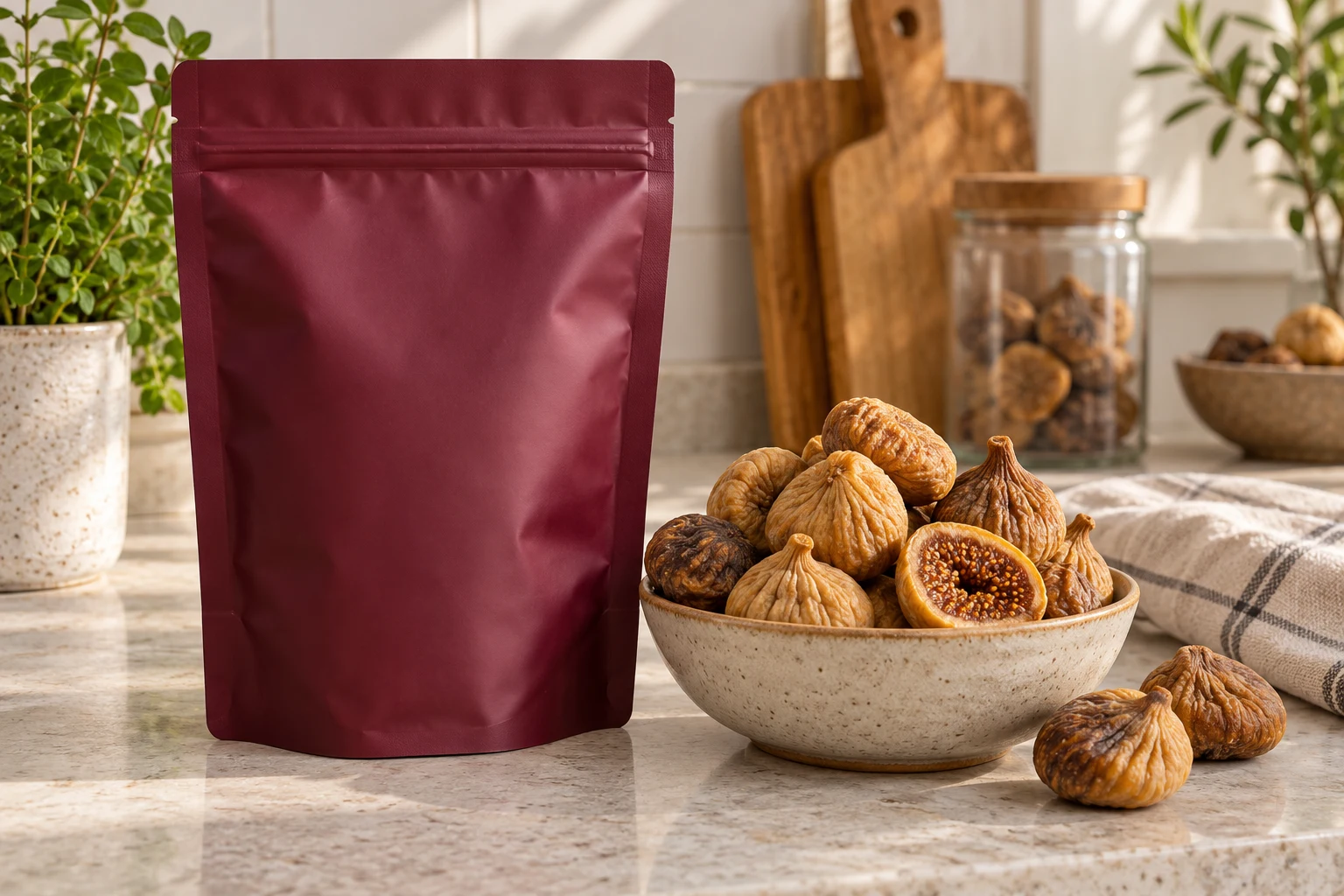
Dried figs can arrive with an unfamiliar surface or an awkward opening. Without clear product references, a buyer may mistake an appearance question for a packaging answer.
I choose a dried fig resealable pouch after confirming the fruit specification, moisture-related handling, appearance references, filled size and clean seal zones. I validate the complete pack before making storage or shelf-life claims.
At Unique Packaging, I separate the fruit supplier’s quality decisions from the converter’s pouch decisions. Both records must describe the same finished product.
Which Fig Specification Should I Confirm First?
Two dried fig lots can feel different in the same pouch. A package selected from a photograph may miss the actual fruit condition.
I confirm variety, whole or cut form, supplier processing, moisture specification and declared treatments before selecting pouch dimensions or comparing materials. I use representative fruit from the planned supply route.
I begin with the fruit specification and the supplier’s release record. Valley Fig Growers explains that increasing the moisture of its processed figs changes their susceptibility to mold and yeast. Its page also distinguishes natural sugar surfacing from spoilage.1 I treat that as supplier context, not a universal moisture limit or a food-safety decision for an unknown retail pack. The food business must define the acceptable product.
My product brief records the fig variety, whole or sliced form, processing description and any declared treatment. I ask the supplier how it checks moisture and what reference samples it uses for texture and appearance. I keep those documents with the lot chosen for the packaging trial. If the brand buys fruit from multiple suppliers, I ask whether the pouch must accommodate all approved variants or whether each needs a separate sample approval.
I fill before choosing the final dimensions
Whole figs and cut pieces settle differently during a practical filling exercise. I do not assign the same usable volume from their listed net weight. I fill the target sale quantity into candidate pouches, keep the intended top seal clear and record the resulting shape. I check whether a customer can reach a piece without crushing the opening or dragging fruit through the closure. I use the pouch sizing guide to record the dimensions consistently.
| Choice | What I compare | Evidence to retain |
|---|---|---|
| Whole dried figs | Opening width and retrieval | Filled pouch plus fruit lot |
| Sliced or diced figs | Residue and dispensing | Trial notes after repeated use |
| A second supplier lot | Texture and settled volume | Separate comparison sample |
I also define the sales channel. A small snacking pack and a larger baking refill have different use routines. I ask how many openings the planned trial should represent and who will perform them. I then retain a sample from the same fruit lot outside the pouch comparison under the agreed reference conditions. This helps the team discuss changes without automatically blaming every appearance difference on the film.
How Should I Handle Sugar Appearance and Moisture Questions?
A white surface can alarm a shopper. A clearer window does not explain it, and a photo cannot establish that a particular pack is safe.
I obtain appearance references from the fig supplier, keep consumer questions separate from diagnosis and compare candidate films with declared barrier test conditions. I do not promise that packaging will prevent natural sugaring.
In a real r/whatisit thread, a buyer asked whether white material seen after opening supermarket dried figs meant the packet should be discarded.3 I use the question as evidence of uncertainty at the opening moment. I do not adopt the commenters’ safety verdict or diagnose the photograph. A brand needs a responsible support route for an abnormal product, not a package illustration presented as a food-safety test.
Valley Fig Growers describes natural sugar crystals on the surface of its dried figs and explains that this appearance change is not itself spoilage in that context.2 I ask our supplier for approved descriptions and photographs of its own product. The quality team decides what belongs in consumer information and what requires investigation. I keep batch identification and contact details readable after opening so the customer can report a concern accurately.
I compare a window only when it earns its place
I compare an opaque pouch with a window option using the same fruit and fill. I ask what the window helps the shopper evaluate and whether the printed explanation remains easy to find. I also confirm whether the window changes the quoted construction. The food pouch window guide helps frame that choice. Visibility is a design feature; it is not proof of preservation or a substitute for the product quality system.
For material assessment, I link the brief to the core food barrier film guide. Intertek lists ASTM F1249 and ASTM D3985 among its transmission methods.4 I request reports that identify the actual laminate, thickness, temperature, humidity, conditioning and units. I do not compare unlabeled numbers or transfer a supplier’s bulk-fruit storage period to a new retail pouch.
I agree the observation plan with the food team before storing the trial samples. It should distinguish appearance, texture and package integrity from any laboratory food-safety assessment. If the fruit changes unexpectedly, I retain the affected pack and lot details for that team. Changing the pouch artwork cannot resolve an unanswered product-quality question.
What Should My Dried Fig Pouch Trial and Order Include?
Sticky residue, a narrow opening or an unclear sample revision can survive a quick approval. Production then repeats a problem the trial never examined.
I test gentle filling, seal-zone cleanliness, repeated retrieval and the agreed distribution pack. I approve food-contact evidence and a complete written specification before requesting a quote for the selected revision.
I start the trial at the filling bench. I ask the operator to use the proposed equipment and actual fruit instead of arranging a display sample by hand. I record the portioning method, target quantity and space reserved above the product. I inspect the top corners and closure ends before sealing. If a fig or residue reaches a sealing surface, I record the event and work with the operator on the filling sequence before continuing.
I label the sample groups by fruit lot, pouch revision and seal settings. Intertek lists ASTM F88 for seal-strength measurement.4 I ask the selected laboratory to define a suitable setup for our structure, including specimen preparation and comparison conditions. I retain the report with the corresponding samples. I do not treat an attractive seal mark as equivalent to a measured result, or a peel result as proof of a finished food’s shelf life.
I make retrieval and transport reviewable
I ask an uncoached user to open the pouch, remove fruit, reclose it and put it away. I record whether the opening is comfortable, whether the pieces snag and whether the user can tell that the closure is engaged. I repeat the agreed routine as the pack empties. I then inspect filled pouches in the intended carton after our agreed handling exercise. I note changes at corners, folds and the closure without claiming an unperformed distribution certification.
My procurement checklist includes the fruit definition, fill quantity, pouch dimensions, structure and thickness, closure and tear feature, seal clearances, printed lot-code area and carton arrangement. I attach appearance references approved by the food team. For a US application, I request food-contact documentation tied to the proposed components and intended use, following the scope described by FDA.5 I leave unverified certification language out of the purchase brief.
I close the trial using the sample approval checklist and retain a signed reference. The specification sheet records what must trigger another review, including a new fruit supplier, cut form or film revision. I then request a specification-based quotation. The quote should name the approved revision so procurement can compare a real package instead of a generic dried-fruit bag.
Conclusion
I approve dried fig pouches with supplier-backed appearance references, clean filled-pack trials and a written structure. I leave storage claims with the product evidence.
Sources and Further Reading
Need a pouch specification?
I can review your product, size, quantity, artwork, and target market.