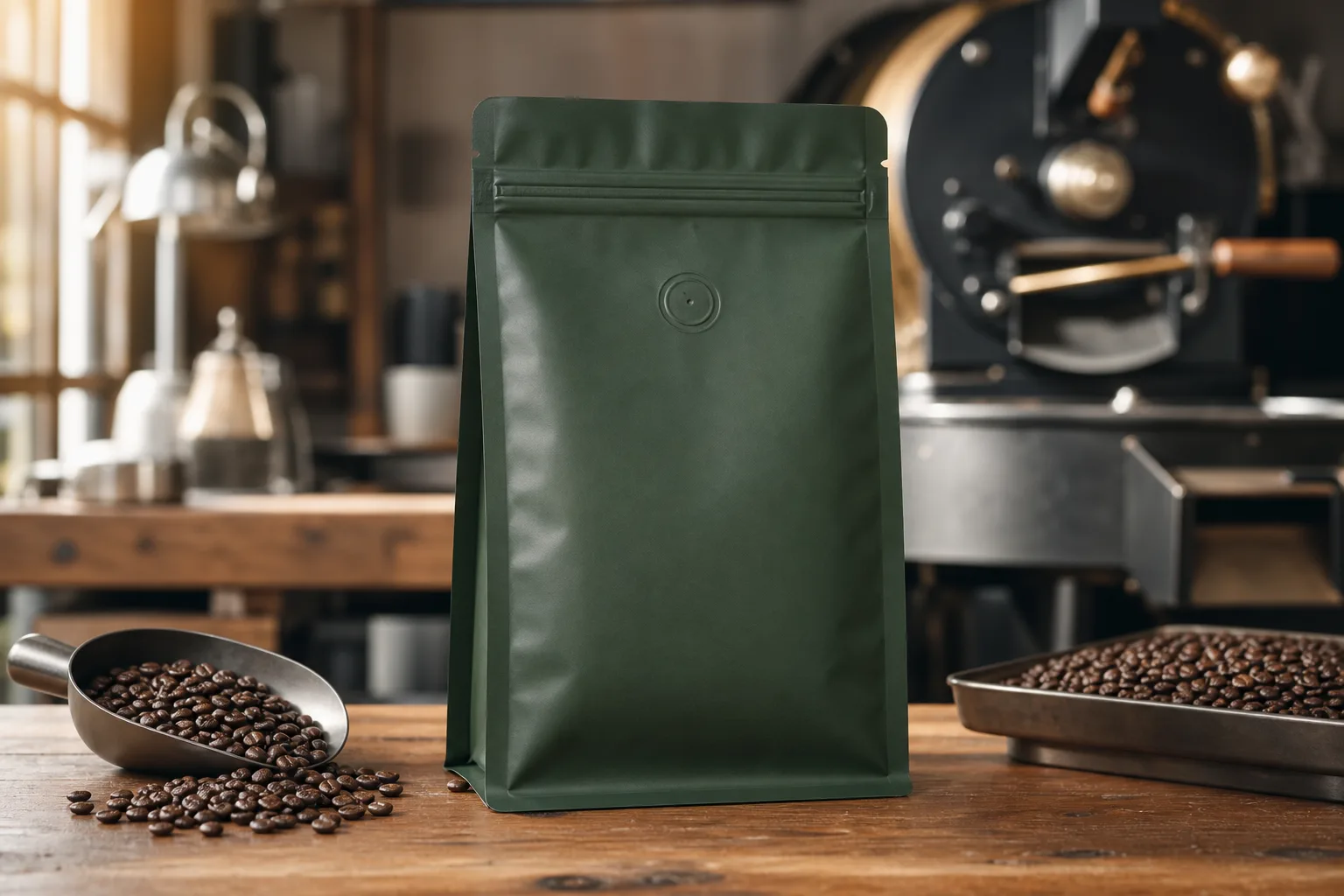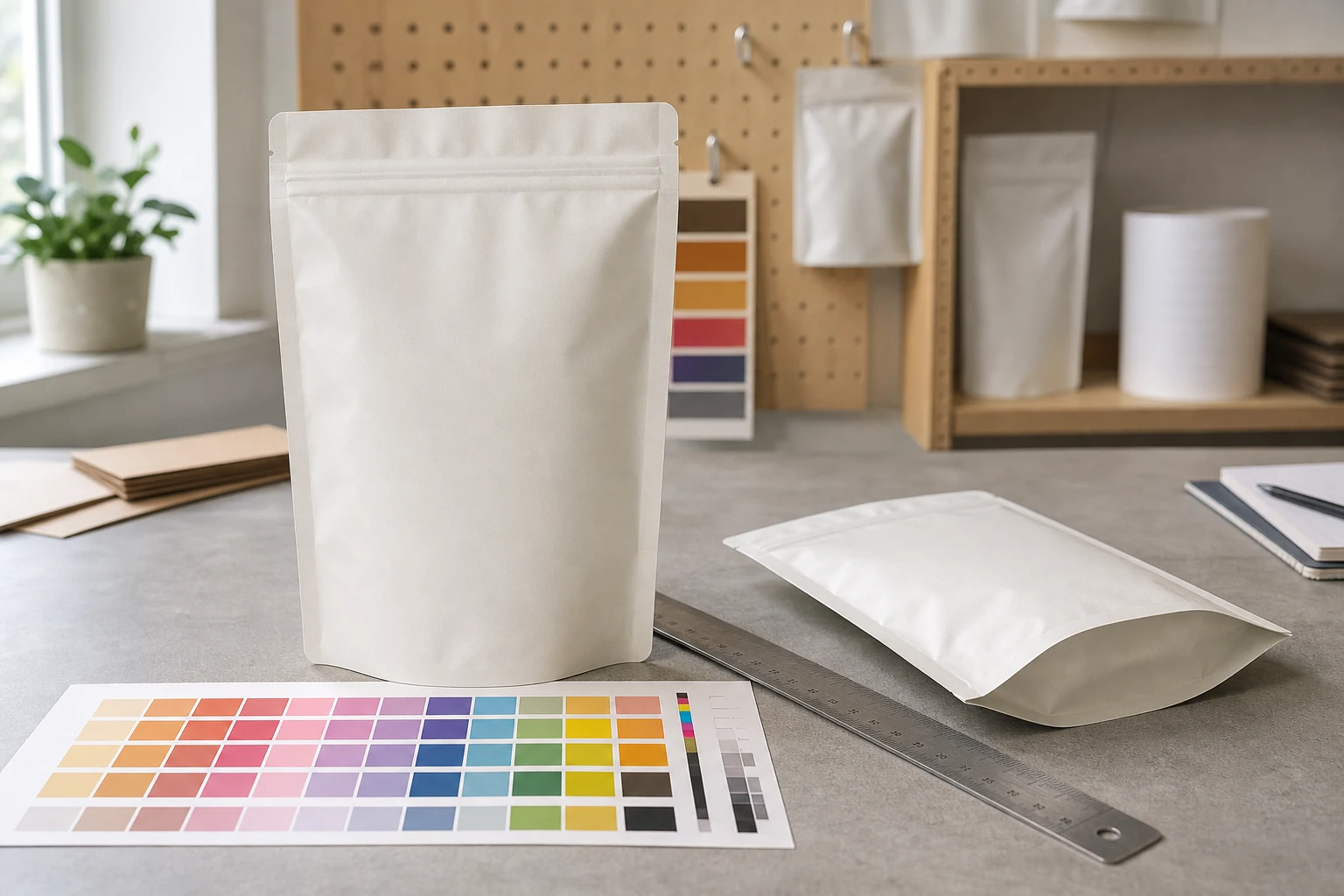
A pouch can look excellent in a photo yet fail after filling, sealing, packing, shipping, or a customer’s first opening.
I approve a flexible packaging sample only after I check the exact structure, dimensions, artwork, filled performance, carton fit, opening use, and written acceptance criteria.
I treat the pouch as a complete system. I confirm the product, material, filling, handling, and customer experience before I approve production.
What Must Match the Approved Specification?
A sample approval becomes weak when the buyer approves a look without confirming that the pouch, components, and artwork match the quoted construction.
I compare the sample with a written specification for pouch format, dimensions, structure, finish, zipper or valve, print revision, fill target, carton plan, and intended market.
I request the current dieline and the material description for the actual sample. I check width, height, gussets, seal areas, zipper clearance, tear feature, and any window or valve placement. I treat an attractive empty bag as evidence of appearance only. It is not proof that later film, component, or artwork substitutions will be acceptable. I identify every item that would require a new approval.
How I make this decision specific
For “What Must Match the Approved Specification?” in this how do i approve a flexible packaging sample before mass production review, I define the actual product, pouch configuration, intended use, and decision owner before I ask a supplier or tester for evidence. I keep the selected structure, component details, sample condition, and any stated test method together, then compare the result with the buyer’s actual route rather than a catalogue promise. That record lets me use the flexible packaging seal-leak guide as a decision aid and retain a specification that another team member can check.
For How Do I Approve a Flexible Packaging Sample Before Mass Production, I state what is known, the condition it applies to, and what must still be checked with the actual product. I do not transfer a number, a test result, or a feature choice from another product simply because its pouch looks similar. The result of “What Must Match the Approved Specification?” should give the buyer a clear next check, the supplier a precise request, and the project owner a record of the remaining uncertainty.
For How Do I Approve a Flexible Packaging Sample Before Mass Production, I request the exact pouch structure, component specification, and test conditions from the supplier. A broad material name or catalogue claim is not a production specification. The right next step is a representative filled sample, where relevant, with observations recorded before production is approved.
How Do I Check Seals and Finished Dimensions?
A clean-looking pouch can still have an unstable seal, incorrect usable volume, or a feature that sits too close to the sealing area.
I inspect filled samples for seal continuity, wrinkle or channel risk, dimensions, fill height, headspace, zipper alignment, opening clearance, and the effects of the actual product.
I use the target product and target fill weight whenever possible. I examine each seal edge, gusset, zipper transition, and corner after filling and settling. I record the measurement method and result instead of relying on memory. Where a project has a numeric acceptance requirement, I agree on the method and limit before the final production order. The check must fit the product and route; it should not be a generic claim that one sample proves every condition.
How I make this decision specific
| Sample check | Why I check it | Record I keep |
|---|---|---|
| Filled dimensions | Confirms product volume and shelf fit. | Measured sample and photo. |
| Seal appearance | Finds channels, wrinkles, and feature interference. | Inspection notes by location. |
| Opening sequence | Checks tear, zipper, and reseal use. | Observed user comments. |
| Carton fit | Shows compression and rub risk. | Packout photo and count. |
For “How Do I Check Seals and Finished Dimensions?” in this how do i approve a flexible packaging sample before mass production review, I define the actual product, pouch configuration, intended use, and decision owner before I ask a supplier or tester for evidence. I keep the selected structure, component details, sample condition, and any stated test method together, then compare the result with the buyer’s actual route rather than a catalogue promise. That record lets me use the flexible packaging seal-leak guide as a decision aid and retain a specification that another team member can check.
For How Do I Approve a Flexible Packaging Sample Before Mass Production, I state what is known, the condition it applies to, and what must still be checked with the actual product. I do not transfer a number, a test result, or a feature choice from another product simply because its pouch looks similar. The result of “How Do I Check Seals and Finished Dimensions?” should give the buyer a clear next check, the supplier a precise request, and the project owner a record of the remaining uncertainty.
How Should I Review Artwork on a Real Pouch?
Flat artwork can conceal folds, seals, glare, and curved panels that change what a buyer or shopper actually sees.
I review the final artwork on a filled pouch at normal viewing distance, checking essential text, barcode space, color, panel hierarchy, finish, and clearance from folds and seals.
I do not approve only a digital PDF. I inspect the filled pouch from the front, side, back, and shelf height. I check whether the product name, required information, and barcode live on stable, readable panels. I compare the proof under representative lighting and look for color shifts, white-ink coverage issues, scuffing, gloss variation, and small type that disappears near a fold. If artwork, size, or feature position moves, the physical review repeats.
How I make this decision specific
For “How Should I Review Artwork on a Real Pouch?” in this how do i approve a flexible packaging sample before mass production review, I define the actual product, pouch configuration, intended use, and decision owner before I ask a supplier or tester for evidence. I keep the selected structure, component details, sample condition, and any stated test method together, then compare the result with the buyer’s actual route rather than a catalogue promise. That record lets me use the flexible packaging seal-leak guide as a decision aid and retain a specification that another team member can check.
For How Do I Approve a Flexible Packaging Sample Before Mass Production, I state what is known, the condition it applies to, and what must still be checked with the actual product. I do not transfer a number, a test result, or a feature choice from another product simply because its pouch looks similar. The result of “How Should I Review Artwork on a Real Pouch?” should give the buyer a clear next check, the supplier a precise request, and the project owner a record of the remaining uncertainty.
For How Do I Approve a Flexible Packaging Sample Before Mass Production, I treat the filled pack as a separate check from the material data. I record the fill condition, seal area, opening or closure behavior, carton arrangement, handling observations, and limits of the comparison. That prevents a favourable bench result from becoming an unsupported claim about shelf life, transport, or every product route.
What Turns a Sample Into a Production Release?
A verbal approval can create confusion when a supplier, component, artwork, or carton changes after the first samples were reviewed.
I release a pouch with a dated specification, approved artwork revision, sample photos, test observations, supplier confirmation, and explicit reapproval triggers for material or process changes.
I keep one retained sample and link it to the quote, artwork proof, material statement, fill condition, carton count, and inspection notes. I state what the review did and did not demonstrate. I then define the changes that force a new review: film structure, thickness, sealant, zipper, pouch geometry, print version, filler, fill weight, product formula, or shipping route. That simple record helps every person compare a future run with the configuration that was actually approved.
How I make this decision specific
For “What Turns a Sample Into a Production Release?” in this how do i approve a flexible packaging sample before mass production review, I define the actual product, pouch configuration, intended use, and decision owner before I ask a supplier or tester for evidence. I keep the selected structure, component details, sample condition, and any stated test method together, then compare the result with the buyer’s actual route rather than a catalogue promise. That record lets me use the flexible packaging seal-leak guide as a decision aid and retain a specification that another team member can check.
For How Do I Approve a Flexible Packaging Sample Before Mass Production, I state what is known, the condition it applies to, and what must still be checked with the actual product. I do not transfer a number, a test result, or a feature choice from another product simply because its pouch looks similar. The result of “What Turns a Sample Into a Production Release?” should give the buyer a clear next check, the supplier a precise request, and the project owner a record of the remaining uncertainty.
For How Do I Approve a Flexible Packaging Sample Before Mass Production, I preserve the final decision in a written brief that names the approved sample, conditions, observations, open risks, and change triggers. I then use the custom pouch dieline guide to keep the quotation tied to the evidence rather than to a remembered sample or a generic product name.
Conclusion
I choose packaging through evidence, filled-pack testing, and clear specifications. That process protects the product, the launch, and the customer experience.
Sources and Further Reading
Need a pouch specification?
I can review your product, size, quantity, artwork, and target market.