A full packaging order can amplify a small filling or sealing mismatch into waste, delays, and a difficult customer launch.
I run a packaging pilot with the actual pouch, product, filling settings, operators, packout, and acceptance checks so I can solve practical failures before full production.
I treat the pouch as a complete system. I confirm the product, material, filling, handling, and customer experience before I approve production.
What Should a Packaging Pilot Prove?
A pilot wastes time when it produces only attractive photos instead of answering the specific operational questions that could block a launch.
I set pilot questions for fill accuracy, seal behavior, pouch handling, line speed, feature clearance, quality checks, carton packing, and the exact changes needed before scale-up.
I write the pilot brief before production begins. It names the pouch structure, dimensions, closure, artwork version, product, fill target, line, operator, expected speed, carton, and destination route. I identify the risks that the pilot should expose: powder in a seal, oily residue, poor pouch tracking, zipper damage, wrinkles, unstable standing, scuffing, or difficult opening. I do not expect one run to establish shelf life or regulatory compliance, but I do expect it to reveal observable production interactions.
How I make this decision specific
For “What Should a Packaging Pilot Prove?” in this how do i run a packaging pilot before a full production order review, I define the actual product, pouch configuration, intended use, and decision owner before I ask a supplier or tester for evidence. I keep the selected structure, component details, sample condition, and any stated test method together, then compare the result with the buyer’s actual route rather than a catalogue promise. That record lets me use the flexible packaging specification-sheet guide as a decision aid and retain a specification that another team member can check.
For How Do I Run a Packaging Pilot Before a Full Production Order, I state what is known, the condition it applies to, and what must still be checked with the actual product. I do not transfer a number, a test result, or a feature choice from another product simply because its pouch looks similar. The result of “What Should a Packaging Pilot Prove?” should give the buyer a clear next check, the supplier a precise request, and the project owner a record of the remaining uncertainty.
For How Do I Run a Packaging Pilot Before a Full Production Order, I request the exact pouch structure, component specification, and test conditions from the supplier. A broad material name or catalogue claim is not a production specification. The right next step is a representative filled sample, where relevant, with observations recorded before production is approved.
How Do I Prepare the Pouch, Product, and Line?
A trial result is hard to use when the actual film, fill, settings, operator actions, or sample timing are not recorded.
I prepare a controlled run by locking the current materials and settings, labeling time-based samples, recording adjustments, and keeping the product and carton conditions representative.
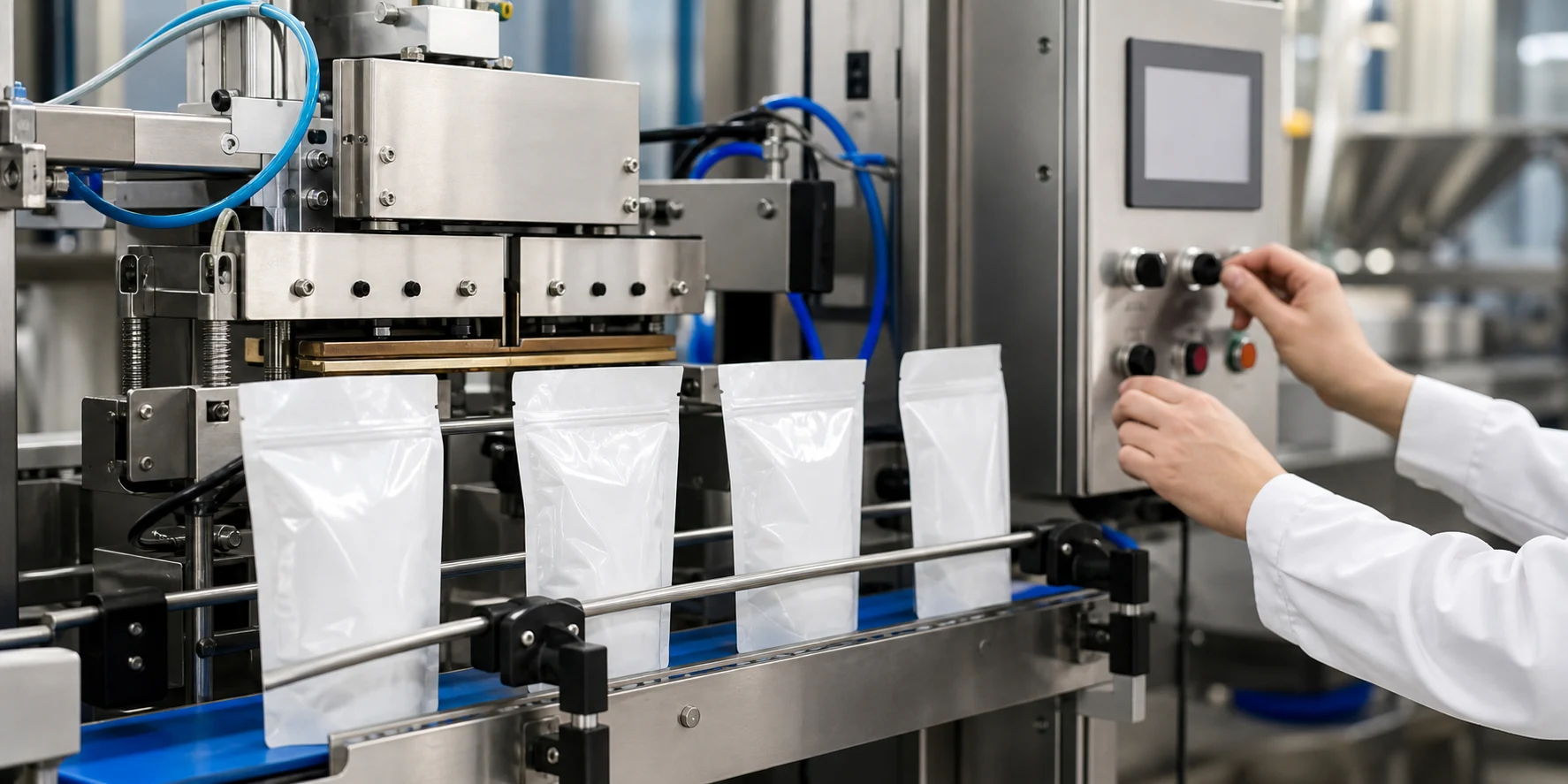
I use the exact pouch configuration that the project intends to buy whenever feasible. I check the filler, seal jaws, coding area, product flow, dust control, and the packaging line’s handling surfaces. I ask the team to make adjustments visible: time, temperature, pressure, dwell, speed, product condition, film roll, and reason. I take samples at startup, after changes, and at stable operation. That information is more useful than a single good pouch selected after the fact.
How I make this decision specific
| Pilot record | Why it matters | What I compare |
|---|---|---|
| Line settings | Connects output to a repeatable condition. | Startup, adjustment, stable run. |
| Sample timing | Shows drift and recovery. | Early and late pouches. |
| Reject reason | Separates symptom from cause. | Seal, tracking, fill, print, feature. |
| Packout result | Links line output to logistics. | Carton count, rub, compression. |
For “How Do I Prepare the Pouch, Product, and Line?” in this how do i run a packaging pilot before a full production order review, I define the actual product, pouch configuration, intended use, and decision owner before I ask a supplier or tester for evidence. I keep the selected structure, component details, sample condition, and any stated test method together, then compare the result with the buyer’s actual route rather than a catalogue promise. That record lets me use the flexible packaging specification-sheet guide as a decision aid and retain a specification that another team member can check.
For How Do I Run a Packaging Pilot Before a Full Production Order, I state what is known, the condition it applies to, and what must still be checked with the actual product. I do not transfer a number, a test result, or a feature choice from another product simply because its pouch looks similar. The result of “How Do I Prepare the Pouch, Product, and Line?” should give the buyer a clear next check, the supplier a precise request, and the project owner a record of the remaining uncertainty.
What Should I Inspect During and After the Run?
A pouch that leaves the sealing jaws cleanly can still fail when it settles, enters a carton, rubs in handling, or reaches the customer.
I inspect pilot samples during filling, after cooling, after carton packing, and after representative handling for seals, dimensions, appearance, features, product contamination, and opening use.
I begin with the obvious defects but do not stop there. I inspect top seals, side seals, gussets, zipper transitions, tears, wrinkles, panel alignment, fill height, and product trapped near the seal. Then I put representative samples into the proposed carton. I note carton count, orientation, empty space, rub points, and compression. I open and reclose pouches without coaching people through the process. I keep the observations tied to the sample time and line condition so the team can act on a pattern.
How I make this decision specific
For “What Should I Inspect During and After the Run?” in this how do i run a packaging pilot before a full production order review, I define the actual product, pouch configuration, intended use, and decision owner before I ask a supplier or tester for evidence. I keep the selected structure, component details, sample condition, and any stated test method together, then compare the result with the buyer’s actual route rather than a catalogue promise. That record lets me use the flexible packaging specification-sheet guide as a decision aid and retain a specification that another team member can check.
For How Do I Run a Packaging Pilot Before a Full Production Order, I state what is known, the condition it applies to, and what must still be checked with the actual product. I do not transfer a number, a test result, or a feature choice from another product simply because its pouch looks similar. The result of “What Should I Inspect During and After the Run?” should give the buyer a clear next check, the supplier a precise request, and the project owner a record of the remaining uncertainty.
For How Do I Run a Packaging Pilot Before a Full Production Order, I treat the filled pack as a separate check from the material data. I record the fill condition, seal area, opening or closure behavior, carton arrangement, handling observations, and limits of the comparison. That prevents a favourable bench result from becoming an unsupported claim about shelf life, transport, or every product route.
How Do I Decide Whether to Scale or Repeat the Pilot?
Scaling from one attractive pouch can turn an unknown line condition into a full-order problem that no one can trace.
I scale only when the pilot meets agreed acceptance criteria; otherwise I isolate the failure, revise the specification or process, and repeat the focused check.
I summarize what passed, what failed, the most likely cause, the corrective action, and the remaining unknowns. I compare samples made before and after each adjustment. If a material, pouch dimension, zipper, product fill, machine setting, or carton changes, I confirm whether the original evidence still applies. The release should name the final setting range and the owner of the next check. A focused repeat pilot is usually less costly than guessing through a full production order.
How I make this decision specific
For “How Do I Decide Whether to Scale or Repeat the Pilot?” in this how do i run a packaging pilot before a full production order review, I define the actual product, pouch configuration, intended use, and decision owner before I ask a supplier or tester for evidence. I keep the selected structure, component details, sample condition, and any stated test method together, then compare the result with the buyer’s actual route rather than a catalogue promise. That record lets me use the flexible packaging specification-sheet guide as a decision aid and retain a specification that another team member can check.
For How Do I Run a Packaging Pilot Before a Full Production Order, I state what is known, the condition it applies to, and what must still be checked with the actual product. I do not transfer a number, a test result, or a feature choice from another product simply because its pouch looks similar. The result of “How Do I Decide Whether to Scale or Repeat the Pilot?” should give the buyer a clear next check, the supplier a precise request, and the project owner a record of the remaining uncertainty.
For How Do I Run a Packaging Pilot Before a Full Production Order, I preserve the final decision in a written brief that names the approved sample, conditions, observations, open risks, and change triggers. I then use the flexible packaging quality-tests guide to keep the quotation tied to the evidence rather than to a remembered sample or a generic product name.
Conclusion
I choose packaging through evidence, filled-pack testing, and clear specifications. That process protects the product, the launch, and the customer experience.
Sources and Further Reading
- PMMI, Transitioning Flexible Materials Best Practice.
- Reddit r/smallbusiness, prototype-to-small-batch discussion.
- ASTM F88/F88M, seal strength of flexible barrier materials.
- ISTA, packaged-product performance testing overview.
- Unique Packaging specification-sheet guide.
- Unique Packaging quality-tests guide.
Need a pouch specification?
I can review your product, size, quantity, artwork, and target market.