A buckwheat pouch can spill at breakfast or confuse buyers before cooking. I start with the food identity and the way people actually portion it.
I choose buckwheat groat pouches by separating raw and toasted products, measuring the actual fill, checking controlled pouring and complete reclosure, and comparing documented films. I approve filled samples and a written specification before requesting a quotation.
At Unique Packaging, I use the grain-packaging cluster to connect food identity, daily handling, and material assessment without transferring a rice or quinoa pouch specification unchanged.
Which Buckwheat Product Will the Pouch Actually Hold?
A grain name alone can hide a different cooking product. I identify the groats before choosing pack size, visual references, or storage copy.
I record whether the buckwheat is raw or toasted, its supplier grade, piece condition, fill weight, and intended preparation. I use the actual lot to check pouch volume and keep approved food information with the artwork.
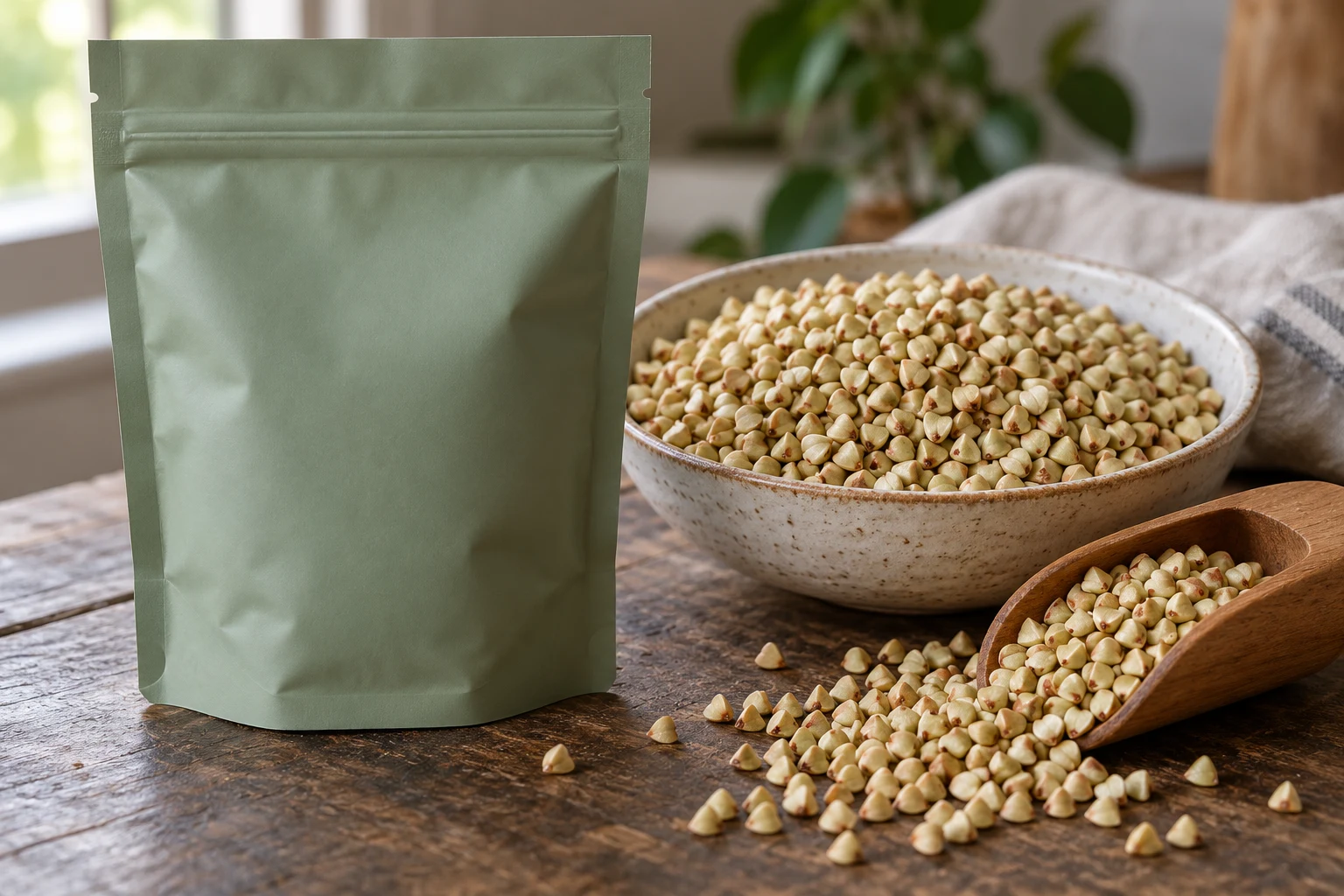
University of Missouri Extension describes a groat as the dehulled portion of a buckwheat seed. It also notes that stores may sell toasted groats. I use that distinction to write a clear product brief. I do not treat an image of brown toasted groats as an accurate illustration for every raw buckwheat product.1
I ask the food supplier for a representative lot and the agreed product specification. I record whether the pack holds intact groats, a grade with more broken pieces, or a prepared mixture. I also keep the intended cooking directions and market separate from the packaging drawing. A supplier can then assess the same food that the brand plans to sell.
A buyer in r/Sacramento asked where to obtain bulk buckwheat. An indexed reply distinguished roasted and unroasted options. I use that exchange as a small signal that product identity matters during purchasing. It is not evidence of market size, a preference shared by all buyers, or a reason to repeat a commenter’s taste judgement on our packaging.2
How I choose the first pouch dimensions
I weigh the proposed retail portion into sample pouches and measure the settled fill height without forcing the contents down. I leave space for the intended closure and sealing operation. I use the filled pouch sizing guide to document width, height, gusset, opening, and usable internal space. An attractive empty sample does not establish that our groats will fit.
I compare the pack when full and after several normal portions have been removed. I ask whether it stands where the brand expects, whether the front remains legible, and whether the remaining food blocks a comfortable grip. If the brand wants several pack weights, I check each one rather than multiplying the smallest pouch dimensions by the weight ratio.
I keep the food team responsible for claims and preparation instructions. A botanical name does not answer a question about the actual supply chain or finished-product label. My packaging record therefore identifies the artwork owner and approved food specification. That lets the converter work from confirmed copy while purchasing resolves any food-document questions before an order is released.
How Do I Check Pouring and Resealing with Real Groats?
A wide opening may pour too quickly, while a narrow one may frustrate portioning. I observe the entire task before approving the mouth and zipper.
I test first opening, pouring into the intended measure, stopping the flow, and resealing at full, middle, and low fill levels. I record stray groats, closure obstructions, grip changes, and any extra steps required.
I begin with a filled sample that has the proposed top seal and tear feature. I ask an adult tester to open it without a demonstration. I watch whether the tear clears the zipper and leaves room to grip both sides. If a sharp-looking tear edge or awkward mouth interferes with pouring, I record that exact observation and request a revised sample.
I use the measure that matches the brand’s intended portion task. I place the measure on a tray so that stray groats can be counted or weighed consistently. I record starting fill, amount poured, any spill, and the tester’s grip. I repeat the same task with each candidate. A polished photograph of one successful pour is less useful than comparable observations.
I then ask the tester to stop, set the pouch down, and close the entire track. I inspect the lip and zipper for trapped pieces. If a groat remains in the track, I record where it lodged and whether the user noticed it. I do not assume that every obstruction causes the same leak or storage outcome. It gives the converter a specific closure problem to investigate.
What changes after several portions?
I repeat the task as the pouch empties. A tester may fold the top, grip below the food level, or rest the pouch on its gusset. I note those actions rather than instructing everyone to use an ideal laboratory grip. I also check that the product name, directions, and date area remain accessible when the upper part is folded for storage.
Bob’s Red Mill advises cool, dry, sealed storage for its products. I cite that manufacturer guidance as an example of why the reclosure task belongs in a grain-pouch brief. It does not approve our selected film, establish a storage period for another supplier’s groats, or remove the need for the food owner’s own directions.3
I use the sample approval checklist to retain the sample version and observations. I compare opened-use packs with unopened controls under a schedule agreed with the food team. I record dates, portions, reclosure method, temperature, and humidity. The purpose is to separate user handling from unopened-package performance, so the next design decision addresses an observed problem rather than an assumed cause.
Which Film Evidence and Purchase Details Do I Need?
A broad film name hides the actual construction. I need comparable reports and filled samples before a quotation can represent the pouch I approved.
I request the full laminate and closure specification, conditioned transmission and seal reports, food-contact evidence for the intended use, and a filled handling trial. I attach the approved sample and acceptance criteria to the purchase brief.
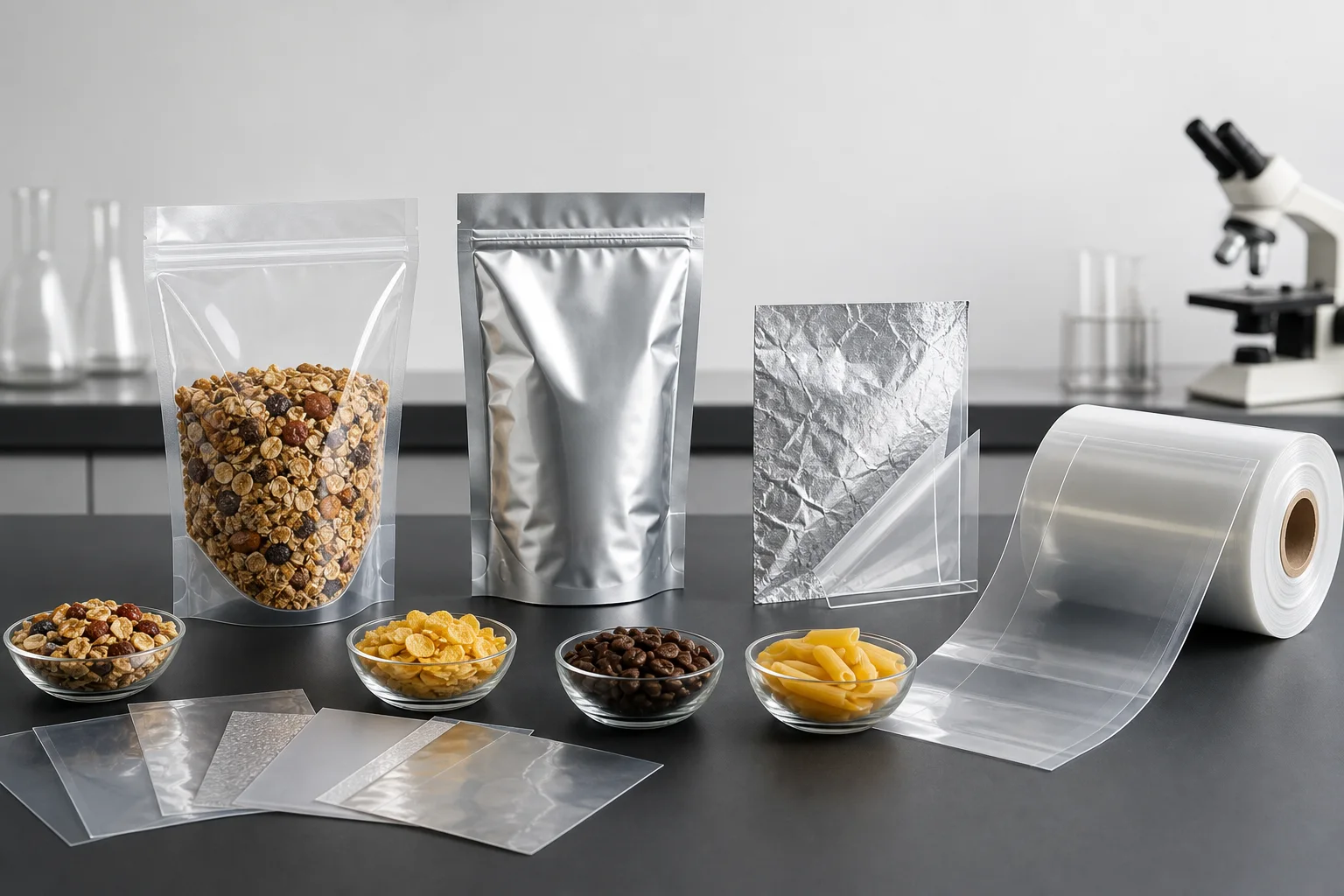
I start material assessment with the food barrier-film guide. I request layer identity, thickness and tolerance, sealant, print and adhesive arrangement, and zipper details. I ask whether a window or surface finish changes the offered construction. I compare the complete candidates, not a paper appearance or a metallic colour.
| Option or observation | Question I ask | Evidence for approval |
|---|---|---|
| Clear laminate | Does visibility justify this exact structure? | Complete construction and filled comparison |
| Metallized candidate | What measured protection does the actual sample provide? | Conditioned transmission reports and storage observations |
| Proposed mono-material pouch | Does the complete pouch meet the brief? | Layer and closure details, sealing and handling evidence |
Intertek lists ASTM F1249 for water-vapour transmission, D3985 for oxygen transmission, and F88 for seal strength. I use those names to request the relevant reports rather than to claim that a pouch passes by material category. I keep temperature, humidity conditions, units, thickness, specimen preparation, and sample identity beside any reported value.4
How I make the comparison repeatable
I ask the laboratory and food owner to agree storage conditions and endpoints before samples enter the study. A reference condition such as 23°C and 50% relative humidity can be proposed for a project, but it is not a universal buckwheat test or a shelf-life prediction. I add a route-relevant condition when the responsible team considers it necessary and record the reason.
I retain sealed filled samples from the intended filling and sealing process. I inspect for stray groats in the seal area, folds at the gusset, scuffing after carton handling, and loss of closure function. I keep leak observations separate from peel-strength data. If a failure appears, I preserve its location and sample history instead of changing several variables at once.
FDA explains that food-contact status depends on the individual components and intended conditions. I request documents that identify the proposed food-contact use and applicable limitations. I do not describe the finished pouch as FDA certified because a supplier sent a generic statement.5
My written specification names the groat grade, fill weight, dimensions, film, closure, seal layout, artwork revision, coding area, carton arrangement, and retained sample. After a representative trial, I request a quotation against that specification. I ask for proposed substitutions in writing and leave unsupported quantity, timing, price, certification, and storage promises out of the article and purchase comparison.
Conclusion
I approve buckwheat pouches through product-specific filling, controlled pouring, clean closure trials, documented materials, and a written specification tied to retained samples.
Sources and Further Reading
Need a pouch specification?
I can review your product, size, quantity, artwork, and target market.