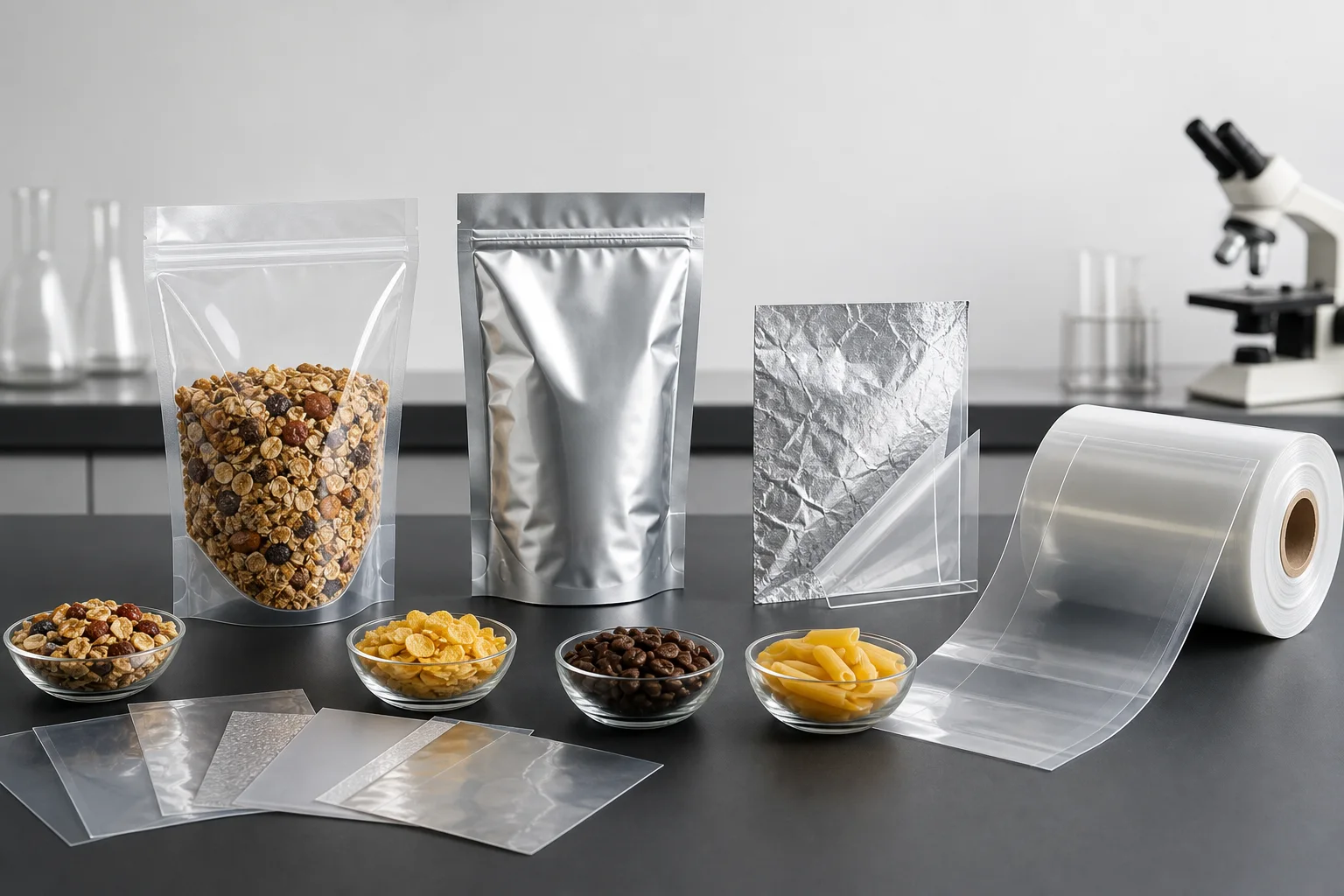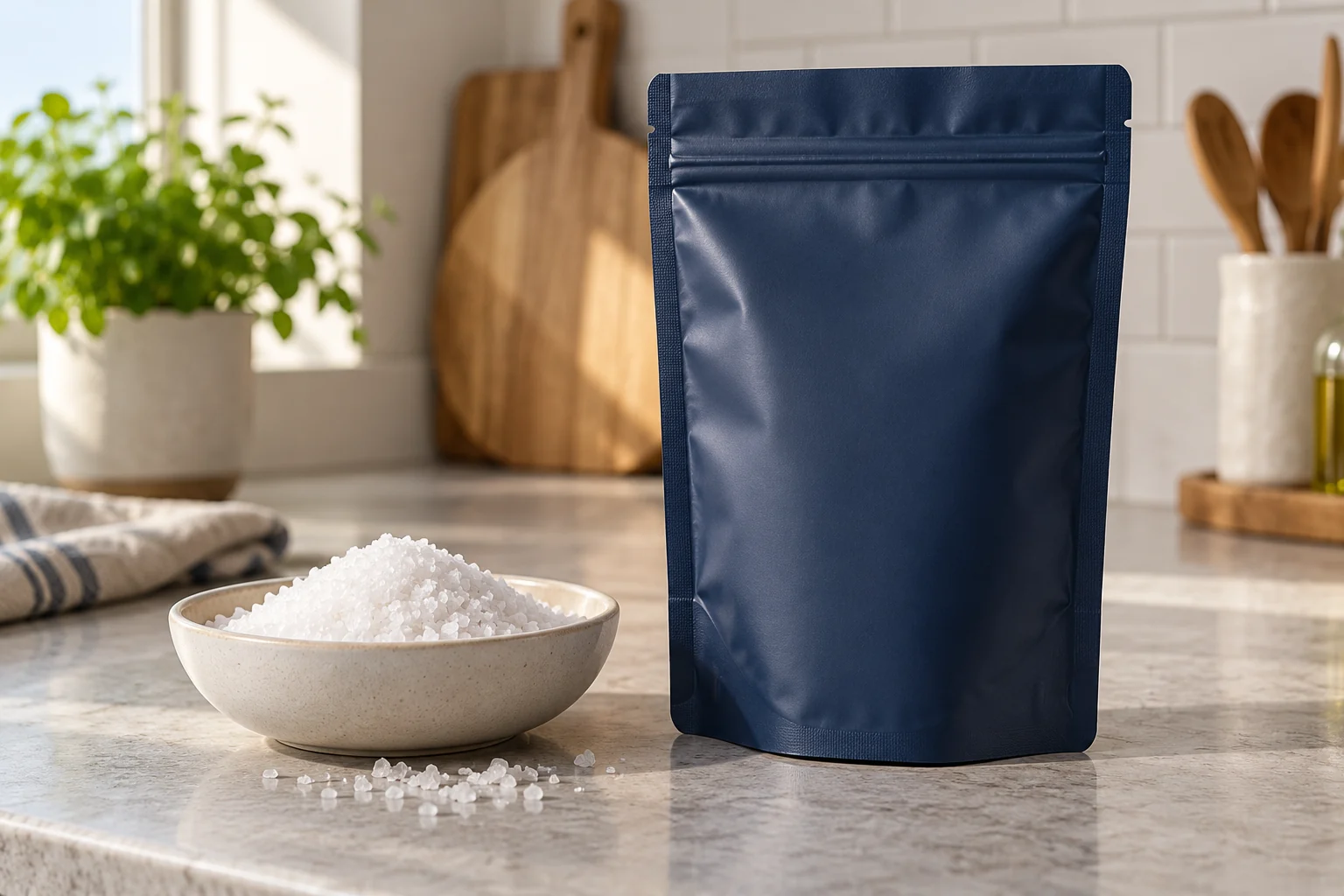
A salt refill can look simple until crystals jam the zipper or scatter around a jar. A clean sample photo cannot settle those problems.
I choose salt refill pouches by matching the crystal grade, moisture evidence and opening to the refill task. I compare actual materials, test filled packs for pouring and reclosure, and confirm the approved construction in writing before requesting a quote.
At Unique Packaging, I start with the salt and the receiving container. This guide focuses on a dry culinary refill, rather than a universal storage promise for every salt blend.
Which Salt and Refill Task Should I Define First?
A fine table salt and a coarse finishing salt may share a name on a buying brief. Their handling still needs separate observation.
I record salt grade, crystal size, additives, fill range and receiving jar before choosing a pouch. I test whether customers transfer everything or keep opening the refill pack.
I begin with a sample of the exact culinary salt. I ask the brand to identify the grade, supplier reference, crystal range and any added ingredients. I keep fine table salt, coarse crystals, delicate flakes and seasoned mixtures as separate projects. I do not use a successful pour with one grade as evidence for all the others. The packer also needs a representative sample rather than an ingredient name alone.
Morton recommends cool, dry storage away from cooking and suggests an airtight container when that location is unavailable.1 That supports asking about the customer's storage situation. It does not establish a shelf life for my proposed refill pouch. I ask whether the refill will sit beside a cooker, inside a cupboard or in a food-service preparation area, and I put the intended use into the brief.
Follow the transfer from first tear to final closure
I bring the receiving jar or grinder to the sample review. I measure its useful opening and look at where the customer can grip the pack. I try a nearly full pouch and a partly emptied one. I observe the initial surge, any crystals caught at the lip and how easily the customer can stop. A pouch opening that suits a broad jar may make a narrow grinder awkward.
In a Reddit camping-gear discussion, users suggest avoiding steam above a pot and drying equipment before returning it to a storage bag.2 I treat this as a specific account of use around cooking gear. It is not a packaging test or a reason to repeat the thread's advice about improvised moisture absorbers. It prompts a useful trial question: can the user close and store the refill without wet utensils touching its opening?
I decide whether a zipper has a real job. A one-time transfer may call for a controlled tear opening, while a larger pack may need repeated access. I compare both tasks before choosing a feature. The pouch size guide helps organize dimensions, but I still fill the proposed shape with this salt and retain the observed pour results.
How Do I Compare Moisture Protection and Pouch Features?
A broad high-barrier label cannot explain a clumped refill. The exact film, closure and storage route need separate evidence.
I compare the written film construction and water-vapor data under named conditions, then check opening control, crystal retention and reclosure on filled prototypes.
I request the full layer sequence, thicknesses, sealant and closure reference for each proposed pouch. I ask which data belong to that construction and which describe a different film. ASTM F1249 addresses water-vapor transmission through flexible barrier materials.3 I ask the laboratory to name the method edition, specimen, temperature, humidity conditions, units and orientation. I do not compare isolated numbers when those conditions differ.
I use the barrier-film core guide to frame that request. A film measurement is one input to the material decision. I also need an intact finished pack, an appropriate closure and a storage plan. I ask the brand to define how it will judge flow and visible clumping in a trial. I avoid an unsupported promise that any laminate will eliminate caking.
| Candidate | What I compare | What still needs a trial |
|---|---|---|
| Plain sealed refill | Layer specification and tear opening | Controlled transfer into the intended jar |
| Zipper stand-up refill | Zipper position, top seal and opening width | Crystals in the track after repeat use |
| Spout concept for a dry refill | Internal passage and receiving opening | Actual crystal flow and blockage |
Separate the ingredient from the packaging claim
Morton's product guide distinguishes salts with anti-caking additives from products without them and treats iodized or seasoned products separately.4 I therefore keep the product identity attached to any storage observation. I do not copy Morton's product dates, ingredient claims or instructions onto another brand's salt. If the recipe changes, I ask which checks need repeating.
I inspect clear and opaque samples without assuming appearance proves protection. A window can help customers see crystals, but it also belongs in the written construction. I ask the converter for evidence covering the window region and its interfaces when relevant. I place samples beside the actual label artwork to check that customers can find the tear feature and understand the refill purpose.
For US food-contact use, I ask for documentation that matches the food type and intended contact conditions described in FDA's framework.5 Other destinations require their own review. A generic food-grade statement cannot replace a construction-specific document request or demonstrate that this particular pouch suits the planned storage and handling.
What Should I Verify Before Ordering Salt Refill Pouches?
A tidy prototype can conceal crystals in the top seal or a refill opening that becomes awkward after handling. Approval needs a repeatable sequence.
I test filled, sealed, handled and opened salt packs against agreed criteria, then freeze the approved sample, construction, filling conditions and commercial brief.
I arrange a trial using representative salt, the intended fill range and the proposed filling equipment. I record how the packer keeps crystals below the seal and out of the zipper track. I retain the machine settings used with that sample. I ask the converter and packer to establish their own operating window rather than copying a sealing temperature from another laminate.
ASTM F88/F88M provides a seal-strength method for flexible barrier materials.6 When it fits the project, I ask the laboratory to report the method edition, specimen preparation, conditioning, holding technique and failure mode. I keep that result separate from the agreed finished-pack integrity checks. A strong strip is not proof that every filled pouch will stay closed or retain its intended storage quality.
Keep the refill task inside the acceptance plan
I pass filled packs through the agreed carton handling and storage review. I then repeat the first tear, transfer and reclosure with the receiving jar. I record spilling, crystals left at the opening, zipper engagement and any visible changes to the seal or film. If a change appears, I preserve the sample and ask the responsible team to investigate it before setting a corrective action.
I include full-transfer and repeated-use cases only when they match the product plan. I count the planned openings and record the amount removed each time. I also record room conditions and the storage location. Those notes help distinguish a design issue from a different use sequence. They do not establish a shelf life without a product-specific study and suitable assessment.
My written pouch specification lists salt identity, fill range, dimensions, gusset, layer construction, tear feature, zipper reference and artwork revision. It includes the receiving container, carton plan, contact documents, approved sample, test conditions and acceptance criteria. I name changes that require review, including a new crystal grade, material substitution or altered closure location.
I send that record with a salt refill sample and specification-based quote request. I state quantity per design and delivery destination. The supplier can then quote the defined configuration and identify its commercial conditions. I compare offers against the same evidence, without inventing a standard price, minimum quantity or production lead time.
Conclusion
I approve salt refill pouches around the actual crystals, refill task and documented trial. The written sample specification should drive the purchase.
Sources and Further Reading
Need a pouch specification?
I can review your product, size, quantity, artwork, and target market.