A resealable quinoa pouch can look tidy while hiding a poor pour or unclear inspection trail. I check the grain, closure, and approval record together.
I choose dry quinoa pouches by measuring the actual grain blend, comparing documented film constructions, testing clean filling and repeated pouring, and approving filled samples. I keep incoming grain inspection separate from packaging integrity checks.
At Unique Packaging, I use this review for uncooked dry quinoa. Cooked ready-to-eat quinoa needs a separate process and packaging assessment.
Which Quinoa Product and Material Am I Actually Buying?
Dry grain, flour, and cooked quinoa need different briefs. A familiar pouch shape can conceal that mismatch until the wrong sample is approved.
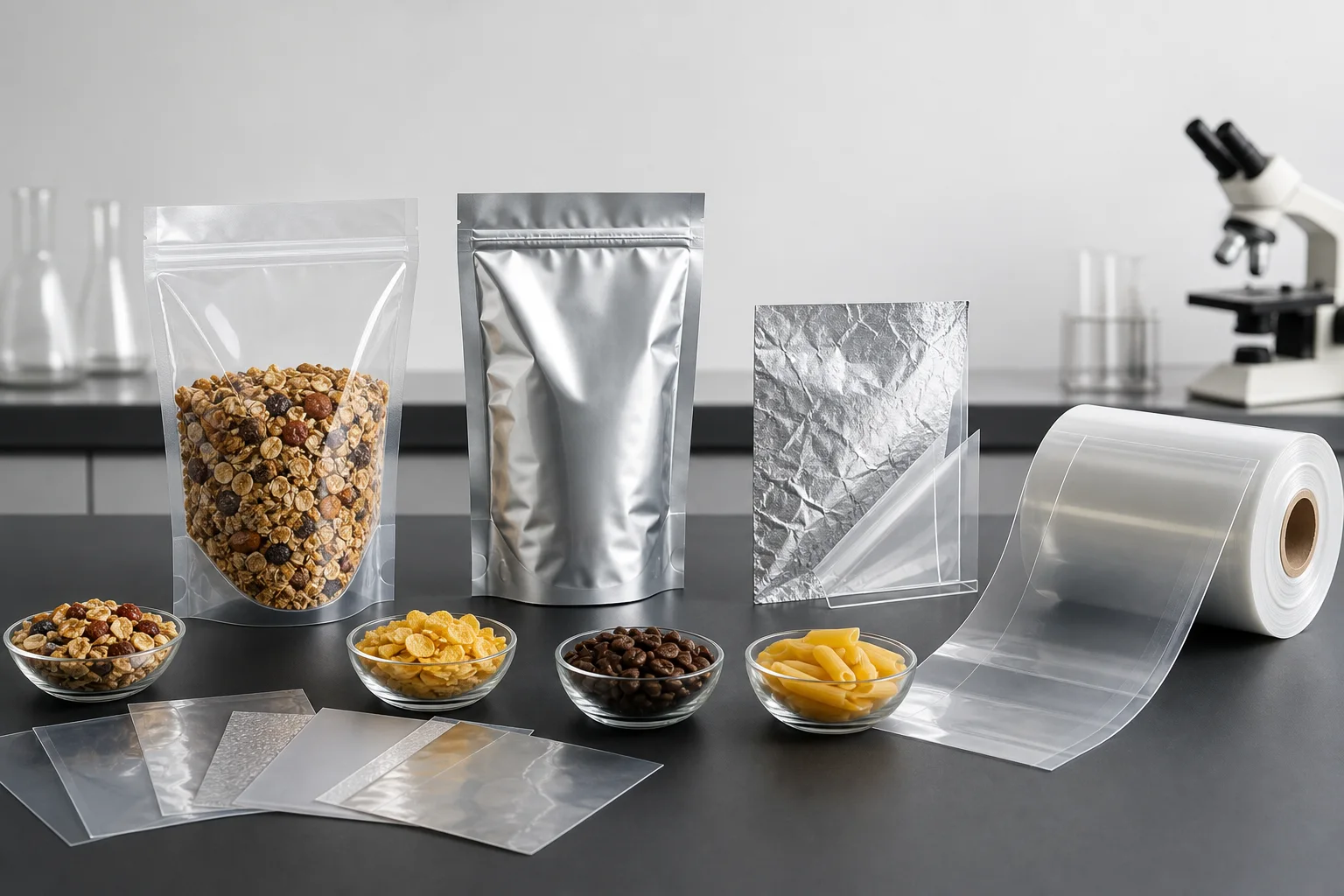
I identify uncooked whole quinoa, record the blend and preparation claims, and measure representative fill volume. I compare clear, opaque, and metallized candidates through their documented construction rather than appearance.
I begin with the food specification. I record whether the lot contains white, red, black, or mixed quinoa, and whether the supplier has already processed it for the intended preparation instructions. Utah State University discusses rinsing quinoa before cooking. I use that as context for reviewing the food team’s directions, not as permission to print an unverified prewashed claim.1
I ask for samples from the actual intended supply lot. I measure the planned net weight and its loose volume, then repeat after ordinary settling. I also note broken seeds and fine particles. These observations help me compare pouch dimensions without assuming that a rice bag of the same stated weight will fit. My pouch size review turns those measurements into sample dimensions.
| Candidate | Question to resolve | Evidence to retain |
|---|---|---|
| Clear film candidate | Does visibility add useful product information? | Construction, thickness, filled appearance and test reports |
| Opaque laminate candidate | Does the exact structure suit the intended route? | Layer identities and transmission data at stated conditions |
| Metallized candidate | What evidence supports this proposed barrier? | Traceable specimen and measured results, not silver appearance |
I then review the core food barrier film guide. I ask the converter to identify layers, sealant, thickness, zipper, and intended food contact. A finish is a design choice; the supplier still needs to document the proposed structure. I do not publish a universal transmission target, oxygen-absorber instruction, or storage duration for a new quinoa pouch.
When comparing water-vapor reports, I request method, thickness, temperature, humidity gradient, units, and sample code. Intertek lists ASTM F1249 for water-vapor transmission and D3985 for oxygen transmission. Those method names help define an evidence request. They do not establish our acceptance limits or prove the filled pack will meet a shelf-life target.4
For a US project, FDA explains that food-contact status depends on the components and their applicable authorizations and uses. I request documents for the actual proposed materials and contact conditions. I keep that review attached to the sample code so purchasing cannot silently replace the approved construction with another film carrying a similar description.5
How Do I Separate Grain Inspection from Pouch Failure?
A customer complaint can become a packaging diagnosis too quickly. If I lose the lot and opening history, I may investigate the wrong cause.
I retain the food lot, package lot, unopened references, storage history, and photographs. I investigate incoming product condition and package integrity separately before deciding whether either caused the complaint.
In an r/Costco discussion, a buyer reports finding tiny insects after opening and rinsing a bag of dry quinoa. The account includes the inconvenience of cleaning the surrounding area. I cite that as one consumer experience. I do not confirm the insect species, the origin of the problem, or the thread’s home-treatment advice.3
The practical lesson for my brief is traceability. I want to connect a complaint to the grain batch, filling date, pouch batch, storage location, and state of the opening. USU recommends clean, tight storage containers and housekeeping to protect stored foods from pests. That supports treating storage and incoming product controls seriously. It does not prove that a particular pouch caused or prevented an infestation.2
I propose a simple intake record. The food business records its own inspection and release decision before the grain reaches the filler. The packaging team checks the supplied bags against the approved dimensions and construction. I keep those two records separate, then connect them through the finished batch code. A clean-looking packaging sample cannot replace food lot approval.
I examine the top seal and side seams before opening a retained pouch. I photograph visible defects and record whether the zipper has already been used. I avoid opening every reference immediately because an unopened sample may help the investigation. The food owner decides the appropriate product assessment and disposition; I do not turn a consumer photograph into a safety verdict.
How I make the first filling trial useful
I observe how seeds fall into the mouth and whether fine particles collect in the seal zone. I set aside startup packs from each trial setting and identify them. If a pouch has an incomplete top seal, I record its position and inspect the process before changing the material. The closure contamination guide offers a useful inspection sequence, even though whole quinoa behaves differently from powder.
I also agree what the operator should do with doubtful packs. A documented hold and review is more useful than mixing them into the accepted case. The final record should show which grain and packaging lots were used, which checks were completed, and which questions remain open. That gives the brand a starting point if a buyer later reports a problem.
Which Filled-Pack Trials Should Precede the Purchase Order?
A zipper can close neatly when empty and catch seeds during use. A full case can also expose weaknesses that a display sample never shows.
I test first opening, controlled pouring, resealing, seal condition, and carton handling at the planned fill. I retain the chosen sample and written inspection requirements before requesting a specification-based quotation.
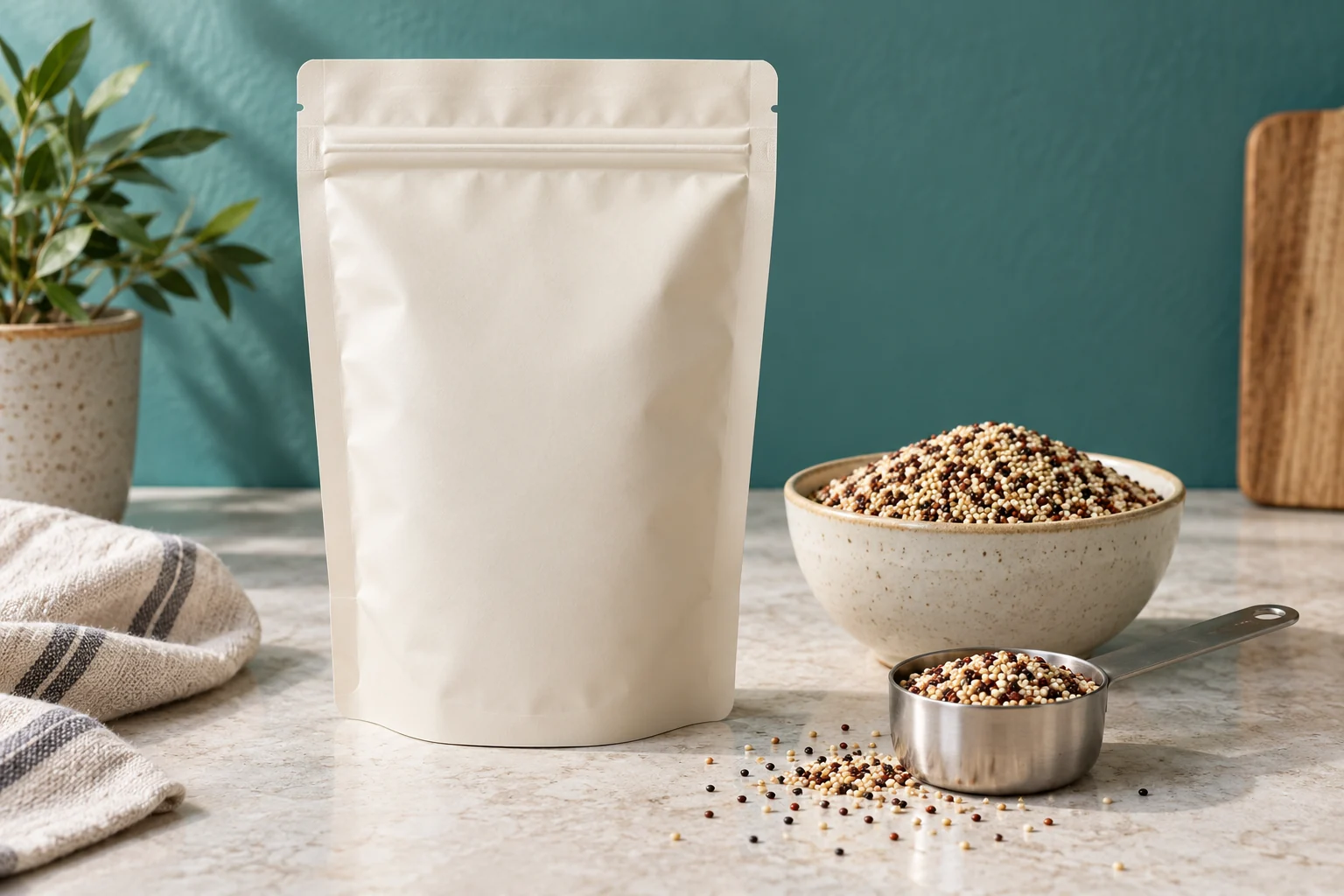
I fill each candidate to the proposed weight and mark the sample version. I open the top seal through the intended tear feature, pour into the intended measuring vessel, and close the entire zipper. I record spilled seeds, grip changes, trapped product, and whether the user can tell the track is engaged. I repeat with several fill levels rather than evaluating only a full bag.
I treat the opening exercise as a project protocol. I record the participants, number of cycles, storage between sessions, and observations. I do not claim a certified closure lifetime from an informal exercise. If a change in zipper position, film stiffness, or mouth width improves the observed task, I issue a new sample version and repeat the affected checks.
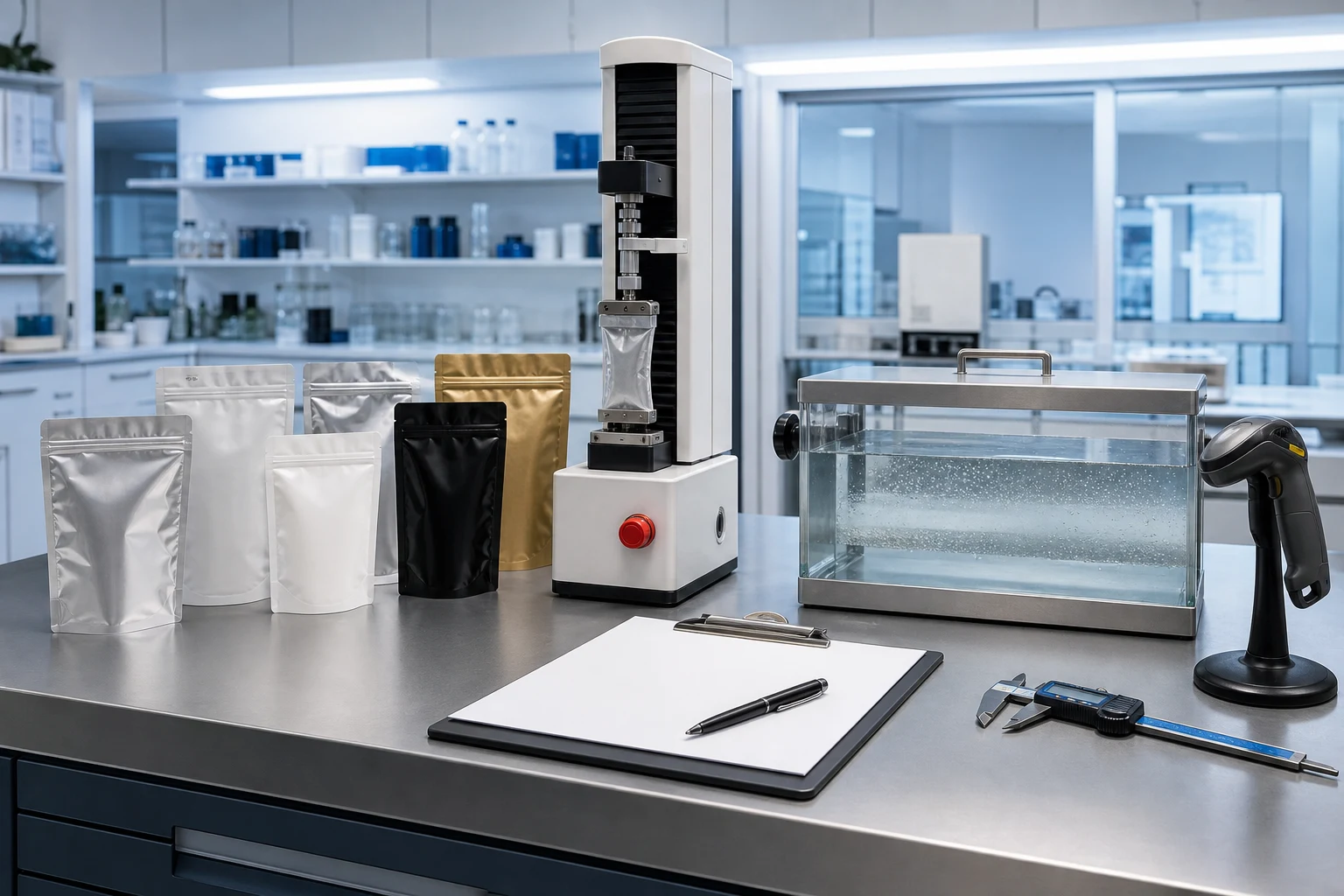
For seal work, I discuss the methods in the quality testing guide with the chosen laboratory. Intertek lists ASTM F88 for seal strength. I request strip width, support arrangement, conditioning, pull speed, and failure description with the result. The report should identify the actual pouch and trial settings. A peel number by itself does not answer every integrity question.4
I propose recording an ambient reference such as 23°C and 50% relative humidity alongside an agreed route-specific storage condition. These are proposed study settings, not universal quinoa requirements or a claimed standard protocol. The food team and laboratory must confirm the temperatures, duration, sample count, and endpoints for the intended product and distribution route.
I place the filled pouches in the proposed shipper and photograph the arrangement. After the agreed handling sequence, I inspect seam appearance, base folds, corner abrasion, and pouring again. If a pouch fails, I keep the failed sample and investigate its location in the case. I do not call this informal screening a certified transit test.
My purchase checklist includes the grain identity, fill weight, pouch dimensions and tolerances, layer specification, zipper location, top seal, print revision, batch marking space, case layout, and inspection plan. I name the approved sample and who may authorize substitutions. I include food-contact documentation and the limits of each completed trial.
Only then do I request a quote against the confirmed specification. I ask the converter to identify departures explicitly. Price, minimum quantity, certification, and production timing need current project evidence. I leave them out of this general guide so the next purchasing step rests on the actual pack rather than an invented promise.
Conclusion
I approve dry quinoa pouches through product inspection, measured sizing, documented materials, clean closure trials, and written specifications linked to representative filled samples.
Sources and Further Reading
Need a pouch specification?
I can review your product, size, quantity, artwork, and target market.