Sesame seeds can spill, linger in a large open bag, or disappoint buyers when the closure and portion size do not match daily use.
I choose sesame seed packaging around raw or toasted seeds, expected use after opening, material evidence, pouch size and clean reclosure. I approve a representative filled pack before I confirm the written specification and request a production quote.
At Unique Packaging, I start with how a food brand expects customers to use its seeds. A pouch that suits a kitchen refill may need different opening geometry from a bulk foodservice pack.
Which Sesame Seed and Storage Details Change My Pouch Brief?
A familiar seed name can hide different processing, storage and opening patterns. A copied bag specification can miss the actual product.
I record seed variety, raw or toasted condition, product handling instructions, fill weight, destination and expected opening frequency. I keep unopened storage validation separate from the customer’s use after opening.
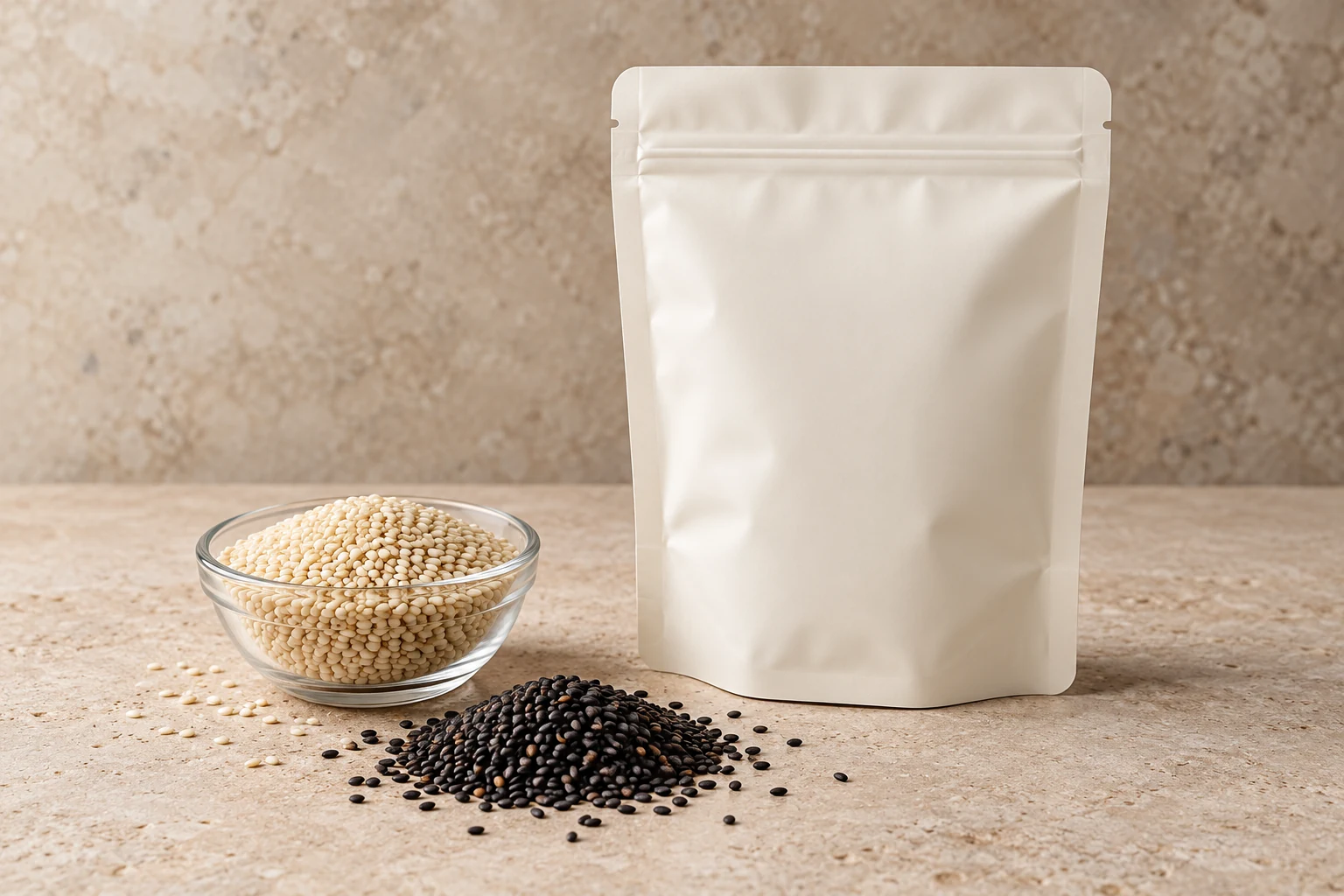
I begin by asking whether the product contains whole white seeds, black seeds, a mixed topping or a seasoned blend. I also ask whether the seeds reach the packing station raw, toasted or otherwise processed. Those descriptions belong on the brief because I need a sample that represents the finished product. I do not approve a pouch with a different seed merely because both samples occupy a similar volume.
Ask Extension identifies sesame seeds as an oily product that can become rancid. Its storage response also points out that repeated opening exposes seeds to air and moisture.1 I use that advice to ask better packaging questions. I do not convert household storage guidance into a commercial shelf-life guarantee. The brand must establish its own product handling and shelf-life evidence for the selected pack and distribution conditions.
Separate the refill from the working portion
A useful r/AskCulinary discussion starts with a cook who owns a large bag of sesame seeds, usually toasts small amounts for dishes, and wonders about toasting the whole bag.2 I treat this as an individual use pattern. It suggests testing a small working portion and a larger refill separately; it does not establish which storage method or pouch material is scientifically best.
I therefore write down the intended opening cycle before choosing the pouch dimensions. Will a cook pour seeds directly onto food, refill a jar, or scoop them into a mixing bowl? Will staff use the whole pack in one preparation session? I compare filled volume and hand access with the pouch size guide. Fill weight alone cannot tell me whether a jar opening or a scoop will fit the pouring path.
I keep a sample of the exact product alongside the drawing. That lets the buyer and converter discuss real seed size, flow and usable headspace. If the brand later changes from plain whole seeds to a seasoned topping, I reopen the brief rather than silently transferring the approval.
Should I Choose Clear or Opaque Sesame Seed Packaging?
A clear window helps buyers see seeds, while an opaque pouch hides them. Neither appearance alone tells me how the selected film performs.
I compare clear and opaque structures against the brand’s protection, display and documentation needs. I request data for the exact laminate and test conditions, then check the finished pack instead of inferring barrier from its color.
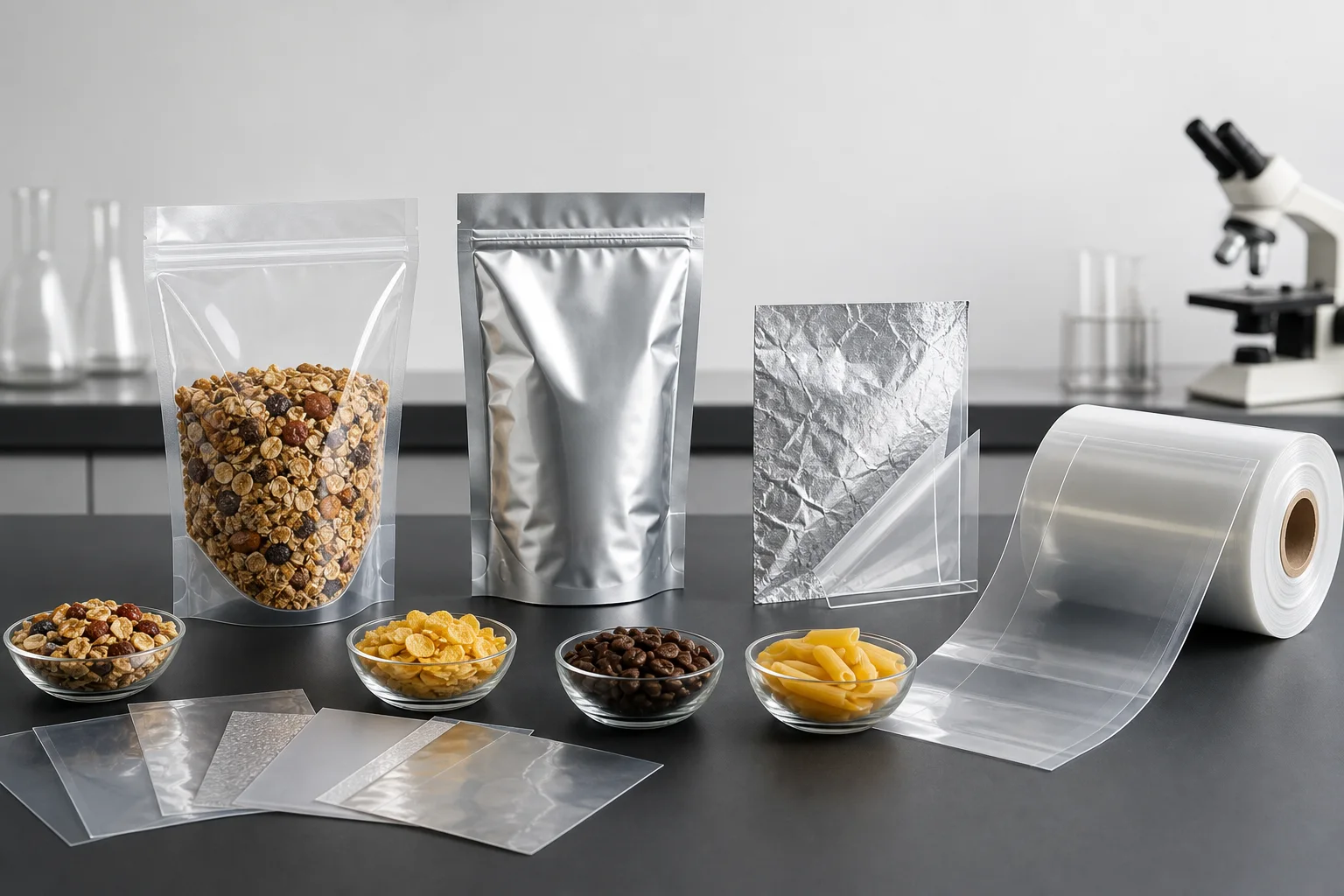
I use a material comparison to expose trade-offs before artwork is finished. A transparent area may be useful when seed appearance is part of the buying decision. An opaque design may offer more consistent print space. A metallized or other barrier structure may be worth evaluating when the product brief calls for it. These are options to assess, not a universal ranking of all clear, opaque and metallic pouches.
| Option | Reason to evaluate | Evidence I request |
|---|---|---|
| Clear pouch or window | Visible white, black or mixed seeds | Exact film data and a display sample |
| Opaque printed pouch | Consistent artwork and covered contents | Declared structure and a filled sample |
| Barrier laminate | Product brief identifies oxygen or moisture risk | Relevant transmission results with stated conditions |
I compare the proposed materials through the food barrier film guide. The useful record names the construction, layer thicknesses, test method, temperature, humidity and units wherever applicable. I do not compare a result measured under one condition with an unexplained number from another supplier. I also keep material data separate from performance of the zipper, seals and completed pouch.
Match documentation to the actual food
The FDA food-contact reference distinguishes food types and conditions of use.3 For a project sold in the United States, I ask which documented use covers the actual seeds and handling conditions. For another destination, I ask for evidence relevant to that market. A general phrase such as food grade does not tell me which construction, component or application the supplier has documented.
I send the same product description to each shortlisted converter. I include the proposed window, zipper and print coverage because I want the quote and sample to describe the same pack. I flag later substitutions for review. A familiar-looking replacement should not inherit approval without checking what actually changed.
I also keep light exposure, carton protection and retailer display assumptions visible in the sample brief. The buyer can then decide which differences deserve a filled-pack comparison. This approach gives a small brand a clear decision record without inventing a universal oxygen limit, storage duration or material promise.
How Do I Test Pouring, Reclosure and Delivery Before Ordering?
A pouch can stand neatly when full yet pour badly, trap seeds in its zipper or lose its shape as customers use the contents.
I test first opening, pouring, repeated reclosure, partial-fill standing and carton handling with the actual seeds. I document observations and relevant seal evidence, then lock the approved sample, material and dimensions before pricing.
I fill several representative pouches and ask someone unfamiliar with the design to open one without coaching. I watch where the tear starts and whether the opening leaves useful space above the zipper. I then pour into the intended jar or bowl over a tray. The tray helps me see spilled seeds. I record the task and the observed result instead of describing every pouch as easy to pour.
I repeat the check after removing part of the contents. I look for seeds lodged in the tracks, difficulty gripping the top and a front panel that folds into the pouring path. A user may need two hands to close the pouch fully. That is a design input to test, not a reason to promise a leakproof or airtight zipper from its catalogue name.
Keep usability and seal evidence separate
For the sealed pack, I discuss appropriate strength testing with the converter or laboratory. ASTM F88/F88M covers seal-strength measurement, and the cited edition describes specimen separation force and failure mode.4 My report identifies the agreed edition, specimen width, conditioning and tail-holding technique. A good peel result does not establish long-term food quality or a guarantee about every pack in distribution. The packaging test guide helps organize those separate checks.
I place the filled samples in the intended carton and inspect them after the agreed handling trial. I compare the original pack with a retained reference. I note scuffing, top-seal damage, standing behavior and closure access. I only call a formal distribution test complete when the selected procedure and report support that statement.
My purchase checklist names seed form, net fill, pouch dimensions, structure, feature positions, top-seal area, artwork revision, packing arrangement and acceptance criteria. I include the approved sample identifier and any unresolved shelf-life work. I use the written specification checklist to keep these decisions together.
Only then do I ask for a sesame pouch sample review and quotation. I request quantity per design and destination separately from the technical brief. The quote should identify its assumptions. If structure, fill conditions or pouch geometry change, I decide which sample checks must be repeated before approving the order.
Conclusion
I choose packaging through evidence, filled-pack testing, and clear specifications. That process protects the product, the launch, and the customer experience.
Sources and Further Reading
Need a pouch specification?
I can review your product, size, quantity, artwork, and target market.