A refill can save shelf space yet spill leaves or expose them to unsuitable storage. I define the refill job before selecting opacity.
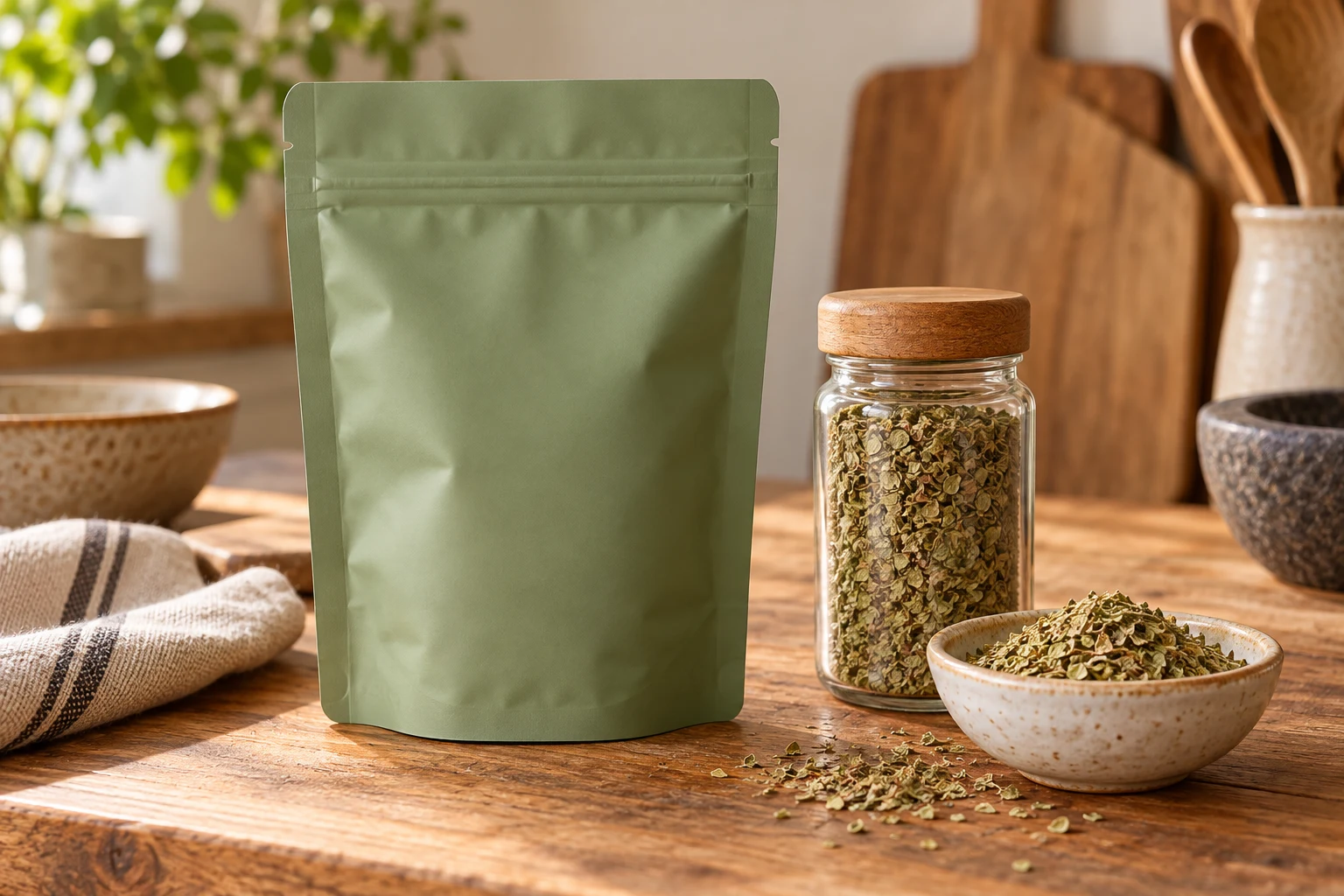
I consider an opaque dried-herb refill pouch when the product brief needs light screening and compact storage. I still verify drying, material evidence, clean jar transfer, closure behavior, and the real storage route. Opacity alone does not prove aroma protection or shelf life.
I focus on dried culinary leaves such as oregano and rosemary. Fresh herbs, teas, and herb oils need separate specifications.
When Does an Opaque Refill Pouch Make Sense?
A clear window helps shoppers inspect leaves but changes the light-exposure question. I compare the selling benefit with the storage brief.
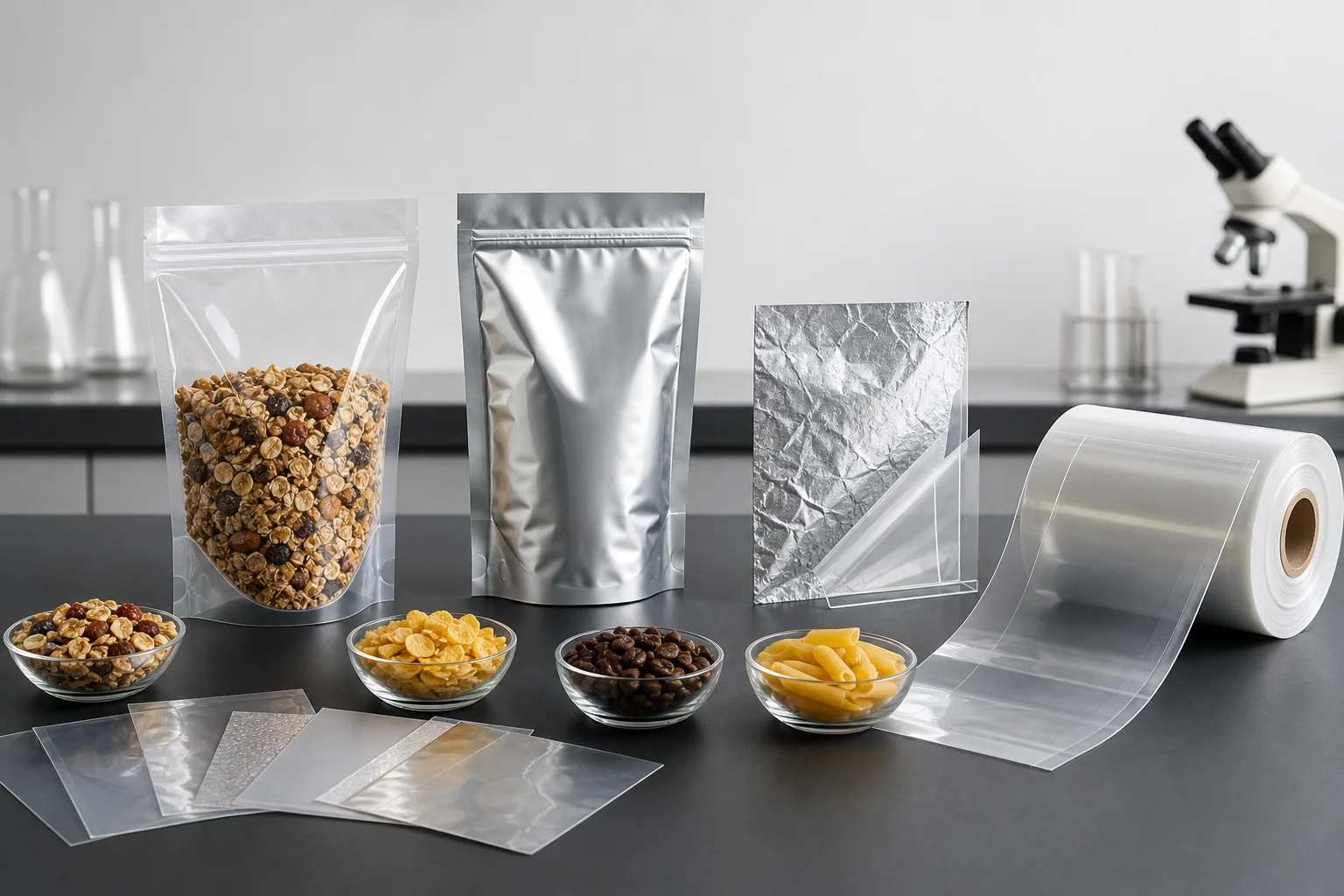
I compare an opaque pouch, a clear pouch, and the current jar under the intended display and storage conditions. I request material data separately, because a dark panel does not identify the moisture or aroma barrier.
I distinguish a culinary leaf refill from a ground spice blend. Leaf size, stem content, and the destination jar affect transfer. A rosemary refill can bridge at a narrow opening. Fine oregano pieces can scatter around the jar rim. I therefore record the product form and the smallest intended jar opening before selecting a package. I use the spice-blend guide only when the buyer also handles a separate blend.
Iowa State Extension advises storing fully dried herbs in airtight jars in a cool, dry location, away from light and heat.1 I take this as a reason to evaluate the storage route. It does not show that any particular opaque pouch equals a jar. The refill still needs evidence for its contact layer, seams, and closure. I also ask whether the customer empties the entire pack at once or keeps a partly used refill in the cupboard.
I make the visual trade-off explicit
| Option | Question it helps answer | Evidence still needed |
|---|---|---|
| Opaque refill pouch | Can the pack screen the product from display light? | Light screening, material reports, and filled-pack quality |
| Clear refill pouch | Does product visibility matter for this sale? | Display exposure and product quality during storage |
| Jar | Is the package also the repeated-use container? | Closure, access, and the actual cupboard or shelf conditions |
I request the full laminate and component list rather than ordering by surface colour. ASTM F1249 is a method for measuring water-vapor transmission through film and sheeting.3 I compare reports only when the temperature, humidity gradient, specimen condition, orientation, and units are recorded. For an initial project comparison I propose 23°C, 50% RH on the humid side, and a dry receiving side for laboratory review. I change the plan if it does not represent the route.
I use the core barrier-film guide to keep light screening, moisture transmission, and aroma assessment separate. I do not infer an aroma-retention period from a moisture number. My ingredient team defines the quality endpoint and checks the actual dried leaves in the finished candidate pack.
How Do I Check Jar Transfer and Partly Used Refills?
Leaf fragments can scatter or jam the opening. I test the refill with its intended jar before approving the pack shape.
I pour real dried leaves into the smallest intended jar and repeat the trial with partly empty pouches. I observe bridging, spills, leaf breakage, and resealing, then compare those results with the current refill.
A Reddit herb grower asked about storing dried herbs and received several different storage approaches. One commenter described keeping zipper bags inside tea tins because separate jars occupied too much space.5 I use that specific space concern as community insight. I do not adopt the thread's storage-duration claims as a commercial shelf-life statement.
This example makes me define two user paths. In the first, the buyer fills a jar and disposes of an empty refill. In the second, the buyer stores several partly full refills inside a box or tin. I test the first path for transfer and the second for repeated closing. A bag designed only for the first path may not give the second user a workable opening or closure.
I use the smallest jar in the brief
I set the intended jar on a clean tray so spilled leaves remain visible. I open the pouch along its intended tear line and pour a measured portion. I record whether the opening can form a controlled pour, whether stems bridge across it, and whether users need a funnel. If the instructions call for a funnel, I include it in the trial and show that requirement clearly. I do not call a pack easy to refill after testing it only with a wide bowl.
I observe the leaves before and after transfer. I compare the amount of fine material against the starting sample without imposing an invented pass percentage. My ingredient owner decides what appearance and particle distribution remain acceptable. I repeat the sequence after the pouch has been handled in its proposed carton so the test includes the pack and the actual product condition.
For partly used refills, I check both ends of the closure and look for leaf fragments in the tracks. I observe the user's grip, the available headspace, and whether a fold pushes fragments toward the zipper. I keep this use test separate from unopened seal integrity. The seal-leak guide covers the production problem; a user-operated closure has its own handling question.
Iowa State's guidance specifies thoroughly dried herbs before storage.1 I ask the ingredient team to approve drying and release criteria independently. Packaging is one part of that system. I do not use an opaque pouch, a tight closure, or an absorbent sachet as a substitute for an approved ingredient process.
What Evidence Should I Lock Before Ordering Herb Refills?
A refill sample can pass a quick pour test yet leave material and seal questions unanswered. I close those gaps in writing.
I lock ingredient form, target jar, structure, dimensions, closure, contact conditions, and trial findings. I retain seal and storage evidence for the actual pouch, then request a quotation against the approved specification.
I write a brief for the actual dried culinary herb. I include whether the product is whole leaf, cut leaf, or a leaf-and-stem mixture. I name the pack weight and the destination jar opening. I also record the display route, whether the pack will be partly used, and the ingredient owner's storage instructions. These details let the supplier assess a representative sample instead of offering a generic green pouch.
FDA's reference tables separate food types from conditions of use.2 I ask for food-contact evidence that identifies the selected product-contact layer and zipper under the intended filling and storage conditions. I include printing and adhesive details in the construction record. A certificate for an unspecified film does not tell my purchasing team which finished pouch was reviewed.
I keep flat-film and finished-pack evidence separate
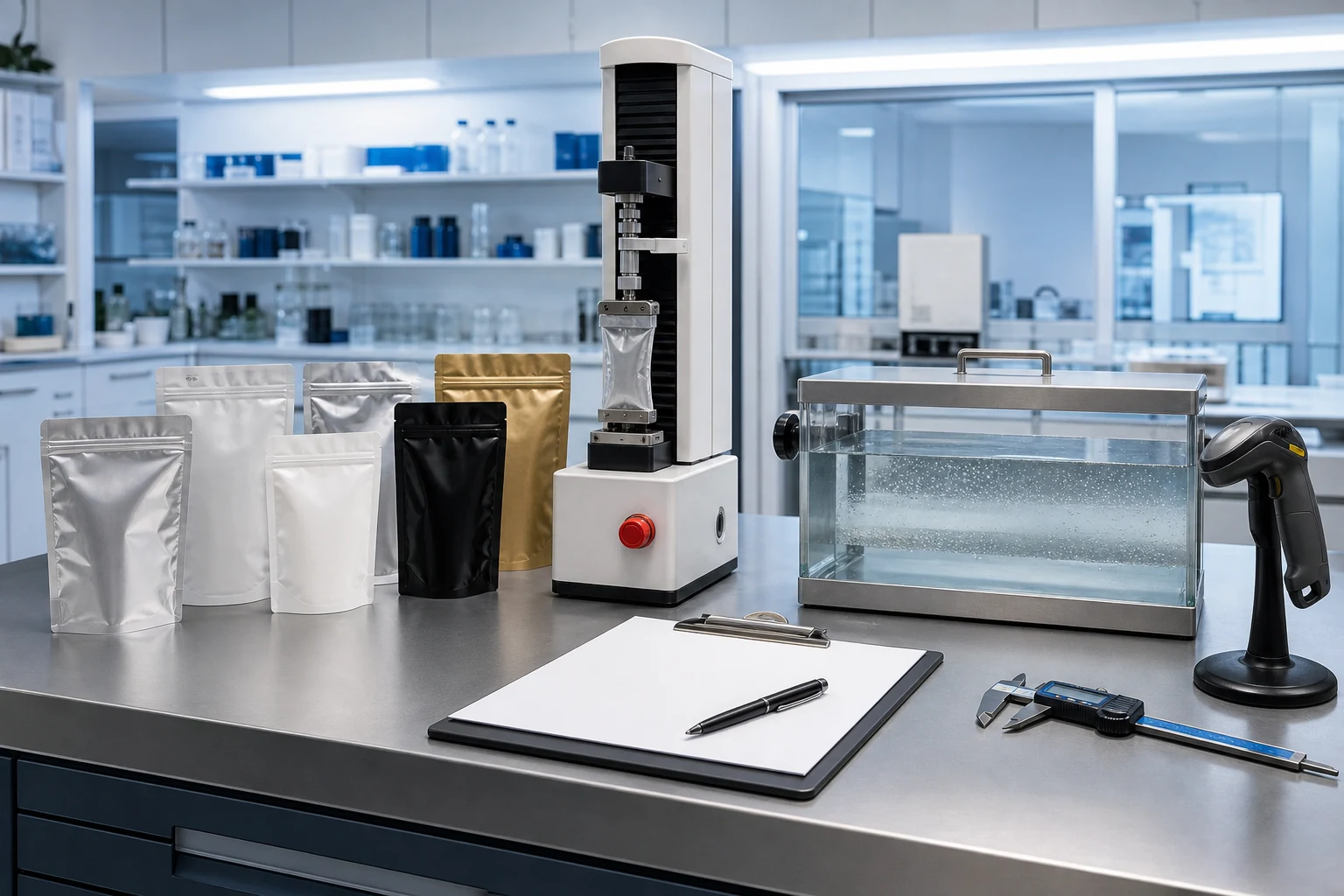
ASTM's packaging standards list F88/F88M for seal strength of flexible barrier materials.4 I ask the tester to state specimen width, support technique, test speed, conditioning, and seal location. I want the failure description as well as the measured force. I agree criteria with production before checking candidate seals. I also inspect filled samples for leaf fragments across the seal band and folds at the corners.
I compare storage samples with a retained ingredient control under recorded conditions. I ask the ingredient team to define aroma, colour, texture, and moisture endpoints that matter for this herb. I do not label a quick sniff comparison as a validated shelf-life study. If an outcome is unresolved, I record that uncertainty before requesting a production order. The quality-test guide helps connect each observed concern to an appropriate check.
- Herb identity, leaf form, fill weight, and ingredient release criteria.
- Target jar opening, transfer method, and partly used storage path.
- Exact structure, thickness, zipper, opening detail, and contact-document scope.
- Material method and conditions, seal settings, and filled-pack acceptance criteria.
- Approved sample, carton trial, quality review, and change-control owner.
I retain these inputs in the packaging specification sheet. I move from material assessment to representative samples, then a filled-pack trial and written confirmation. A specification-based quotation can follow once the open questions are resolved. I do not promise a recycling route, shelf life, price, certification, minimum order, or delivery period from the pouch's appearance.
Conclusion
I choose packaging through evidence, filled-pack testing, and clear specifications. That process protects the product, the launch, and the customer experience.
Sources and Further Reading
Need a pouch specification?
I can review your product, size, quantity, artwork, and target market.