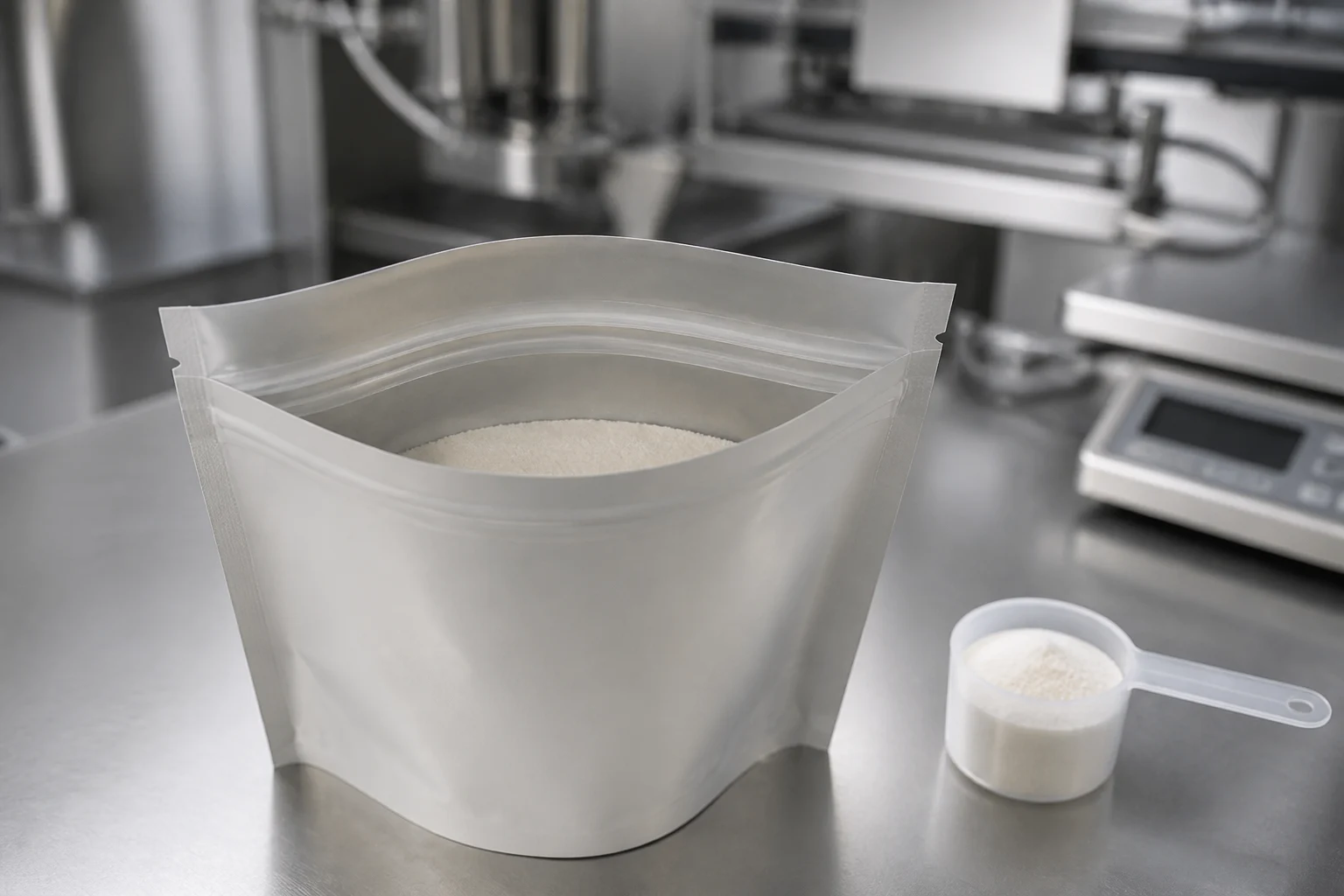
Flour trapped in folds or closures turns every refill into cleanup. I start with the opening and powder path before choosing the pouch.
I choose flour pouch packaging by matching the flour type, fill process, scoop access, closure, and storage instructions. I compare material documents and test filled packs for powder leaks, clean resealing, handling, and repeated use before approving a written specification.
I separate white flour from whole-grain and nut flour. Then I work through material selection, everyday use, and the buying record.
Which Flour and Pouch Format Am I Actually Comparing?
A neat pouch can hide the wrong storage assumptions. I identify the flour and its handling route before comparing materials.
I compare the exact flour recipe and pack weight with a paper bag, a wide-mouth stand-up pouch, and a flat-bottom pouch. I treat storage guidance, usable opening, and material test evidence as separate decisions.
I begin with the ingredient rather than the shelf appearance. White wheat flour, whole-grain flour, and nut flour are separate buying briefs. King Arthur Baking explains that whole-grain and nut flours contain fats and can oxidize after milling. Its storage advice includes an airtight bag or container and cold storage where appropriate.1 I use that guidance to ask the ingredient owner for storage instructions. I do not transfer a household storage recommendation into a retail shelf-life promise.
I record the flour identity, particle character, net weight, filling equipment, and intended market. I ask whether the pack is a refill, a container used repeatedly, or an ingredient emptied into a bakery hopper. These jobs need different opening tests. A shallow refill can work without standing on a counter. A pack used with a measuring cup needs enough mouth clearance to remove a level scoop without scraping powder through the closure.
I compare formats by the job they must do
| Candidate | Useful comparison | Failure I investigate |
|---|---|---|
| Paper bag | Current flour handling and transfer reference | Powder in folds, tears, and repeated closing |
| Wide-mouth zipper pouch | Scooping and storage between uses | Powder trapped in zipper tracks |
| Flat-bottom pouch | Counter stability at the actual fill weight | Corner damage and awkward access near empty |
I request dimensions below the zipper, not just the outside height. I compare candidate sizes with actual filled samples. I weigh the pack after filling and observe its shape after settling. I avoid setting a generic flour capacity from a pouch photograph because the selected ingredient and packing method are part of the result.
For material assessment I use the barrier-film guide. ASTM F1249 addresses water-vapor transmission through film and sheeting.3 I request reports with the structure, thickness, temperature, humidity on both sides, conditioning, and units. As a proposed comparison condition, I ask the laboratory about 23°C with 50% RH on one side and a dry receiving side. The laboratory must confirm suitability. These are comparison inputs, not a required flour specification or a guaranteed protection level.
How Do I Test Scooping and Powder in the Closure?
A zipper can look closed while powder interferes with its use. I check the whole scoop-and-close sequence with real flour.
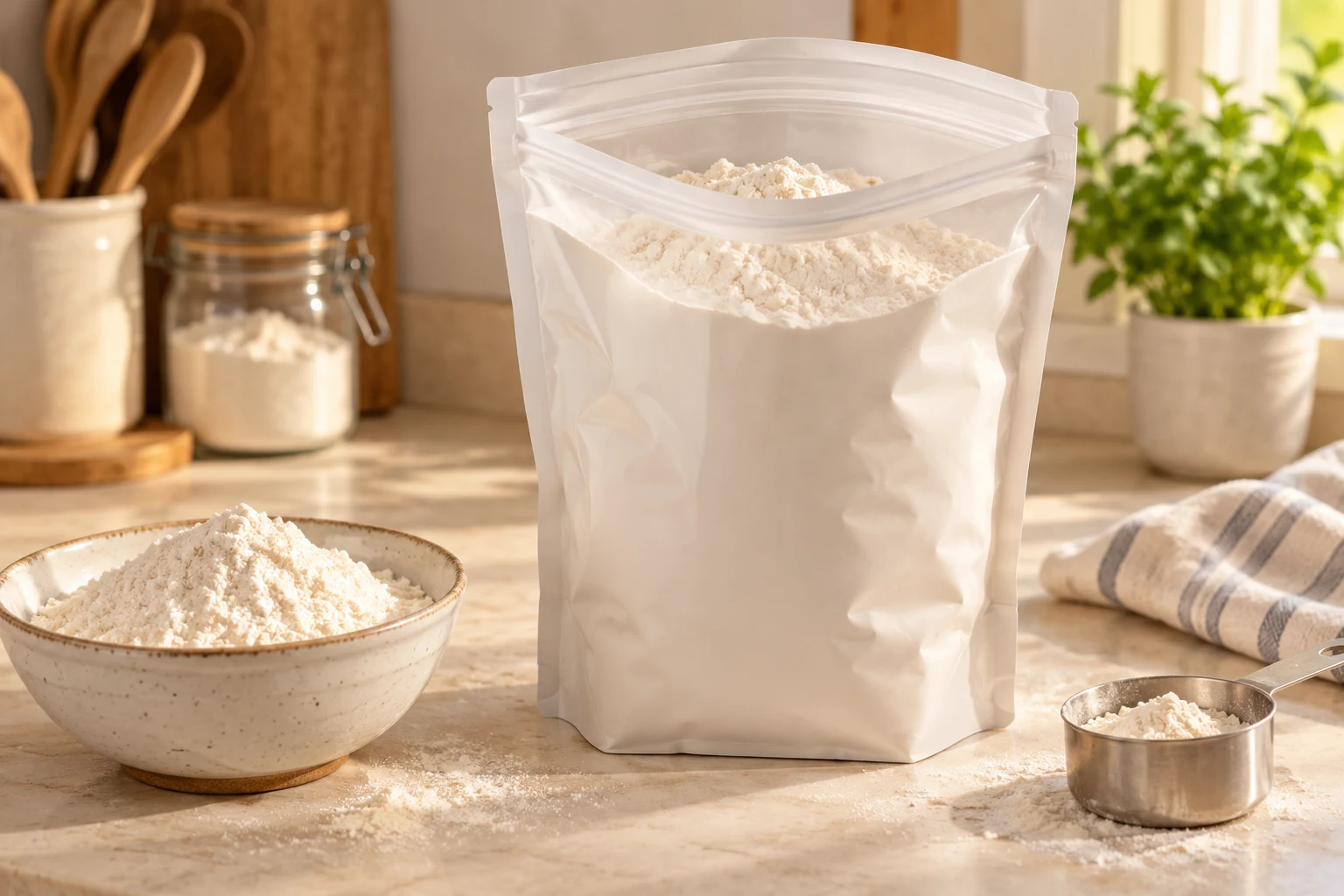
I test opening, scooping, pouring, wiping the closure, and resealing at full and nearly empty fill levels. I record powder escape and closure behavior instead of assuming a zipper solves flour mess.
I use a specific user complaint to design the trial. In a Reddit discussion, a frequent baker described difficult access in a resealable flour bag and powder accumulating in its zipper.5 This is one user's experience, not evidence that all zipper pouches fail. It tells me to include a powder-loaded closure in the test, rather than checking an empty sample only.
I put the proposed pouch beside the current package. I use the measuring tool named in the product brief. I open both packs according to their intended instructions, scoop a portion, and return the pouch to the counter. I note whether a hand needs to hold the mouth open, whether the scoop touches the zipper, and whether flour remains along the opening. I photograph the same areas after each cycle so my team can distinguish a new design problem from ordinary use.
I include the last portion in the trial
I repeat the sequence when less flour remains. A mouth that works at full fill can become awkward when the user must reach into the lower corners. I also pour the last portion into a mixing bowl. I record flour left in folds, powder released when the pack is shaken, and the grip needed to keep the opening pointed toward the bowl. These observations help me compare mouth width, panel stiffness, and gusset shape without claiming one format is universally easier.
I ask trial users to close the zipper as they normally would. Then I observe whether they check both ends or stop when the centre feels engaged. I keep closure success separate from primary heat-seal quality. The zipper supports repeated use after opening. The unopened package still needs its specified seal and a controlled filling process. I connect manufacturing questions to the powder-contamination guide and use the pouch-size guide when access depends on available space.
I also ask how the pack will be stored after use. King Arthur's flour guidance recommends protection from moisture and outside odors.1 I retain the ingredient owner's specific instructions rather than adding an unsupported storage period. If the intended instruction calls for transfer to another container, I test that transfer. A refill brief should solve clean pouring, while a repeated-use brief should also address resealing.
What Must the Flour Packaging Specification Confirm?
An attractive sample is not a buying record. I lock the material, closure, and trial findings before requesting production pricing.
I confirm the exact structure, dimensions, closure, food-contact use, seal process, and agreed test conditions. I attach an approved filled sample and unresolved limits, then request a quote against that same specification.
I separate the three approval records. The ingredient owner approves the flour and its handling instructions. The packaging team approves the candidate construction and documents. The production team approves filling and sealing on the intended equipment. A signature on the artwork does not replace any of these decisions.
FDA's reference tables distinguish food categories and conditions of use, including room-temperature, refrigerated, and frozen storage.2 I ask the supplier to identify the food-contact basis for the actual contact layer and closure components under the planned use. If the brief includes freezer storage, I include that condition in the document review and handling trial. I do not treat an unspecified food-grade statement as evidence for every flour and temperature.
I write down the testing question
ASTM lists F88/F88M as a seal-strength method for flexible barrier materials.4 I request a report that states specimen width, test speed, support technique, conditioning, seal location, and observed failure. My production team agrees acceptance criteria with the laboratory before the trial. I also retain photographs of seal contamination and channels. A peel-strength measurement does not answer every leak or closure question.
I run the candidate with the normal flour filling process. I record fill dust, pouch mouth position, sealing settings, and rejects. I label trial specimens so a failed pack can be traced to its run condition. I compare clean seals with seals produced during realistic powder handling. I use the packaging test guide to choose checks that address the observed failure, rather than ordering unrelated tests.
- Exact flour identity, fill weight, and approved handling instructions.
- Layer construction, nominal thickness, and food-contact document scope.
- Finished dimensions, usable mouth width, zipper position, and opening detail.
- Sealing setup, named methods, laboratory conditions, and agreed acceptance criteria.
- Approved sample, scoop-and-close observations, carton arrangement, and change triggers.
I keep this checklist in the written specification sheet. I review a representative sample before a filled-pack line trial, then confirm the final version in writing. Only then do I request a quotation tied to the selected construction and quantity per design. The result is a flour-specific decision record. It does not invent a minimum order, delivery date, certification, shelf life, or price.
Conclusion
I choose packaging through evidence, filled-pack testing, and clear specifications. That process protects the product, the launch, and the customer experience.
Sources and Further Reading
Need a pouch specification?
I can review your product, size, quantity, artwork, and target market.