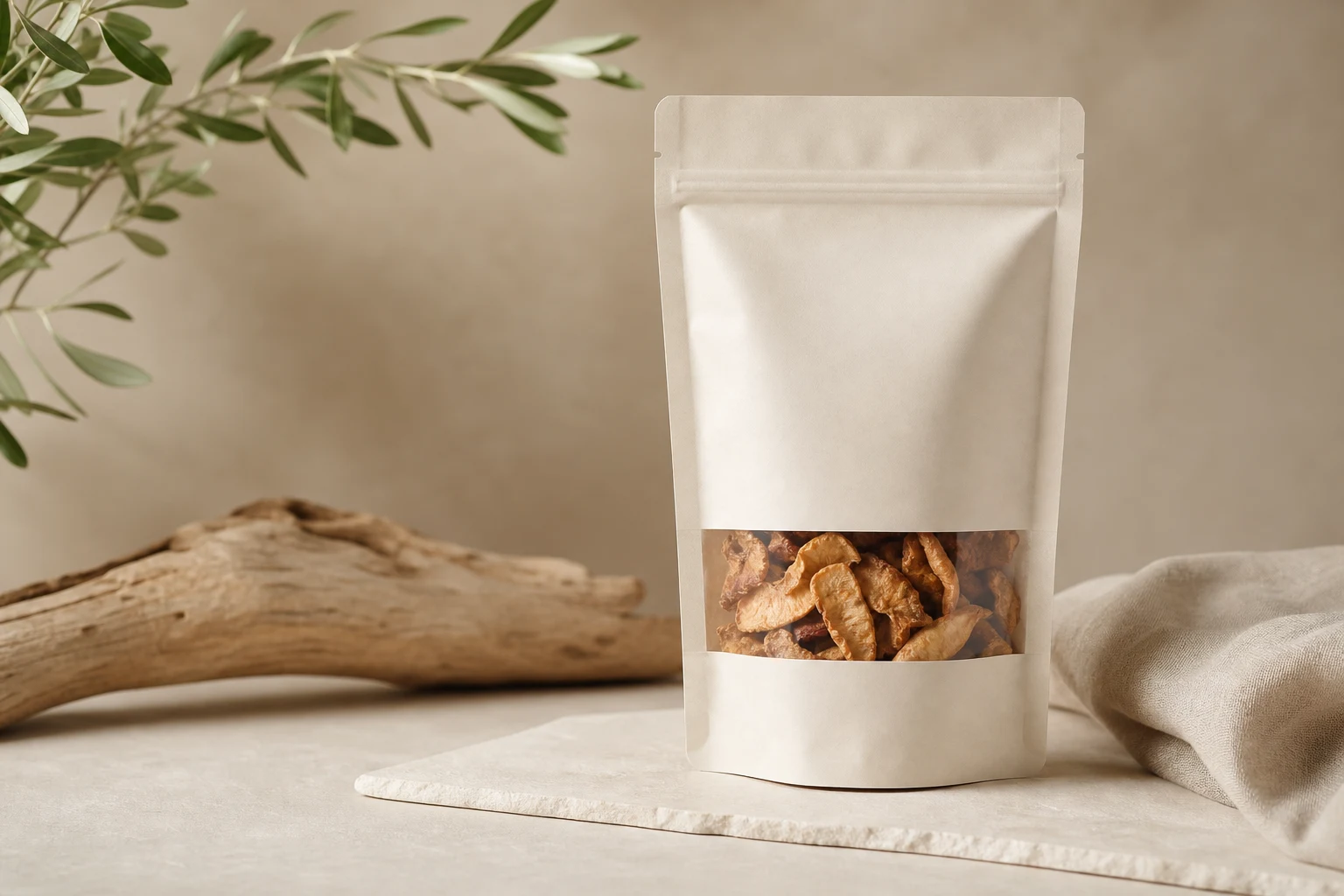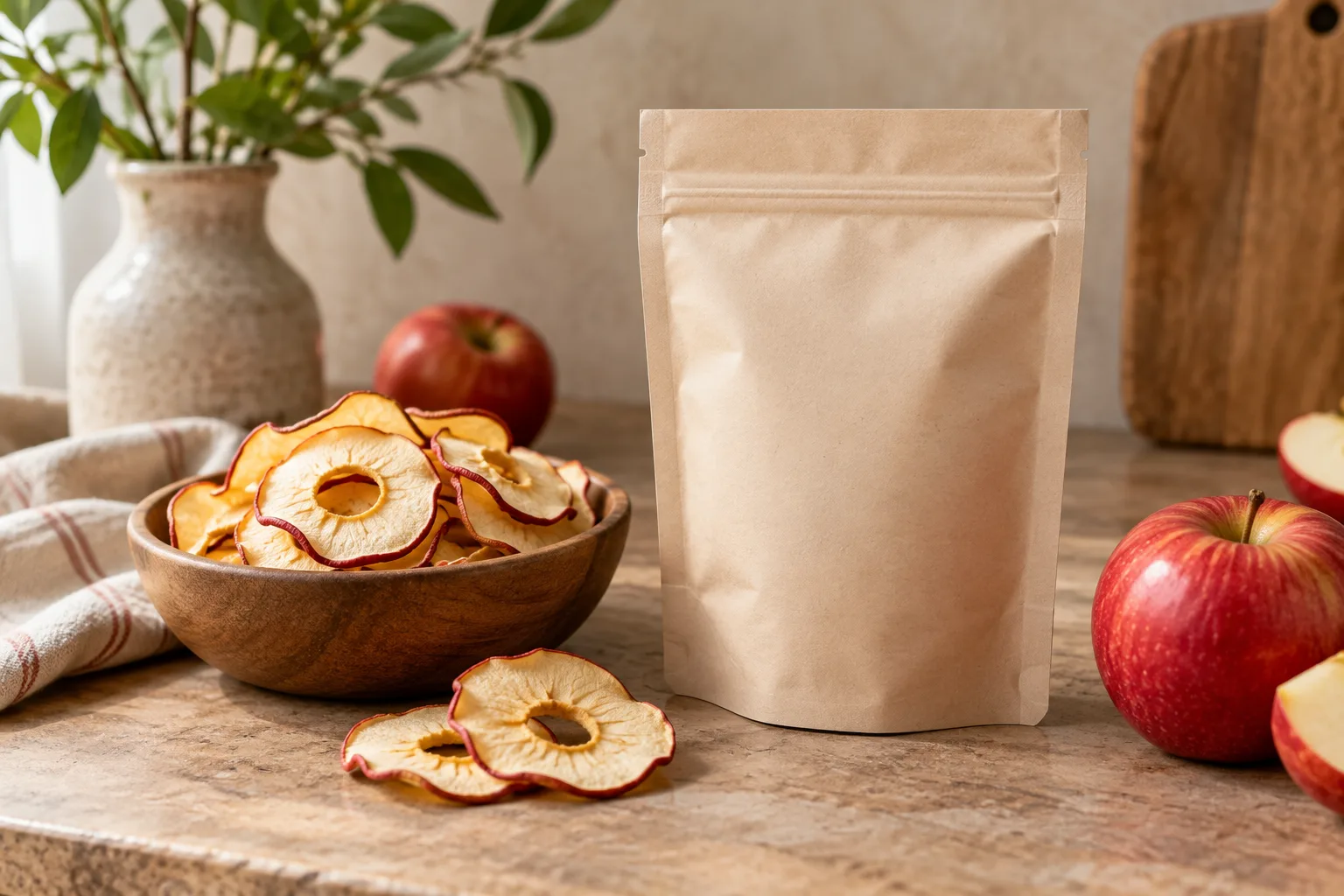
Apple chips can look attractive through a window yet arrive soft or broken when the finished pack has not been checked.
I choose clear or opaque apple-chip pouches using the actual chips, storage route, moisture-barrier evidence, and filled-pack trials. Visibility is a design benefit; it cannot replace proof that the chosen construction meets the product brief.
I start with the intended texture. Chewy dried apple slices and crisp apple chips should not share an undefined acceptance criterion.
What Texture Am I Trying to Preserve?
An undefined word such as dried lets the processor, buyer, and packaging supplier judge different products as acceptable.
I define the chip thickness range, intended bite, production condition, and acceptance method with the food team. I retain a reference sample and separate initial texture defects from changes during storage.
I ask the brand owner what a customer should experience at first opening. Does the slice snap, crunch, or remain flexible? I write that expected texture in the product brief and ask the food team to define a repeatable evaluation. I do not invent a moisture-content or water-activity target for a recipe I have not tested.
The National Center for Home Food Preservation explains that dried foods can reabsorb moisture and recommends cooling before packaging.1 That is useful background for the investigation. Its home-preservation guidance does not establish the commercial shelf life of a specific apple-chip pouch. I use product trials to answer the commercial question.
I distinguish two possible starting problems
In the Reddit apple crisps/chips discussion, u/Just_bumbling reports slices that remain chewy after drying. In a reply, u/cremaster2 describes storing dried slices in vacuum bags and noticing moisture uptake otherwise.4 I treat both accounts as attributed experience. They suggest different checks: inspect the initial product, then study the change after packing. They do not establish a universal drying schedule.
I retain a sample from the batch at filling and record its texture, appearance, slice range, and production revision. I compare stored samples with that baseline. If every pack begins with a chewy product, changing the pouch is not a substitute for investigating the food process. If the accepted starting product changes after storage, I examine the packaging and exposure conditions. This distinction makes the next trial specific and prevents unrelated changes to film, drying, and carton design at the same time.
How Do I Compare Clear, Windowed, and Opaque Packs?
A transparent panel makes a product visible, but its appearance cannot identify the finished pack’s moisture protection.
I compare the entire construction, including any window, using identified samples and agreed barrier-test conditions. I keep shopper visibility and verified protection as separate entries in the decision table.
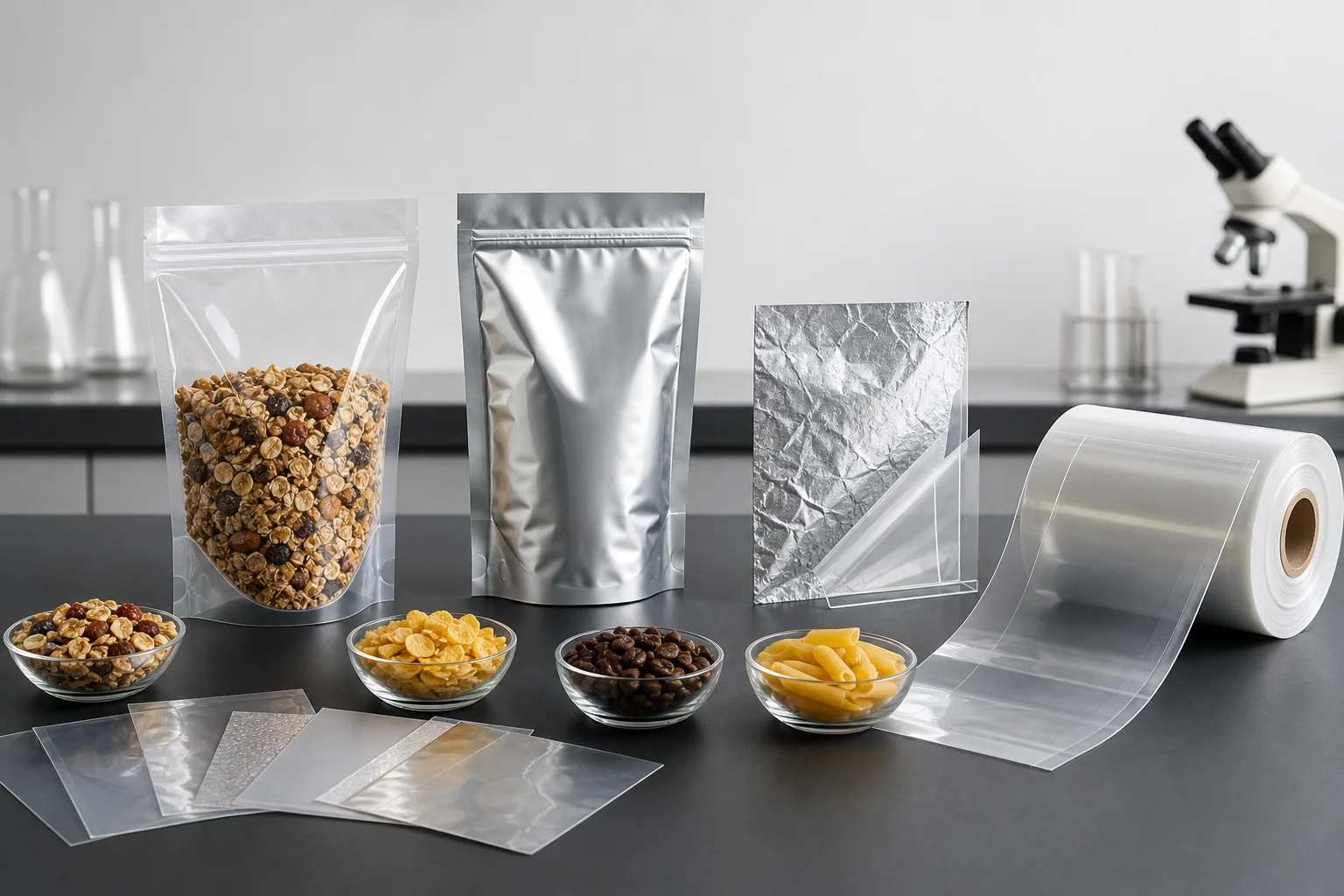
I request complete structure descriptions for the clear, windowed, and opaque candidates. I include the window area, sealing layer, dimensions, and any coating or lamination detail relevant to the supplier’s proposal. I do not assume that every opaque pack contains foil, or that every transparent film has the same barrier. Those categories describe appearance, not one standard construction.
I keep the comparison tied to evidence
| Candidate | Reason to evaluate | Evidence still needed |
|---|---|---|
| Clear pouch | Shoppers can inspect the chips | Full construction and barrier report |
| Windowed pouch | Limited view with space for printed information | Window construction and finished-pack trial |
| Opaque pouch | Hidden product with an uninterrupted artwork area | Identified structure and the same product study |
ASTM F1249 defines a water-vapor transmission method for flexible barrier materials.2 I ask the laboratory to report specimen identity, temperature, humidity conditions, units, and thickness where applicable. I compare results only after checking that the method and conditions fit the decision. I do not prescribe an arbitrary test condition as though it represents every warehouse.
The barrier-film guide provides the broader material framework. The food-pouch window guide helps specify the viewing feature. I then run the same apple product through candidate packs under a documented storage plan. I record texture and other food-team criteria alongside package condition. This lets the buyer judge visibility against evidence for the actual application rather than choose a pouch by a generic high-barrier label.
How Do I Check Breakage, Seals, and Repeated Opening?
A film report cannot show broken apple rings, crushed corners, or the way a customer closes a partially used pack.
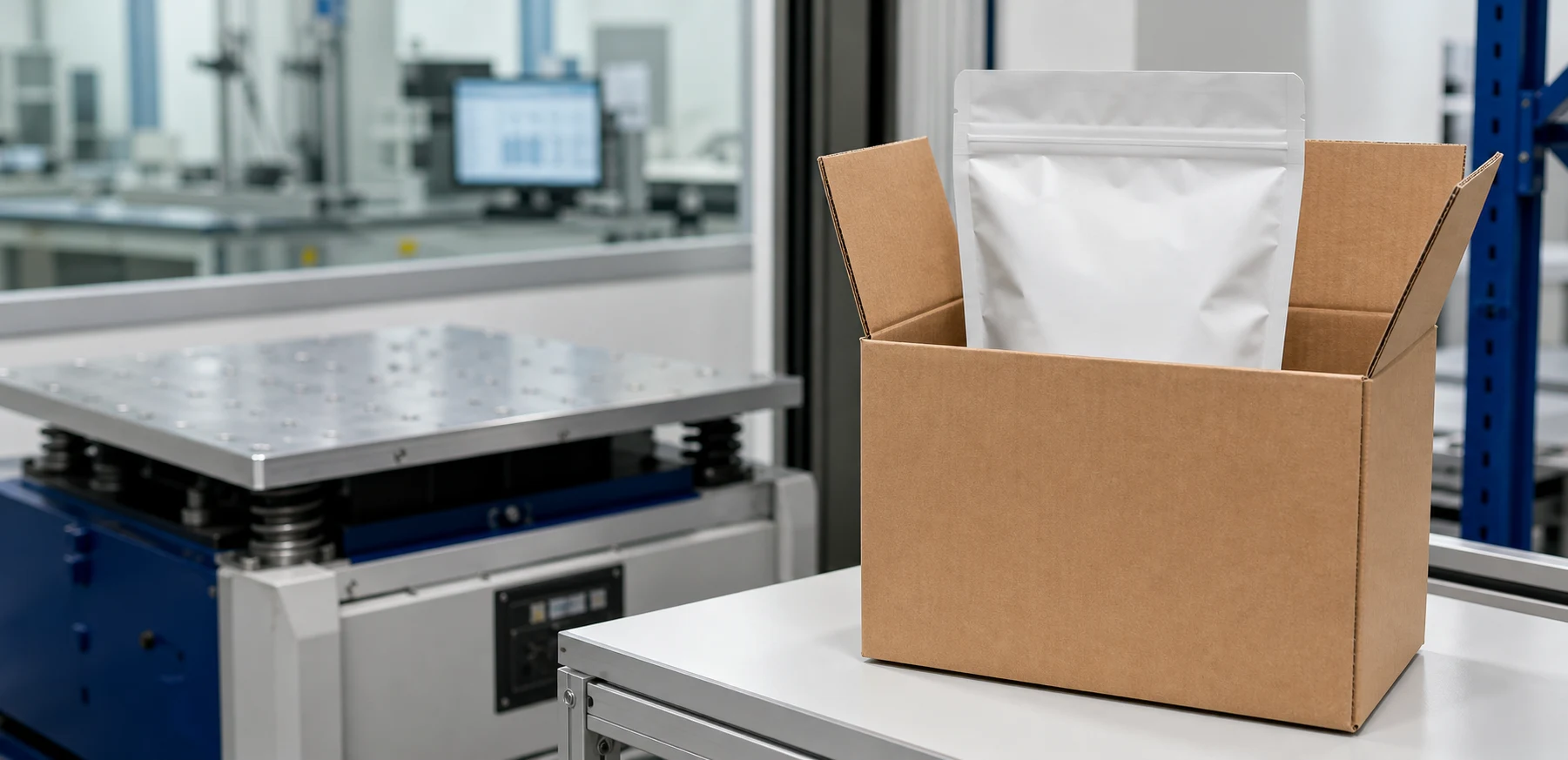
I review representative filled pouches in the intended carton, then inspect chips, seals, opening, and closure. I document handling and storage conditions so I can separate food damage from package failure.
I begin with the pack as shipped. I record the fill range, pouch dimensions, carton layout, and chip orientation where relevant. I inspect a baseline sample before handling, then use a project-specific distribution plan. I compare whole pieces, fragments, visible dust, panel rub, and seal appearance after the selected checks. I do not call a bench exercise a certified shipping result.
The filled-pouch distribution guide helps define the question and test route. I ask whether the principal concern is retail display, parcel handling, or a different shipment. A protective carton decision may matter to this project as much as the pouch format. I retain the carton arrangement with the approved sample so later teams can repeat the same configuration.
I examine the functional features separately
ASTM F88/F88M provides a seal-strength method.3 I request the relevant specimen location, support technique, speed, conditioning, and failure description. I keep the result separate from breakage observations. A favorable seal-strength comparison is not evidence that chips survived compression or retained their original texture.
For a resealable pack, I plan an opening and closure exercise with actual chips. I observe whether crumbs enter the zipper and whether the opening allows normal pouring without crushing pieces at the mouth. The NCHFP guidance notes exposure to air and moisture when dried-food packages are reopened.1 I therefore ask the food team to include the intended after-opening use pattern in its study. I avoid copying home-storage durations onto a commercial label. The outcome should identify the tested configuration, remaining uncertainty, and any change that needs another filled-pack review.
What Apple-Chip Specification Makes Quotes Comparable?
Two attractive quotes may describe different windows, layer structures, fill volumes, and carton assumptions.
I quote one written brief with the apple product, intended texture, pack construction, viewing feature, tests, filled-sample approval, and carton plan. I ask suppliers to identify every proposed deviation.
I first confirm which candidate passed the defined material and filled-pack review. I attach the accepted sample identifier rather than ask the supplier to match a photograph. I record the chip recipe or production revision and the texture reference used at approval. I keep the storage study plan with the pack specification because it explains the limits of the decision.
I record the details that can change the comparison
My purchasing checklist names the fill range, width, height, gusset, layer sequence, sealant, thickness specification, zipper, tear notch, window position, window size, and artwork revision. I include the market and intended food-contact conditions. FDA’s tables are a starting point for identifying food type and use; they are not a certificate for this pouch.5 I request documents for the stated components and project scope.
I also record moisture-test conditions, the chosen sample, package checks, carton dimensions, dividers if used, handling plan, and food-team acceptance criteria. I distinguish an intended shelf-life target from a confirmed result. I use the written specification guide to hand these decisions to sourcing without losing their context.
I then request a quote with quantity per artwork, commercial assumptions, sample scope, and any substitutions stated explicitly. No generic price, MOQ, certification, or delivery claim is needed to explain this buying process. If a supplier changes the window, sealant, or carton arrangement, I ask which relevant checks need repeating. The practical path is material assessment, representative filled-pack trial, written configuration approval, then a specification-based quote. I send the accepted brief and unresolved questions through the project inquiry form when those inputs are ready.
Conclusion
I choose packaging through evidence, filled-pack testing, and clear specifications. That process protects the product, the launch, and the customer experience.
Sources and Further Reading
Need a pouch specification?
I can review your product, size, quantity, artwork, and target market.