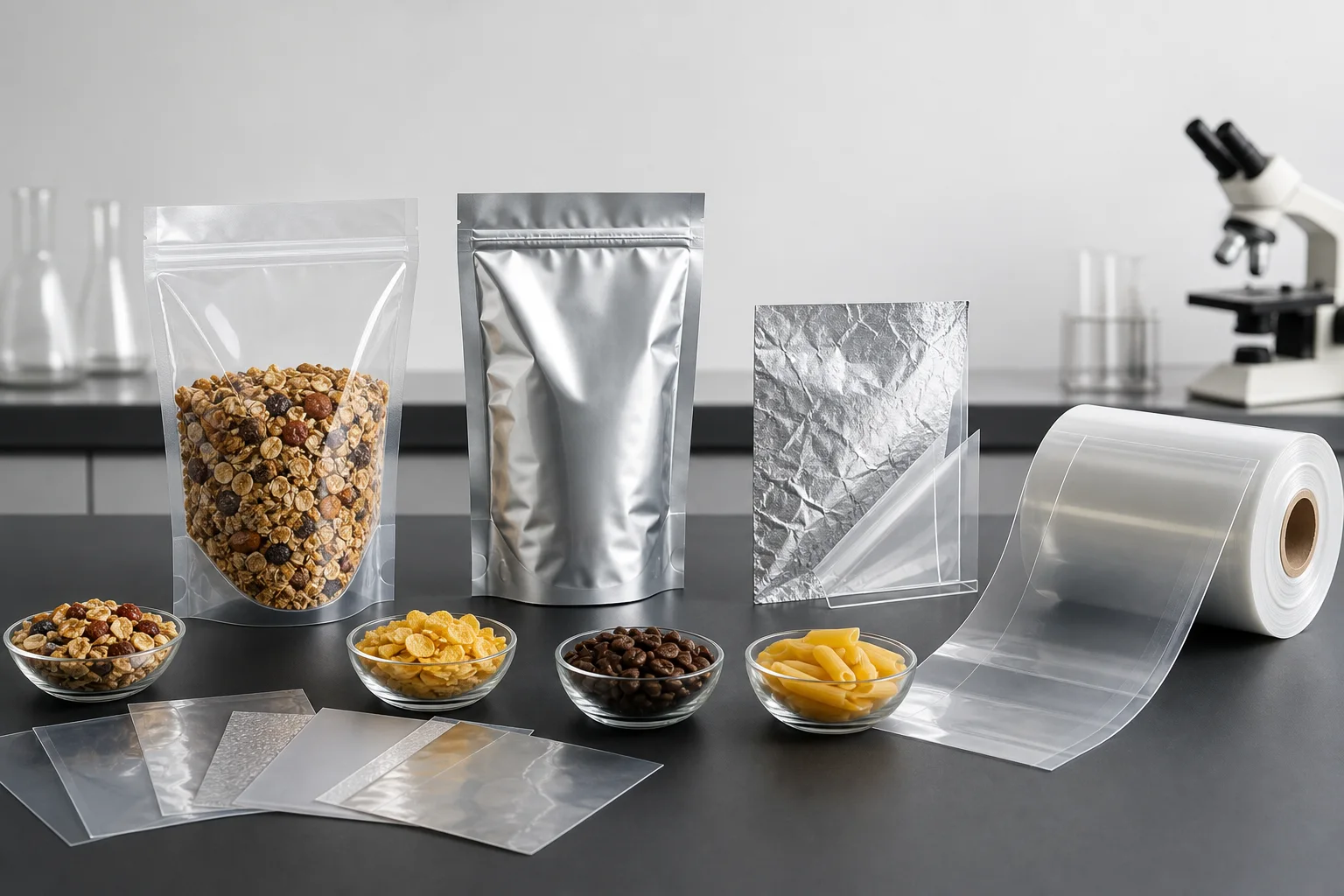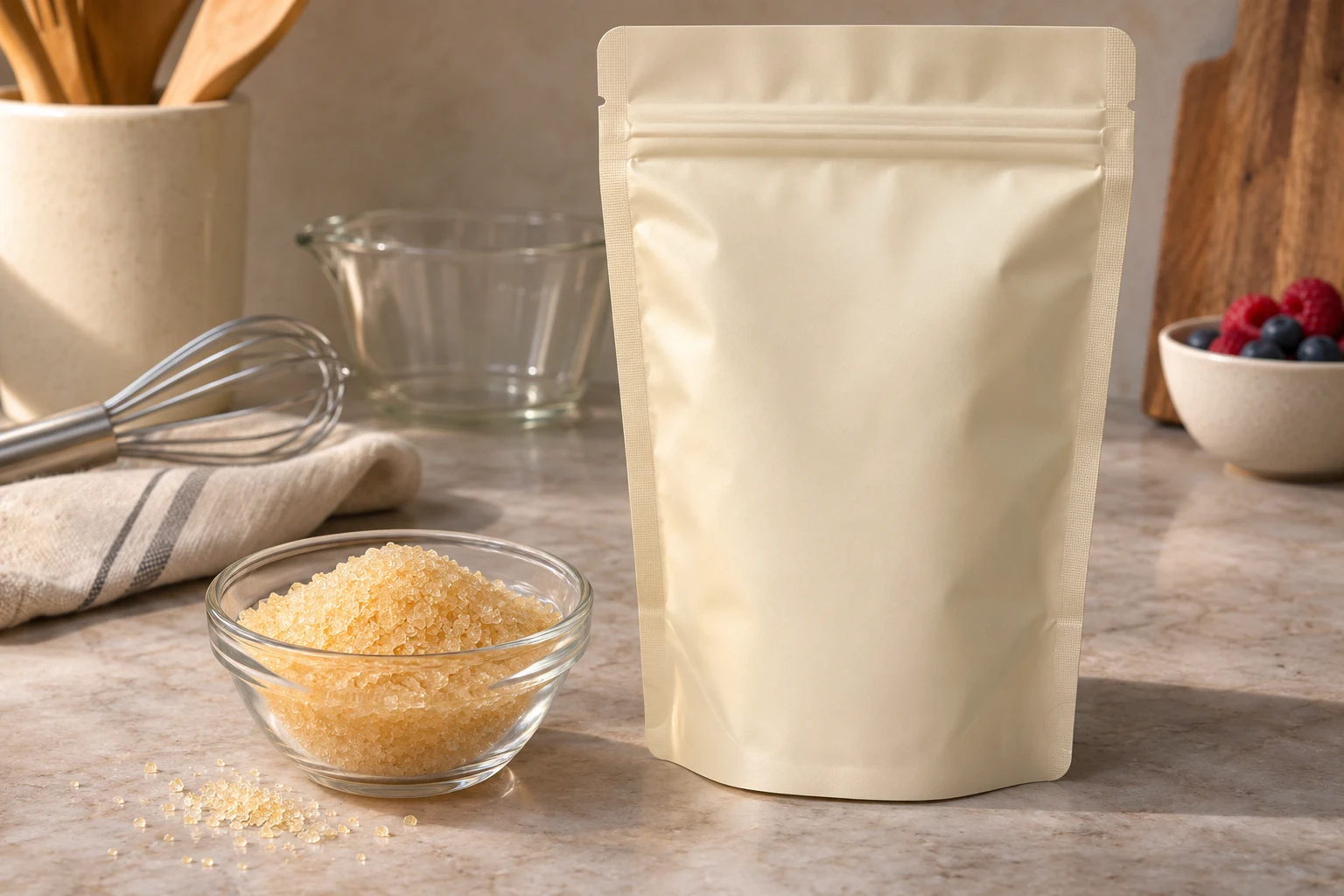
A gelatin pouch can close neatly on the sample bench. Add a scoop and several weeks of kitchen use, and the same closure can become awkward.
I choose a resealable pouch by testing my actual gelatin grade, scoop clearance, zipper cleanliness and moisture protection. I compare it with single-use sachets when the recipe calls for a full measured portion, then approve the film and closure together.
I start with how people measure the ingredient, then work back to the pack and the filling line.
Does My Gelatin Need a Zipper or a Single-Use Sachet?
A bag sized only for fill weight can be too narrow to scoop from. Buyers may end up moving the ingredient into another container.
I use a zipper for repeat scooping and a tear-open sachet for a full recipe portion. I compare both with the actual powder and the measuring tool the buyer will use.
The distinction I care about is what happens after the first opening. If the whole quantity goes into one recipe, I can compare a tear-open sachet with a multi-use bag by the number of portions the customer actually handles. For a pouch intended to supply several batches, I check whether the widest common measuring spoon enters flat and exits without scraping the zipper. Then I test again with most of the product removed. In a deep narrow bag, reaching the last portion can be a different task from taking the first.
One r/AskCulinary participant considering a bulk purchase asked whether to decant the powder into jars. A reply said they kept their gelatin in the original dark zip-top bag in a cupboard.1 I use that exchange as a prompt to compare two paths in a trial. Can a person store and measure directly from the pouch, and can they find the grade and lot code again if they prefer to transfer the product? The exchange tells me what to observe in a kitchen trial. I take the storage instructions from the actual ingredient supplier. One food gelatin technical sheet, for example, specifies a cool, dry environment for its own powder.2
| Format | Use I would trial | What can rule it out |
|---|---|---|
| Tear-open sachet | One entire recipe portion | Powder spills at tearing or remains trapped in corners |
| Wide zipper pouch | Repeated scooping with a dry spoon | Spoon scrapes closure or cannot reach a low fill |
| Tub with lid | Frequent access with a wide scoop | Proposed fill or case layout makes the tub impractical |
I use the stand-up pouch sizing guide to turn the trial into actual width and gusset candidates. I compare the opened mouth dimensions as well as the unopened pack dimensions. A wider bag still needs to fit the case and present the instructions on the shelf.
How Do I Keep the Seal and Zipper Clean?
A few grains in the wrong place can make a closure hard to judge. A good hand-filled sample may hide what happens at line speed.
I separate the factory top seal from the consumer zipper. I run the intended powder at production-like speed and check each zone for stray grains, wrinkles and alignment.
I ask the filler for the particle grade and for a representative sample from the intended process. I want to see how the powder falls from the actual nozzle and what the operator does between fill and seal. I inspect packs early, midway and after a stop and restart. If a setup throws powder upward, I record where the product lands. Debris above the zipper, debris inside the zipper and debris at the jaw line are three separate observations with different implications for the investigation.
What do I record at the sealer?
I record actual jaw temperature, dwell, pressure, fill speed and the lot of the pouch. I also record the seal location and whether the strip came from a flat panel or near a seam intersection. I ask the lab to agree the ASTM F88/F88M seal-strength configuration before comparing specimens, including strip width, pull setup, conditioning and failure mode.3 I compare top-seal results with the visual findings on the same sample group. The seal-leak guide helps me organize those observations by location.
For the zipper test I ask a second person to open, scoop, close and reopen the pouch with normal hand pressure. I log the cycle count and which end first feels hard to close. I also look for excess force from the pouch panel folding into the track. If a change to fill height clears the zipper but pushes the lot code into a fold, I carry both observations into the next trial. I keep a filled reference pouch and a photo of the worst failure so production and purchasing can review the same evidence.
What Should My Gelatin Pouch Specification Include?
A supplier can quote an attractive bag while assuming a different film, zipper or pouch width. Those assumptions can undo the trial.
I lock the ingredient grade, fill weight, opening dimensions, film construction, closure and test conditions. I request a quote tied to the sample revision and the intended food-contact use.
I begin the material assessment with the product supplier's storage instructions and the brand's intended distribution and use. I review the food barrier film guide to decide what film data to request. For a water vapor transmission comparison using ASTM F1249, I ask for film identity, thickness, temperature, relative humidity and units on the report.4 I specify matching conditions for both candidates. Then I run a separate filled-pack study with the brand's storage and opening schedule. I check powder flow and visible clumps against a retained sample, and ask the product team to define any ingredient performance checks it needs.
For US food contact I request documentation for the exact contact materials and conditions of use. FDA's guidance explains that regulatory status depends on the components and their intended use.5 I record which proposal the documentation covers and route any proposed substitutions to review. I use the packaging specification sheet to collect the rest in one place.
- Record the gelatin grade, net fill and planned scoop.
- Mark mouth width, usable reach, fill line and lot code on the drawing.
- Identify film layers, thickness, zipper profile and approved sample.
- Attach seal, moisture and after-opening test records with acceptance criteria.
- Set a written review step for material, tooling or component substitutions.
I ask for two filled sample revisions only if the trial reveals a real trade-off. A shorter bag can improve reach, for example, while a wider bag may force a new case layout. Once the drawing and trial record agree, I use the pouch quote form and include the quantity per artwork, target market and destination. That gives the converter the same configuration the filler approved.
How do I compare the last serving?
I weigh the pouch before the last planned serving, then ask the tester to measure that serving using the instructions printed on the pack. I weigh the pouch again and record whether the tester had to tilt, shake or roll it. A useful trial includes at least one person who has never handled the prototype. If they turn it sideways and lose sight of the instructions, I ask the artwork team to review the placement before I send the drawing for a quote.
Conclusion
I approve the pouch when the real powder stays usable, the scoop fits at low fill, and the line can seal consistently.
Sources and Further Reading
- Reddit r/AskCulinary: long-term powdered gelatin storage.
- Perdomini-IOC: powder gelatin technical data sheet.
- ASTM F88/F88M: seal strength of flexible barrier materials.
- ASTM F1249: water vapor transmission through plastic film and sheeting.
- FDA: determining regulatory status of food-contact components.
Need a pouch specification?
I can review your product, size, quantity, artwork, and target market.