A baking powder refill can look convenient yet disappoint when the opening spills powder, the zipper traps dust, or the material evidence is incomplete.
I choose baking powder refill pouches by checking the actual powder, moisture-barrier evidence, seal and zipper geometry, and the refill or spooning routine. I approve representative filled packs before confirming a written specification.
I start from the baker’s routine. My buying brief connects ingredient handling with pouch construction, rather than assuming every white powder needs the same package.
Should the Pouch Refill a Tin or Hold the Measuring Spoon?
A refill promise becomes awkward when the pouch cannot pour into the intended tin or give a measuring spoon enough room.
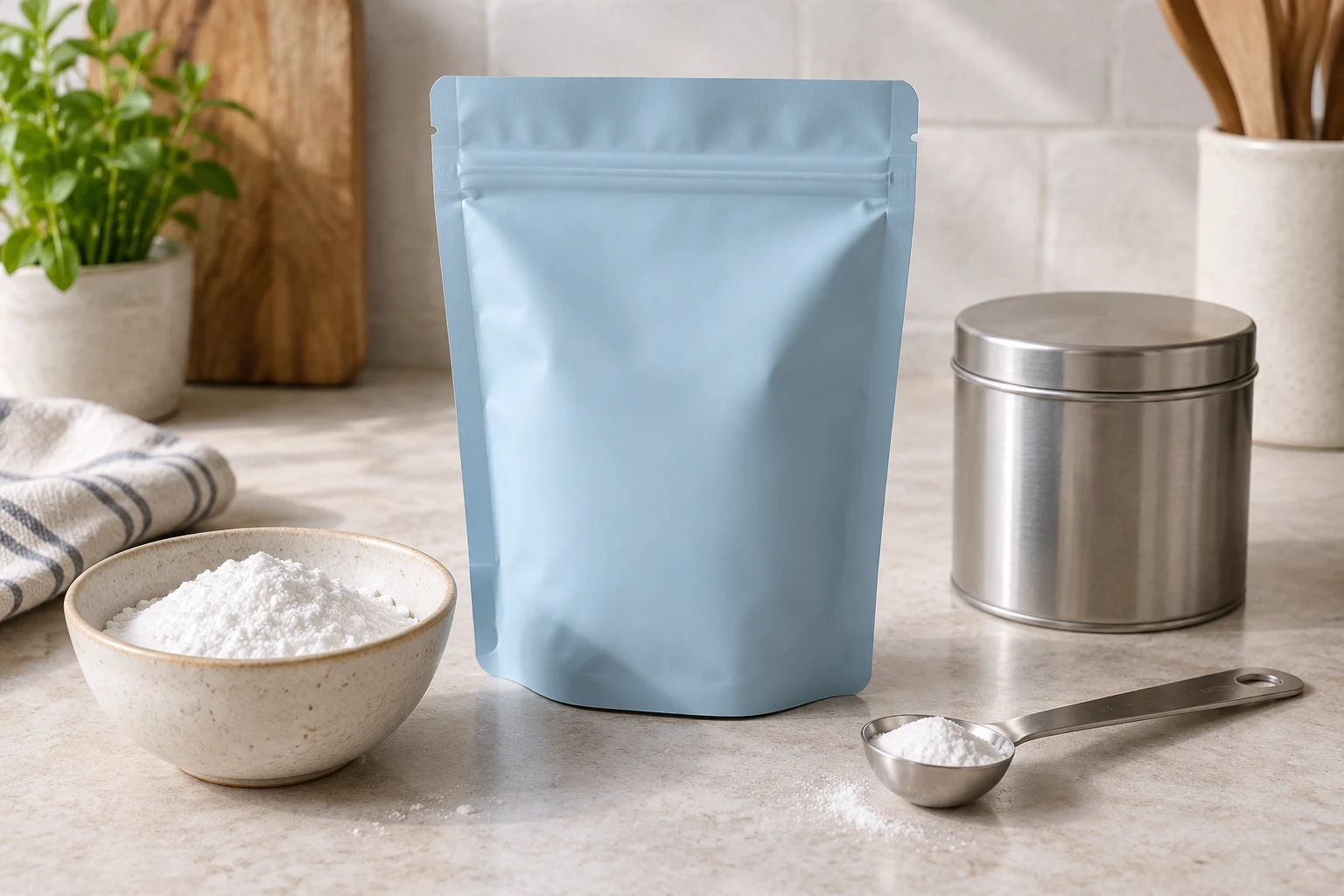
I decide whether the pouch is a one-time refill or a repeated-use container. Then I test its mouth, pouring control, spoon clearance, and closure with the actual baking powder and intended receiving container.
I separate two jobs before discussing film. A refill pack may transfer its entire contents to a named tin. A pantry pack may stay open for many short measuring sessions. I ask the brand which job it promises. I then draw the sequence from first tear to final portion. That exercise tells me whether to prioritize a controlled pouring corner, a wider mouth, easy zipper access, or a smaller fill. I do not assume a refill customer already owns a suitable container.
Clabber Girl recommends storing its baking powder in a cool, dry place.1 I use that product-specific guidance to frame the handling brief. I do not copy the brand’s storage period onto a new private-label product. My brief asks the ingredient owner for its own approved storage instructions and quality criteria. It also identifies whether the product is a plain leavener or a blend. Different products need their own assessment.
How do I preserve the measuring routine?
In r/AskBaking, a user valued baking powder tins with a lip for leveling measuring spoons and wanted similar containers for other ingredients.2 I treat this as a specific usability signal. It does not show that a flexible pouch needs a rigid leveling strip. Instead, I compare whether the refill can preserve a useful existing tin, and whether a pouch-only format makes measuring harder. I avoid adding hardware until a simple filled sample exposes a real problem.
For a trial, I give an adult evaluator the intended spoon, receiving container, and filled pouch. I record the tear path, access to the zipper, powder left on the counter, and difficulty controlling the last portion. I repeat the routine after some product has been removed. A nearly empty pouch may be held differently from a full one, so I include both states in my proposed review. These are observations to collect, not performance results I already possess.
I use the pouch size guide to organize dimensions and fill clearance. I keep the final decision tied to the physical trial. A nominal gram capacity alone cannot tell me whether a particular spoon fits through the opening.
Which Material and Seal Evidence Should I Compare?
A high-barrier description cannot tell me the tested film, conditions, or whether the powder filling process leaves a usable seal.
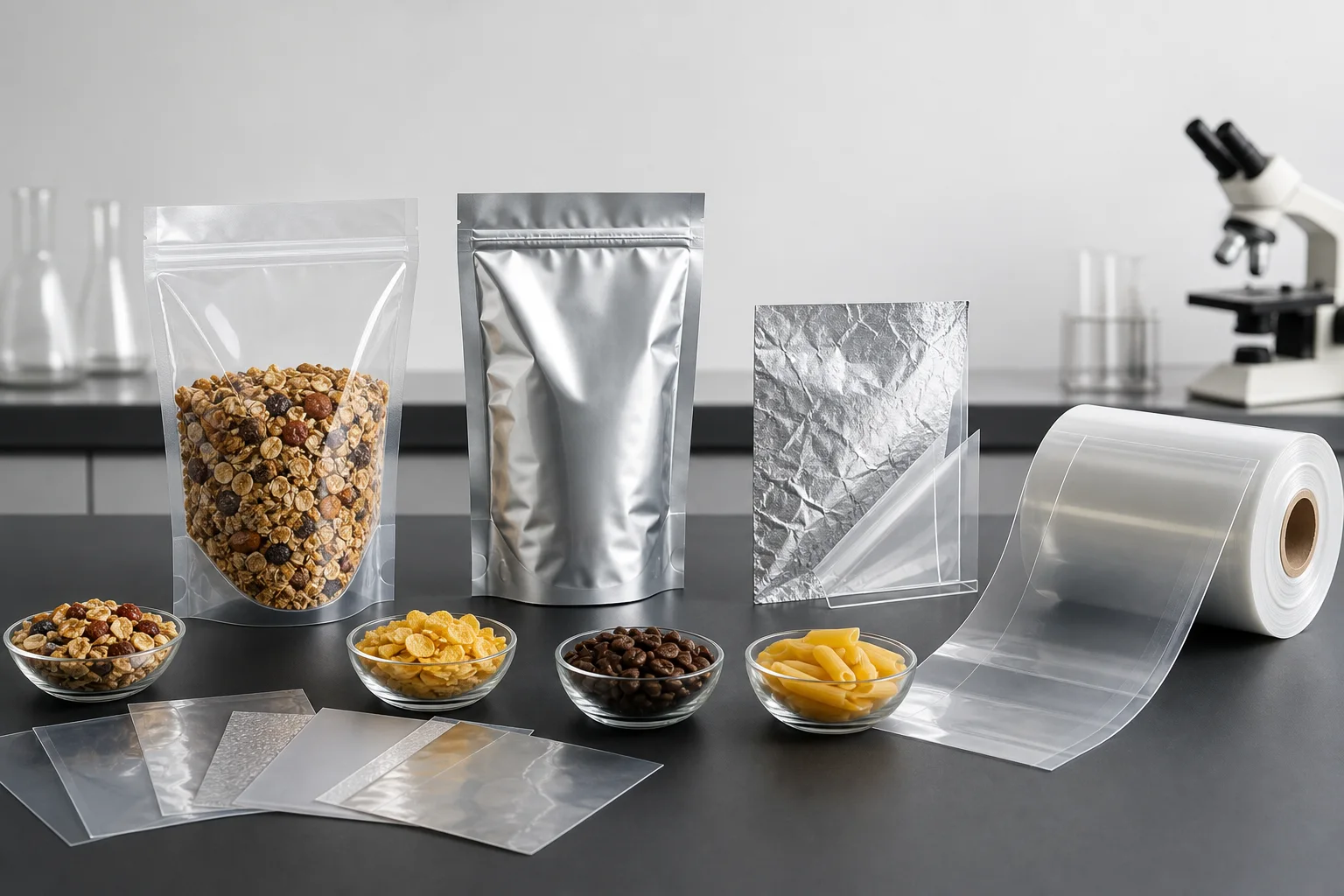
I compare the named construction, moisture-transmission report, food-contact scope, sealant, zipper placement, and filled sealing trial. I request test conditions and agreed limits before treating two supplier results as comparable.
I request the proposed layer sequence, nominal thickness and tolerances, inside sealant, and zipper specification. I ask which version of the material each report represents. A sample made with one structure cannot approve a later order made with another. I link the sample identifier to the written construction so the buyer can trace an attractive mockup back to a real proposal.
ASTM F1249 is a method for measuring water-vapor transmission through plastic film and sheeting.3 For my comparison, I request the report’s temperature, humidity conditions, units, specimen identification, and thickness. I ask the laboratory to confirm the appropriate method and conditions. I do not invent a universal moisture-transmission target for baking powder. The ingredient owner must connect packaging evidence with its product evaluation.
What does each evidence item answer?
| Evidence | Buying question | Remaining check |
|---|---|---|
| Named film and moisture report | What material was tested, under which conditions? | Actual filled product and storage plan. |
| Seal-strength report | How did the tested seal separate? | Powder filling and leak assessment. |
| Zipper and opening sample | Can the customer reach and reclose it? | Repeated use with actual powder. |
| Food-contact documentation | Does the evidence match intended use? | Review for the target market and project. |
ASTM F88/F88M measures seal strength in flexible barrier materials and records the failure mode.4 I ask for the specimen width, support technique, preparation, and reported results when comparing seals. I keep a separate record for powder contamination and visible channels. A force value alone does not answer every package-integrity question.
FDA separates food-contact assessment by food type and conditions of use.5 I therefore give the supplier the actual dry product and process, rather than accepting a general food-grade description. I use the barrier-film core guide to organize material questions and the powder seal and zipper guide for filling details. Neither page replaces documentation for the selected pouch.
How Do I Turn Filled Trials into a Purchase Specification?
A promising sample is hard to repeat when purchasing records only artwork and dimensions while leaving the filling and opening conditions unstated.
I approve a named filled sample, define measurable acceptance criteria, and record construction, dimensions, closure, filling settings, test conditions, storage review, and change triggers. I request quotations against that same specification.
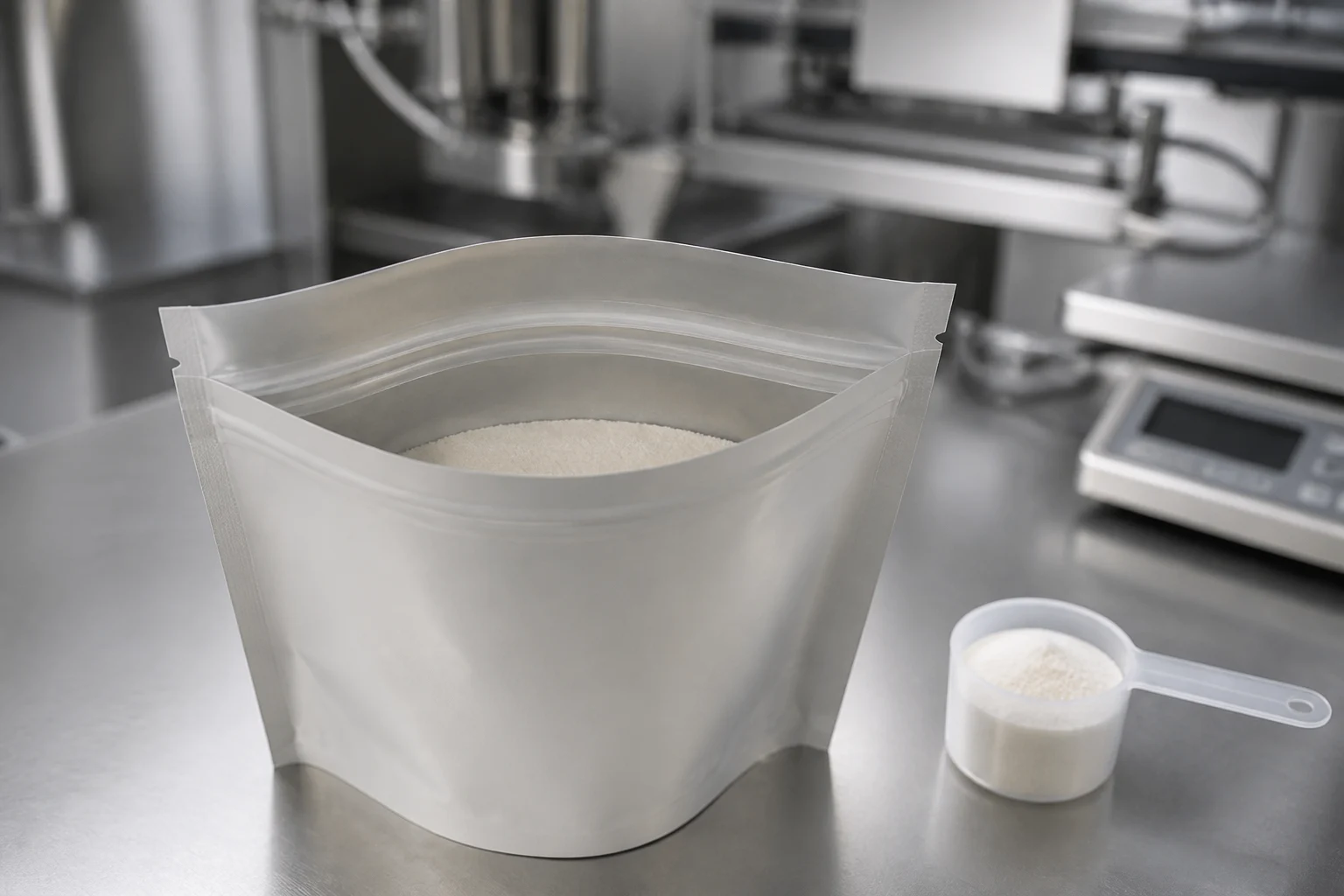
I start the pilot with representative baking powder, proposed pouch construction, and the intended filling equipment. I record the product lot, fill range, pouch revision, and line settings. I retain both filled and empty samples. I ask the production team to inspect the top seal before and after handling. If powder reaches the seal zone, I correct the filling setup and repeat the affected review before approving that configuration.
I separate unopened storage evaluation from repeated household use. For unopened packs, I agree with the ingredient owner on the storage conditions, observation schedule, and product-quality checks. For use trials, I define an opening and reclosing routine that matches the intended pack size. I do not infer a shelf life from a short bench trial or from another brand’s label. Any claimed storage period needs evidence for this product and package.
Which details belong in the purchasing checklist?
- Ingredient identity, fill range, intended market, and approved handling instructions.
- Layer sequence, thickness tolerances, sealant, zipper, opening path, and artwork revision.
- Finished dimensions, usable opening, spoon or tin reference, and carton layout.
- Named sample, filling settings, test methods, conditions, observations, and agreed limits.
- Who approves changes to powder, material, closure, fill, or production equipment.
I name likely failure modes in the trial record. They include a tear that damages the zipper, dust that prevents closure, a narrow mouth that obstructs a spoon, uncontrolled pouring, and a top seal affected by product contamination. I mark each item as observed, not observed under the stated conditions, or still unresolved. This wording preserves the limits of a small pilot and makes corrective work clear.
I then send the accepted record through the written specification process. Suppliers quote the same construction and test scope. If a supplier proposes a different material, I treat it as a separate option with its own sample review. I can use a comparable quotation checklist to expose differences without inventing a price, MOQ, or lead time.
My release decision belongs to the actual project. A sample that pours neatly is useful evidence for usability. It does not prove moisture performance, production consistency, or the whole distribution route. I keep those approvals visible and separate.
Conclusion
I choose the refill around dry handling, useful measuring, verified material evidence, and a filled trial recorded in the purchase specification.
Sources and Further Reading
Need a pouch specification?
I can review your product, size, quantity, artwork, and target market.