A cheap quote can become an expensive launch when colors drift, seals fail, or the shipment arrives after the promotion starts.
I choose a flexible packaging supplier by verifying specification control, quality evidence, food-contact documents, proofing, capacity, communication, change control, and total delivered cost.
I compare suppliers with the same written brief. That step turns vague promises into answers I can test before I risk a full production order.
What Should I Include in My Supplier Brief?
Suppliers cannot quote the same solution when each one receives a different mix of sizes, photos, and assumptions.
I send one brief with product, fill weight, dimensions, material needs, features, artwork, quantity, market, filling method, shelf life, destination, and deadline.
I start with the product and business goal. I state whether this is a market test, retail launch, or repeat scale order. I provide product type, net weight, density if known, sensitivity to oxygen, moisture, light, aroma, grease, and puncture. I include target shelf life, storage temperature, and shipping route. These facts let the supplier recommend a structure instead of guessing from a photo.
I make commercial details measurable
I list each SKU and quantity. I state whether quantity means pieces per design or total pieces across designs. I ask for MOQ, setup cost, unit price, proof cost, sample cost, production time, packing method, carton size, gross weight, trade term, and quote validity. I separate production lead time from transit time. I also identify the required delivery date and destination postal code.
I attach the current dieline or bag sample when one exists. I mark width, height, gusset, seal, zipper, valve, window, hang hole, tear notch, rounded corner, and finish. I explain the filling method and the available seal-jaw width. I ask the supplier to highlight every assumption in the quote.
I send the same brief to shortlisted suppliers. I use the inquiry form to keep product details and artwork together. I then compare proposed structures line by line. A lower price may reflect a thinner material, different barrier, fewer colors, different freight term, or a larger MOQ. I resolve those differences before I compare unit cost.
Which Quality and Compliance Evidence Should I Request?
A certificate list looks reassuring, but it may not cover the factory, material, product, or intended market in my order.
I request current, traceable evidence for the manufacturing site, selected materials, intended food-contact use, testing, inspection method, and batch records.
I ask which quality system covers the plant that will make my pouches. I request certificate number, scope, issue date, expiry date, and issuing body. I verify that the company name and address match the production site. I also ask how the supplier approves raw materials, controls ink and adhesive, identifies batches, and handles nonconforming product.
I connect documents to intended use
For food packaging, I provide food type, contact conditions, temperature, and expected duration. The FDA explains that the regulatory status of a food-contact component depends on intended use and the applicable authorization.1 I ask for declarations and test reports relevant to the chosen structure. I do not assume that one general migration report covers every food, temperature, or market.
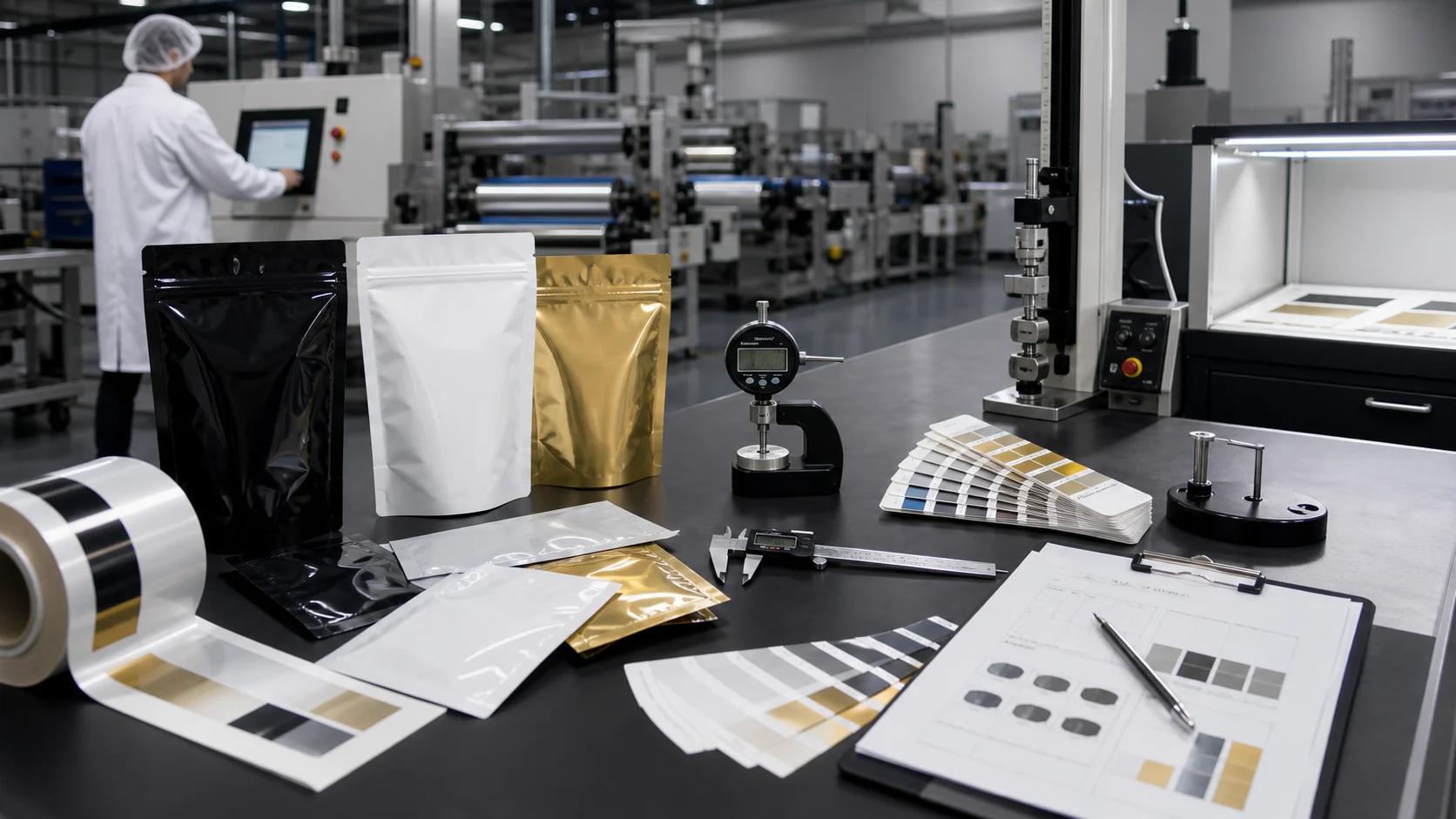
I ask for the inspection plan. I want to know how the factory checks dimensions, thickness, print registration, color, appearance, zipper, valve, seal strength, leakage, odor, roll direction, and quantity. I request acceptance limits, sample frequency, and final release records. I also ask how instruments are calibrated and how retained samples are stored.
I discuss traceability and complaints. I ask how a finished carton links back to film, ink, adhesive, machine, shift, and inspection record. I ask for the corrective-action process and response time. A strong supplier can explain this process in simple steps. The answer matters more than a wall of certificates with no link to my order.
How Do I Evaluate Samples, Proofs, and Communication?
A polished sales sample can hide weak control when it is not made with my size, structure, print process, or production line.
I evaluate blank samples, printed proofs, filled packs, written revisions, and response quality as one connected approval process.
I request a stock sample first to judge general converting. I inspect seals, zipper alignment, notch position, edge finish, odor, panel flatness, and handling. I then request a blank sample in my proposed size and material when possible. I fill it with the real product. I test headspace, closing force, stability, case fit, and customer opening.
I define what each proof can prove
A PDF proof confirms content and layout. It does not prove exact color or material feel. A digital printed proof can show scale and much of the appearance, but it may not match a final rotogravure process. A production sample gives stronger evidence, but setup cost and timing can be higher. I write the approval scope on each proof so my team does not infer more than the sample can show.
I also evaluate communication as a control system. I look for numbered revisions, written confirmations, realistic dates, and clear ownership. I ask one technical question and see whether the answer includes evidence or only confidence. I check whether the supplier identifies risk before I point it out. Fast replies are useful, but accurate replies are more useful.
I keep one approval record with the final dieline, artwork, color reference, material, dimensions, features, packing, quantity, shipping mark, and signed sample. I ask the supplier to issue a final order specification. If any item changes, I require a written revision. This discipline prevents a chat message from quietly becoming a production instruction.
How Do I Compare Price, Lead Time, and Repeat-Order Risk?
The lowest unit price can lose its advantage after cylinders, freight, defects, storage, delays, and cash requirements are included.
I compare total delivered cost, usable yield, setup, freight, payment, inventory, schedule reliability, and repeat-order control for the same approved specification.
I build a landed-cost table. I include pouch price, printing plates or cylinders, artwork support, proof, testing, cartons, export packing, freight, duty, tax, bank fees, inspection, storage, and expected waste. I compare the same trade term. I also calculate cost per usable pouch, not cost per shipped pouch. A low defect rate and stable filling performance can be worth more than a small unit-price difference.
I test schedule claims
I ask for artwork review time, proof time, material preparation, printing, lamination curing, pouch making, inspection, and dispatch as separate steps. I ask what happens during peak season and which dates depend on my approval. I include a buffer for first production. I do not plan a launch around the fastest possible date.
For repeat orders, I ask how the supplier stores cylinders, files, color standards, and approved samples. I ask whether materials can change without notice. I require change approval for film, ink, adhesive, zipper, valve, thickness, process, and production site. I also ask how long the quoted cylinders and artwork files will remain available.
I usually begin with a controlled order that is large enough to represent production but small enough to limit risk. I inspect arrival, filling, shelf behavior, and customer feedback. I score the supplier on quality, delivery, communication, and corrective action. I can then scale with evidence. This method turns supplier selection into a repeatable business decision instead of a one-time price contest.
Conclusion
I choose packaging through evidence, filled-pack testing, and clear specifications. That process protects the product, the launch, and the customer experience.
Sources and Further Reading
Need a pouch specification?
I can review your product, size, quantity, artwork, and target market.