A new flaxseed bag can raise doubts at its first opening. I compare the product, storage evidence, and closure before guessing which material caused the concern.
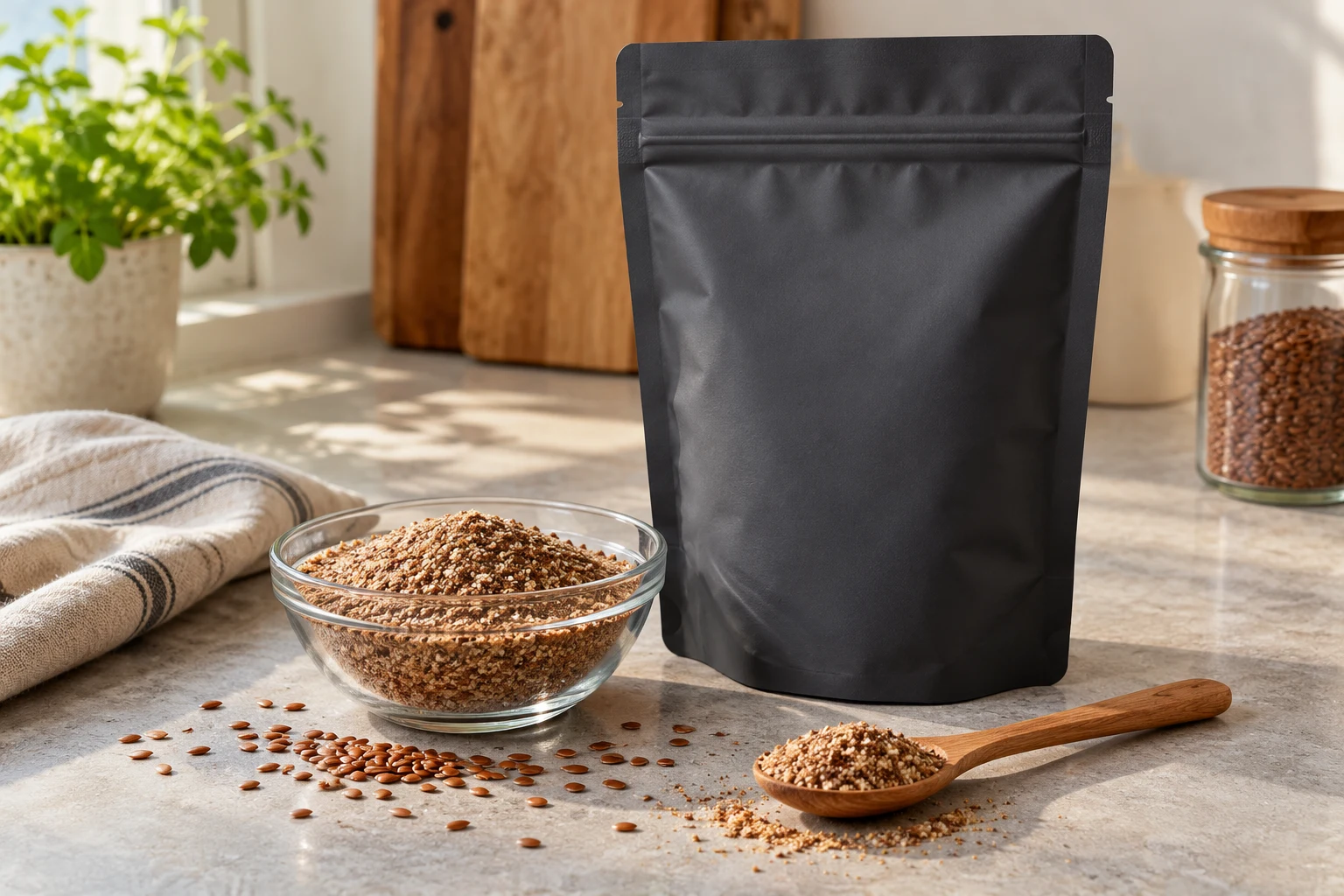
I consider an opaque resealable pouch for ground flaxseed when light control and repeated portions fit the product brief. I compare its actual construction, barrier reports, and handling with alternatives, then validate the filled product. Opacity alone does not establish shelf life.
I use storage research to design the trial. I keep individual consumer reports separate from product specifications.
What Does Flaxseed Storage Research Actually Support?
Broad claims about ground seed can send a buyer toward the wrong package. I read the tested product and conditions before turning research into a requirement.
I use flaxseed research as evidence about specific samples and storage conditions. I do not transfer a study duration to my pouch. I define the milling, starting quality, route, and opening routine for the actual product.
I first distinguish whole seed, freshly ground seed, commercial milled flaxseed, and a formulated blend. The product name alone does not capture particle size, processing, or starting condition. I ask the ingredient supplier to identify the exact lot and provide its handling instructions. I keep that information with the packaging brief. It prevents me from comparing a plain ground seed pouch with a flavored blend and blaming every difference on the laminate.
The original Malcolmson, Przybylski, and Daun study tested two milled flaxseed samples in plastic-lined paper bags at 23 ± 2°C for 128 days. It found no significant rise in peroxide values or conjugated double bonds for those samples.1 I preserve those boundaries. The result does not qualify every resealable pouch, every processing method, or repeated opening in a warm kitchen.
That distinction matters when I hear that all ground flaxseed becomes unacceptable immediately after milling. I do not use that claim to sell a more expensive material. I also do not use the paper to promise a particular shelf life. I ask the food specialist to assess the actual product and design its acceptance criteria. Packaging is one part of that assessment.
I separate a consumer concern from a diagnosis
In a Reddit r/vegan thread, a buyer described an unexpected burnt smell when opening a newly bought ground flaxseed bag and asked whether other users had similar experiences.5 I treat this as a useful first-opening concern. The thread does not establish rancidity, a manufacturing fault, or a packaging failure. I do not repeat the commenters' guesses as verified chemistry.
I translate that concern into a trial record. I compare a fresh retained product sample with filled pouch samples, label the storage history, and ask qualified staff to evaluate the agreed sensory attributes. If a concern appears, I investigate the ingredient lot, processing, storage, and package together. The oily-food packaging guide helps frame the material questions without assuming that one barrier label resolves them.
I also record what happens after opening. The brand must decide whether its intended routine is daily portions, a refill transfer, or one-time use. I then test that routine separately from unopened storage. This keeps the commercial specification grounded in the actual product rather than in either an online complaint or a laboratory duration taken out of context.
How Do I Compare Opaque and Clear Flaxseed Pouches?
An opaque pack can hide weak closure behavior, while a clear pack can distract from its material evidence. I compare both against the same product brief.
I compare light exposure, documented film barrier, seal behavior, and portion access. I approve an opaque construction only if it fits those requirements, and assess any clear window as part of the complete filled pouch.
I use opacity as a design question, not a complete material answer. An opaque outer appearance tells me little about the sealant, layer thickness, zipper, or converted pouch. I request the complete structure and the actual laminate report. I also ask how the pouch will sit on shelf and how much light a proposed window exposes to the product. The supplier and product specialist should explain what the comparison is intended to resolve.
I compare alternatives without declaring a universal winner
| Candidate | Potential use | Evidence I request |
|---|---|---|
| Opaque zipper pouch | Repeated portions with product kept out of view | Complete structure, light assessment, closure trial |
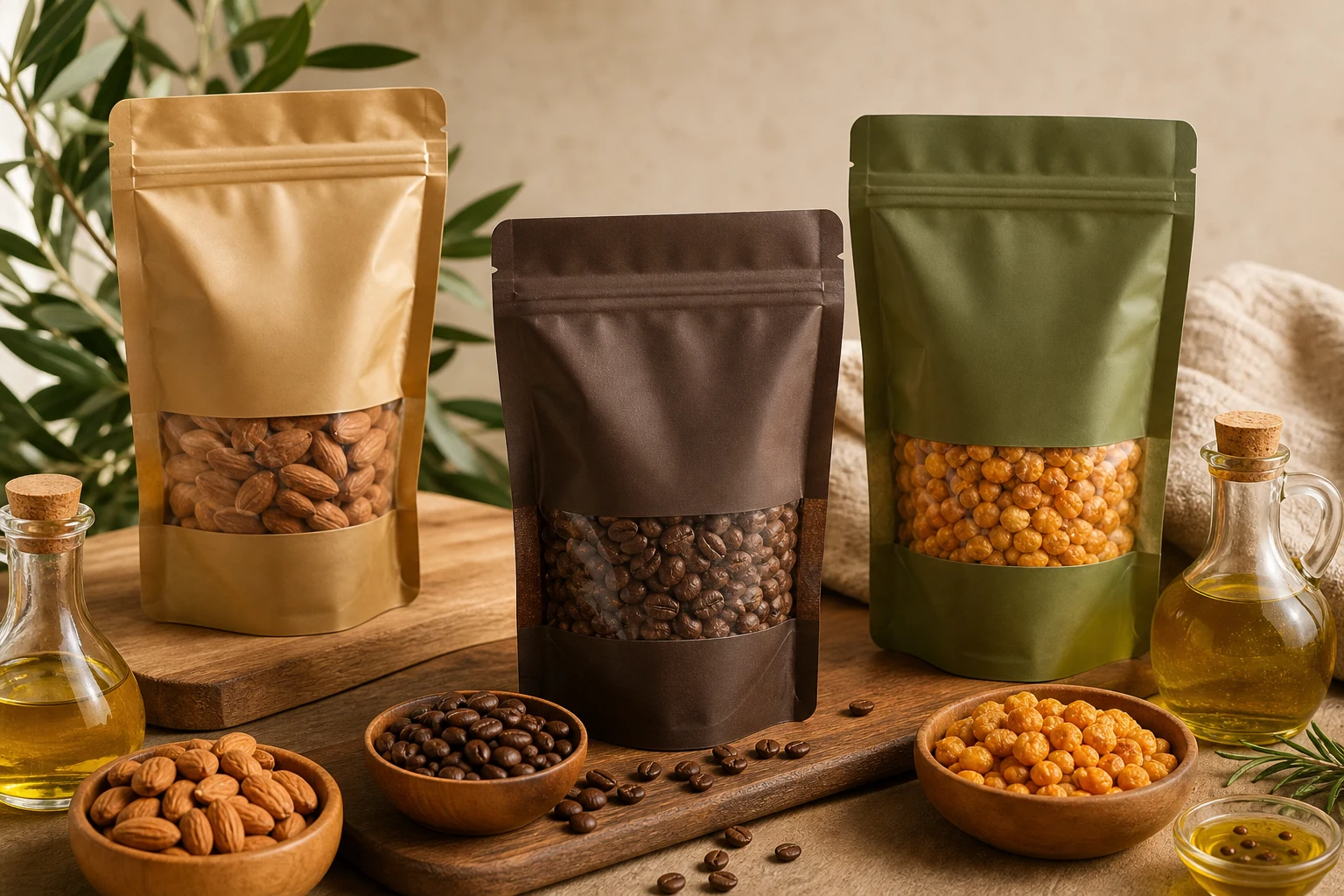
| Clear or windowed pouch | Retail display where visibility is important | Window exposure and product stability comparison |
| Small heat-sealed sachet | One measured portion per opening | Opening, emptying, original seal, portion accuracy |
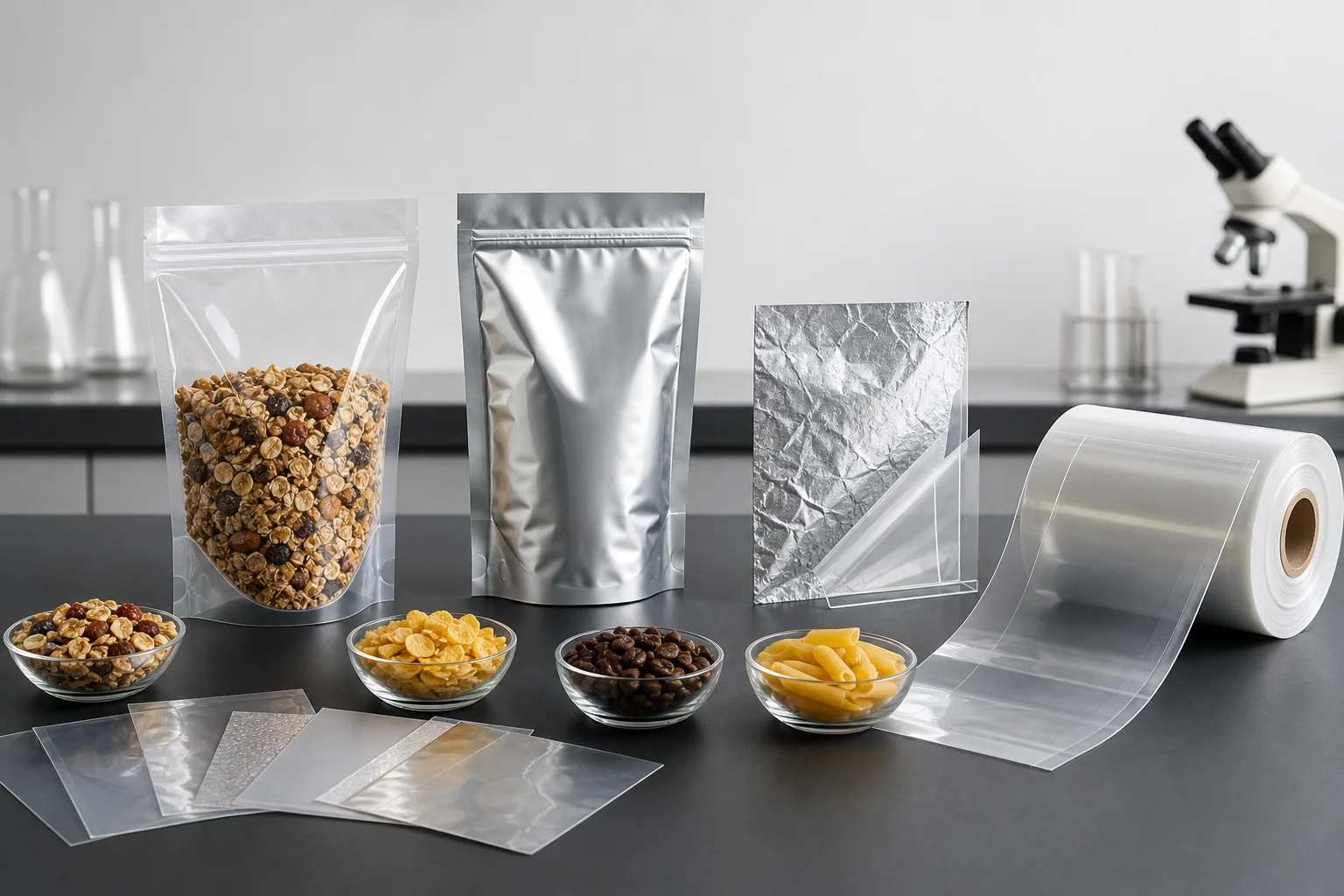
I compare water vapor transmission reports under the same named conditions. ASTM F1249 describes film and sheeting measurement.3 My request includes test temperature, humidity on both sides, units, and laminate thickness. I do not turn the result into a pouch lifespan. If oxygen transmission is part of the brief, I request its method and conditions separately rather than assume a moisture report covers it.
I connect those questions to the core barrier-film guide. That guide supports material assessment, but the final choice still needs product data. I do not claim that a paper-look pouch, a metallized appearance, or a mono-material label automatically delivers the required protection. I compare the proposed samples and written evidence.
I check food-contact scope too. FDA separates food types and conditions of use.2 I ask the supplier to evaluate the ground seed and intended storage rather than accepting a generic dry-food statement. Any expected refrigeration or frozen storage must be in the brief, if the product owner specifies it. I do not add that instruction simply because someone in a discussion stores their bag in a freezer.
Finally, I trial the opening and final portions with the actual ground product. A tall narrow pack may be easy to display but awkward for a dry spoon. I use the pouch sizing guide to record the usable opening and headspace. A material decision that ignores access can produce a package the buyer transfers into another container immediately.
What Should My Flaxseed Filled-Pack Trial Record?
An empty sample misses trapped meal, awkward scooping, and uncertain storage history. I record the filled pack before asking the supplier to reproduce its behavior.
I record the product lot, construction, fill weight, seal settings, storage conditions, and first-opening comparison. I test repeated resealing and final portions, then freeze the accepted specification and request a quote for that construction.
I start the trial with the exact ground flaxseed intended for sale. I record its lot, milling information supplied by the producer, and date of packing. I fill samples in the proposed pouch dimensions and document the sealing equipment. I keep unused pouches and a retained product reference. This creates a trail for investigating any later concern instead of relying on a photo of a finished package.
I inspect the top seal and zipper separately. Ground meal in the seal area may interfere with forming a clean joint, so I observe the filling step and inspect the result. I ask for seal strength data using a named method such as ASTM F88.4 I record conditioning, specimen width, test speed, support technique, and failure mode. I agree the limits with the packaging specialist. A passing force value does not settle the product's storage performance.
I define ordinary use as a repeatable trial
I open a pouch at full, half, and nearly empty levels. I take a dry spoonful, inspect the closure tracks, and reseal with the same simple instructions proposed for the customer. I note loose meal trapped around the gusset, the hand position needed to close the zipper, and whether the pouch collapses into the opening. I record the number and timing of trial openings. Those are test settings, not a claim that every household will behave identically.
I also retain an unopened comparison pack. The food specialist defines storage temperature, humidity, light exposure, duration, and sampling intervals. I state which conditions represent normal distribution and which are challenges. I keep observations such as odor difference, appearance, and closure usability separate from laboratory measurements. If samples differ, I investigate before making a causal claim about the film.
- Ingredient identity, lot, processing description, and handling advice.
- Approved layers, thickness, pouch dimensions, and closure position.
- Barrier reports with method, units, temperature, and humidity.
- Seal settings, test conditions, sample origin, and agreed limits.
- Opening routine, sensory review plan, and retained references.
- Artwork, storage instructions, and approval for construction changes.
I place that record in the written packaging specification. I ask the supplier to confirm it before quoting. If the selected pouch changes layer, thickness, zipper, or geometry, I identify which approvals need review. I do not accept a different sample as equivalent merely because its front panel looks similar.
I then send a specification-based flaxseed pouch inquiry with quantity per design and destination. I request project-specific terms rather than publishing a guessed price, MOQ, or lead time. My buying path is material assessment, a representative trial, written approval, and a quote that identifies the approved construction.
Conclusion
I choose packaging through evidence, filled-pack testing, and clear specifications. That process protects the product, the launch, and the customer experience.
Sources and Further Reading
- Malcolmson, Przybylski and Daun — Storage stability of milled flaxseed, original research.
- FDA — food types and conditions of use for food-contact substances.
- ASTM F1249-25 — water vapor transmission through film and sheeting.
- ASTM F88/F88M-23 — seal strength of flexible barrier materials.
- Reddit r/vegan — a buyer describes an unexpected smell at first opening.
Need a pouch specification?
I can review your product, size, quantity, artwork, and target market.