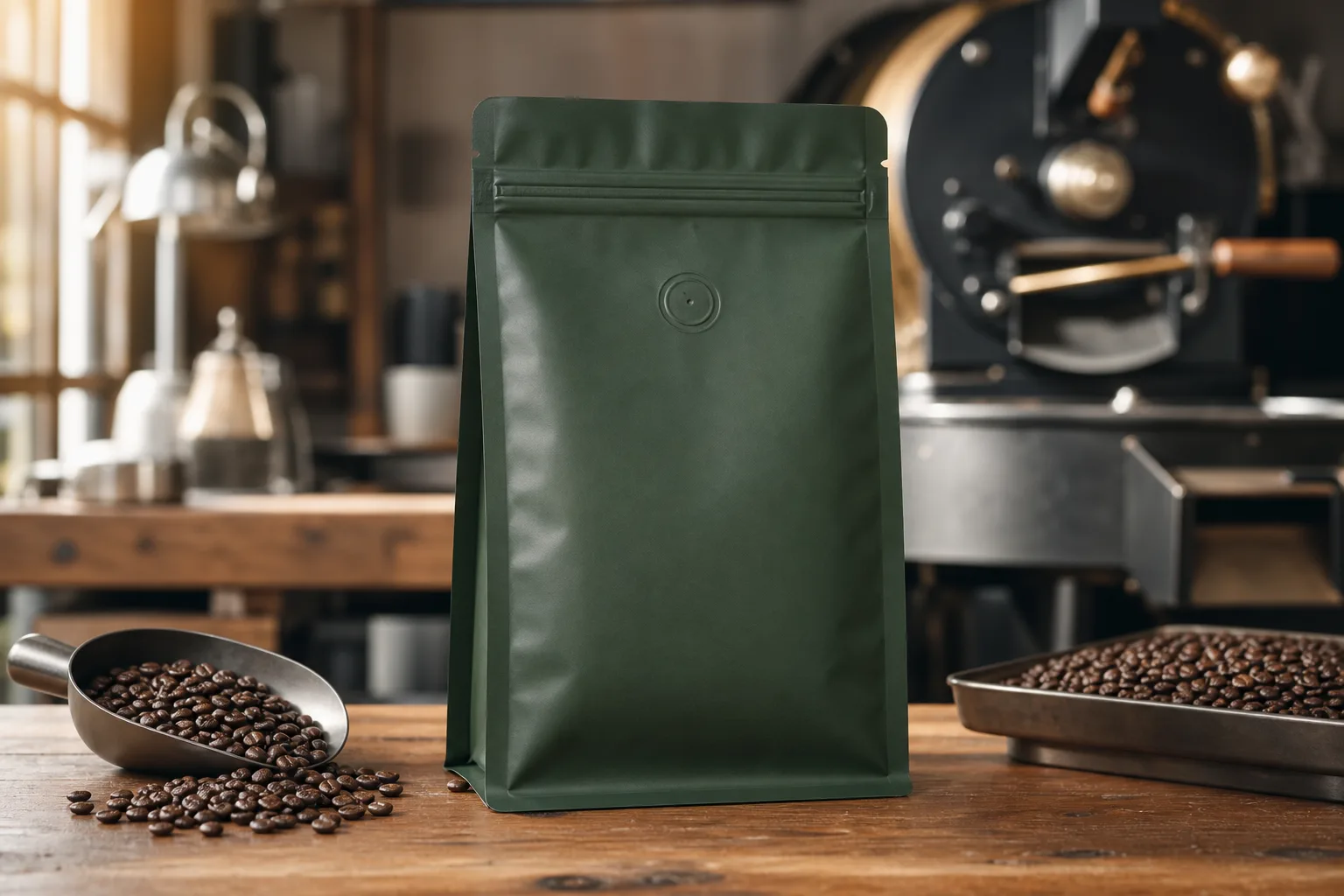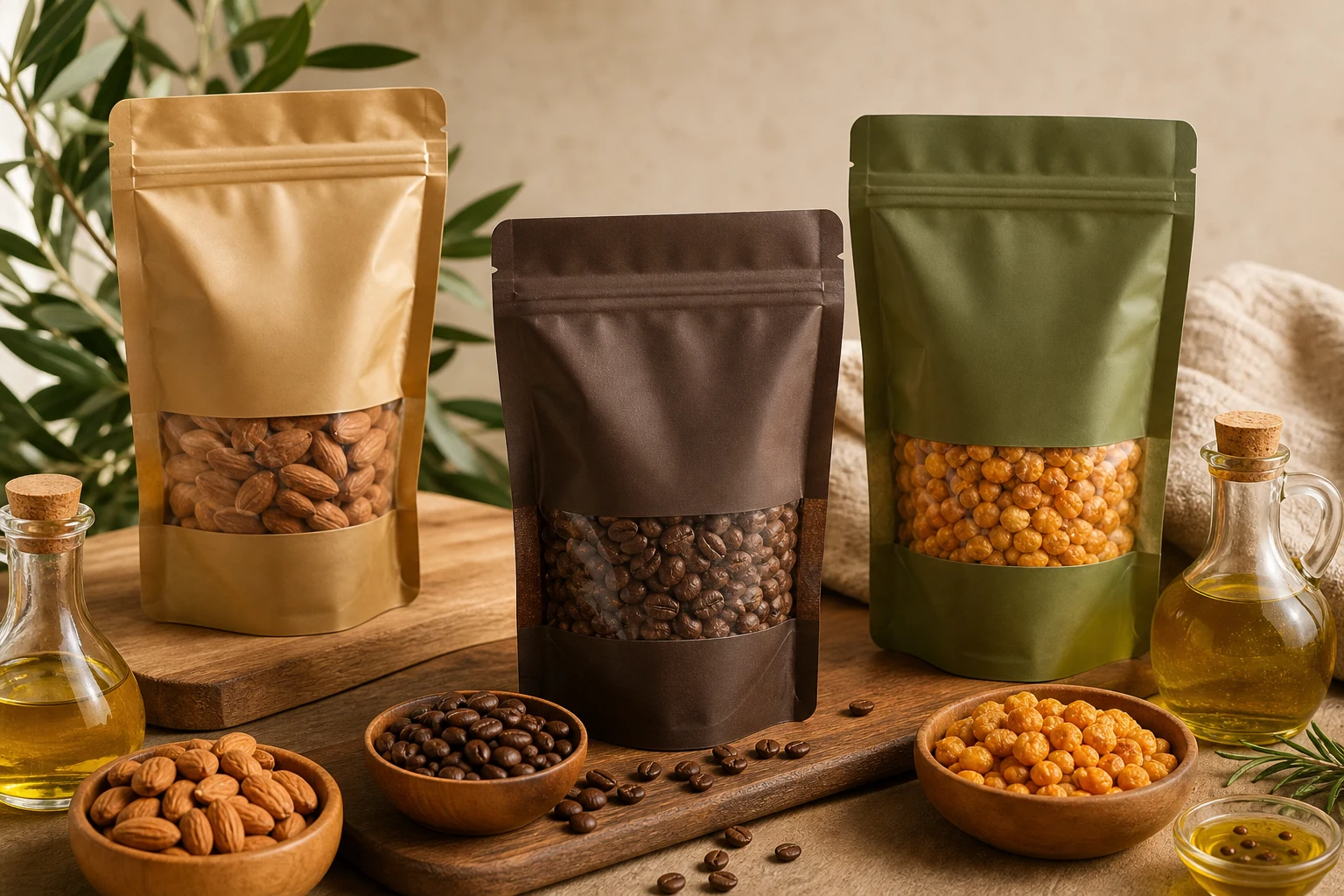
Oily foods can expose weak seals, stain an outer pouch, carry aroma away, or make a premium pack look neglected long before the intended sale date.
I package oily foods by defining the oil, temperature, shelf-life target, contact conditions, aroma risk, and filling route, then validating the full pouch structure with real filled samples.
I treat the pouch as a complete system. I confirm the product, material, filling, handling, and customer experience before I approve production.
Which Oily-Food Risks Should I Define First?
“Oily food” is not one package requirement: a dry roasted nut, sauce, seasoning, chocolate inclusion, and coffee can expose different contact, aroma, and seal conditions.
I define the actual oil or fat, temperature, fill method, shelf-life target, oxygen and aroma sensitivity, package orientation, and destination market before I select materials or make a barrier claim.
I begin with product data and route. I ask whether the product is dry, free-flowing, viscous, hot-filled, refrigerated, or frozen; whether oil can contact the seal zone; and whether aroma or oxidation is a product-quality concern. Then I request documentation for the exact material system and intended use. Food-contact suitability is not a marketing label that transfers automatically between different foods and temperatures.
How I make this decision specific
For “Which Oily-Food Risks Should I Define First?” in this how do i package oily foods without stains or odor loss review, I define the actual product, pouch configuration, intended use, and decision owner before I ask a supplier or tester for evidence. I keep the selected structure, component details, sample condition, and any stated test method together, then compare the result with the buyer’s actual route rather than a catalogue promise. That record lets me use the food barrier-film guide as a decision aid and retain a specification that another team member can check.
For How Do I Package Oily Foods Without Stains or Odor Loss, I state what is known, the condition it applies to, and what must still be checked with the actual product. I do not transfer a number, a test result, or a feature choice from another product simply because its pouch looks similar. The result of “Which Oily-Food Risks Should I Define First?” should give the buyer a clear next check, the supplier a precise request, and the project owner a record of the remaining uncertainty.
For How Do I Package Oily Foods Without Stains or Odor Loss, I request the exact pouch structure, component specification, and test conditions from the supplier. A broad material name or catalogue claim is not a production specification. The right next step is a representative filled sample, where relevant, with observations recorded before production is approved.
How Do I Match the Structure to Grease and Aroma?
A pouch can hold an oily product for a short sample trial and still show staining, odor change, delamination, or weak aesthetics when storage and handling extend.
I choose the complete laminate, sealant, adhesive, print protection, and any barrier layer around the product’s actual contact and protection needs, then compare evidence at stated conditions.
I ask the supplier to state each functional layer rather than quote “oil proof” or “high barrier” without context. The outside surface needs to stay presentable, the internal layer must fit product contact and sealing, and other layers may contribute to aroma, oxygen, moisture, light, or puncture performance. I compare the candidate package to a control at the same product weight and storage conditions. If a window, matte coating, soft-touch coating, zipper, or valve is added, I evaluate the complete construction again.
How I make this decision specific
For “How Do I Match the Structure to Grease and Aroma?” in this how do i package oily foods without stains or odor loss review, I define the actual product, pouch configuration, intended use, and decision owner before I ask a supplier or tester for evidence. I keep the selected structure, component details, sample condition, and any stated test method together, then compare the result with the buyer’s actual route rather than a catalogue promise. That record lets me use the food barrier-film guide as a decision aid and retain a specification that another team member can check.
For How Do I Package Oily Foods Without Stains or Odor Loss, I state what is known, the condition it applies to, and what must still be checked with the actual product. I do not transfer a number, a test result, or a feature choice from another product simply because its pouch looks similar. The result of “How Do I Match the Structure to Grease and Aroma?” should give the buyer a clear next check, the supplier a precise request, and the project owner a record of the remaining uncertainty.
How Do I Protect the Seal Zone During Filling?
Oil or product residue near a heat seal can convert a good material choice into a leak path when the filler, pouch geometry, and seal setup do not work together.
I control fill height, product splash, pouch presentation, seal-area cleanliness, heat-seal conditions, and startup checks, then inspect filled samples instead of assuming an empty pouch proves seal integrity.
I inspect the whole sealing sequence. I look at the product behaviour near the top, settling time, residue, and any feature that makes the seal harder to form. The selected sealant and operating window must fit the product and line. I use comparable seal-strength evidence when the project needs it, but a single number does not prove carton or shelf performance. I also check corners, zipper transitions, and base folds because oily foods can make a visual problem obvious even before an actual leak occurs.
How I make this decision specific
For “How Do I Protect the Seal Zone During Filling?” in this how do i package oily foods without stains or odor loss review, I define the actual product, pouch configuration, intended use, and decision owner before I ask a supplier or tester for evidence. I keep the selected structure, component details, sample condition, and any stated test method together, then compare the result with the buyer’s actual route rather than a catalogue promise. That record lets me use the food barrier-film guide as a decision aid and retain a specification that another team member can check.
For How Do I Package Oily Foods Without Stains or Odor Loss, I state what is known, the condition it applies to, and what must still be checked with the actual product. I do not transfer a number, a test result, or a feature choice from another product simply because its pouch looks similar. The result of “How Do I Protect the Seal Zone During Filling?” should give the buyer a clear next check, the supplier a precise request, and the project owner a record of the remaining uncertainty.
For How Do I Package Oily Foods Without Stains or Odor Loss, I treat the filled pack as a separate check from the material data. I record the fill condition, seal area, opening or closure behavior, carton arrangement, handling observations, and limits of the comparison. That prevents a favourable bench result from becoming an unsupported claim about shelf life, transport, or every product route.
How Do I Validate an Oily-Food Pouch Before Release?
A launch can go wrong when teams approve a dry or empty sample, then learn after shipping that oil staining, odor, leakage, or rub marks appear in the real route.
I validate filled production-style pouches through relevant storage, visual, seal, aroma, carton, handling, and opening checks, then retain the configuration and conditions behind the approval.
I make target-weight samples with the actual food and examine them over the agreed period and conditions. I inspect outer panels, seals, folds, corners, coating appearance, odor, and carton contact after normal handling. I do not translate a visual test into a shelf-life claim; measured shelf-life and migration work needs the appropriate specialists and methods. The release record identifies product, fill temperature, pouch structure, production settings, sample conditions, observations, and change triggers so the next order does not silently drift from the approved system.
How I make this decision specific
For “How Do I Validate an Oily-Food Pouch Before Release?” in this how do i package oily foods without stains or odor loss review, I define the actual product, pouch configuration, intended use, and decision owner before I ask a supplier or tester for evidence. I keep the selected structure, component details, sample condition, and any stated test method together, then compare the result with the buyer’s actual route rather than a catalogue promise. That record lets me use the food barrier-film guide as a decision aid and retain a specification that another team member can check.
For How Do I Package Oily Foods Without Stains or Odor Loss, I state what is known, the condition it applies to, and what must still be checked with the actual product. I do not transfer a number, a test result, or a feature choice from another product simply because its pouch looks similar. The result of “How Do I Validate an Oily-Food Pouch Before Release?” should give the buyer a clear next check, the supplier a precise request, and the project owner a record of the remaining uncertainty.
For How Do I Package Oily Foods Without Stains or Odor Loss, I preserve the final decision in a written brief that names the approved sample, conditions, observations, open risks, and change triggers. I then use the seal-leak prevention guide to keep the quotation tied to the evidence rather than to a remembered sample or a generic product name.
Conclusion
I choose packaging through evidence, filled-pack testing, and clear specifications. That process protects the product, the launch, and the customer experience.
Sources and Further Reading
- FDA, food packaging and other substances that come in contact with food.
- Reddit r/Packaging, flexible-pouch community discussion.
- Food Standards Agency, alternatives to single-use packaging research.
- ASTM F88/F88M, seal strength of flexible barrier materials.
- Unique Packaging food barrier-film guide.
- Unique Packaging seal-leak prevention guide.
Need a pouch specification?
I can review your product, size, quantity, artwork, and target market.