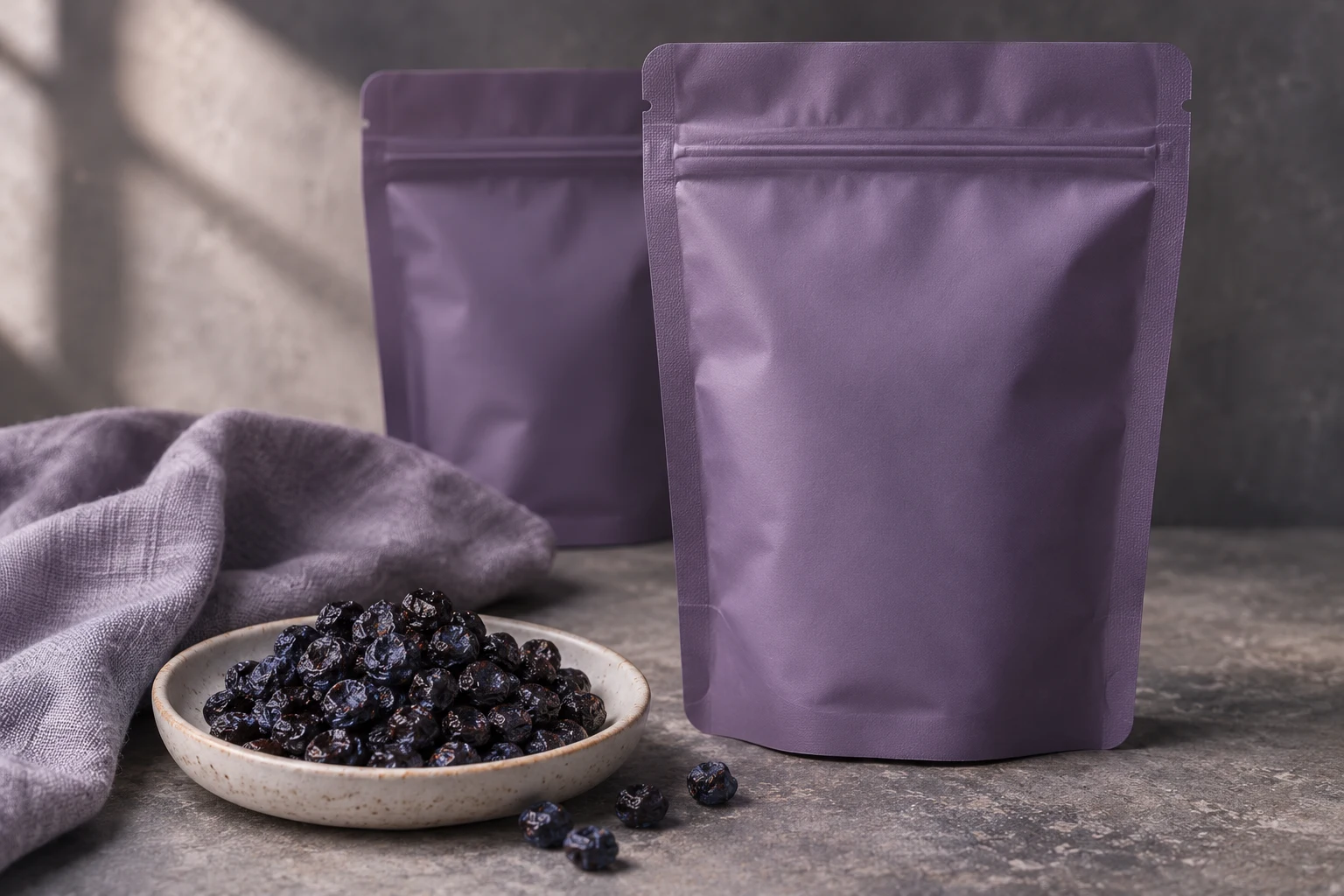
A bag of dried blueberries can meet the net weight and still disappoint a customer who expected soft fruit for a snack or recipe.
I specify the berry type and target texture first. Then I compare pouch films, test opening and reclosing with the actual berries, and ask the product team to approve quality through the planned storage period.
I use three decisions to move from the fruit sample to a pack specification.
What Kind of Dried Blueberry Am I Packing?
Two bags can both say dried blueberries while the fruit inside serves very different jobs. A packaging trial becomes misleading if those products get mixed.
I identify whether the fruit is chewy, sweetened or unsweetened, whole or cut. I set a texture reference for the intended use and keep freeze-dried products on a separate brief.
I ask for a sample and specification from the supplier before I request any pouches. Traina's specification for its sweetened dried blueberries is an example of product-level documentation that covers packaging and storage for a defined ingredient.1 I request the equivalent record for the exact grade I plan to fill. I keep that record beside an approved fruit sample. When an alternative supplier sends a sample, I compare it to that reference before committing to the same pouch.
A shopper on r/traderjoes described looking for the chewy, sweet berries used in a particular salad.2 I take that as one example of texture driving a purchase. If my own pouch is marketed as a salad topping, I ask the product team to approve a sample at the point of use. For a bakery ingredient, I also ask the customer to check it in the intended recipe. An attractive berry at the filling table can still have the wrong bite in a finished product.
| Product | First packaging comparison | Filled check |
|---|---|---|
| Whole sweetened dried blueberries | Opaque and clear-front zipper prototypes | Fruit pours freely and matches the target chew |
| Unsweetened dried berries for baking | Small recipe portion and multi-use pouch | Intended amount dispenses without scraping the bag |
| Freeze-dried blueberries | Separate brief for crisp fruit | Breakage and texture assessed separately |
My reference sample notes record chew, surface stickiness, loose pieces and any clumps. I define an observation method with the product team so the next person can repeat it. If the berry changes in the incoming lot, I set it aside for review before changing film or extending a storage claim.
How Do I Test Barrier and Resealing Together?
A strong film report cannot show how well a pouch closes after a spoon has brushed fruit against the zipper.
I compare the proposed films under matching test conditions and run filled tests with the approved berries. I keep unopened storage and repeated opening as separate trial groups.
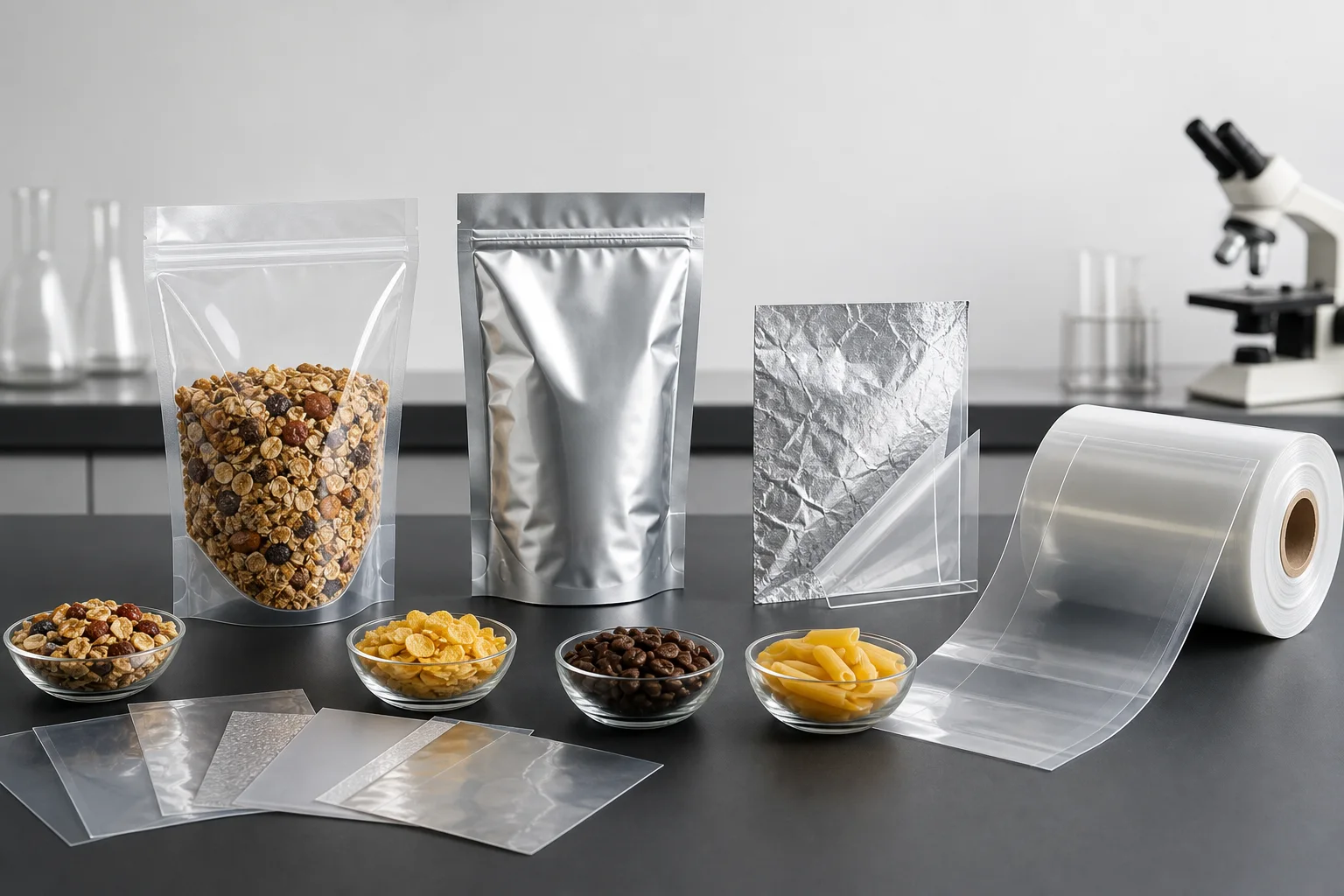
I start with the food barrier film guide to identify the evidence I need. For comparable ASTM F1249 film results, I ask the lab to list test temperature, relative humidity, thickness and units for each candidate.3 I also ask which exact structure was tested. A windowed prototype deserves its own review if the window changes the construction. I record the panel and window details on the sample ticket so they follow the sample into the trial.
The National Center for Home Food Preservation explains that repeatedly opening home-dried food exposes it to air and moisture.4 That supports my choice to track opening as a variable. For a commercial product, I ask the food team to define the actual study, the relevant measurements and the acceptance criteria. I use separate unopened controls and repeated-use samples from the same fruit lot. For the latter I record room temperature and humidity, opening duration, servings removed and the intended use interval. I let the team decide which measurements, including water activity where appropriate, belong in that protocol.
I check whether clusters bridge the pouch mouth, whether fruit fragments catch at the zipper ends, and whether users can tell that the closure is seated. I use the food pouch window guide to decide what I gain from a viewing panel and what additional evidence I need. If a clear window helps shoppers see whole berries but the tested construction misses the product team's target, I bring the two designs back to the same decision meeting.
What Evidence Do I Need Before Ordering Blueberry Pouches?
A good sample pouch can lose its value if the quoted order changes the contact layer, mouth dimensions or approved carton arrangement.
I confirm the film, zipper, case arrangement and approved berry lot in writing. I review food-contact documentation and use the filled-pack results to set the purchase specification.
I run the filled pouch through its actual case layout. I record how it sits upright after unpacking and whether the zipper or gusset folds into the serving path. For an online order I ask the logistics team to define a representative shipping test and inspect for rubbing at the corners, damaged seams and loose fruit around the opening. The filled pouch distribution guide gives me a starting point for documenting the load and the inspection after handling.
I ask the supplier to tie the food-contact documentation to the materials and intended conditions. The FDA's guidance explains how to determine the regulatory status of food-contact components for their intended use in the US.5 I put that document request beside the layer construction and artwork revision, so the converter knows which candidate I am approving.
Which details go on the purchase sheet?
- Berry supplier and grade, net fill, and approved reference lot.
- Flat dimensions, gusset, usable opening, zipper and top seal.
- Film construction and window dimensions where applicable.
- Named test conditions, sensory reference and storage acceptance criteria.
- Case arrangement, label and lot-code location, and approval for substitutions.
I use the pouch specification sheet to join the drawing, material evidence and approval record. After the filler has used representative samples and the product team has approved the study results, I send the revision with my request for quotation. I include quantities per artwork and destination so competing quotes describe the same pack. If a supplier proposes a different zipper or viewing panel, I ask for it as a separate option with the trial evidence it would need.
How do I tell a fruit problem from a pouch problem?
I reserve an incoming sample from each berry lot before filling. If one batch develops clusters in both pouch candidates, I compare the clusters with the retained berries and check the fill and storage records before changing the film. If only one candidate produces a problem, I compare where it appears. Fruit stuck to a narrow opening is a different observation from fruit that has changed throughout the bag. I give the food team both records so it can plan the next comparison.
Conclusion
I choose the pouch that preserves the approved eating quality and still opens, pours and closes cleanly after realistic handling.
Sources and Further Reading
- Traina: sweetened dried blueberries product specification.
- Reddit r/traderjoes: shopper looking for chewy dried blueberries.
- ASTM F1249: water vapor transmission through plastic film and sheeting.
- National Center for Home Food Preservation: packaging and storing dried foods.
- FDA: determining regulatory status of food-contact components.
Need a pouch specification?
I can review your product, size, quantity, artwork, and target market.