A refill pouch can save a trip yet spill flakes across the counter. I test the actual transfer and closure before approving its shape.
I make nutritional yeast refill pouches work by matching the opening, material, and pack size to the actual flakes and receiving container. I test filling, pouring, resealing, and intended storage, then confirm the complete specification before purchasing.
I focus on dry nutritional yeast flakes used as seasoning. Active baking yeast, yeast extract pastes, and formulated supplements need separate packaging briefs.
How Does the Ingredient Change the Refill Brief?
Using a baking yeast pouch as the starting point can confuse the project. The ingredient identity and customer use need to be explicit.
I identify the nutritional yeast formulation, flake size, fill weight, storage directions, and receiving container first. I treat each as part of the pouch brief and keep nutrition or storage claims tied to the actual product.
I ask the owner to identify the ingredient before discussing the pouch. Bragg’s FAQ distinguishes inactive nutritional yeast from other yeast uses and provides its own product storage advice.1 I cite that manufacturer context to clarify the category. I do not transfer its nutrition, formulation, or storage period to another brand. The project’s current ingredient list and approved label remain the starting documents.
I request representative flakes from the proposed production lot. I ask whether the product contains added nutrients or other ingredients and whether those details are already reflected in the label. I record flake size, observed dust, fill weight, and the filling route. Those are practical sample descriptions. They do not establish that all nutritional yeast products flow, settle, or store in the same way.
I choose the transfer task before the pouch shape
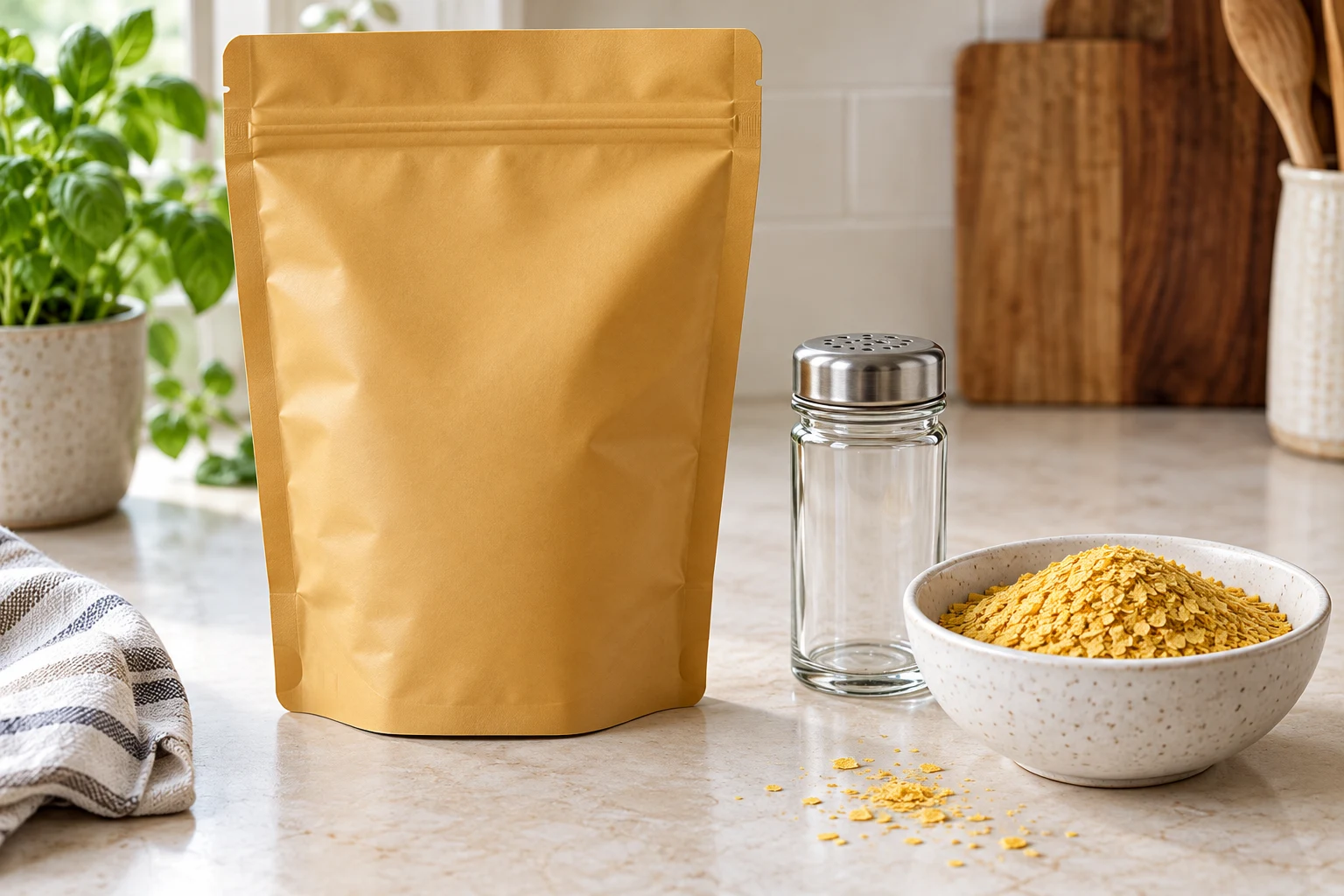
I define the receiving container. A narrow seasoning shaker, a wide pantry jar, and a restaurant storage bin create different pouring tasks. I measure the opening and test transfer with the actual flakes. A pouch selected only by nominal capacity may be awkward when the user must control a small stream or hold both the bag and a funnel.
A Reddit r/vegan traveler asked about carrying a small bag or container of nutritional yeast. Replies discussed original bags, small shakers, and explaining the seasoning to airport staff.5 I use that discussion as an attributed example of portable portioning and ingredient identification. It does not prove market demand or establish travel rules. For a refill brand, it suggests asking whether customers retain the labeled pack after transfer.
I use the pouch sizing guide to organize the fill volume and opening dimensions. I fill the candidate rather than borrowing the capacity of a powder with different behavior. I check the top space, grip area, and access to the last flakes. I also specify whether the pack must stand alone during use or whether the user will pour its contents in one session.
Finally, I match food-contact documents to the actual formulation and use. FDA identifies separate food categories and contact conditions.2 I ask the converter to state what its evidence covers. A familiar seasoning appearance is not a substitute for that material review.
Which Material and Opening Should I Compare?
A refill claim does not explain barrier behavior or pouring control. Approving a pretty pouch can leave both questions unanswered.
I compare complete material candidates and openings using the same flakes and receiving jar. I request test conditions with barrier reports and observe spills, residual product, grip, and closure access in filled samples.
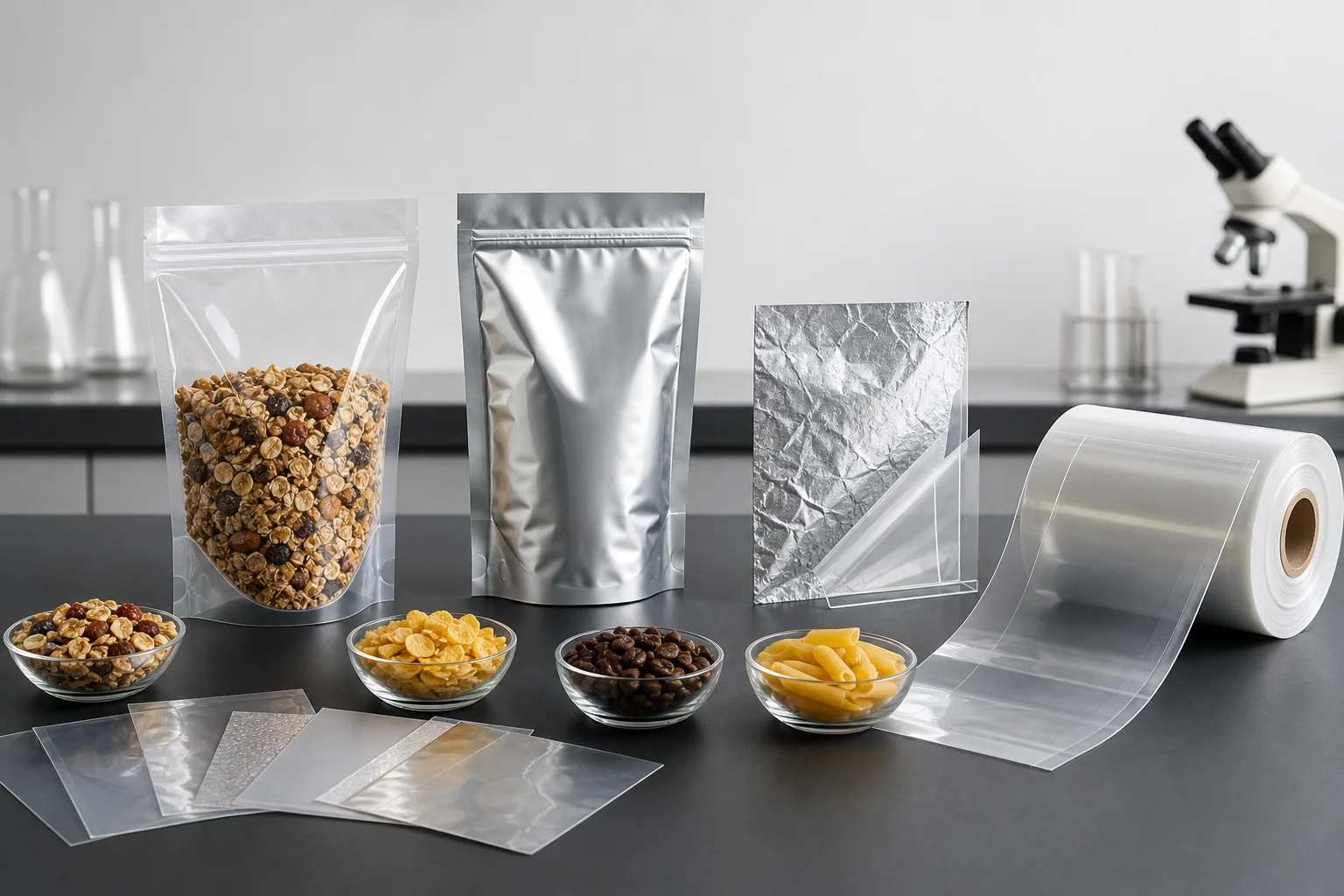
I shortlist an opaque laminate, a metallized candidate, and a clear option only when those samples meet the converter’s intended-use review. I do not describe any candidate as automatically suitable. The purpose is to compare the complete structure and opening against the refill task.
| Candidate | Useful application | Evidence I request |
|---|---|---|
| Opaque flexible pouch | Refill project without a viewing need | Exact structure, storage trial, opening control |
| Metallized candidate | Alternative in the converter’s shortlist | Full laminate and representative filling results |
| Clear pouch | Project where viewing remaining flakes matters | Barrier conditions and filled-pack comparison |
The core barrier film guide gives me a place to organize the data request. ASTM F1249 measures water vapor transmission through film and sheeting.3 I ask for method version, thickness, units, conditioning, temperature, and humidity on each side. I do not use a film result as a nutritional stability guarantee or assign a shelf-life period from that number.
I observe the whole refill
I place the receiving jar on a clean tray and ask the tester to open the pouch normally. I watch how the tear progresses, whether the grip area remains usable, and whether the mouth can guide the flakes. I record visible spills and product left inside after the planned transfer. If a funnel is part of the instructions, I test that exact sequence rather than changing it midway.
I compare one complete transfer with a partial refill followed by resealing. The second case needs a separate handling plan because the user retains product in the pouch. I record how often it opens, how long it stays open, and where it is stored. I ask the food team to choose the storage conditions and product acceptance rules. Unresolved choices remain open questions in the record.
I use the sample approval process to keep the accepted pack with its receiving container measurements. I review overly wide pouring mouths, awkward notches, flakes caught near the closure, and loss of grip as potential trial findings. Those observations justify a specific design review. They do not show that every refill pack suffers those problems or that a different material will solve them without another trial.
I keep the refill task educational and conditional. A pouch that pours well may still need further product testing. A promising storage sample may still spill during use. I require evidence for both before describing the finished project as approved.
What Evidence Should Accompany the Final Specification?
Good pouring samples can distract from production and storage gaps. Those gaps become harder to trace once the artwork and order are locked.
I retain filling settings, seal results, refill observations, product-study conditions, and the accepted sample. I confirm dimensions, components, and change rules in writing, then ask suppliers to quote that defined nutritional yeast project.
I run the proposed filling process with representative flakes. I record the product lot, fill weight, headspace, pouch dimensions, filling speed, seal temperature, pressure, and dwell time. I inspect the area above the product before sealing and note any visible particles. I keep trial packs apart from saleable stock and retain samples from the agreed stages of the run.
ASTM F88/F88M is a named method for seal strength assessment.4 I request the version, specimen width, conditioning, support arrangement, test speed, and failure description. I keep those results with the pouch and process identity. A seal measurement does not validate nutrition claims, prove absence of leakage, or qualify a different filling setup.
I separate claims from proposed checks
Bragg’s FAQ provides storage directions for its nutritional yeast.1 I use that as a reminder to obtain the project owner’s instructions. I do not copy a manufacturer’s duration into a new label. If the brand wants to make nutrient-retention or shelf-life claims, I ask its qualified food team to define supporting studies for the actual formulation, pack, and conditions.
The development record names unopened and reopened sample groups separately. It states temperature, relative humidity where relevant, exposure time, sample count, inspection intervals, and agreed endpoints. If a pack changes odor, appearance, or handling behavior, I document the observation and escalate it for investigation. I do not diagnose contamination or food safety from an online anecdote or a concept image.
- Ingredient identity, formulation, flake description, lot, and fill weight.
- Complete structure, thickness, dimensions, zipper, and tear opening.
- Receiving jar dimensions and full or partial refill instructions.
- Food-contact evidence and intended storage directions.
- Barrier and seal methods, conditions, units, and agreed limits.
- Filling, transfer, resealing, handling checks, and retained samples.
I put those decisions in the written refill pouch specification. I identify any unfinished studies and require approval of component or process changes. I then send the pack details, quantity per design, and destination with a specification-based nutritional yeast quote request. I leave MOQ, price, and timing to the supplier’s current project offer. That keeps the buying path concrete without inventing performance or commercial promises.
Conclusion
I choose packaging through evidence, filled-pack testing, and clear specifications. That process protects the product, the launch, and the customer experience.
Sources and Further Reading
Need a pouch specification?
I can review your product, size, quantity, artwork, and target market.