A buyer expecting soft coconut may reject a correctly dried product. A vague brief can also leave texture, film, and closure decisions unresolved.
I specify desiccated coconut pouches by naming the product grade and cut, confirming intended texture, comparing documented moisture and oxygen barrier evidence, and testing clean filling and repeated use. I approve the finished pack against written product and packaging specifications.
At Unique Packaging, I keep this review focused on dry desiccated coconut. Sweetened moist shreds, coconut chips, and coconut milk need their own briefs.
Which Coconut Grade and Texture Should the Pack Represent?
A photograph of white shreds tells me little about the product. Approving from appearance alone can create the wrong sample and the wrong customer expectation.
I record desiccated status, cut size, oil-content category, ingredients, intended texture, and target market. I use the food specification and representative samples to define the product before choosing the pouch.
I start with a product name that purchasing, production, and artwork can all interpret. Codex CXS 177 covers desiccated coconut and addresses product descriptions, quality, packaging, storage, and labeling. I use it to identify the questions that belong with the food team. I do not present a general blog as a compliance certificate for a supplier’s coconut.1
Tetra Pak’s Coconut Handbook distinguishes coconut products and describes desiccated coconut characteristics with reference to Codex. That is useful background for defining the ingredient. I ask the food supplier to state the actual grade, cut, and oil-content category for our lot, with the relevant analysis and intended market requirements.2
In r/AskBaking, one user asks why shredded coconut sometimes feels soft and sometimes unpleasantly scratchy. Replies discuss different coconut products. I treat this as evidence of a customer expectation problem. It is not a controlled texture test, and I do not repeat the thread’s preparation suggestions as manufacturing instructions.3
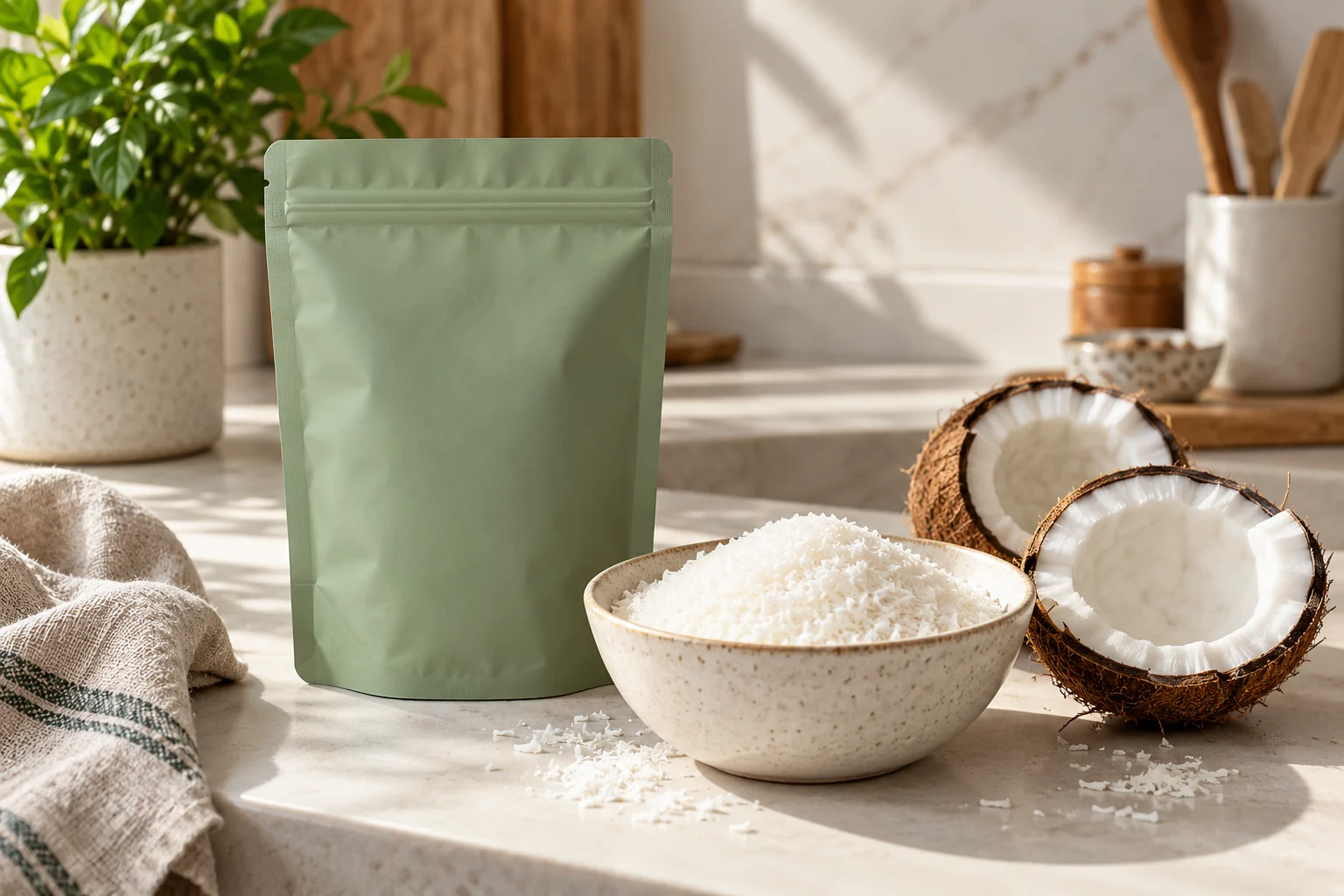
I therefore compare the proposed front label with a representative product sample. Does the image suggest long moist shreds when the pack contains fine dry coconut? Does the product name distinguish a sweetened ingredient from the unsweetened dry product in our brief? The brand owner reviews the final wording, while I check that the pouch leaves enough readable space for it.
I measure the actual loose fill and then observe settling. I include the distribution of fine and larger pieces because a carefully selected sample may hide how the full lot handles. The pouch dimension guide helps me translate volume into a sample size. I leave enough room for the seal process and usable opening, then verify the resulting shape after filling.
What I write before requesting material samples
My short brief names the product lot, fill weight, grade, cut, intended texture, filling method, distribution route, and preparation instructions supplied by the food owner. I mark unresolved items clearly. If the food specification changes, I revisit the packaging assessment rather than assuming that every white coconut ingredient behaves the same way. This keeps a sourcing comparison focused on the exact product the customer will receive.
How Should I Compare Barrier Films Without Guessing Shelf Life?
An opaque pouch can look protective without useful test evidence. A copied barrier number can also hide a different thickness or humidity condition.
I compare identified constructions using measured transmission reports with stated conditions. I then ask the food team to validate the filled product and intended storage period rather than converting a film number into a shelf-life promise.
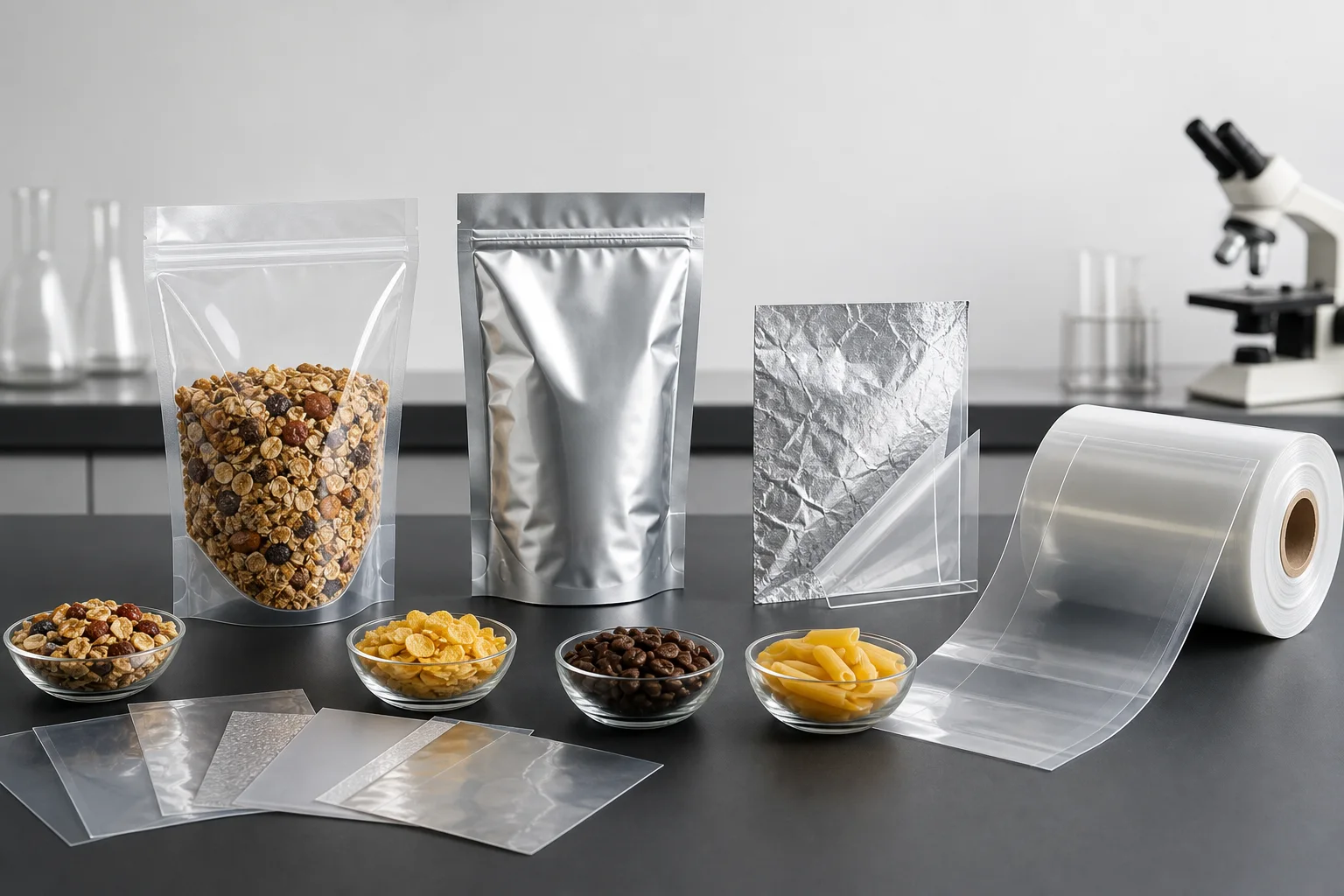
I use the food barrier film guide as the main comparison path. My first request is the proposed layer structure, total thickness and tolerance, sealant, zipper, and any window. I ask the converter to explain which reported results belong to that exact construction. A metallic appearance, paper exterior, or material nickname does not replace a traceable report.
| Candidate | Question to resolve | Evidence to retain |
|---|---|---|
| Clear candidate | Does product visibility justify this construction? | Identified film, light exposure review and filled trial |
| Opaque candidate | Does the selected laminate fit our quality target? | Transmission reports and product observations |
| Windowed candidate | Has the complete window construction been assessed? | Window size, surrounding film and finished-pouch sample |
For water-vapor transmission I request ASTM F1249 or the agreed equivalent, with test temperature, humidity conditions on both sides, specimen thickness, units, and sample identity. For oxygen transmission I request the method and its reported conditions separately. Intertek lists F1249 and D3985 among film tests. The listings establish method scope, not a pass value for this coconut project.4
I would ask the laboratory to define a reference storage condition and an additional condition relevant to the intended route. For example, 23°C at 50% relative humidity could be a recorded project reference if the food team agrees. It is an illustrative starting point, not a prescribed coconut storage standard or proof that accelerated storage predicts a certain number of months.
I retain product observations beside the material results. The food owner defines relevant endpoints, such as texture and odor, and the appropriate analytical or microbiological work. I do not infer a mechanism from one visible change or use an informal taste check to decide safety. The product’s release requirements remain part of the food business’s own controlled process.
For US food contact, I request documents tied to the proposed components and use. FDA explains that authorization has component-specific limitations. I keep the review with the sample version and intended contact conditions. I do not translate a generic food-grade statement into a claim that all temperatures, ingredients, and markets are covered.5
This comparison gives me a shortlist for filled trials. It does not automatically select foil, metallized film, or a mono-material pouch. If two candidates meet the agreed evidence requirements, I compare the other project needs, including opening, packing, and quotation terms. Any sustainability claim needs its own support for the intended market.
What Filling and Resealing Evidence Belongs in the Order?
Loose coconut can collect around a closure or top seal. An attractive empty sample will not show whether the actual filling routine controls that problem.
I observe the real fill, keep the seal area clean, test opening and repeated closure, and inspect filled cartons. I attach the chosen sample, conditions, and acceptance requirements to the order specification.
I begin the pilot with the intended food lot, fill weight, and pouch version. I record how the product enters the mouth, whether flakes touch the seal area, and whether the operator must shake or wipe the bag before sealing. I inspect the first packs before assuming that a wider seal or higher temperature will solve every problem.
I keep samples from each trial setting and identify them. I record jaw condition, temperature, dwell time, pressure setting where available, and cooling arrangement. The converter and filler must agree the working process. If we change the sealant, dimensions, or filling arrangement, I repeat the affected trial rather than relying on the first approved photograph.
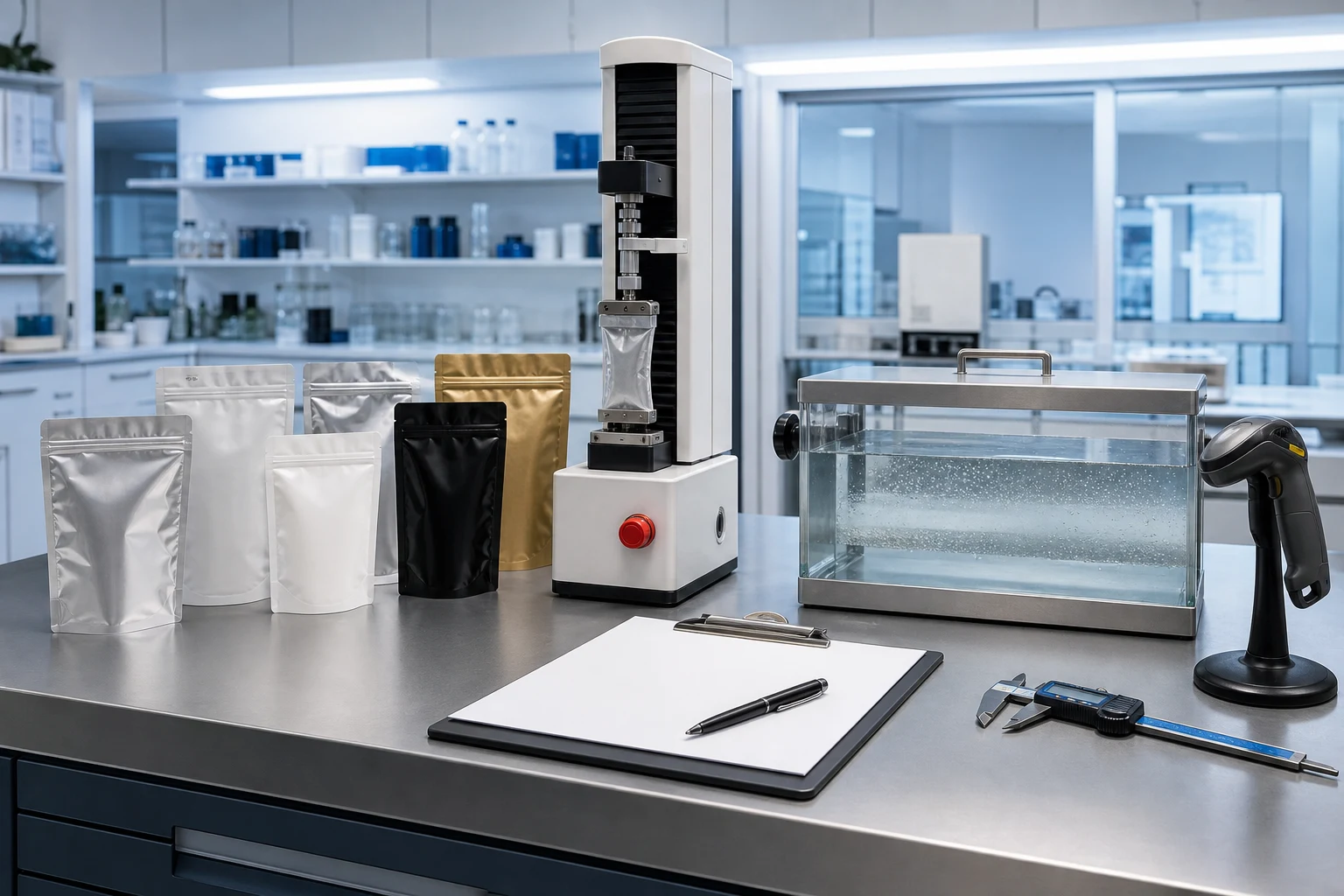
I discuss laboratory checks through the quality test guide. Intertek lists F88 for seal strength. For any report, I request specimen preparation, conditioning, support method, pull speed, and observed failure mode. I keep the numerical result attached to its sample and method. It should not be advertised as a universal leak or shelf-life guarantee.4
I open a filled pack and pour a realistic portion into a dry bowl. I record whether coconut lodges in the zipper and whether users can engage the track fully. I repeat at different fill levels using a documented number of cycles. The purpose is to find a practical opening and closing design, not to claim that a household routine has been reproduced for every buyer.
I also inspect the case arrangement after the agreed handling sequence. I look for abrasion, hard folds, changed seals, and product accumulation around the mouth. I retain an unhandled reference so that the team can compare changes. If an issue appears only in a particular carton position, I record that location before modifying the pack.
My written specification names the food grade and lot reference, approved film, thickness and tolerances, dimensions, zipper and top seal, artwork revision, batch-code area, packing layout, and test records. I specify who reviews changes and which checks must be repeated. I leave incomplete food or material questions visible.
After material assessment and a representative filled-pack trial, I request a specification-based packaging quotation. I ask the supplier to list substitutions and assumptions. Minimum quantities, timing, prices, certification, and storage claims need current project evidence. The useful outcome is an agreed construction and approval record that can be repeated when the coconut grade or supplier changes.
Conclusion
I match desiccated coconut pouches to the stated grade, texture, material evidence, seal process, and filled trial before confirming the specification and quotation.
Sources and Further Reading
Need a pouch specification?
I can review your product, size, quantity, artwork, and target market.