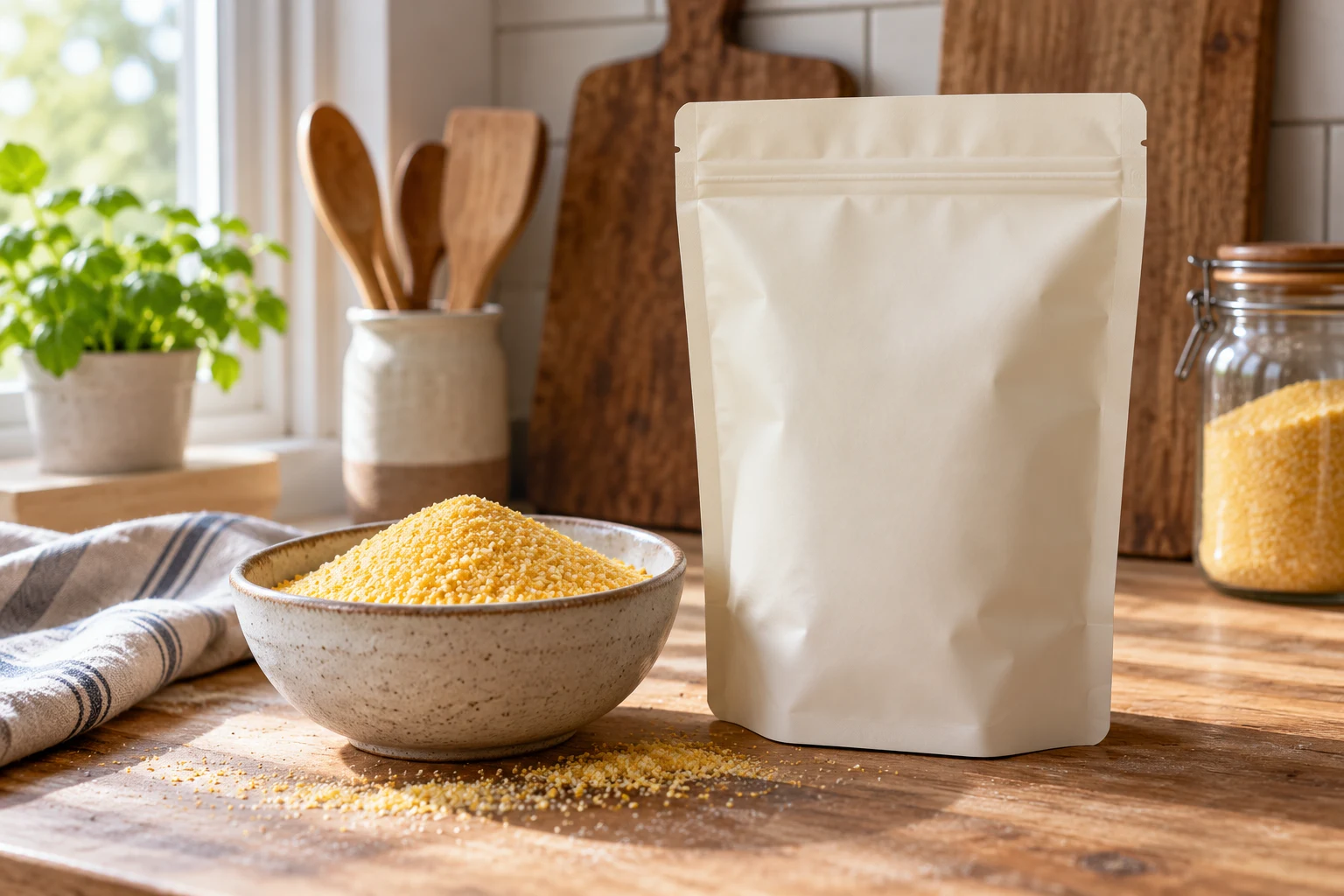
Cornmeal can spill from a difficult opening and collect around a closure. A neat empty pouch hides both problems until customers start cooking.
I choose a cornmeal resealable pouch by confirming the meal type, fill volume, barrier evidence, clean sealing space and repeated pouring. I compare closures with actual cornmeal before approving the written specification.
At Unique Packaging, I start this review with the miller’s product description. Fine meal, coarse meal and a prepared mix deserve separate sample records.
Which Cornmeal Details Change My Pouch Choice?
A cornmeal name does not tell me the grind, formulation or pouring behavior. Buying from that name alone can produce the wrong sample.
I record the miller’s exact product, particle grade, ingredient list, target weight and intended storage. I then fill candidate pouches and compare their usable volume and handling.
I ask the miller whether the product is whole-grain meal, a degermed product or a formulated mix. Bob’s Red Mill describes its own cornmeal as whole grain and its grits/polenta as partially degermed. That distinction belongs to those products; I do not assume every mill uses the same naming system.1 I request the specification for the exact SKU that will enter this pouch.
My sample kit contains product from the planned production source, not a convenient substitute from a kitchen cupboard. I note the supplier lot, grind description and any added ingredients. I photograph a small sample next to the supplier reference. If a second mill will supply the same retail line, I include its product in the trial. I want the purchaser to see a change before it reaches the filling machine.
I compare usable capacity with the real fill
I measure the filled shape instead of assigning a universal gram capacity to an empty bag. I weigh the intended sale quantity into each candidate and leave the filling team’s required seal area clear. Then I record the standing footprint, front-panel shape and space available for a scoop or controlled pour. I use the stand-up pouch size guide to organize these observations. The sample result stays specific to the meal and dimensions tested.
| Choice | What I compare | Evidence to retain |
|---|---|---|
| Fine meal | Dust near the opening and zipper | Filled sample and closure photographs |
| Coarse meal | Pour control and grains at closure ends | Repeat-use observations |
| Prepared mix | Actual ingredients and pack instructions | Miller-approved product brief |
I also ask who will use the pack. A baker scooping from a large pouch has a different task from a home cook pouring a small portion. I give both users an uncoached sample when both are part of the brief. I record whether they can hold the pouch securely, see the opening and return it to storage. This gives me a concrete reason to select one size rather than simply choosing the larger pack.
I keep the meal label and sample lot together so later purchasing changes can be checked against the original filling and dispensing observations.
Which Closure and Film Should I Compare for Cornmeal?
A closure can feel easy when empty yet become awkward after meal reaches its tracks. Film descriptions alone cannot resolve that handling question.
I compare a conventional zipper with any alternative reclosure using the same cornmeal, pouch geometry and opening routine. I assess film barrier separately with reports for the exact construction and conditions.
A Reddit post titled “Cornmeal package seals with velcro” provides a useful starting question: should I compare a different style of reclosure for this product? It records an observed package feature, not a controlled performance result.3 I do not infer that a hook-and-loop closure is cleaner, tighter or easier for every buyer. I request identifiable closure samples from the converter and compare them fairly.
For the trial, I use the same meal and target fill in each pouch. I ask a user to open it, dispense a normal portion and close it without coaching. I inspect the closure ends and photograph any residue before cleaning. Then I repeat the routine through the planned use sequence. I note spills, hesitation, incomplete engagement and the need to brush material away. These are observations from a proposed trial, not published claims about a closure type.
I keep barrier and convenience as separate decisions
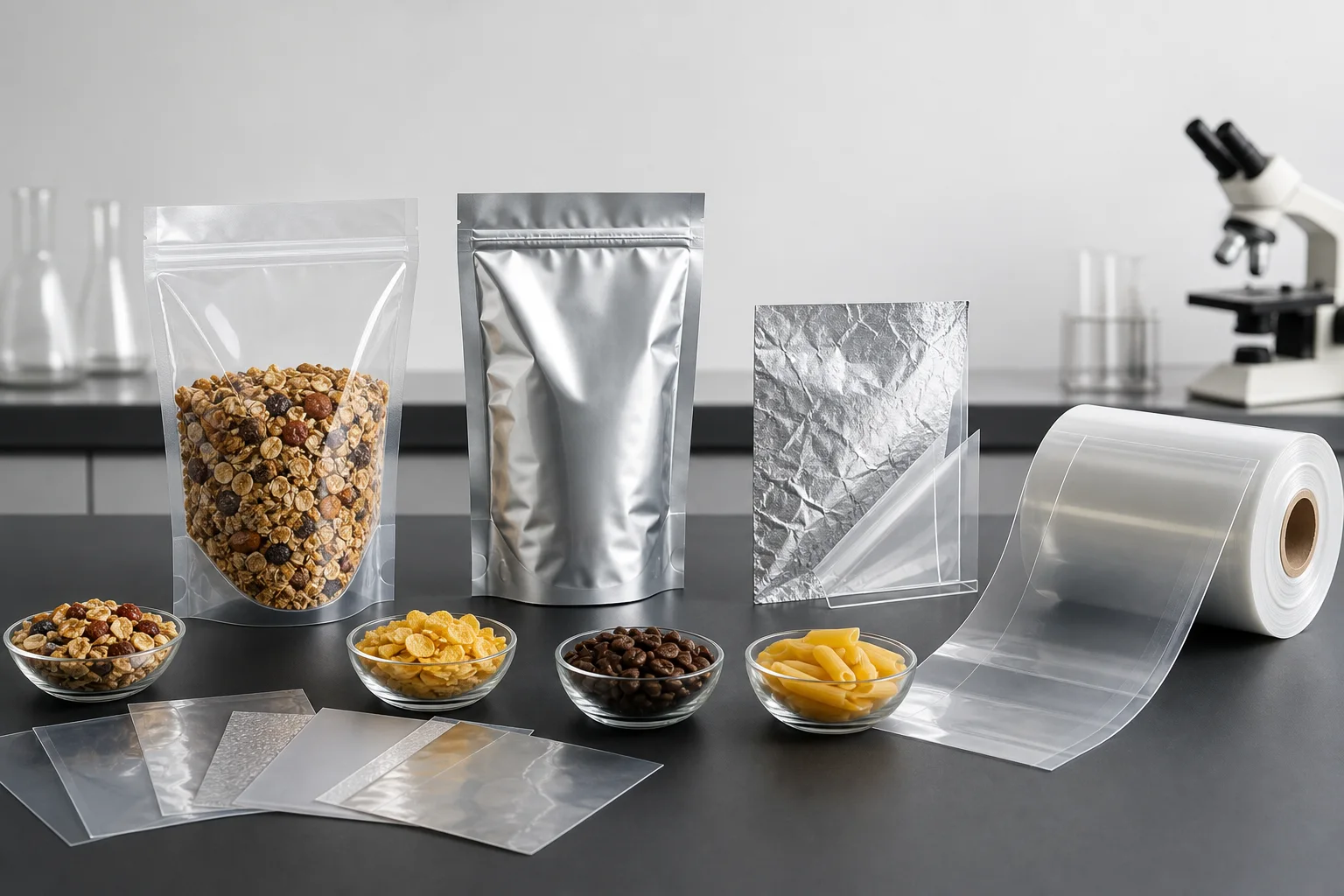
I use the food barrier film guide when reviewing construction options. A transparent, opaque or metallized appearance does not give me a measured barrier value. I ask for the finished laminate identity, thickness and report conditions. Intertek lists ASTM D3985 for oxygen transmission and ASTM F1249 for water-vapor transmission among its film methods.4 I ask the laboratory to specify temperature, humidity, conditioning and units before comparing results.
I do not convert a film report into a cornmeal shelf-life promise. Bob’s storage advice for its products calls for cool, dry, sealed storage and gives additional after-opening guidance for whole-grain flours and meals.2 The brand must establish instructions for its own product. I check that the intended pouch supports those instructions, including handling after opening, rather than writing a storage claim to fit the artwork.
My closure comparison ends with a sample code and a written decision. I retain the rejected sample too if it demonstrates a useful failure. That makes the next reorder conversation specific: change the troublesome opening or closure feature, then repeat the affected checks.
What Must I Test Before Ordering Cornmeal Pouches?
A clean prototype can hide fill-line dust, poor opening access and inconsistent sealing. Those gaps become expensive after artwork and production are locked.
I run a filled-pack trial on the intended equipment, review seal and reclosure evidence, confirm food-contact documents and approve a written specification before requesting a matching production quote.
I begin the line trial with the exact meal and candidate construction. I record the filler, filling nozzle, target quantity and the observed product level. I inspect the seal area immediately after filling and before the jaws close. If residue is visible, I record where it arrives and ask the line team to adjust the filling process. I do not approve a dirty seal zone simply because one hand-sealed sample looks acceptable.
Next I label samples with machine settings and run order. I retain the actual temperature, pressure, dwell time and cooling arrangement used for each group. Intertek identifies ASTM F88 as a seal-strength method; I ask the lab to define the specimen preparation, peel setup and reported results for our structure.4 A seal-strength number is one piece of evidence. It does not replace a suitable package-integrity check or demonstrate every distribution condition.
I write an order checklist that the supplier can quote
My checklist states the product identity, nominal and trial fill weights, finished width and height, bottom construction, film specification, closure code and opening feature. I attach the approved sample photographs and mark the seal clearances on the dieline. I add the test plan, acceptance decisions, carton arrangement and change triggers. The packaging specification sheet guide helps keep those details in one record.
For US food-contact review, FDA explains that component status and intended-use conditions determine the regulatory position of a food-contact material.5 I therefore ask for documents tied to the proposed structure and intended cornmeal application. I do not publish a blanket certification claim from a generic supplier brochure. Other destination markets require their own review before approval.
I finish by packing the filled samples into the planned shipping carton and recording any opening, corner or panel damage after the agreed handling trial. I use the sample approval checklist to close unresolved items. Only then do I send the approved specification through the project enquiry. I ask the quote to identify that revision so a cheaper substitute cannot silently become the production reference.
Conclusion
I approve cornmeal pouches after particle-specific pouring, closure and seal trials. I keep the tested construction and filling settings attached to the order.
Sources and Further Reading
Need a pouch specification?
I can review your product, size, quantity, artwork, and target market.