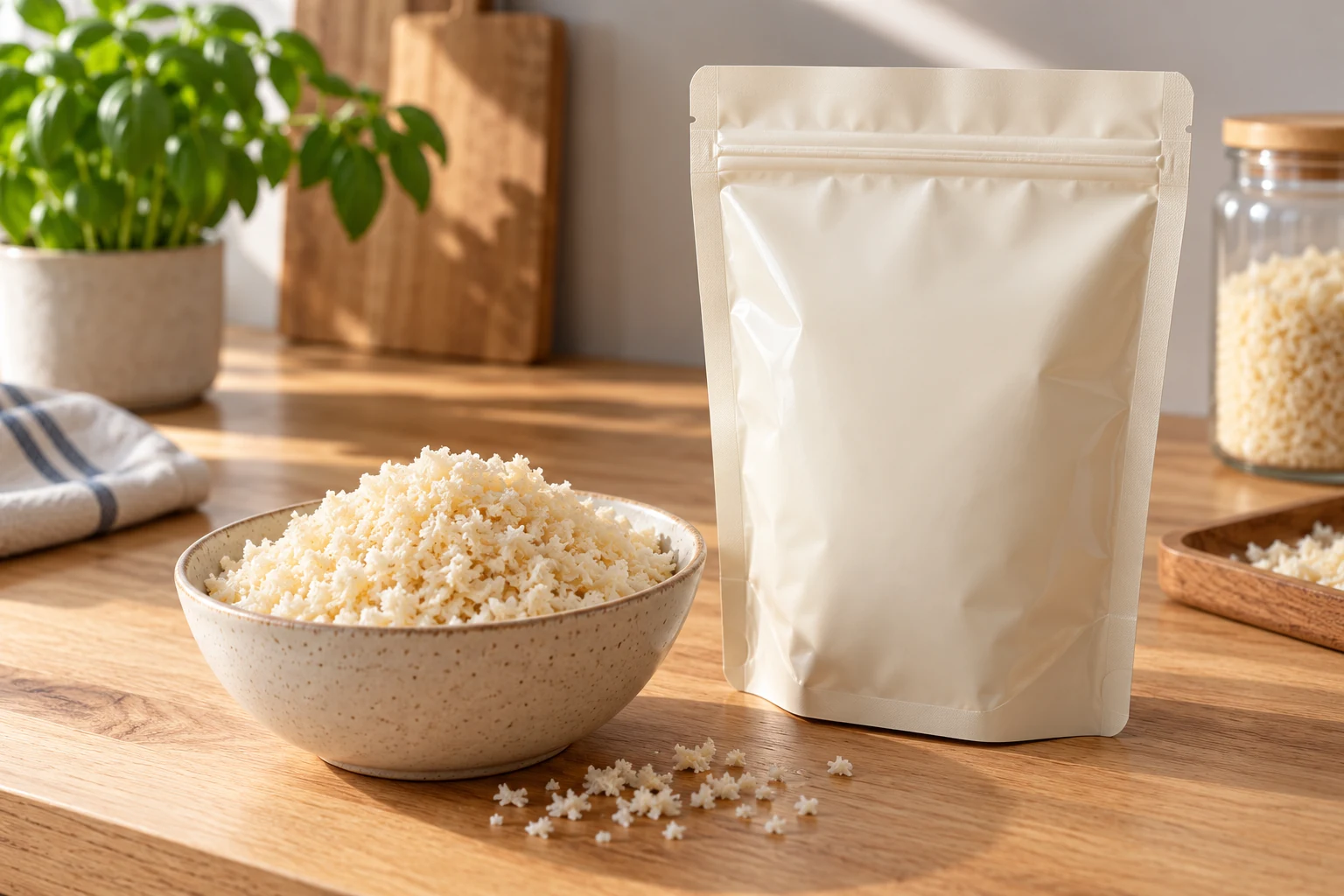
Panko that arrives crushed or spills from a stubborn closure can disappoint buyers before they cook. I start with the crumb and the opening routine.
I choose panko breadcrumb pouches by separating dried from fresh products, checking crumb size and filled volume, comparing documented films, and testing pouring, resealing, and carton handling with the actual breadcrumbs.
At Unique Packaging, I use this review for dried retail panko. Fresh panko needs its own storage and process assessment.
Which Panko Product and Pouch Structure Am I Comparing?
A pouch sized by weight alone can squeeze airy flakes. A fresh breadcrumb product can also be mistaken for a dried pantry ingredient.
I record dried or fresh status, ingredients, crumb size, loose fill volume, and intended storage before comparing pouch constructions. I treat a window, a barrier layer, and a zipper as separate decisions.
Dried panko and the material brief
I first ask the food team to name the product precisely. Kikkoman distinguishes dried and fresh panko and gives different storage advice for them. Its dried-panko guidance includes an airtight container. That supports a clear scope boundary, not a shelf-life promise for a new pouch.1
For a dried retail product, I collect a representative production sample rather than a handful selected for a sales photograph. I weigh it, measure its loose volume, and note the mix of large flakes and fines. I repeat that observation after normal handling. I use the pouch sizing guide to turn the measured volume into sample dimensions. The package must leave enough room for the planned top seal and opening, without using a large empty panel to disguise an undersized fill.
| Option to assess | Useful question | Evidence I request |
|---|---|---|
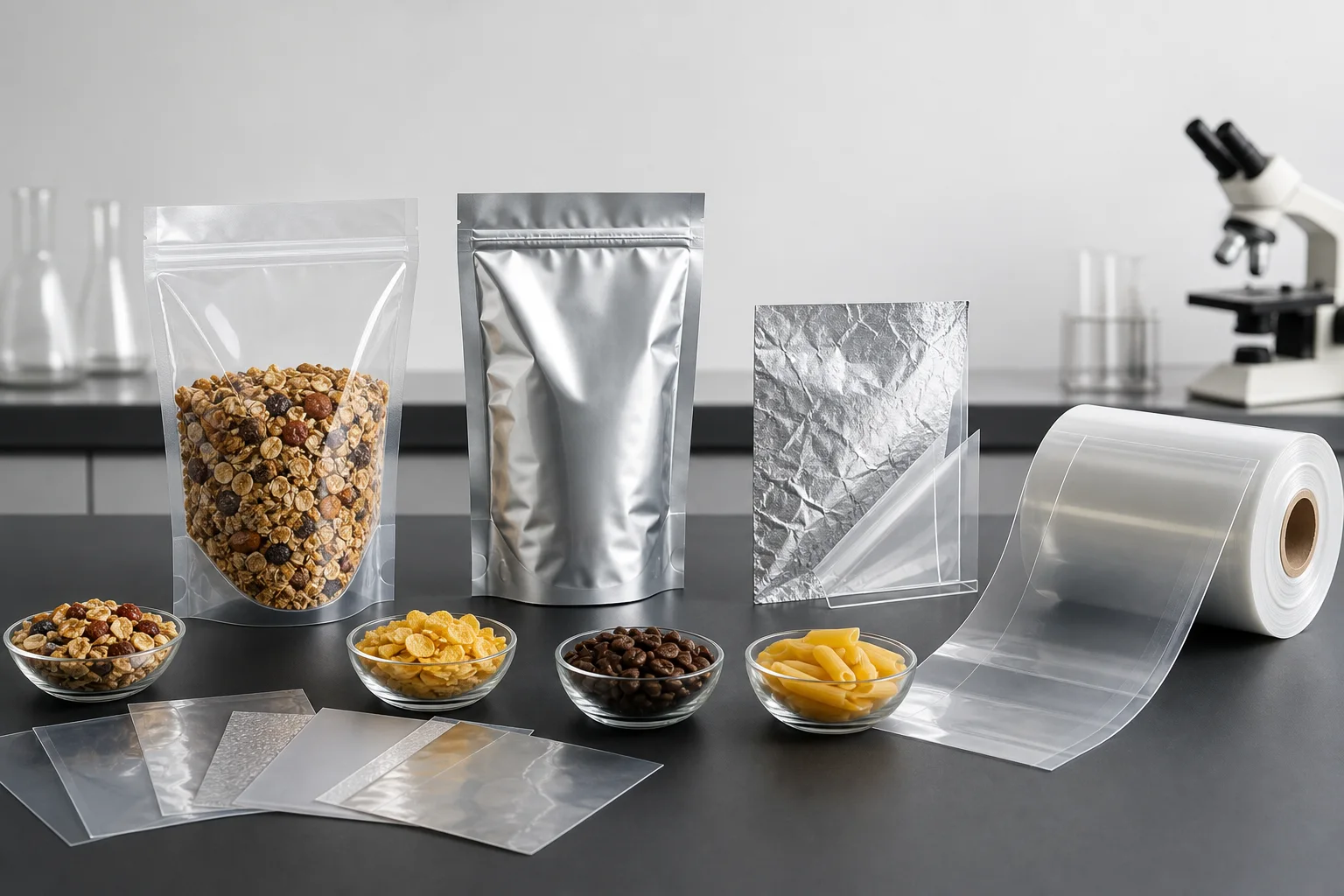
| Clear structure | Does visibility help buyers judge flake size? | Filled sample, barrier report, light exposure review |
| Opaque laminate | Does the selected construction fit the storage route? | Layer specification and measured barrier conditions |
| Zipper pouch | Can loose flakes stay clear of the tracks? | Repeated pour-and-close observations |
These are candidate designs, not a ranking of materials. I do not infer barrier performance from a silver surface or an opaque print. In the food barrier film guide, I compare the exact construction and its evidence. For water-vapor data I request the method, film thickness, temperature, humidity on both sides, units, and sample identity. Intertek lists ASTM F1249 for water-vapor transmission and F88 for seal strength; neither listing supplies a panko-specific acceptance limit.4
I also distinguish plain panko from a seasoned blend. Kikkoman lists wheat flour, cane sugar, yeast, and salt for its US product, including wheat as an allergen. That is one manufacturer example, not the formula for every breadcrumb brand.2
My material brief therefore names our own ingredients and intended contact conditions. I ask the food business to review the applicable documentation before choosing a film. This stops a supplier from quoting a generic snack pouch while the buyer expects a different ingredient or storage profile.
How Do I Keep Pouring and Resealing Practical?
A wide mouth helps pouring, but flakes trapped in a zipper can make the next closure frustrating. I test both actions together.
I check tear position, usable opening, zipper clearance, pour control, and closure feedback at full, half-full, and nearly empty stages. I also make storage instructions and date information easy to find.
Crumbs, pouring, and closure residue
I begin with the first opening. The user should be able to remove the top strip without cutting into the zipper or leaving a flap that hides the tracks. I ask several people to open an unmarked sample and describe what they do. I observe the action before explaining the intended technique. If most people reach for scissors or pull the wrong seam, I revise the sample rather than adding a long instruction panel.
I then pour the amount needed for one cooking session into a separate dry bowl. I watch where flakes collect, whether the gusset collapses, and whether crumbs lodge under the zipper. I repeat with less product in the bag. A nearly empty pouch can fold differently from a full one. I record spills on the bench and the time spent clearing the tracks. These are proposed usability observations, not a standardized closure certification.
A Reddit user in r/hellofresh asked about leftover breadcrumb sachets whose age they did not know. I take one narrow insight from that question: consumers can retain small packs without a clear memory of purchase or opening. I do not adopt the replies as food-safety or shelf-life advice.3
For my design review, that question makes date visibility and storage wording worth checking. I keep the lot and date area away from a fold that disappears after the user rolls the pouch down. I ask the food owner to approve the actual wording. Packaging appearance cannot decide whether an old ingredient is safe to eat, and a zipper cannot establish an open-life date.
I compare a zipper with a simpler one-use pack when the buying occasion calls for a single recipe portion. I do not add a closure merely because it looks premium. A small portion may not need repeated access; a larger retail fill may. That choice should follow the customer routine and the actual product volume, rather than a competitor photograph.
The closure contamination guide gives useful process questions, although panko flakes are not powder. I adapt its clean-seal discipline to crumbs, then retain photos of the zipper after repeated use. I keep product-quality observations separate from closure failures so the responsible team can correct the right part of the system.
What Must Pass Before I Approve the First Order?
An attractive empty sample cannot reveal crushed crumbs, a dusty seal, or a carton that compresses the fill. I need filled evidence.
I approve the actual film and filled pouch together, using agreed seal checks, crumb comparisons, storage observations, and the proposed shipper. I quote only after the written specification identifies the approved sample and limits.
Filled-carton trial and approval record
I prepare a small comparison plan before samples arrive. The plan identifies the breadcrumb lot, fill weight, pouch dimensions, construction revision, zipper, seal settings, and carton arrangement. I keep a reference sample from the same product lot. I photograph its flake distribution so later observations do not rely on memory. If the breadcrumb supplier changes the milling or drying process, I reassess whether that reference still represents production.
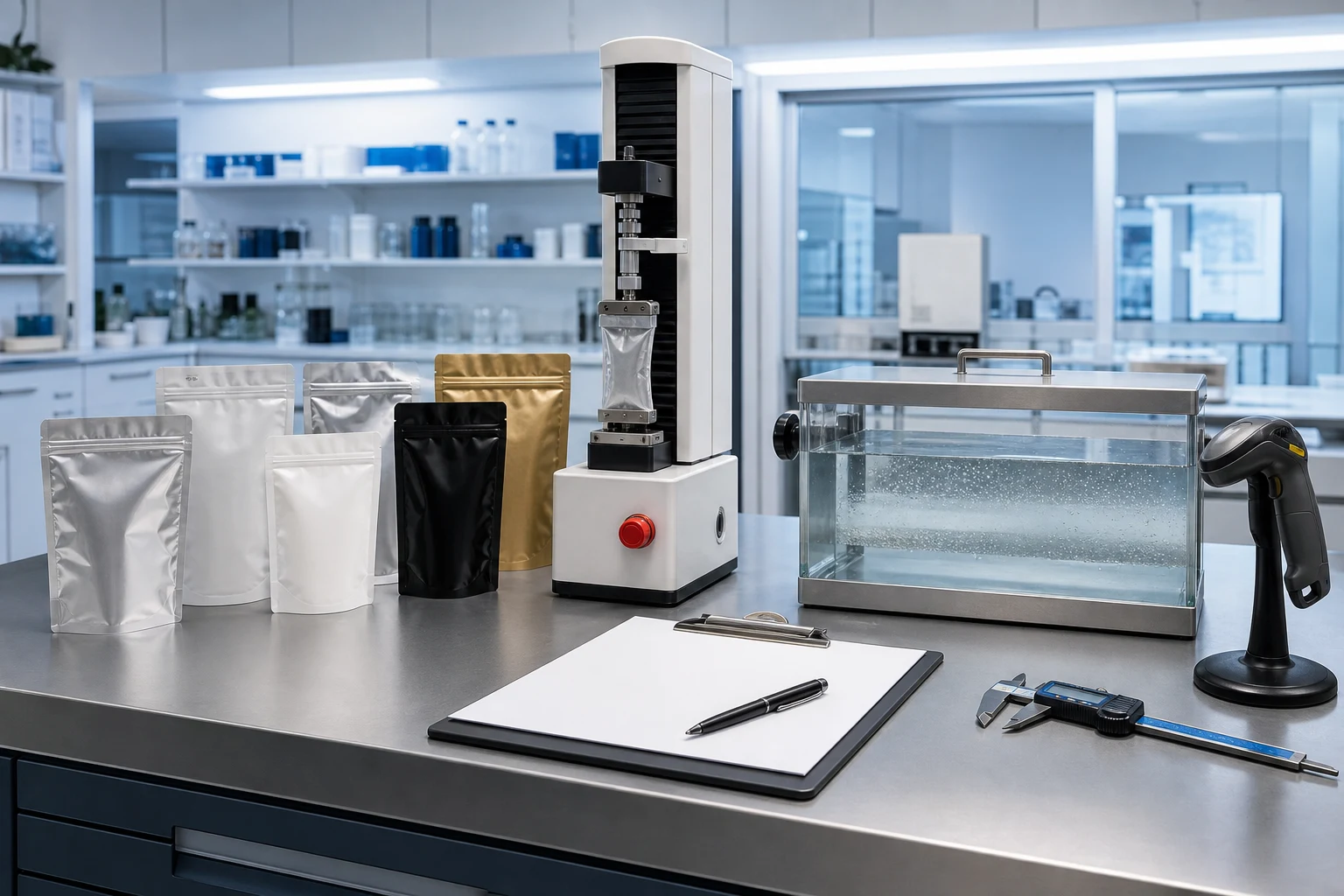
On the filling line, I inspect the seal zone after filling and before closing. I record crumbs in the jaw area, wrinkles at the gusset, and any operators wiping the mouth by hand. I vary settings only within a plan agreed with the converter and packer. For an F88 seal-strength request, I ask the laboratory to record strip width, specimen orientation, support technique, pull speed, conditioning, and failure description. I do not substitute a hand tug for a measured result.4
I use the packaging test guide to choose a practical inspection sequence. Separately, I compare crumbs before and after the proposed carton-handling trial. I check the bottom corners, the zipper ends, and the remaining headspace. If fines increase, I investigate handling and carton compression rather than assuming a stronger film will solve every problem.
My storage comparison uses a control and the selected pouch with recorded temperature, humidity, duration, and opening schedule. The food team sets its own quality criteria and shelf-life study. A flat-film report cannot by itself establish how long our dried panko remains acceptable. I retain the study limits in the release record so a short trial cannot become a printed long-term claim.
For the US market, FDA describes food-contact packaging components and authorization for intended uses. I request the relevant documentation for the proposed structure; a general food-grade phrase is not my complete review.5
My purchasing checklist covers layer identity, thickness tolerance, usable dimensions, zipper placement, top-seal allowance, print revision, date area, packing method, and change control. I attach the approved filled-sample reference and outstanding questions. Only then do I send a specification-based sample and quote request. The quotation must name the same construction and trial scope. If the supplier offers an alternative, I review it as a new candidate rather than silently replacing the approved pack.
Conclusion
I approve dried panko pouches through crumb-specific sizing, controlled pouring, documented films, filled-carton trials, and written specifications tied to the quoted construction.
Sources and Further Reading
Need a pouch specification?
I can review your product, size, quantity, artwork, and target market.