A premium pouch cannot fix unwanted shell fragments or unclear storage instructions. I separate ingredient quality from packaging performance before choosing a cacao nib bag.
I choose cacao nib pouches by confirming the ingredient specification, comparing documented opaque and clear constructions, and checking opening, pouring, sealing, and storage with representative nibs. I keep ingredient defects separate from pouch failures.
I use this buying review for retail nibs. Cocoa powder, whole beans, and finished chocolate need different product briefs.
What Belongs in the Nib Specification Before Film Selection?
A package complaint may start with the ingredient itself. Changing film without checking nib quality can hide the real problem.
I define nib identity, processing state, particle distribution, fines, and the supplier’s ingredient acceptance criteria before comparing films. I use a retained nib sample to separate product variation from packaging changes.
Cacao identity and film evidence
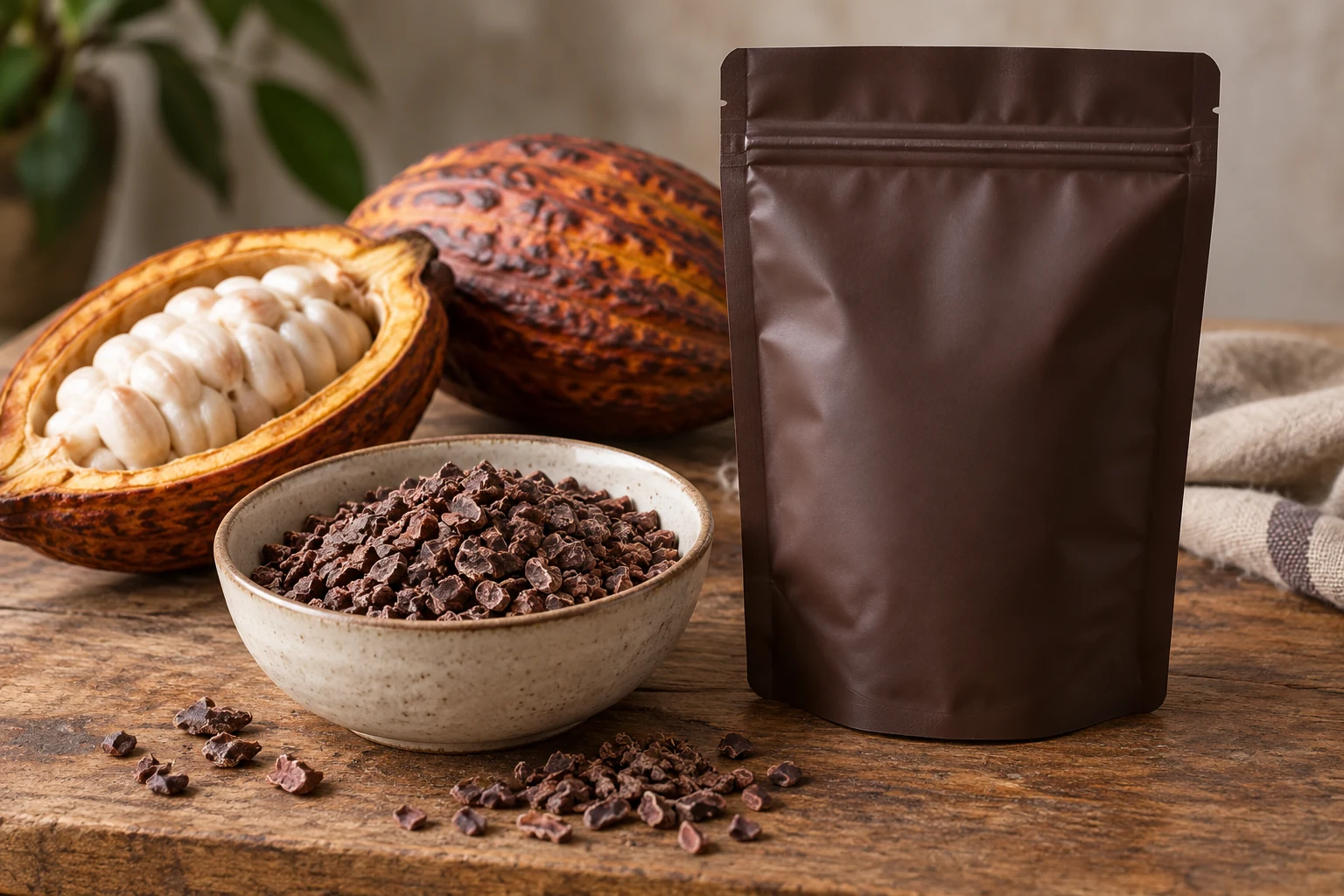
I start with what the buyer is selling. Navitas describes its nibs as crushed cacao beans and lists applications such as smoothies and baking. That supports the ingredient identity and use context; it does not specify our particle size or prove the performance of a proposed pouch.1
I request a sample from a normal production lot and ask the ingredient supplier for its specification. I record the processing state without assuming that a marketing word describes a validated food process. I also ask who owns ingredient inspection and how complaints will be traced. A converter can inspect film and pouch seals, but the food business must own the product acceptance decision.
A recent r/Smoothies post reports hard pieces the user suspected were shell in a cacao nib bag. The identification was the user’s interpretation. I do not confirm that diagnosis or transfer the allegation to another brand. Its value here is the buyer question: can we distinguish an ingredient problem from a bag problem when a customer sends a photograph?3
I retain representative fragments and a sample from before filling. If a later complaint concerns hard particles, that baseline helps the food owner investigate. The oily food packaging guide supports the separate material review. I avoid saying that improved barrier film removes shell fragments or guarantees an ingredient quality standard.
| Decision | What I compare | What the comparison cannot prove |
|---|---|---|
| Opaque or clear pouch | Visibility, storage route, documented film data | A universal shelf-life duration |
| Opening width | Pouring and spoon access with actual nibs | Ingredient purity |
| Seal and gusset layout | Filled-pack handling and corner observations | Food process validation |
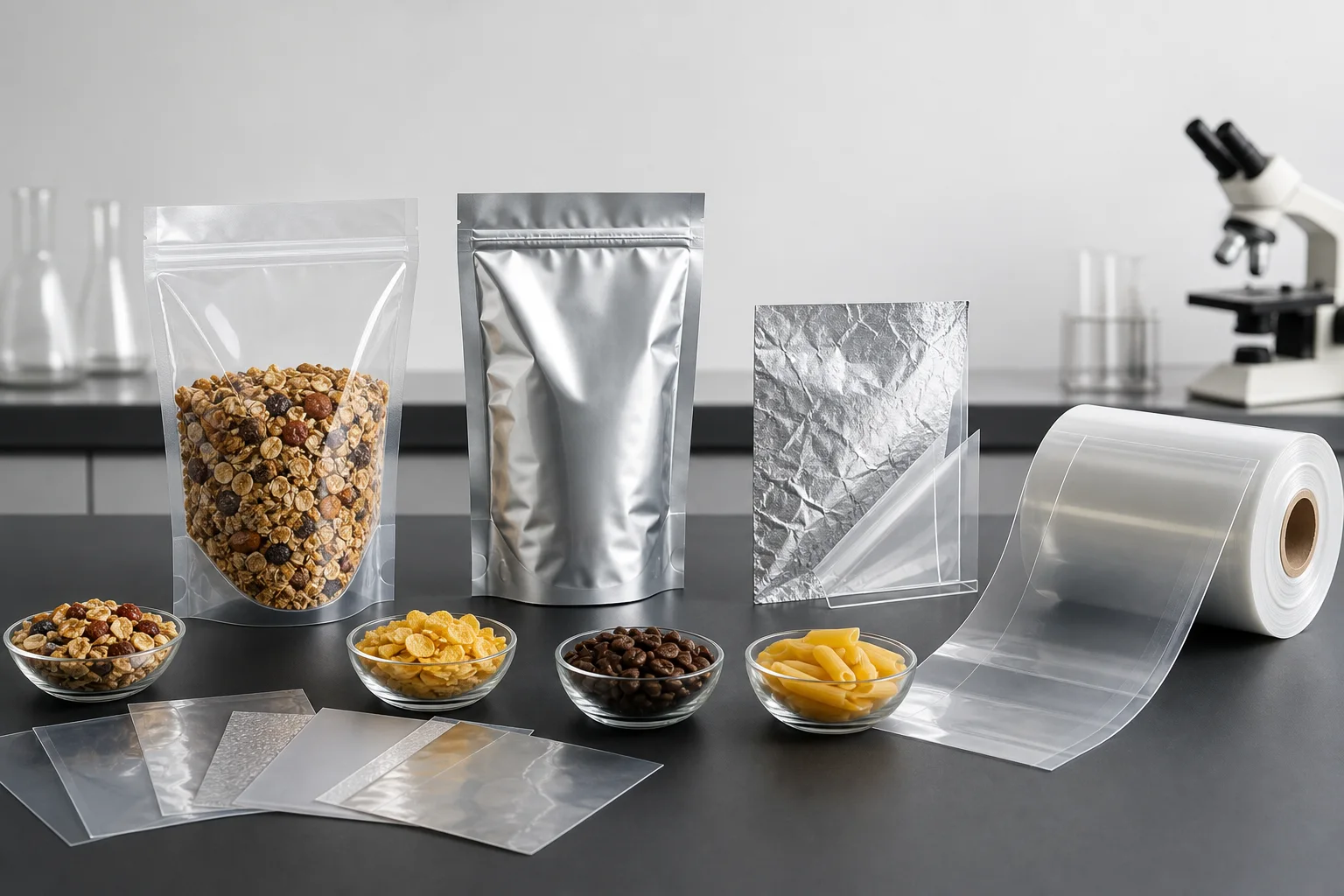
I send each film candidate through the barrier film comparison using the exact layer structure and thickness. If oxygen transmission is a relevant project criterion, I ask for an agreed method such as ASTM D3985 with temperature, humidity, gas conditions, units, and specimen identity. Intertek lists that method among film tests.4
I keep those measurements beside the product brief. I do not borrow a number from cocoa powder or a roasted nut pouch simply because the package looks similar. The decision remains specific to our nibs, our route, and the construction submitted for approval.
How Do I Compare Storage and Repeated Opening?
A well-sealed retail pouch still has to work after breakfast. An awkward opening can leave nibs in the tracks and the pack partly closed.
I compare full, partly used, and nearly empty pouches with the intended serving routine. I check storage wording, zipper feedback, spoon access, and whether users can close the pouch without clearing loose nibs by hand.
Nibs, fragments, and clean scooping
I first define the customer routine. A smoothie user may pour a small amount directly from the mouth, while a baker may weigh a larger portion. I test both only if both are intended uses for the product. I do not turn a single appealing kitchen photograph into a universal opening requirement. The user group and task should be written down before a sample is scored.
Navitas recommends cool, dark, dry storage and fully resealing its superfood packaging after each use, with named exceptions for other products. I use that as a manufacturer example of clear handling guidance. I do not present it as a storage validation or shelf-life study for our nibs.2
For our artwork, I ask the food team to approve the conditions that actually apply. I check whether instructions stay readable when the top is folded or the pouch is almost empty. A dark design can still need a contrasting date area. I review the pouch dieline before print approval so the date and opening features have usable space.
In an opening session, I observe tearing, pouring, spoon entry, zipper closure, and storage return. I look for fragments near the tracks and stress at the tear notch. I record whether people can tell that the full closure is engaged. I ask them to explain that feedback in their own words rather than accepting a designer’s assumption that the seal feels obvious.
I keep usability observations distinct from barrier testing. A zipper that feels secure does not tell me its gas or moisture transmission rate. A film report does not tell me how often a distracted customer leaves a gap. These two records answer different questions, so both belong in the product decision.
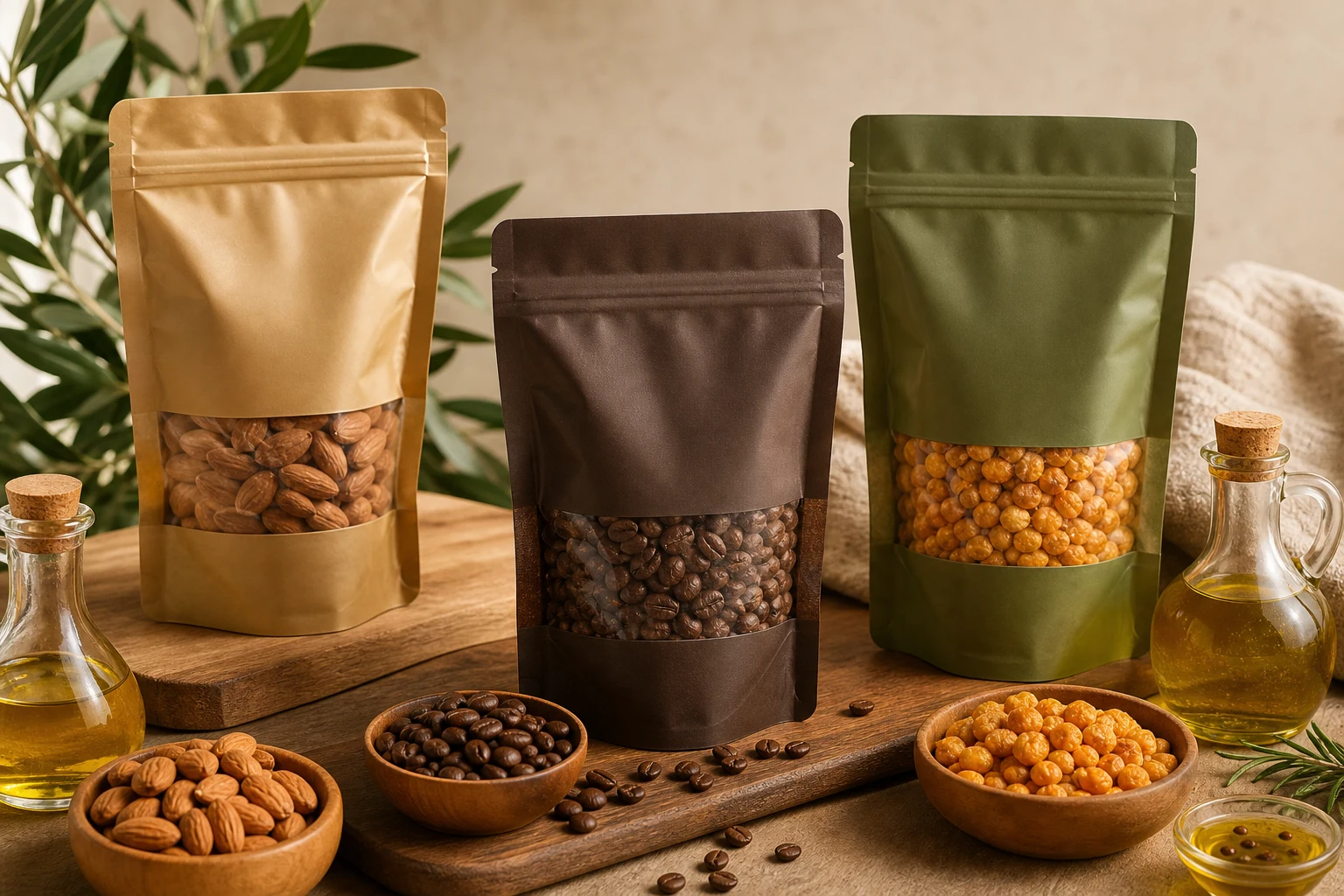
I compare an opaque design with a visible window only when there is a real merchandising reason. If visibility helps shoppers understand fragment size, I test that benefit without assuming the window is suitable for storage. I ask for construction-specific evidence and run the filled comparison. The result may support either option; I do not decide from the words premium, recyclable, or high barrier alone.
Finally, I record spillage and closure difficulties at each fill level. A modest mouth change or different zipper position may be more useful than a more elaborate finish. I approve the action the customer performs, then check that the converter can make that version consistently.
Which Trial Records Make a Cacao Nib Quote Useful?
Two quotes can describe the same pouch size while covering different films, closures, and sample assumptions. I need a shared evidence record.
I request representative filled samples, stated barrier and seal test conditions, storage comparisons, and carton observations. I confirm the approved specification in writing before comparing prices or ordering printed stock.
Sample review and written release
My trial begins with a single ingredient lot split across candidates and a control. I record fill weight, fill volume, product condition, pouch revision, storage conditions, and the observation schedule. I also retain an unopened reference. That makes it easier to distinguish an incoming ingredient variation from a packaging change. If the trial uses different nib lots, I label that limitation rather than calling the results directly comparable.
I discuss the quality endpoints with the food team before starting. They choose the appropriate sensory and analytical checks and any safety review. I do not infer that an old pack is safe from its smell or appearance, and I do not print an expiry based on a brief bench comparison. The trial is evidence for the questions it was designed to answer.
For package integrity, I use the quality test planning guide to define observations at the seal, zipper ends, and gusset corners. I ask the laboratory to record the seal-strength method and specimen conditions. I check whether any seal contamination came from nib fines during filling. When a result is poor, I investigate the film, settings, and contamination separately rather than increasing jaw temperature by guesswork.
I then pack filled pouches in the proposed carton. I record case arrangement and inspect after the agreed handling sequence. I look for visible corner abrasion, seam changes, and an increase in small fragments. These observations do not certify a distribution route. They tell me which candidate needs a more formal test or a design change before the first production order.
For a US food project, FDA includes packaging components in food-contact substance oversight and discusses authorization for intended use. I request documents tied to the proposed materials and contact conditions; a generic badge on a sales sheet does not replace that review.5
My final checklist names the food lot reference, laminate layers, thickness and tolerances, pouch dimensions, zipper location, top seal, artwork version, date marking area, carton packing, test reports, and change-control owner. I attach photographs and the approved sample code. Any unresolved item stays visible instead of becoming an assumed promise.
I then send a sample review and specification-based quote request. I ask each supplier to identify departures from the approved brief. I leave prices, production timing, certification, and minimum quantities out of the guide unless the project has current supporting evidence. That keeps the comparison useful without inventing a commercial commitment.
Conclusion
I specify cacao nib pouches around the real ingredient, usable closures, documented constructions, and filled-pack evidence. Clear ownership keeps ingredient quality and pouch performance accountable.
Sources and Further Reading
Need a pouch specification?
I can review your product, size, quantity, artwork, and target market.