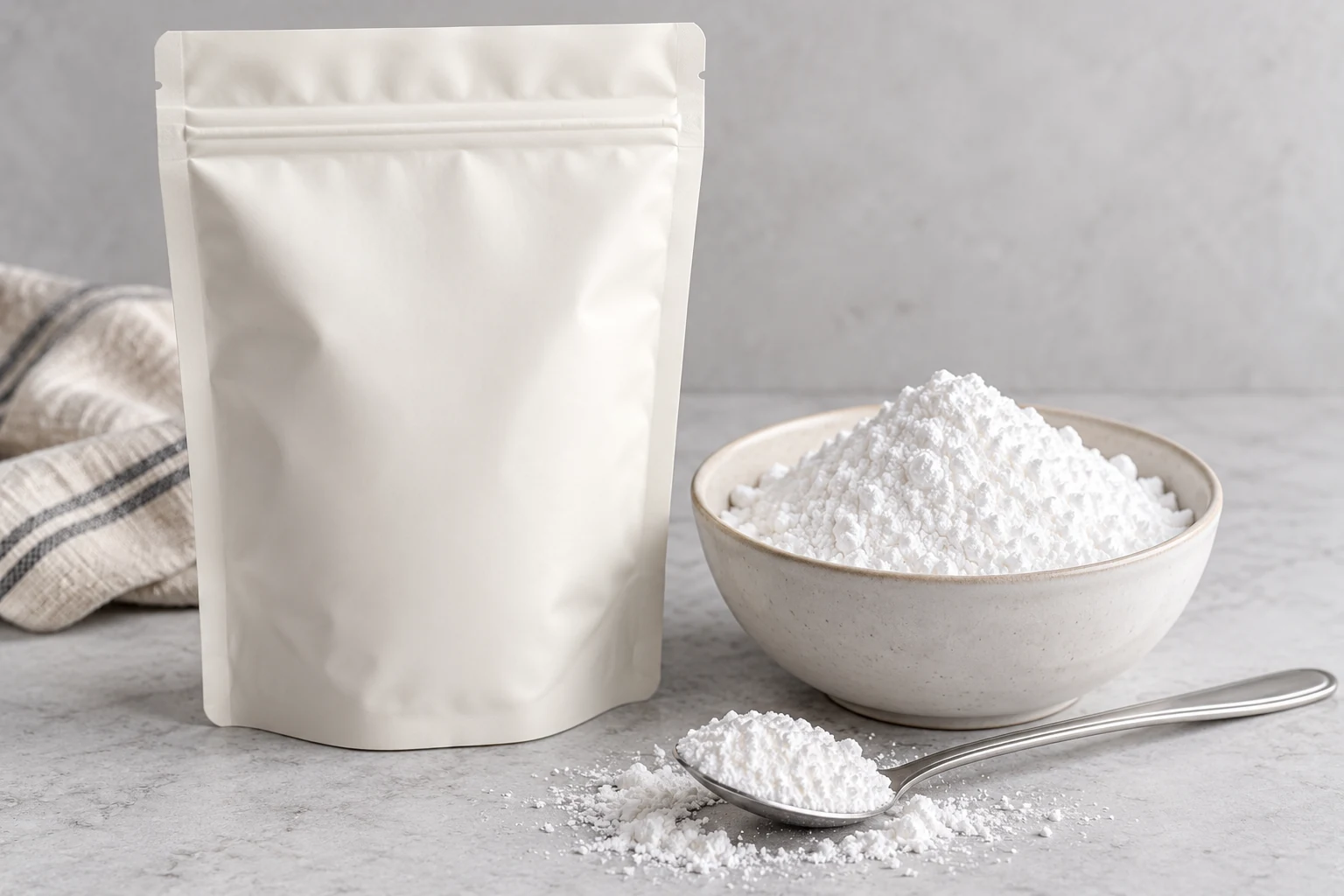
Powdered sugar can dust a counter, lodge in a closure or form lumps. A tidy bag photograph does not show how customers will use it.
I choose powdered sugar packaging by moisture and odor needs, controlled scooping or pouring, clean top seals and repeatable reclosure. I compare the exact pouch structure with representative filled samples and confirm the written specification before ordering.
At Unique Packaging, I treat confectioners sugar as its own packaging application. I do not copy a brown-sugar bag brief and assume the same opening, handling and storage priorities apply.
What Must Powdered Sugar Packaging Protect Against?
A bag can look tightly closed while the product develops lumps or picks up an unwanted smell. Vague barrier claims do not explain the cause.
I start with the sugar supplier’s storage guidance and the intended packing environment. I evaluate moisture and odor exposure, exact food-contact documentation and the whole filled pouch rather than relying on a material trade name.
I first confirm the actual powdered sugar product. The brand may sell a fine confectioners sugar for home baking, a decorating ingredient or a larger kitchen refill. I ask for the current ingredient and handling information rather than assuming every formulation is identical. I also record the destination, storage environment and proposed sale period before I compare packaging structures.
Domino advises storing its powdered sugar in a cool, dry location and explains that moisture can create lumps. It also notes the product’s tendency to take up strong odors.1 I use this product-specific guidance to plan a packaging review. I do not treat it as proof that a chosen pouch will provide a particular shelf life or prevent every odor from reaching the contents.
Define comparable material evidence
I ask the converter to state the full construction and its intended function. If a quotation includes a moisture-barrier result, I ask for the method, temperature, humidity, units and tested construction. I keep that record with the sample. An unexplained high-barrier label is not a usable comparison, and a film measurement does not by itself describe performance after repeated opening.
| Decision | Question for the trial | Evidence to retain |
|---|---|---|
| Material structure | Does it address the documented exposure? | Declared construction and scoped test data |
| Opening and zipper | Can a user scoop and fully reclose it? | Observed handling with real sugar |
| Final heat seal | Is the seal area clean after filling? | Line settings and inspected samples |
I use the barrier film comparison guide to frame those questions. I include odor-sensitive storage situations in the brief, such as nearby ingredients or outer packaging. I avoid recommending a numerical transmission target until the product owner and testing team can explain why that target suits this application.
The FDA food-contact tables distinguish food categories and use conditions.2 For a US-market project, I ask the supplier to identify the documented intended use of the chosen construction. I keep that review separate from visual appearance, print finish and a general assurance that the pouch is suitable for food.
Should My Sugar Pouch Support Scooping, Pouring or Refilling?
A convenient zipper can still leave too little hand space. A wide opening can be awkward when a customer only wants a light dusting.
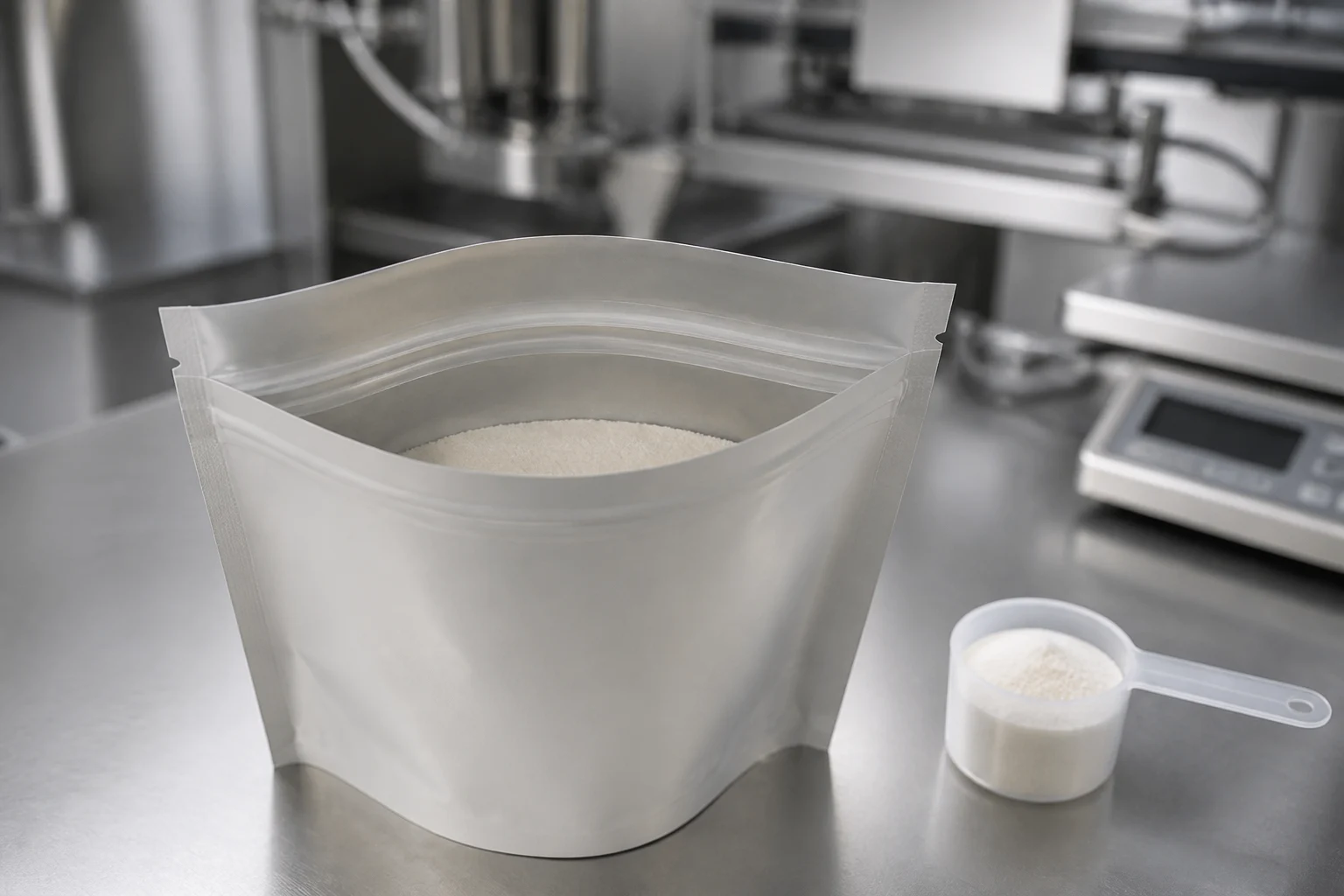
I choose the opening around a specific task: scoop into a bowl, pour a measured amount or refill a separate dispenser. I check the task at full and partial fill, including grip, reclosure and visible powder escape.
I ask how customers actually use the sugar before choosing the mouth width. A baker preparing icing may want a scoop and room above the fill. A breakfast user may prefer to refill a small shaker. A kitchen buying a larger pack may transfer the whole bag into a labelled ingredient container. I do not assume that one opening is equally useful for all three tasks.
In a r/Cooking discussion about powdered sugar in a shaker, the original poster describes spooning from a sturdy resealable retail bag but wanting fewer steps when making waffles and pancakes.3 That is a specific convenience problem worth testing. I do not adopt the thread’s mixed storage advice as technical evidence. I use the manufacturer’s guidance for that part of the decision.
Test the transfer rather than the promise
I place a filled sample on a tray and run the chosen task with an appropriate spoon, bowl or dispenser. I watch whether the pouch mouth folds inward, whether the spoon catches the zipper and where powder settles. I record the fill level and opening method. A small pile left on the tray is an observation to compare between samples, not a basis for an unsupported percentage reduction claim.
I also ask the user to reclose the pouch without wiping it first, then repeat the task after cleaning the tracks according to the proposed handling instructions. This reveals whether the chosen routine is realistic. I connect any filling-related contamination to the powder and zipper contamination guide. Customer reclosure and the original production heat seal need separate checks.
I review the filled pouch dimensions with the proposed scoop and target weight. I leave room for the agreed seal zone and opening feature instead of stretching artwork into every available millimetre. When a trial identifies a better mouth width or zipper position, I request a revised drawing and sample before approving the print layout.
Finally, I ask whether the pack still stands and remains easy to hold when half empty. That simple comparison gives a brand useful evidence about the second and later opening, which an untouched presentation sample cannot provide.
How Do I Approve Seals and a Powdered Sugar Purchase Specification?
Fine powder near the bag mouth makes a clean-looking sample an incomplete approval. The filling process must produce the same usable pouch consistently.
I approve powdered sugar pouches through a representative filling trial, clean seal zones, documented sealing conditions and repeat-use checks. I retain the sample and acceptance record, then request pricing for that exact specification.
I involve the contract packer before the final order. I ask how powder enters the pouch, which parts support the opening and how the sealing area stays clear. I also ask which pouch dimensions and zipper positions the equipment can handle. These questions belong in the sample stage because a change made after printing may affect the approved artwork and usable top space.
I inspect samples from the proposed filling setup. I look for visible sugar in the heat-seal zone, folded film, uneven closure placement and powder trapped near the tear path. I record the observed defects and the operating conditions. I do not prescribe a universal sealing temperature, pressure or dwell time. The selected sealant and equipment need an agreed operating window.
Record what a test actually establishes
ASTM F88/F88M is a seal-strength test method; the cited edition covers force to separate a specimen containing a seal and the failure mode.4 I ask the laboratory to identify the edition, specimen dimensions, conditioning and holding technique. Consistent setup makes the results useful within the comparison. Seal strength alone is not proof of moisture protection, odor resistance or finished-product shelf life.
I then compare filled packs after the agreed carton handling and storage observations. I keep a retained sample so that changes in the opening or closure can be discussed clearly. If a test fails, I identify the responsible feature or process condition and repeat the relevant check after correction. The packaging quality test guide helps keep those separate decisions in one plan.
My procurement checklist includes product identity, net fill, finished dimensions, structure, zipper position, opening path, seal area, artwork revision and carton arrangement. It also names the approved trial, acceptance criteria and any validation still owned by the food brand. I record how the bag will be labelled if it serves as a refill for a separate working container.
I send that record with a powdered sugar pouch sample and quotation request. I specify quantity per design and destination but avoid assuming a standard minimum or delivery date. The supplier can quote the documented construction and state any commercial conditions. I review substitutions against the approved sample instead of accepting them because the new pack has the same color and nominal capacity.
Conclusion
I choose packaging through evidence, filled-pack testing, and clear specifications. That process protects the product, the launch, and the customer experience.
Sources and Further Reading
Need a pouch specification?
I can review your product, size, quantity, artwork, and target market.