A refill pouch can look dry and seal neatly while the buyer has not defined the powder, intended use, or conditions behind a clumping complaint.
I specify citric acid powder refill pouches by confirming the exact ingredient and use, comparing documented moisture-barrier structures, testing filling and reclosure, and approving a written specification from representative filled samples.
I begin with the product identity because food ingredients, household products, and mixed powders need different purchase briefs. My process below is a project checklist, not a promise of shelf life.
Which Citric Acid Product Am I Actually Packing?
A complaint about a mixed powder can send a buyer toward a new film before the team has checked what was packed.
I confirm ingredient form, grade, particle size, formula, intended use, and market first. I keep pure citric acid separate from multi-ingredient blends when I review storage observations and choose representative samples.
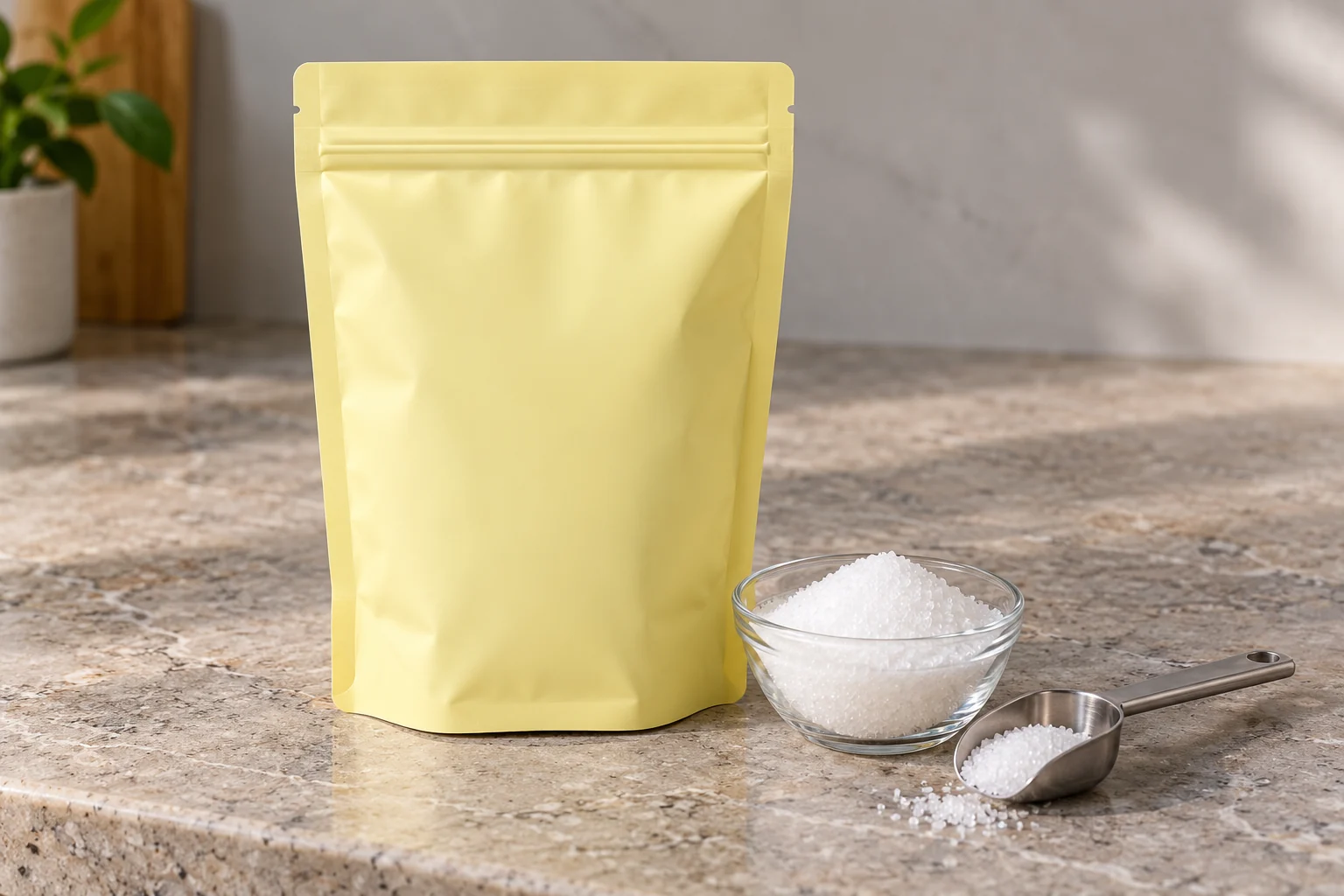
I write the complete product name on the sample request. Jungbunzlauer lists citric acid in anhydrous and monohydrate forms in its product range.1 That distinction belongs in my brief. I also ask the ingredient owner to identify the supplied grade and granulation. A photograph of white crystals cannot answer those questions. I do not select the film from a generic acid-powder label.
In a real r/chemhelp thread, a user described hard clumping after mixing citric acid with baking soda and leaving the mixture in a jar.2 I use that report as a reminder to inspect the complete formula. It is one user observation about a mixture, not a controlled study of pure citric acid or a commercial pouch. I do not repeat the thread's home remedies as production instructions.
What belongs in the first sample brief?
I request the current ingredient specification, target fill mass, storage instructions, intended opening routine, and distribution route. I ask whether a consumer will scoop directly from the bag or transfer the whole contents elsewhere. I mark whether the sample is a food ingredient, a household formulation, or another product. The responsible product team then checks the applicable documentation for that use and market.
For a food-contact project, FDA explains that the status of the package depends on its individual substances and intended use.3 I therefore request documentation for the proposed contact structure rather than accepting a broad food-safe slogan. I use the food-contact document checklist to keep the material and use connected. A household formulation needs its own review rather than borrowed food documentation.
I retain the incoming powder lot alongside each filled sample. If a later lot behaves differently, I can compare the package and product records separately. I also keep a reference sample in the ingredient owner's approved container. This does not prove which package wins. It gives the investigation a defined starting point and avoids changing the film, closure, powder, and storage routine at once.
Which Barrier and Closure Comparisons Are Useful?
A metallic appearance or a thick pouch does not tell me how the proposed film and zipper will behave with my actual powder.
I compare the exact construction, reported water-vapor transmission conditions, sealant, and reclosure geometry. I evaluate film reports and filled-pouch behavior separately, then choose a structure only after the project defines acceptance limits.
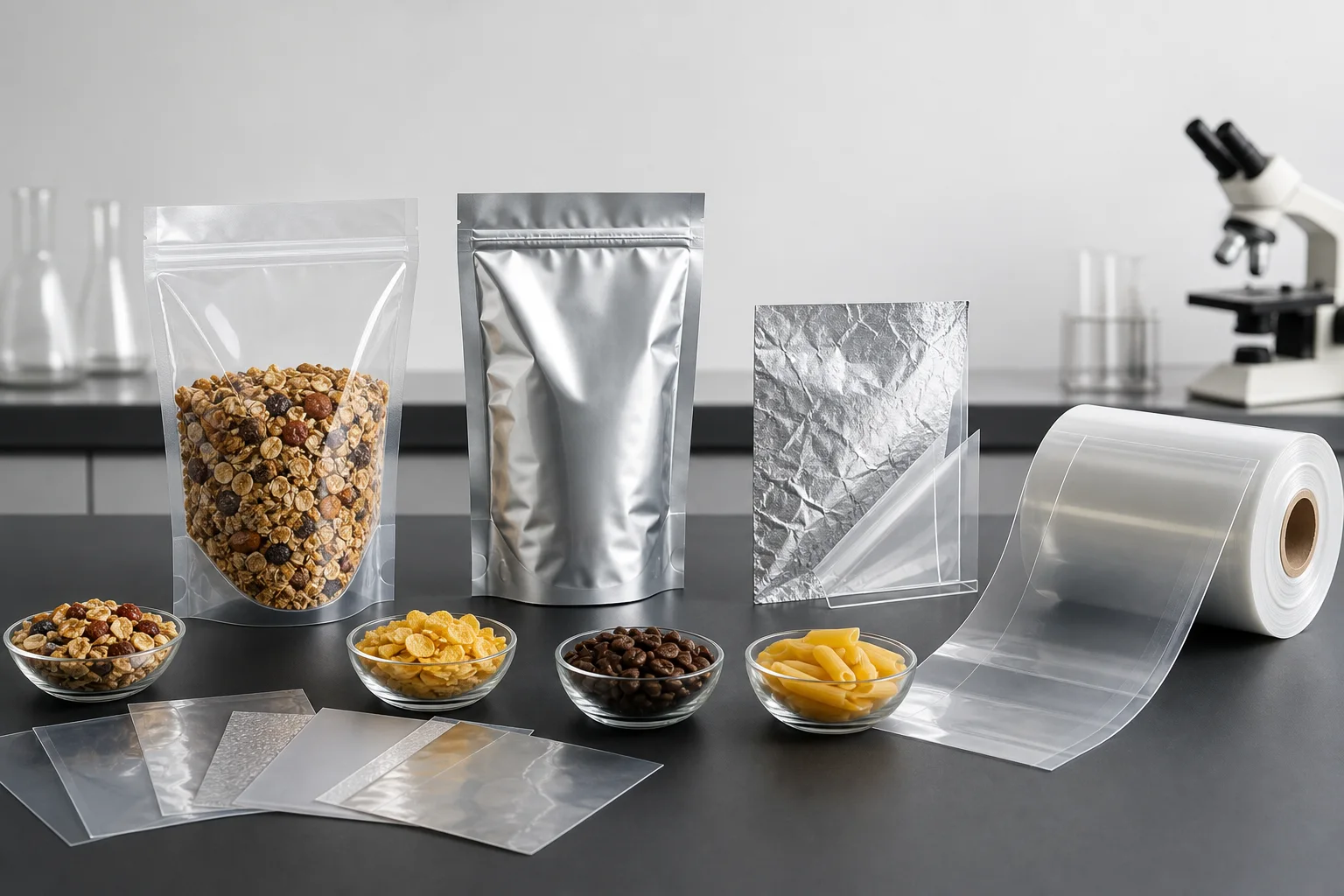
I ask the supplier to describe every layer, the total thickness, and the inside sealant. I place candidate constructions beside the core barrier-film guide so the discussion stays focused on the required protection. I do not assume an opaque pouch, a clear pouch, or a named polymer automatically meets the brief. The sample report must identify what was actually tested.
ASTM F1249-20 describes a method for water-vapor transmission through film and sheeting.4 I cite its published scope as a method reference, not a claim that my pouch has passed. For a comparison, I request temperature, relative humidity on each side, sample thickness, conditioning, units, and method edition. A report without these conditions leaves me unable to compare its number with another supplier's number.
How do I compare candidates without inventing a ranking?
| Candidate detail | Question I ask | Evidence I request |
|---|---|---|
| Clear construction | Can I inspect the powder without losing required protection? | Exact film report and filled storage observations. |
| Opaque or metallic construction | Does this exact structure meet the brief? | Layer specification, test conditions, and converting samples. |
| Zipper geometry | Can users clear and fully close the mouth? | Repeated opening with the actual powder. |
| Top heat seal | Is the line sealing a clean, continuous area? | Recorded settings and identified seal specimens. |
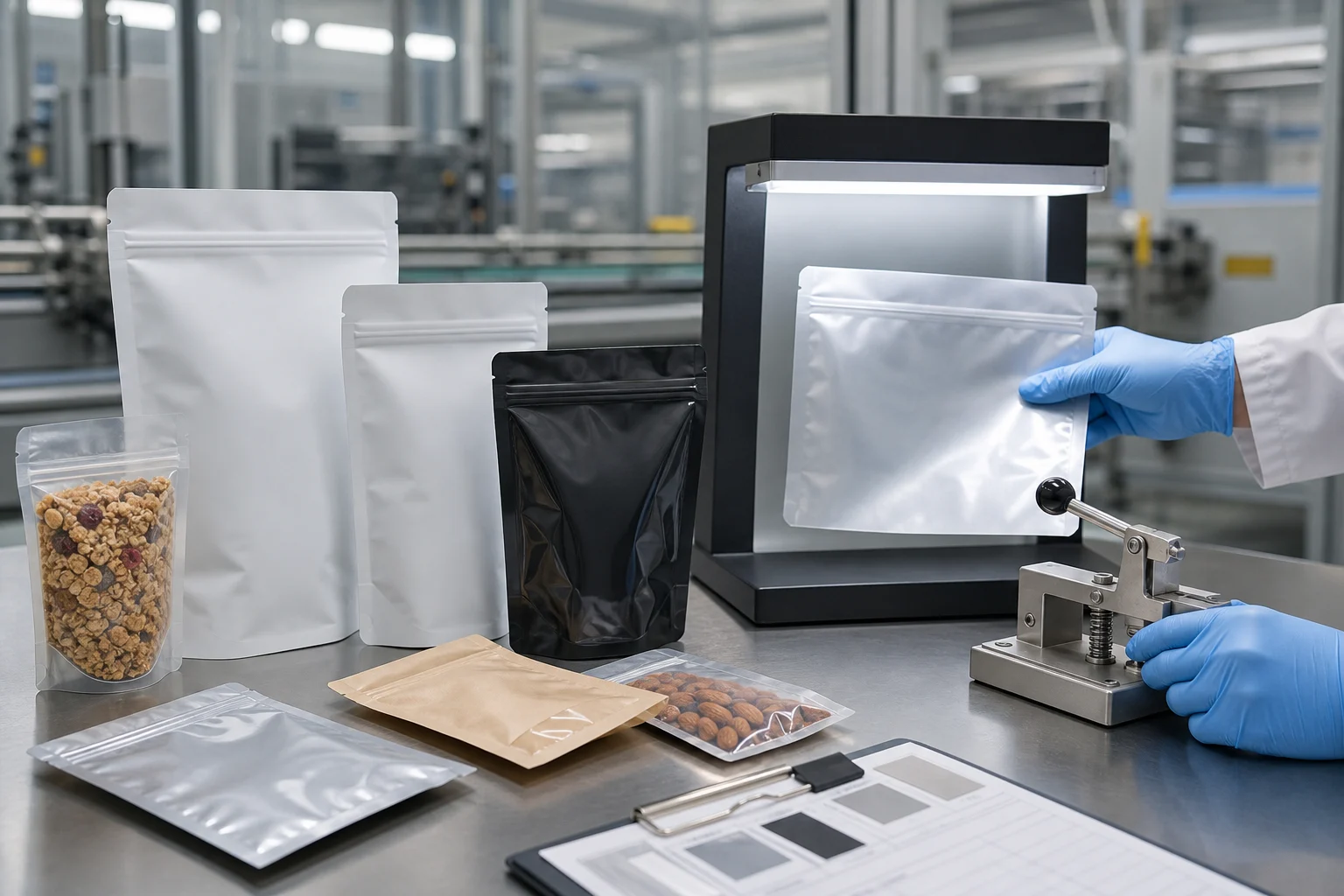
I inspect how much powder remains above the fill line and near the zipper after a normal filling cycle. I record visible contamination, incomplete closure, and difficult scooping as observations. I then change one controllable feature at a time, such as mouth width or fill clearance. I do not claim the zipper is hermetic because it feels closed.
ASTM F88/F88M-23 covers seal-strength measurement in flexible barrier materials.5 When I request that comparison, I ask the laboratory to state specimen width, technique, preparation, conditioning, and failure mode. The seal-leak prevention guide helps organize line checks. Neither a strip result nor a film result alone verifies the full package after filling and opening.
How Do I Turn Filled Trials into a Purchase Specification?
Unlabeled samples and changing storage conditions can make an expensive pouch comparison impossible to interpret or repeat.
I define sealed-storage and repeated-use trials with the product owner, record exact conditions and observations, and approve the pouch drawing, material, closure, filling setup, and acceptance plan before requesting comparable quotations.
I separate an unopened-pouch comparison from an opened-use comparison. For the unopened set, I identify each filled bag, powder lot, mass, construction, seal setting, and storage position. For the opened set, I write a repeatable opening schedule and handling routine. The test owner selects the storage temperature, humidity, duration, and sampling intervals from the actual project needs. I record those values instead of declaring a universal humidity target.
I ask the product owner to define what an unacceptable change looks like before the trial starts. Possible observations to assess include a change in pour behavior, visible lumps, package damage, incomplete reclosure, or loss during transfer. Those are proposed checks, not claims that every citric acid product will develop those problems. Where a laboratory measurement is required, I name the method and responsible reviewer in the plan.
Which failure patterns should I investigate?
If only opened samples change, I examine the handling routine and closure observations. If only one sealing lane produces damaged packs, I examine lane records and retained specimens. If all samples from one powder lot differ, I ask the ingredient owner to review that lot. I preserve the evidence before changing anything. This approach makes a failure useful because it creates a specific follow-up question rather than a general complaint about cheap bags.
- Exact ingredient identity, formula revision, intended use, and market.
- Fill range, dimensions, usable mouth, zipper position, and top-seal drawing.
- Approved layer construction, thickness, contact documentation, and component revisions.
- Recorded film-test conditions and sealed/opened trial protocols.
- Acceptance criteria, sample retention, traceability, and change-approval owner.
I transfer the approved details into the written pouch specification. I then compare supplier quotations against the same scope, including samples and required evaluation work. An alternative film or zipper remains an alternative until the affected checks are repeated. I make no unsupported promise about production timing, minimum order, price, recyclability, or storage life.
I also retain the rejected candidate and the reason it was rejected. On a repeat order, that record prevents a similar-looking structure from returning as an unnoticed substitution. My approval identifies a specific powder-and-package pairing under stated conditions, with the remaining uncertainties written down.
Conclusion
I buy citric acid pouches from a defined product brief, comparable test conditions, representative filled trials, and a written approval that suppliers can quote.
Sources and Further Reading
Need a pouch specification?
I can review your product, size, quantity, artwork, and target market.