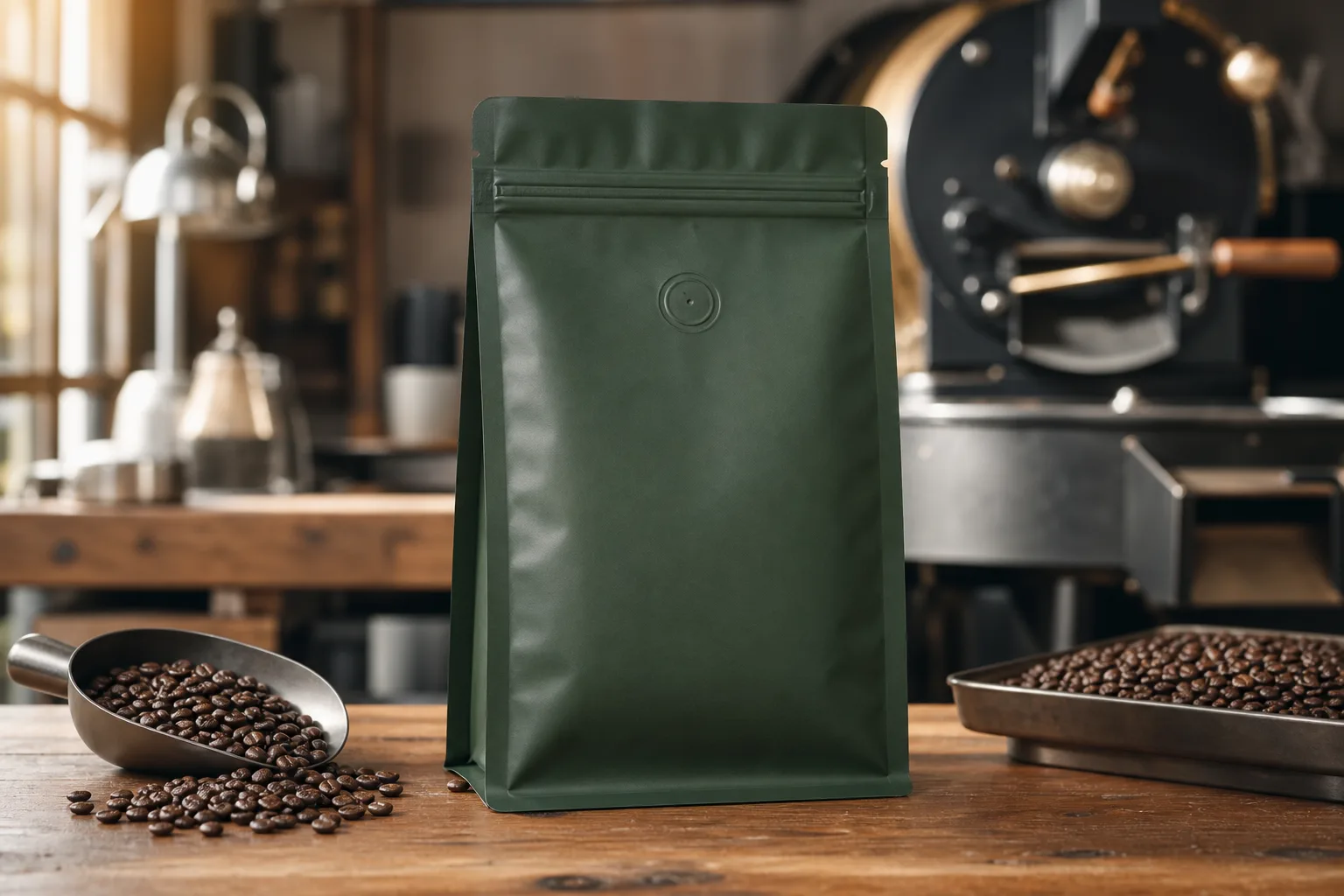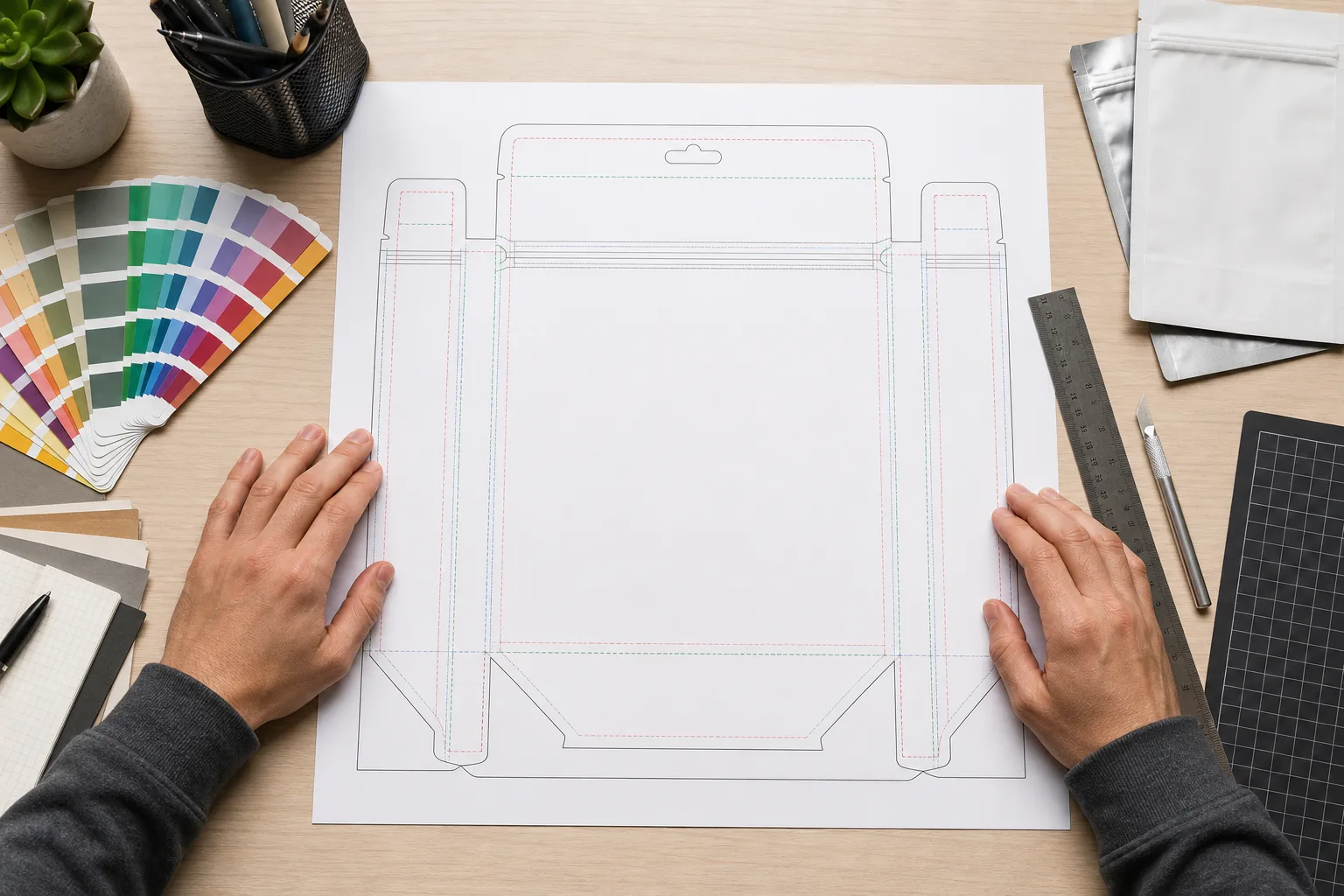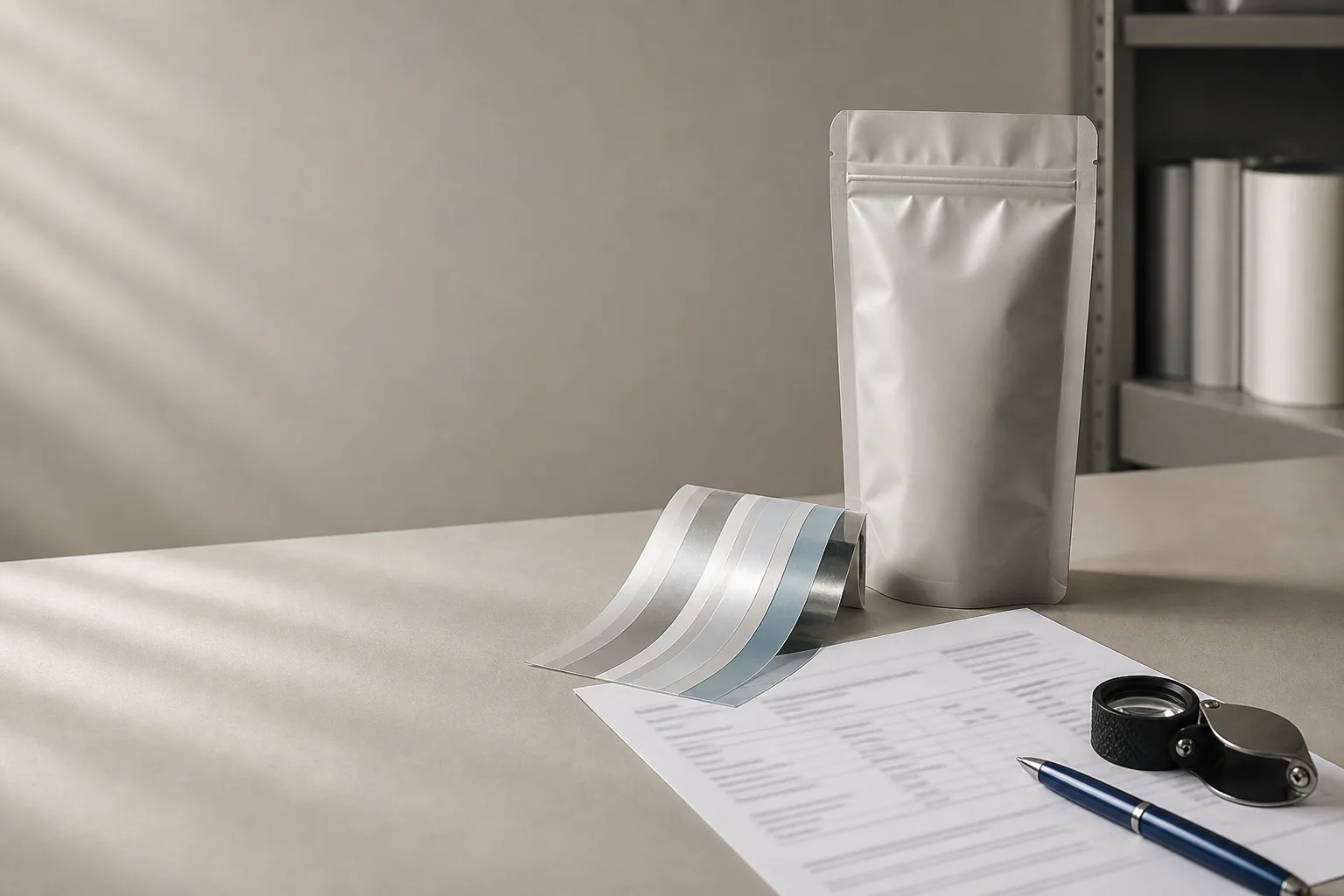
A generic “food-safe” file can look reassuring, yet it may not cover the exact pouch, food, temperature, market, or supplier that will enter production.
I verify food-contact packaging documents by matching their scope to the exact finished pouch, components, intended food, conditions of use, target market, supplier, and current production revision.
I treat the pouch as a complete system. I confirm the product, material, filling, handling, and customer experience before I approve production.
What Exact Pouch and Intended Use Does the Document Cover?
A document cannot answer the real question if it names a generic material while the order uses a different laminate, ink, adhesive, zipper, food, or temperature.
I first match each document to the finished pouch configuration, food type, contact side, fill and storage conditions, market, supplier identity, and revision that the order will actually use.
I begin with a controlled product-and-pouch brief: food category, fat or acid exposure where relevant, fill temperature, storage, reheating or retort conditions, contact duration, pouch construction, print, adhesive, zipper or spout, and destination market. FDA organizes food-contact conditions around food types and use conditions, which shows why a bare material name is not enough for a finished-pack decision.5 I ask the supplier to identify the actual manufacturing site and production reference, not only a trading-company name. If the pouch changes, I treat it as a new scope review.
How I make this decision specific
For “What Exact Pouch and Intended Use Does the Document Cover?” in this how do i verify food-contact packaging documents review, I define the actual product, pouch configuration, intended use, and decision owner before I ask a supplier or tester for evidence. I keep the selected structure, component details, sample condition, and any stated test method together, then compare the result with the buyer’s actual route rather than a catalogue promise. That record lets me use the flexible packaging specification-sheet guide as a decision aid and retain a specification that another team member can check.
For How Do I Verify Food-Contact Packaging Documents, I state what is known, the condition it applies to, and what must still be checked with the actual product. I do not transfer a number, a test result, or a feature choice from another product simply because its pouch looks similar. The result of “What Exact Pouch and Intended Use Does the Document Cover?” should give the buyer a clear next check, the supplier a precise request, and the project owner a record of the remaining uncertainty.
For How Do I Verify Food-Contact Packaging Documents, I request the exact pouch structure, component specification, and test conditions from the supplier. A broad material name or catalogue claim is not a production specification. The right next step is a representative filled sample, where relevant, with observations recorded before production is approved.
Which Declaration and Supporting Evidence Should I Request?
A declaration can be useful, but buyers lose control when they never ask what it covers, who issued it, which rule it cites, and what evidence supports it.
I request a dated, traceable declaration for the applicable market plus enough supporting material to confirm its scope, rather than relying on a badge, a catalogue phrase, or an unrelated test report.
For EU plastic food-contact materials, Regulation (EU) No 10/2011 sets declaration and supporting-documentation requirements, while the framework Regulation (EC) No 1935/2004 addresses declarations under applicable specific measures.3 I check the regulation version, issuer, product identification, date, intended-use limits, and any stated migration or test basis. I do not turn that review into legal advice or a universal EU approval statement. The right evidence depends on the actual material and market, so I involve the importer, brand, and qualified regulatory adviser where their responsibility requires it.
How I make this decision specific
For “Which Declaration and Supporting Evidence Should I Request?” in this how do i verify food-contact packaging documents review, I define the actual product, pouch configuration, intended use, and decision owner before I ask a supplier or tester for evidence. I keep the selected structure, component details, sample condition, and any stated test method together, then compare the result with the buyer’s actual route rather than a catalogue promise. That record lets me use the flexible packaging specification-sheet guide as a decision aid and retain a specification that another team member can check.
For How Do I Verify Food-Contact Packaging Documents, I state what is known, the condition it applies to, and what must still be checked with the actual product. I do not transfer a number, a test result, or a feature choice from another product simply because its pouch looks similar. The result of “Which Declaration and Supporting Evidence Should I Request?” should give the buyer a clear next check, the supplier a precise request, and the project owner a record of the remaining uncertainty.
How Do I Read Test Reports Without Overclaiming?
A laboratory report can contain real data yet still be the wrong evidence when its sample, food simulant, temperature, duration, laboratory scope, or pouch revision does not match the project.
I read a test report as scoped evidence: I compare the tested construction, conditions, method, report date, laboratory details, result limits, and stated conclusion with the exact commercial pouch and intended use.
I check whether the report identifies the relevant food-contact layer and whether its sample matches the finished construction, including inks, adhesives, coatings, and functional components where they matter. I also compare the stated test conditions with the planned food and use. FDA explains that the regulatory status of a food-contact article depends on its component substances and their applicable authorizations and limitations, which reinforces the need to verify the complete configuration.4 A report may support a decision, but it does not let me claim every product, market, or changed pouch is compliant.
How I make this decision specific
For “How Do I Read Test Reports Without Overclaiming?” in this how do i verify food-contact packaging documents review, I define the actual product, pouch configuration, intended use, and decision owner before I ask a supplier or tester for evidence. I keep the selected structure, component details, sample condition, and any stated test method together, then compare the result with the buyer’s actual route rather than a catalogue promise. That record lets me use the flexible packaging specification-sheet guide as a decision aid and retain a specification that another team member can check.
For How Do I Verify Food-Contact Packaging Documents, I state what is known, the condition it applies to, and what must still be checked with the actual product. I do not transfer a number, a test result, or a feature choice from another product simply because its pouch looks similar. The result of “How Do I Read Test Reports Without Overclaiming?” should give the buyer a clear next check, the supplier a precise request, and the project owner a record of the remaining uncertainty.
For How Do I Verify Food-Contact Packaging Documents, I treat the filled pack as a separate check from the material data. I record the fill condition, seal area, opening or closure behavior, carton arrangement, handling observations, and limits of the comparison. That prevents a favourable bench result from becoming an unsupported claim about shelf life, transport, or every product route.
How Do I Keep Documents Valid Through Production Changes?
A complete file set can become stale when a supplier changes a resin, adhesive, ink, pouch dimension, zipper, factory, food, or destination without a documented review.
I keep a versioned release record that links the approved pouch, evidence, intended use, supplier, artwork, and change triggers, then request a documented review before a relevant change enters production.
I retain the supplier declaration, supporting evidence index, pouch specification, sample reference, revision date, and the person who accepted the review. I list changes that trigger reassessment: a material or component substitution, alternate factory, different food or fill condition, changed pouch geometry, new ink or coating, or a new destination market. The community procurement thread cited below is useful because it shows why buyers increasingly need a clear request list and traceable ownership.2 I make that list part of the purchase release so it can be checked before repeat orders, not reconstructed after a question from a customer or regulator.
How I make this decision specific
For “How Do I Keep Documents Valid Through Production Changes?” in this how do i verify food-contact packaging documents review, I define the actual product, pouch configuration, intended use, and decision owner before I ask a supplier or tester for evidence. I keep the selected structure, component details, sample condition, and any stated test method together, then compare the result with the buyer’s actual route rather than a catalogue promise. That record lets me use the flexible packaging specification-sheet guide as a decision aid and retain a specification that another team member can check.
For How Do I Verify Food-Contact Packaging Documents, I state what is known, the condition it applies to, and what must still be checked with the actual product. I do not transfer a number, a test result, or a feature choice from another product simply because its pouch looks similar. The result of “How Do I Keep Documents Valid Through Production Changes?” should give the buyer a clear next check, the supplier a precise request, and the project owner a record of the remaining uncertainty.
For How Do I Verify Food-Contact Packaging Documents, I preserve the final decision in a written brief that names the approved sample, conditions, observations, open risks, and change triggers. I then use the quality-control process to keep the quotation tied to the evidence rather than to a remembered sample or a generic product name.
Conclusion
I choose packaging through evidence, filled-pack testing, and clear specifications. That process protects the product, the launch, and the customer experience.
Sources and Further Reading
- EUR-Lex, Regulation (EC) No 1935/2004 on food-contact materials and articles.
- Reddit r/supplychain, supplier documentation community discussion.
- EUR-Lex, Commission Regulation (EU) No 10/2011 on plastic food-contact materials and articles.
- FDA, determining the regulatory status of components of a food-contact material.
- FDA, food types and conditions of use for food-contact substances.
- Unique Packaging specification-sheet guide.
- Unique Packaging quality-control process.
Need a pouch specification?
I can review your product, size, quantity, artwork, and target market.