Sticky dates can foul a zipper, while an unclear storage brief leaves buyers blaming the bag for changes that began before filling.
I choose Medjool date pouches by confirming the fruit specification and storage route, then comparing material evidence, clean filling, reclosure, and distribution trials with the actual dates.
For my work at Unique Packaging, I separate fruit quality from package performance. A useful pouch brief has to address both.
What Must I Know About the Dates Before Choosing Film?
A bag specification is incomplete when cultivar, pitting, moisture, temperature, and the supplier’s release condition are missing.
I document the exact dates, their accepted quality condition, pitted or whole form, fill weight, storage instructions, and intended route before requesting a laminate.
I start with an approved fruit reference rather than an empty bag. The brief names the cultivar, supplier, lot, pitted or whole form, and any surface treatment. I ask the food team to set its acceptance criteria for appearance, texture, moisture or water activity where relevant, and storage. These are product decisions. I do not borrow a specification from raisins or assume that every product sold as a dried date has the same condition.
UC Davis distinguishes soft and semi-soft cultivars and describes moisture uptake under humid conditions unless containers limit moisture transfer. It also identifies sugar spotting as a change in appearance and texture.
1I use that evidence to ask better questions. I do not turn its commodity storage guidance into a shelf-life promise for a printed retail pouch. The actual lot, preparation, storage route, and finished pack still need assessment.
A buyer in the cited r/fruit thread compared two Medjool packs and worried about differences in stickiness and internal appearance.
2That is a specific communication problem, not a diagnosis of either brand. I would retain reference fruit and ask the producer to explain expected variation and complaint escalation. I would not print a universal “white marks are safe” instruction or infer food safety from a photograph.
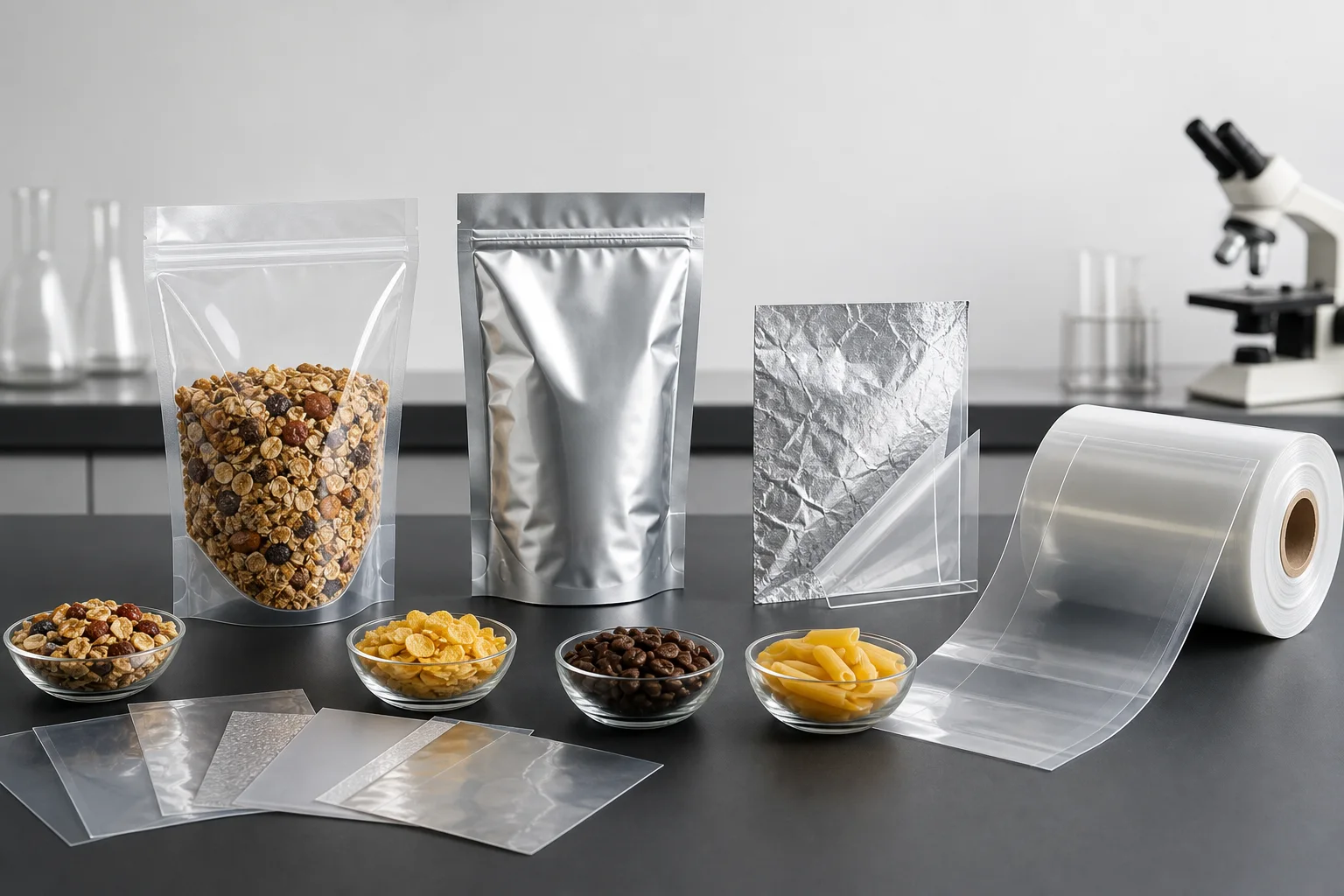
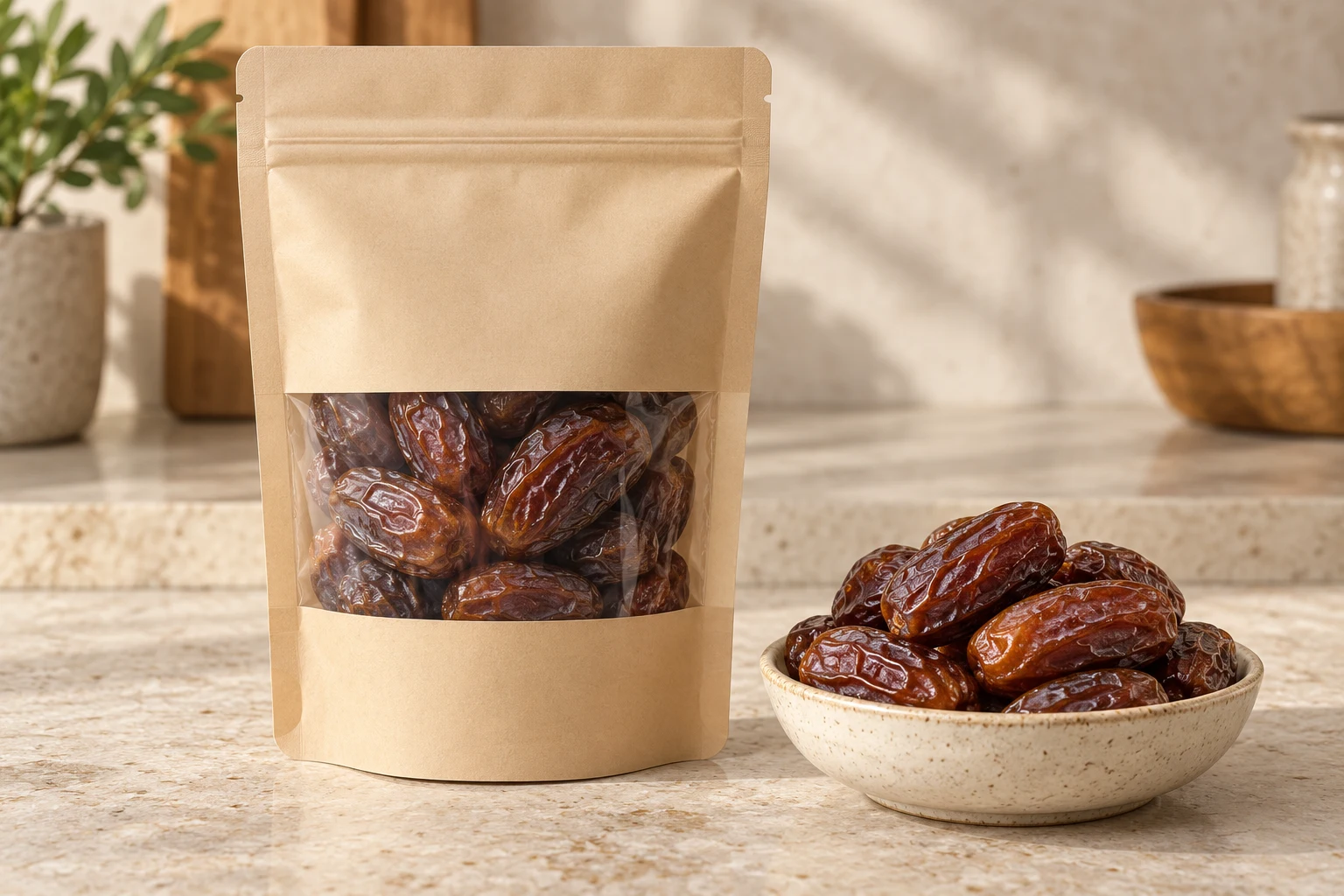
I then compare clear-window and opaque candidates for the intended display. A window lets the buyer see some fruit, but it cannot inspect every piece or establish freshness. An opaque candidate changes visibility and light exposure. I request the complete construction for each, including any window, rather than treating a color as a material specification. The barrier-film guide helps organize the moisture and oxygen questions without selecting a universal film.
My first checkpoint is a signed product-and-route sheet. It lists the intended market, target storage conditions, fill range, expected retail handling, and who owns quality release. If the supplier cannot describe the product condition, I resolve that gap before comparing packaging quotations. A converter can assess a defined material job; it cannot repair an unknown fruit history with a thicker pouch.
How Do I Keep Sticky Fruit Away From the Zipper and Seal?
A clean empty zipper can become awkward after fruit touches the tracks or the filling process leaves residue across the sealing area.
I trial the actual date fill, reserve access above the fruit, control the filling path, and test first opening and reclosure before fixing the pouch dimensions.
I fill candidate samples with the intended dates, not dry beads. I record the target weight, fruit count range where useful, settled volume, and headspace. Large whole dates and small pitted pieces can create different fill patterns. I watch how the pack stands and how easily a person removes a serving without pulling the zipper against the fruit. I would rather change the geometry during sampling than compensate for poor access with a larger printed front panel.
The filling review follows the product from feed tray to sealed pouch. I look for contact between fruit and the opening, residue on the seal band, folds near the zipper ends, and handling that squeezes the filled top. I ask the packer to show normal startup and restart conditions. A hand-filled presentation sample is useful for shape, but I keep it separate from evidence about the intended production process.
I use the following comparison to choose what to trial. It is a buying checklist, not a ranking of universal material performance.
| Candidate | Question for the trial | Record to retain |
|---|---|---|
| Window zipper pouch | Can users reach the fruit without fouling the tracks? | Filled opening photos and closure observations |
| Opaque zipper pouch | Does the selected construction meet the route brief? | Structure and relevant test reports |
| Tray inside an outer pouch | Does separation justify the extra component and space? | Carton fit, access and full component list |
I test the tear opening as well as the zipper. The user should be able to expose the tracks without tearing into them. I include people who have not seen the dieline. They open, remove fruit, reclose, and reopen samples over the use sequence agreed for the project. I record failures and hesitation. I do not call a closure successful simply because someone familiar with the pack can make it work.
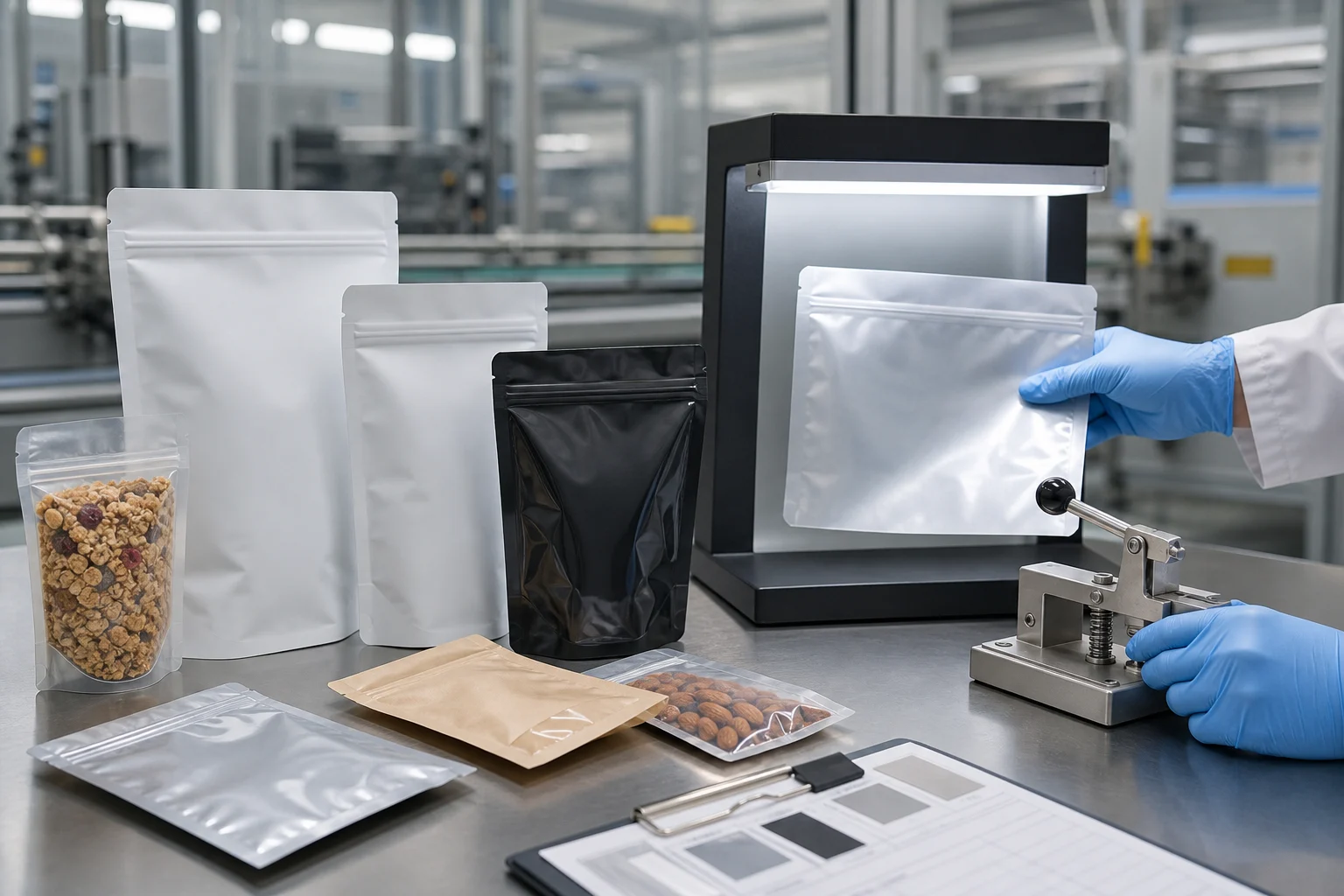
For production sealing, I use the seal-leak guide to organize observations and ask the laboratory about an appropriate method. ASTM F88/F88M measures seal strength.
5It does not by itself prove that a consumer will find the zipper or that a sticky filled pack is leak-free. I retain the specimen preparation, test conditions, failure mode, and agreed limits with each result. Only after this review do I lock the usable opening, fill clearance, seal area, and zipper position.
What Evidence Should Release a Date Pouch Order?
A film number without its conditions or a good-looking filled sample without storage evidence can create false confidence before an order.
I release the documented construction after food-contact review, agreed barrier and seal checks, filled storage and handling trials, and written confirmation of the approved configuration.
I ask for material evidence tied to the exact laminate revision and the intended dates. The food-contact review should cover the relevant food type and conditions of use. FDA publishes separate categories for foods and for room-temperature, refrigerated, frozen, and heated use.
3I use those categories to frame the document request. I do not describe a pouch as approved for every food or every temperature merely because its supplier has sent a general certificate.
For moisture evidence, I ask which material was tested, its thickness, the method, temperature, relative humidity on each side, units, sample count, and reporting basis. ASTM F1249 addresses water-vapor transmission through flexible barrier material.
4A report under one condition is not directly interchangeable with an unexplained number from another quotation. I ask the food team and laboratory to agree the required protection for this product rather than inventing a universal pass value. The quality-tests guide helps connect each result to the question it can answer.
I also keep a filled reference pack. The trial includes the intended carton arrangement and an agreed handling sequence, followed by inspection of corners, gussets, top seals, and reclosure. Storage samples are compared with the approved fruit condition at scheduled review points. If the route includes refrigeration, its temperature profile belongs in the plan. I do not transfer a published commodity storage duration to ambient retail packs or label a short trial as proof of the full sale period.
My purchasing checklist names the fruit reference, pouch drawing, dimensions and tolerances, construction and thickness, zipper, tear feature, top-seal band, print revision, food-contact records, fill range, carton plan, test methods, and acceptance criteria. It also names changes that trigger another review. Replacing a film layer, adhesive, zipper, or supplier requires a focused assessment of the affected evidence.
I take that record through food-contact document review and a representative filled-pack trial before written approval. The final specification-based quotation request then gives suppliers the same job to price. I leave unverified shelf life, price, certification, lead time, and minimum quantity out of the article and obtain project-specific commercial terms separately. That keeps the decision tied to evidence the buyer can actually inspect.
Conclusion
I approve date pouches only after the fruit brief, filled trials, storage conditions, closure checks, and written purchasing specification agree.
Sources and Further Reading
- UC Davis, Date produce fact sheet; cultivar, moisture and quality disorders.
- Reddit r/fruit, buyer confusion about two Medjool date packs.
- FDA, food types and conditions of use for food-contact substances.
- ASTM F1249-25, water-vapor transmission method scope.
- ASTM F88/F88M-23, seal strength method scope.
Need a pouch specification?
I can review your product, size, quantity, artwork, and target market.