Tiny seeds can spill through an awkward opening and collect near a zipper. A refill pouch needs more than a tidy front panel.
I choose chia seed refill pouches by checking the actual seeds, material evidence, mouth shape, closure clearance, and filled-pack handling. I approve a written specification only after a refill trial shows how the pouch pours and closes.
At Unique Packaging, I start a chia seed brief with the refill routine. These are proposed buying checks, not claims that a particular film or closure has passed them.
Which Materials Should I Compare for Dry Chia Seeds?
A clear window shows the seeds, but appearance cannot establish storage performance. I need the construction and its evidence before I choose a pouch.
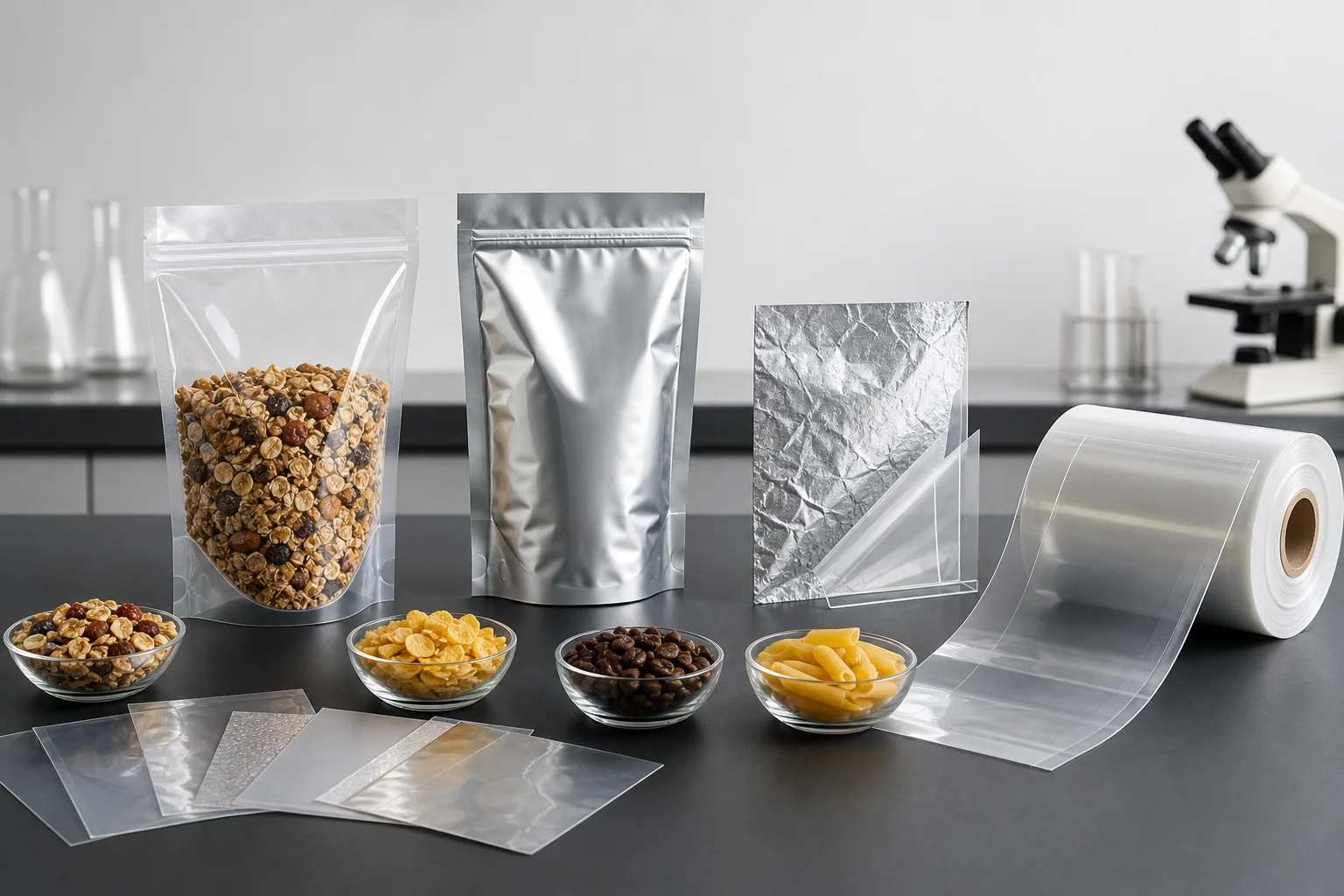
I compare the complete clear, opaque, or paper-faced structure against the intended product and route. I request documented barrier conditions and food-contact scope, then use filled samples to decide which option deserves further testing.
I first specify whole dry edible chia seeds. Ground chia, seed blends, and prepared chia pudding are different products. A brief that mixes these uses makes the material discussion unreliable. I record seed lot, product condition, fill weight, intended storage, destination market, and whether customers will empty the pouch once or use it repeatedly. I also keep the ingredient supplier’s handling instructions with the brief.
Bob’s Red Mill recommends cool, dry storage for its products and lists seeds among products that keep best refrigerated or frozen after opening.1 I treat that as guidance for its own products, not a universal storage instruction for every chia brand. The food owner must confirm the label directions for the actual seeds. A new pouch design should support those directions rather than quietly replace them.
I compare constructions without assuming a winner
| Candidate | Why I would sample it | What remains to establish |
|---|---|---|
| Clear pouch or window | Seed visibility and remaining-fill view | Full structure, measured barrier, and project storage outcome |
| Opaque laminate | A comparison where light exposure is a concern | Layer sequence, evidence, opening, and filled shape |
| Paper-faced laminate | A tactile retail presentation | Actual inner film, sealant, and documentation |
These are sample candidates, not performance rankings. Paper appearance does not tell me the inner structure. A windowed pouch must be assessed as the proposed complete pack, including the window. I ask for layer descriptions, gauge, sealant, zipper material, dimensions, and samples from the intended manufacturing route. The food barrier-film guide helps organize that request.
For moisture-barrier comparisons I name ASTM F1249 and request the laboratory’s sample conditioning, temperature, relative humidity on each side, orientation, units, and acceptance criteria.3 I compare like conditions. I do not convert an isolated film number into a shelf-life promise. FDA separates food types and conditions of use, so I ask the supplier to identify the documentation scope for the actual product and storage route.2
How Should a Chia Refill Pouch Pour and Reclose?
A pouch can stand well and still scatter seeds during refilling. If customers struggle with the mouth, the storage format has not solved their task.
I test pouring into the intended jar with full, partly empty, and nearly empty pouches. I check grip, flow, seed capture near the zipper, and reclosure before choosing the opening geometry.
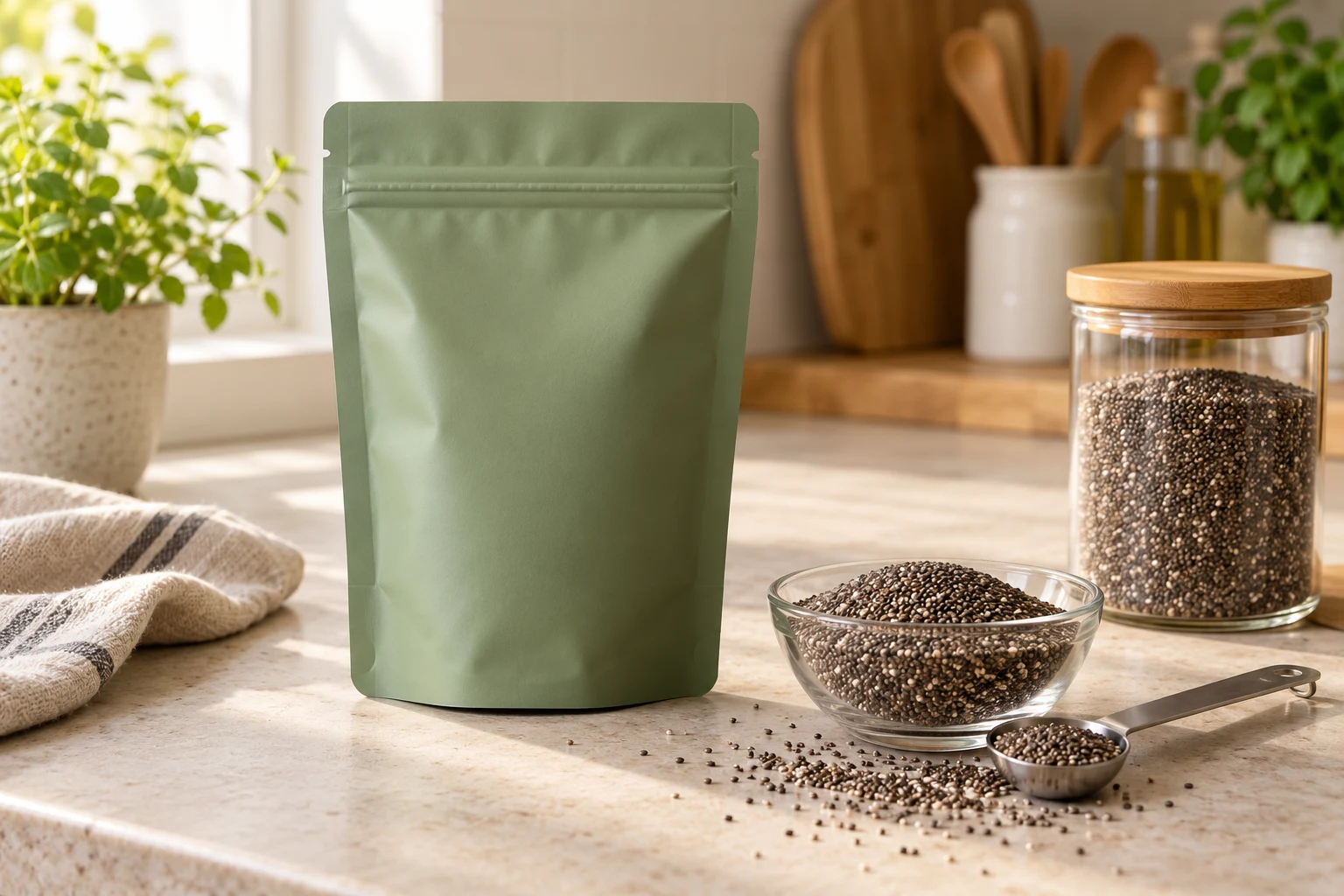
I choose a real target jar rather than an imagined average container. I measure its opening and place it on the same type of worktop customers use. I then fill a pouch with the actual seeds and ask a person unfamiliar with the design to refill the jar. I watch where they hold the pack, how far they tilt it, and whether they need a second tool. A broad opening may help scooping but needs a careful check when the receiving neck is narrower.
In an r/Breadit discussion, a commenter who said they had managed a gardening-seed packaging operation described a spilled tote of chia seeds creating a prolonged warehouse cleanup.5 This is attributed operator experience from a different operation. It does not prove that a retail food pouch leaks. It gives me a practical question: where will loose seeds go during filling and refilling, and how will the operator contain them?
I separate the first opening from repeated use
For first opening I inspect the tear path above the zipper. I look for a clean edge, enough finger room, and an opening that does not remove the closure. For later openings I check whether users can find and engage the entire zipper. I deliberately observe a normal pour before asking them to close the pouch. If seeds collect in the track, I record the location and the user’s response. I compare an alternative zipper position or opening width rather than assume an instruction will fix the geometry.
I use a tray during the comparison so spilled seeds remain visible. I record the starting fill, jar opening, pouch dimensions, grip, observed spills, and remaining product after emptying. I repeat the task at a reduced fill because the pack’s handling changes as it empties. This is a proposed usability check, not a certified test or a claim of spill-free performance.
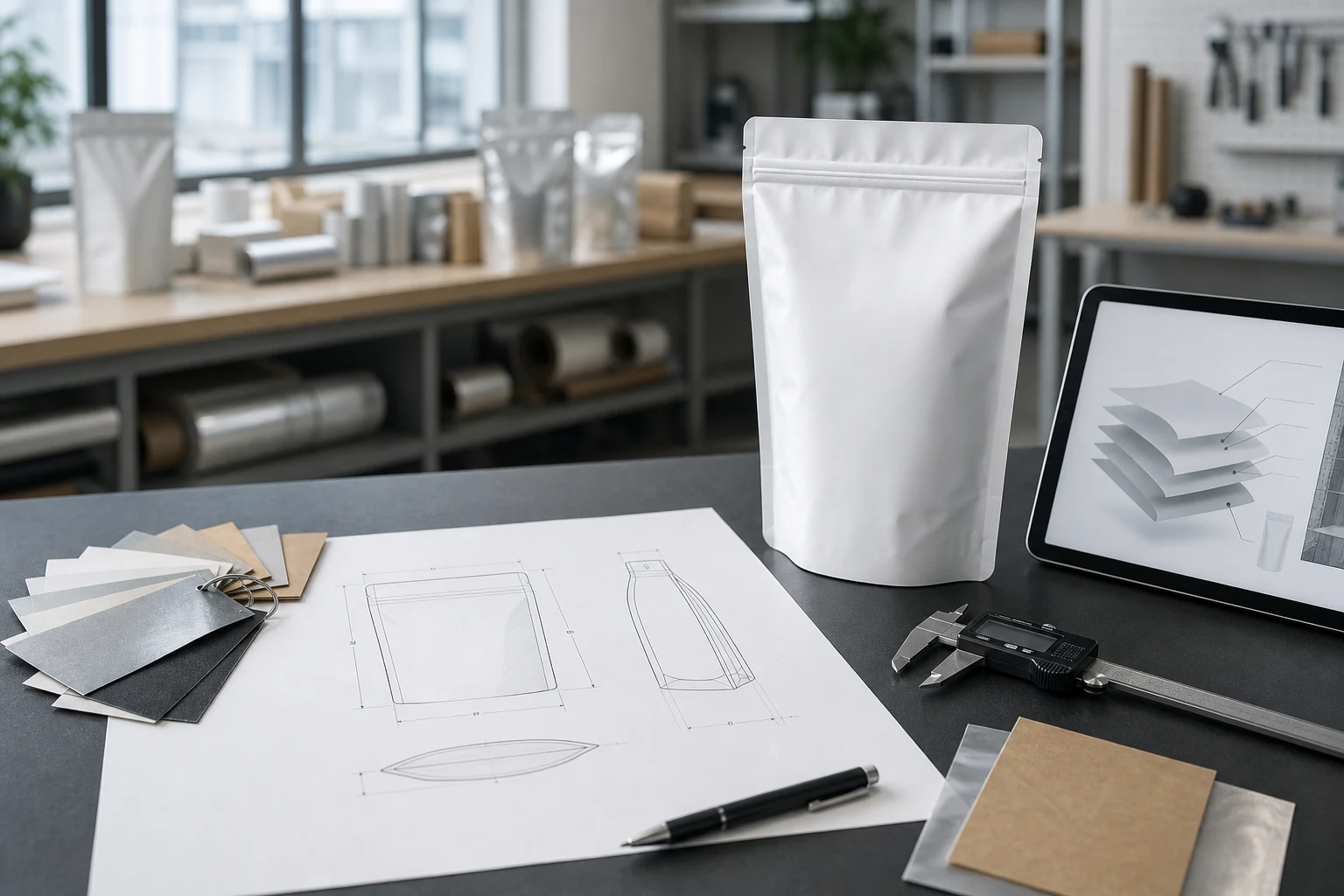
The stand-up pouch size guide supports the initial blank-sample request. I still ask for the proposed finished dimensions, usable mouth width, gusset, zipper location, and seal allowance. I approve the combination that the actual refill task supports, with open questions written down.
What Must I Approve Before Ordering Chia Seed Pouches?
A pleasing refill sample leaves gaps when filling, sealing, cartons, or reorder details change. Those gaps need a documented trial before the purchase specification is fixed.
I approve the material, filling and seal setup, refill observations, carton arrangement, and agreed limits together. I retain labeled samples and request a quote only against the confirmed written specification.
I start the filled-pack trial at the actual filling station. I check how seeds leave the filler, how the pouch is supported, and whether product reaches the top-seal zone. I record settings and visible conditions before changing anything. A cleanup step, a different nozzle position, or a revised fill height should be documented so the comparison has a clear cause. I do not mix several changes and call the final pack an improvement without keeping the earlier samples.
When seal-strength measurement is required, I ask the laboratory to use the agreed edition of ASTM F88/F88M and record its specimen setup and failure observations. ASTM’s public F88/F88M overview identifies it as a seal-strength test for flexible barrier materials.4 I keep that result separate from a whole-pouch leak check and from the consumer’s zipper routine. A useful release record tells the next buyer exactly what was measured.
I retain the filled configuration
I put the filled pouches in the intended carton and review position, contact with adjacent packs, folds, and external scuffing after the agreed handling sequence. I document the route and handling exposure with the project team before the trial. I look for seeds outside the pack, damage near folds, interrupted top seals, and closure problems after opening. These observations guide the next test; a clean bench check does not establish a commercial distribution result.
- Whole-seed product, supplier lot, condition, and fill range.
- Dimensions, layer sequence, gauge, sealant, zipper, and opening details.
- Market, food-contact documents, and intended storage instructions.
- Named barrier and seal methods with conditions and agreed limits.
- Filling setup, carton arrangement, refill observations, and retained samples.
- Artwork revision and changes that require another approval.
I transfer these fields to the packaging specification sheet. The sequence is material assessment, representative samples, filled-pack trial, written confirmation, and then a specification-based chia pouch quote. I supply quantity per design and destination so the supplier can answer the actual brief. I leave price, MOQ, timing, and storage life out of this guide because no verified offer or product study supports those numbers.
Conclusion
I choose packaging through evidence, filled-pack testing, and clear specifications. That process protects the product, the launch, and the customer experience.
Sources and Further Reading
- Bob's Red Mill, product storage guidance.
- FDA, Food Types and Conditions of Use for Food Contact Substances.
- ASTM F1249-25, water-vapor transmission test scope.
- ASTM F88/F88M-21, public seal-strength method scope (historical edition).
- Reddit r/Breadit, former seed-packaging manager describes a chia spill.
Need a pouch specification?
I can review your product, size, quantity, artwork, and target market.