Cornstarch dust on a counter is frustrating. A refill pouch that spills or will not reclose can make a simple pantry task harder.
I choose cornstarch refill pouch packaging by matching the opening to scooping or decanting, checking moisture and food-contact evidence, then testing the actual powder, zipper and top seal before approving a written specification.
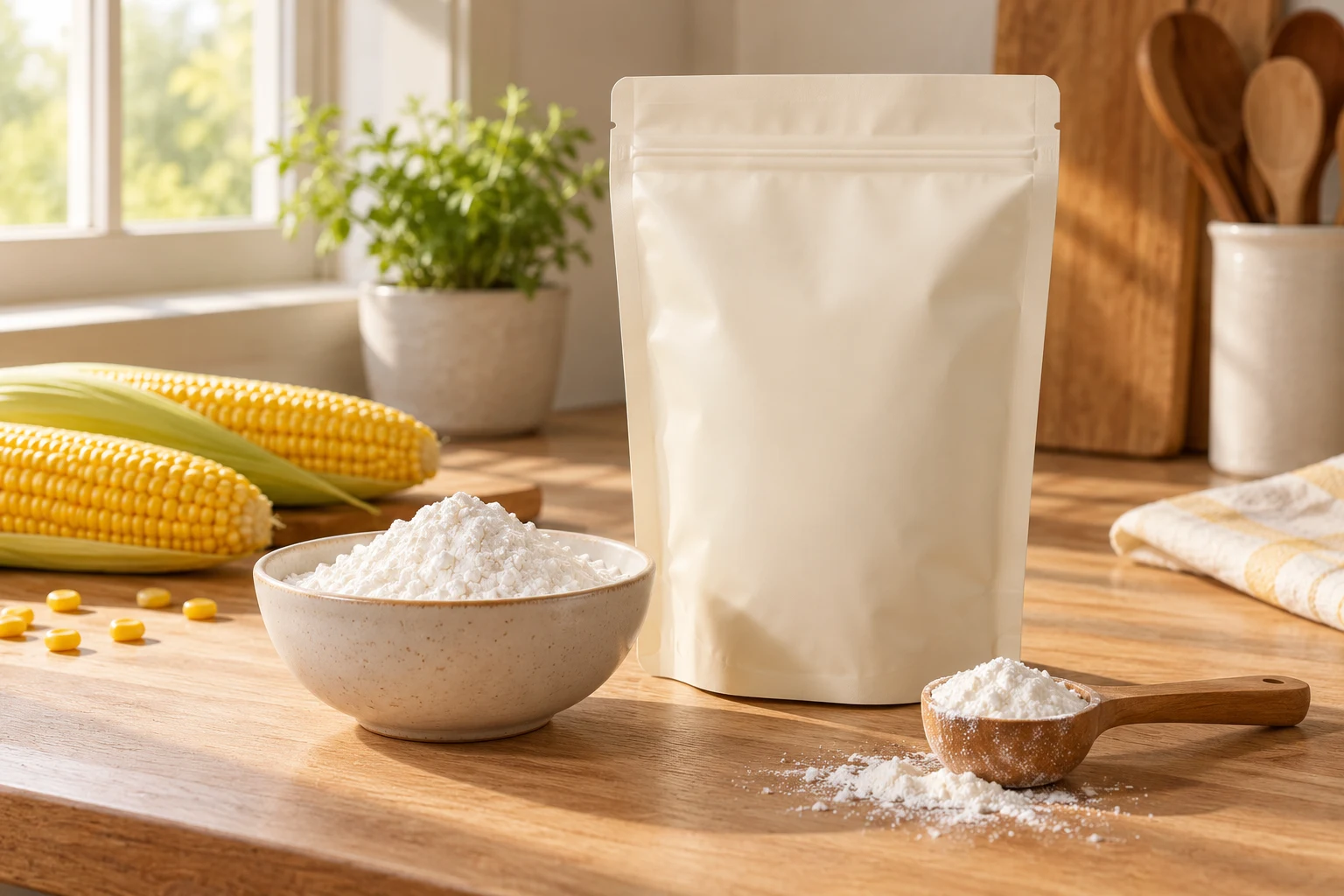
At Unique Packaging, I start with how the brand wants people to use its cornstarch. This guide covers food cornstarch inside a pouch, rather than starch-based packaging materials.
Should My Cornstarch Pouch Support Scooping or Refilling?
A narrow opening can make measuring awkward. A wide opening can make controlled pouring difficult if the refill target is small.
I choose the opening around one main task: scoop directly from a stable pouch, or pour into a defined food container. I test both only when the product promises both.
I first ask the brand to name the receiving container. A broad pantry jar and a small seasoning shaker are different targets. I record the neck opening, available space above it, normal refill amount and whether someone must hold both packages. If the consumer keeps the pouch, I also record the spoon size and how far a hand must reach when the pack is nearly empty.
A real cornstarch discussion makes the distinction useful. On Reddit r/Cooking, ItsAllEasy7 described powder coating the existing container and asked for an option that supports small scoops and sprinkling. That is one household's experience, rather than a survey or proof of a pouch defect.1 I use it to frame two separate tasks for prototype review. I do not assume that a zipper alone solves either task.
I compare the complete opening
| Use pattern | Candidate format | Question for the sample |
|---|---|---|
| Repeated spoon access | Wide-mouth zipper pouch | Can the chosen spoon reach the last powder without rubbing the track? |
| One planned refill | Controlled tear opening | Can the user stop and restart the stream at the receiving jar? |
| Partial refill and storage | Reclosable pouch | Can powder be cleared from the closing area using the intended instructions? |
I check the first tear before I test repeat access. The opening must leave the zipper usable and enough material for a secure grip. I then observe a full, half-full and almost-empty pouch. These are proposed prototype checks; I am not reporting a factory trial. The pouch sizing guide helps translate the chosen use into dimensions without copying another powder's pack.
For storage context, Argo advises closing its own cornstarch container tightly and keeping it in a dry place.2 That supports paying attention to reclosure and storage instructions. It does not establish how long a new flexible pack will protect a different product. I keep the brand's product assessment separate from my opening review, and I avoid putting a shelf-life promise on the prototype.
Which Film and Seal Evidence Should I Request for Cornstarch?
An attractive laminate can still leave unanswered questions about moisture entry, food contact and powder caught in the sealing area.
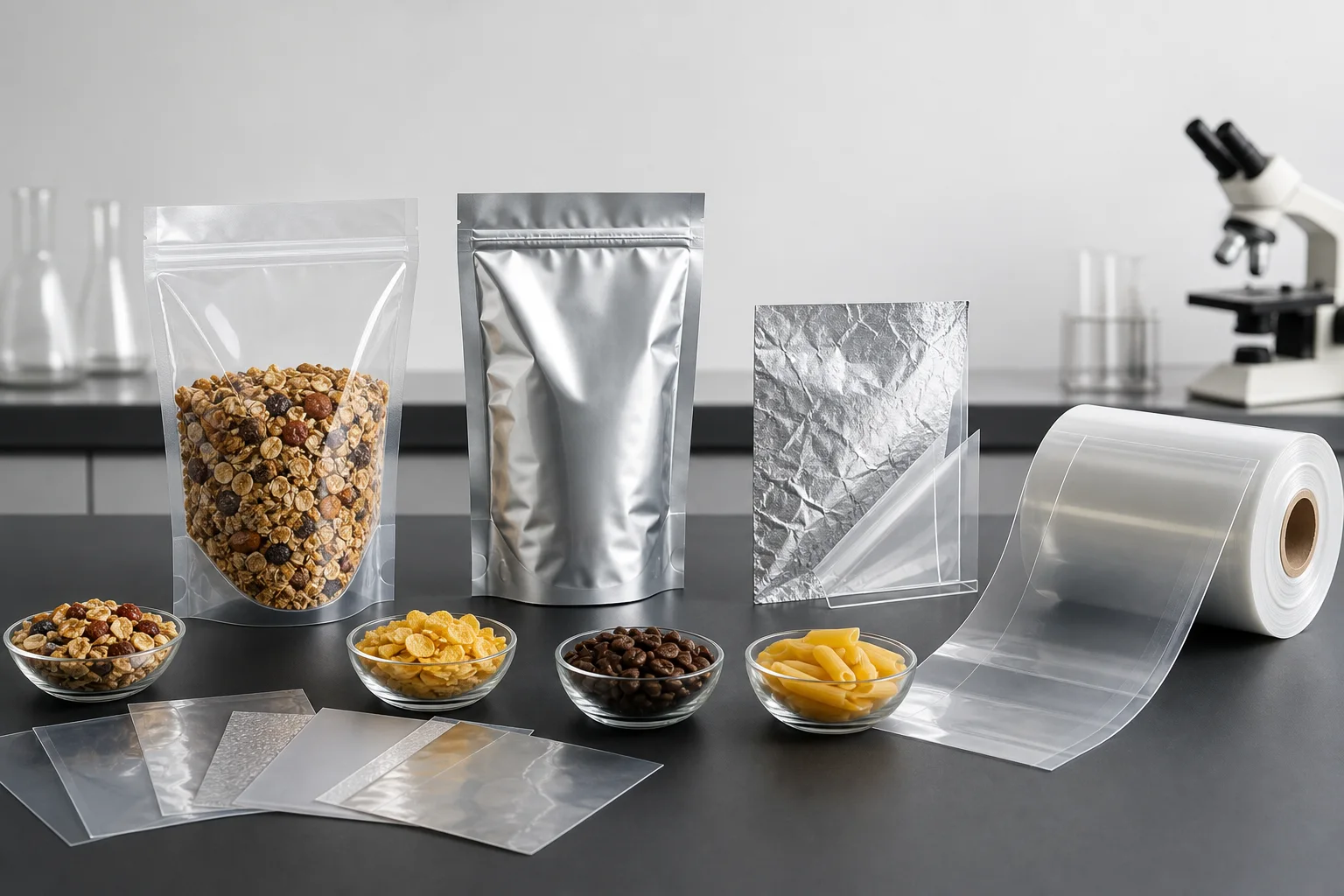
I request the exact layer sequence, sealant, zipper construction, food-contact scope and moisture-test conditions. I compare complete structures and sealed samples, rather than choosing by a broad film name.
I ask for a construction drawing that identifies every layer and the intended product-contact surface. I want thickness and its tolerance, the sealant, the zipper material and attachment, and any window construction. I also ask which elements change if I choose an opaque panel instead of a window. A transparent area needs its own evidence; it is not simply an artwork change. The food barrier-film guide is my starting point for that material conversation.
For moisture data, I request ASTM F1249 evidence for the proposed film. Its public scope covers water-vapor transmission through flexible barrier materials.3 I ask the laboratory to state temperature, relative humidity on each side, specimen thickness, orientation, units and conditioning. I do not supply an invented universal pass value. The product owner must connect an acceptance limit to the actual cornstarch, storage plan and product assessment. Results measured under different conditions should not be ranked as though the conditions match.
I keep the top seal separate from the zipper
I review the seal band above the zipper, the fill height, the powder drop path and the point where the jaws close. For a filling trial, I ask the operator to retain startup samples and samples after a planned interruption. I want to see whether dust remains in the seal area and whether the pouch surface can be held consistently. The existing powder seal and zipper guide helps define observations before the run.
ASTM F88/F88M measures seal separation force and identifies specimen failure mode.4 I request the selected technique, strip width, test speed, conditioning and failure description with the result. A seal-strength measurement does not, on its own, establish absence of leaks or a product storage life. I ask the laboratory which additional integrity checks the pack needs.
For US food-contact review, FDA's food-type and use-condition tables provide a framework for describing the application.5 I give the supplier the actual product and filling conditions, then request documentation for the selected construction. I do not use a generic food-grade label as a substitute for an application-specific review.
How Do I Turn a Cornstarch Trial into a Purchase Specification?
A clean empty sample can hide powder spills and awkward reclosure. A purchase brief without observed acceptance limits cannot resolve those problems.
I test representative filled pouches through sealing, transport handling, first opening, measured dispensing and reclosure. I retain the accepted sample and confirm its dimensions, construction and use limits before requesting comparable quotes.
I build a small trial matrix around the actual job. I include the proposed fill range, the intended cornstarch grade, the selected receiving jar and the normal serving spoon. I record the product lot, pouch revision and filling equipment. The packer supplies the sealing settings used for those samples. I keep this information with photographs so a later sample can be compared with the same baseline.
I write observable checks before the trial
For pouring, I record whether the user needs a funnel, whether the stream can be stopped, and where residue remains. For scooping, I record reach, pouch stability and powder contact with the zipper track. I inspect the first tear for a usable opening rather than judging only the tear notch. If the design needs scissors, the consumer instructions must say so. I do not present a neat studio photograph as proof that these tasks work.
I also check the filled pouch in its planned carton. I inspect seal edges, pouch corners and surface rub after the agreed handling exercise. I separate observations from any formal distribution test claim. If the route needs laboratory testing, I define the carton, fill, orientation, conditioning and procedure with the laboratory before interpreting the result. These checks are a development plan, not a certification.
I list possible reasons for rejection: dust in a top seal, an opening that damages the zipper, uncontrolled pouring, poor access near the bottom, an unstable filled base, or a film report that describes a different structure. Each reason needs an owner and a decision. I revise the part that caused the problem and repeat the affected check, retaining the previous sample for comparison.
My written brief includes product identity, fill range, pouch dimensions, construction revision, zipper position, tear geometry, seal area, artwork, food-contact market, moisture-test conditions, carton layout and accepted samples. I use the specification-sheet guide to organize those items. I then request a quote against that confirmed brief, with quantity and delivery destination supplied by the buyer. I leave price, MOQ and timing to that project-specific response. This sequence keeps material assessment, filled testing, written approval and quotation connected.
Conclusion
I approve a cornstarch pouch when the powder transfers cleanly, the closure works after use, and the written specification matches the tested sample.
Sources and Further Reading
Need a pouch specification?
I can review your product, size, quantity, artwork, and target market.