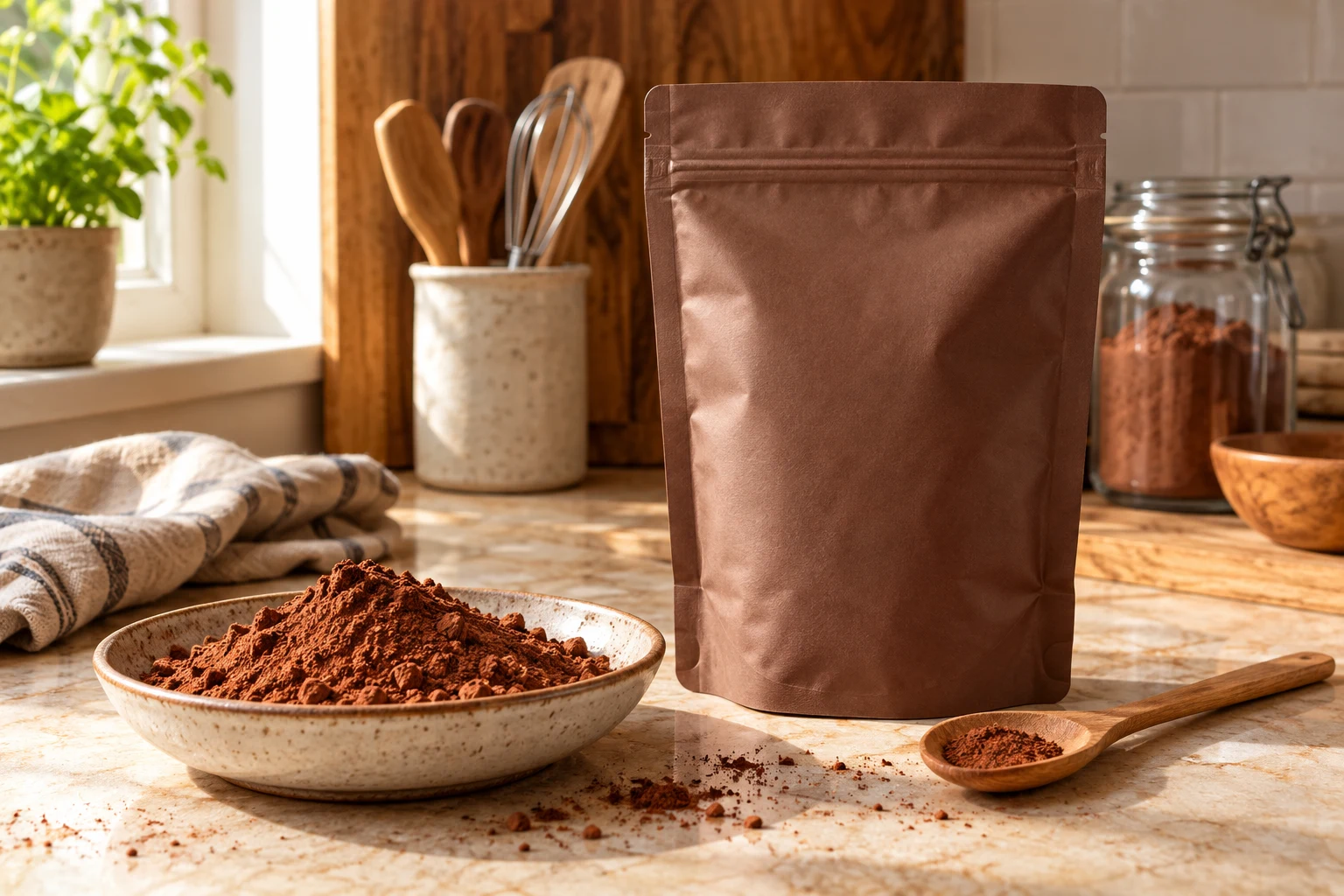
Cocoa powder can make a mess every time a customer opens the pack. I test the opening, dosing, and closing sequence before approving packaging.
I package cocoa powder by matching the pouch mouth, fill volume, closure, material evidence, and filling process to repeated use. I test real powder in representative packs and confirm the specification before choosing a window, finish, or printed design.
My food-packaging brief separates product protection from the everyday problem of taking a clean spoonful.
What Opening and Closure Will Customers Actually Use?
An easy first tear means little if the powder spills or the closure is confusing. I watch the complete use sequence.
I choose mouth width, zipper height, tear location, and usable headspace through a filled user trial. I look for clean spoon access, controlled pouring, readable opening instructions, and a closure that users can find and operate.
I begin with the intended kitchen routine. Is this pure cocoa for baking, a sweetened beverage mix, or a professional ingredient? I do not merge these products into one specification. I name the powder, typical dose, tool used, and expected number of openings. A pastry cook weighing an ingredient has a different routine from a shopper pouring powder into a mug. The pack should support the routine its label actually promises.
A real r/Finland thread asks how to close a Fazer cocoa container. Several users describe transferring powder into jars or separate bags. One commenter reports making a mess and preferring a jar; another discusses difficulty understanding the opening mechanism.1 I use this as attributed evidence of usability friction. It is not a controlled comparison between boxes and pouches, and it does not establish any package's barrier performance.
I test the second opening as carefully as the first
I give a filled sample to a person who has not seen the dieline. I watch how they find the notch, tear the top, open the zipper, and take a spoonful. I repeat the exercise when the pack is partly empty. I note powder on the outer surface, crumbs of material from a rough tear, the need for scissors, and any confusion about reclosure. I photograph the sequence with permission and retain a sample that shows the problem.
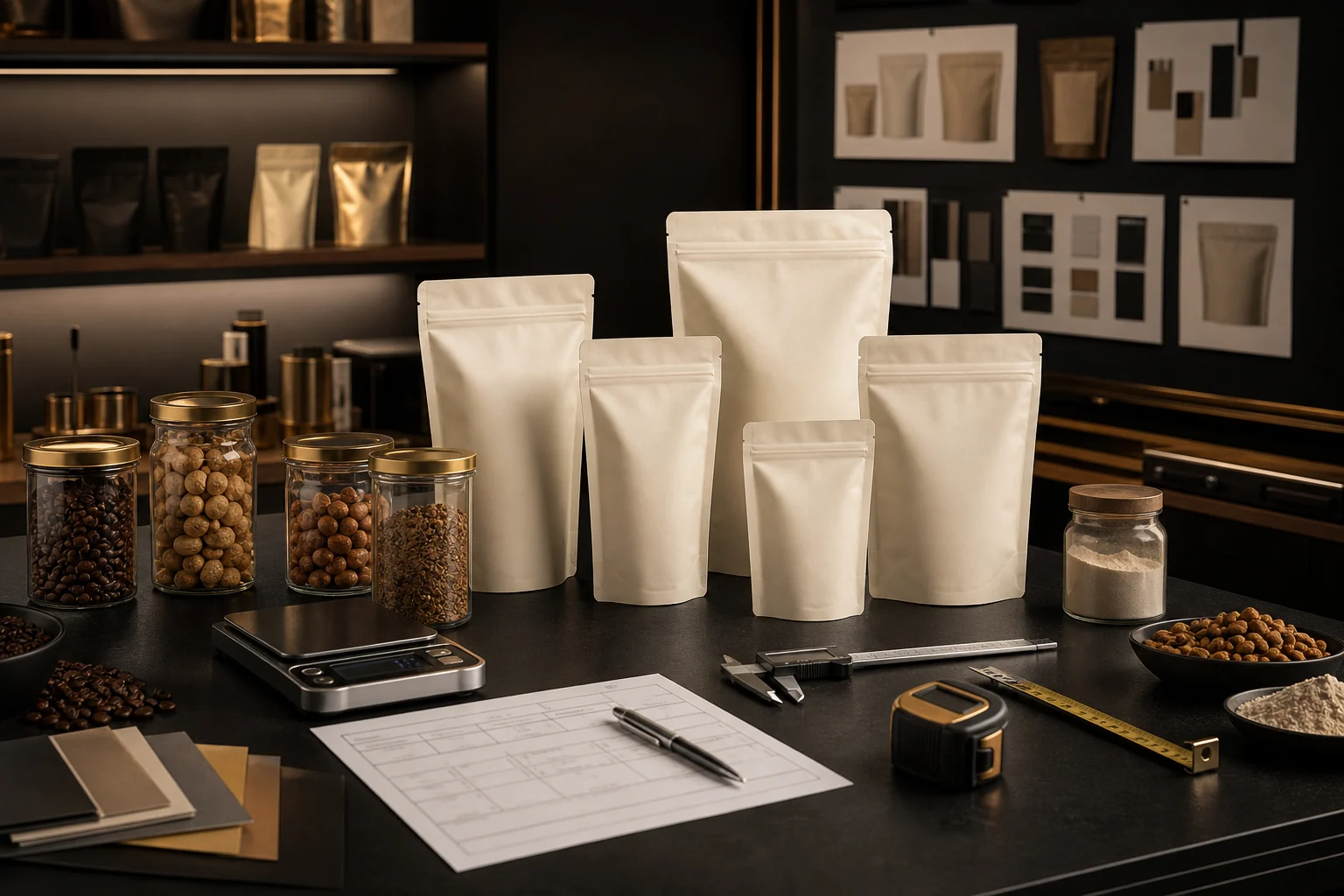
I compare a narrow mouth with a wider one while keeping fill quantity constant. I also compare zipper height and the space above the powder. I do not assume extra empty volume is waste, because the customer may need room for a spoon and the line may need a clean sealing zone. I ask the trial to show what space is useful. The size-selection guide helps record filled volume rather than copying another brand's dimensions.
For a refill product, I check controlled pouring into the intended container. For a pack used directly, I check access near the bottom and whether the side folds trap powder. I keep a list of observed problems before discussing a different format. My success condition is simple: the intended user takes the planned dose and closes the pack without needing an unexplained workaround. I still need separate material and production evidence before buying the pouch.
How Should I Compare Cocoa Pouch Materials?
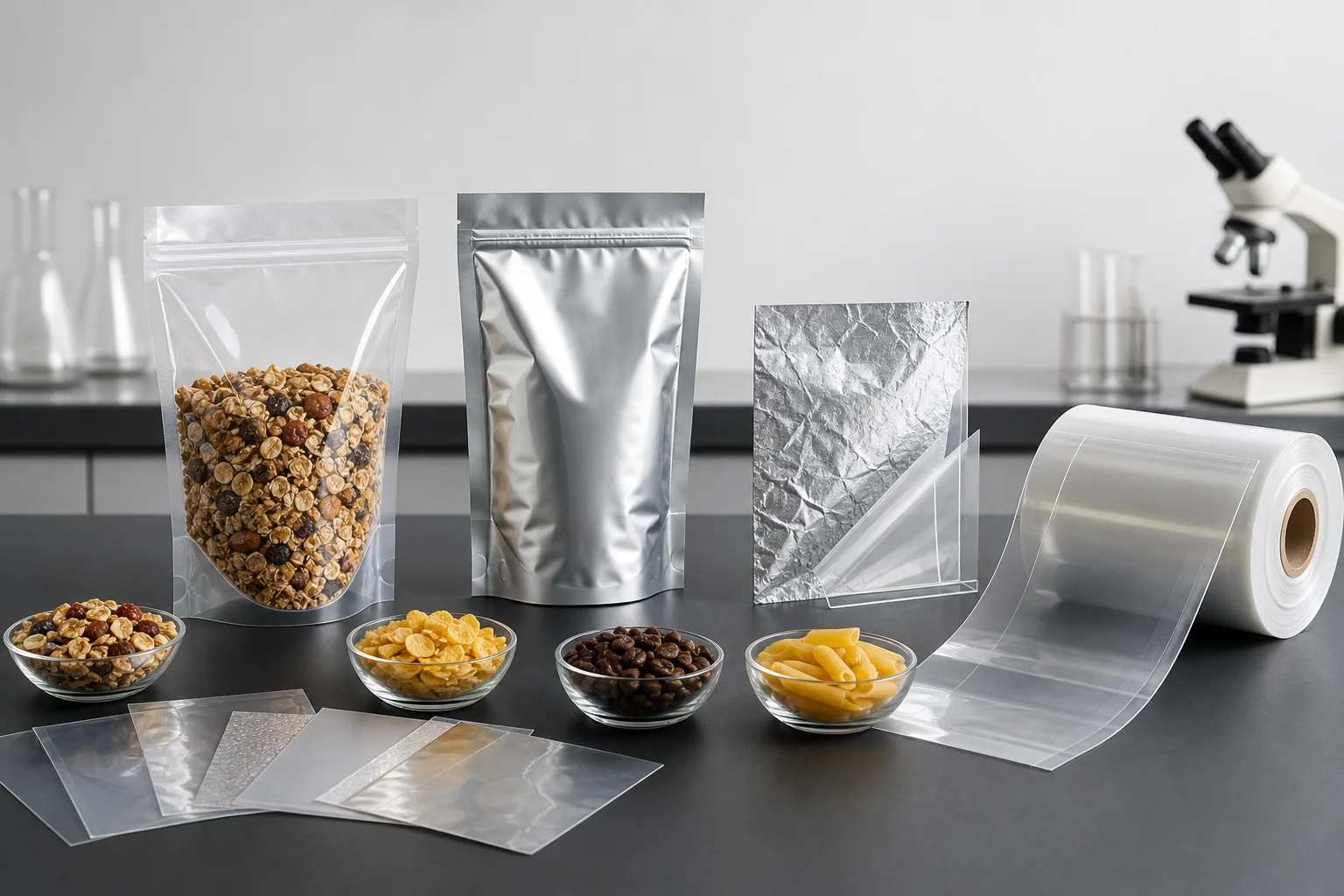
Clear, paper-look, and metallic packs can look different without revealing their protection. I need the actual construction and comparable reports.
I compare exact laminate and closure constructions, product-contact evidence, transmission data, and handling results. I choose a window only after testing the whole pack; I do not assign barrier or shelf life from its appearance.
I request a construction sheet for each candidate. It identifies layer materials, total thickness, product-contact layer, adhesive system, and any coating. I ask whether a paper-look finish is a printed appearance or an actual paper layer. I also ask what changes at a window. That lets the ingredient owner and packer evaluate one real construction instead of a vague category such as premium foil or eco pouch.
I use a comparison table with open questions
| Candidate | Potential use | Evidence still required |
|---|---|---|
| Opaque laminate | A fully printed retail pack | Layer specification and transmission reports |
| Windowed laminate | Showing the actual powder | Whole-pack performance and window construction |
| Paper-look pouch | A chosen visual identity | Actual layers, seams, and contact documents |
I use the barrier-film core guide to organise requests. ASTM F1249 names a method for water-vapour transmission through plastic film and sheeting.2 I ask for the laboratory's temperature, humidity gradient, specimen orientation, conditioning, and reported units. If the ingredient owner wants an initial comparison at 23°C with a 50% relative-humidity gradient, I record that as a project proposal and ask the laboratory to confirm suitability. It is not a universal cocoa requirement.
I keep oxygen data separate and request its stated method and conditions when the product brief calls for it. I do not rank two structures when the reports use different temperatures or describe different specimens. Flat-film results are one input. A finished pouch also has seams, folds, a closure, and a user's opening history. I therefore avoid translating a material number into a shelf-life claim for the cocoa.
FDA describes food-contact applications through food types and conditions of use.3 I ask the supplier to show which documentation covers the chosen contact layers and the actual food and filling conditions. I use the document-review guide to track unresolved items. I then request a representative filled sample from the preferred construction. Only a documented comparison lets me explain why I chose that pack, and which observations could make me change it.
Which Filling Checks and Purchase Details Should I Lock?
Powder near a zipper or seal can turn a good design into a frustrating pack. I check the line before placing the full order.
I run a production-style filled trial, inspect powder contamination and seal geometry, and record the test method and failures. I then lock pouch dimensions, material, closure, seal settings, artwork, and acceptance criteria in the buying specification.
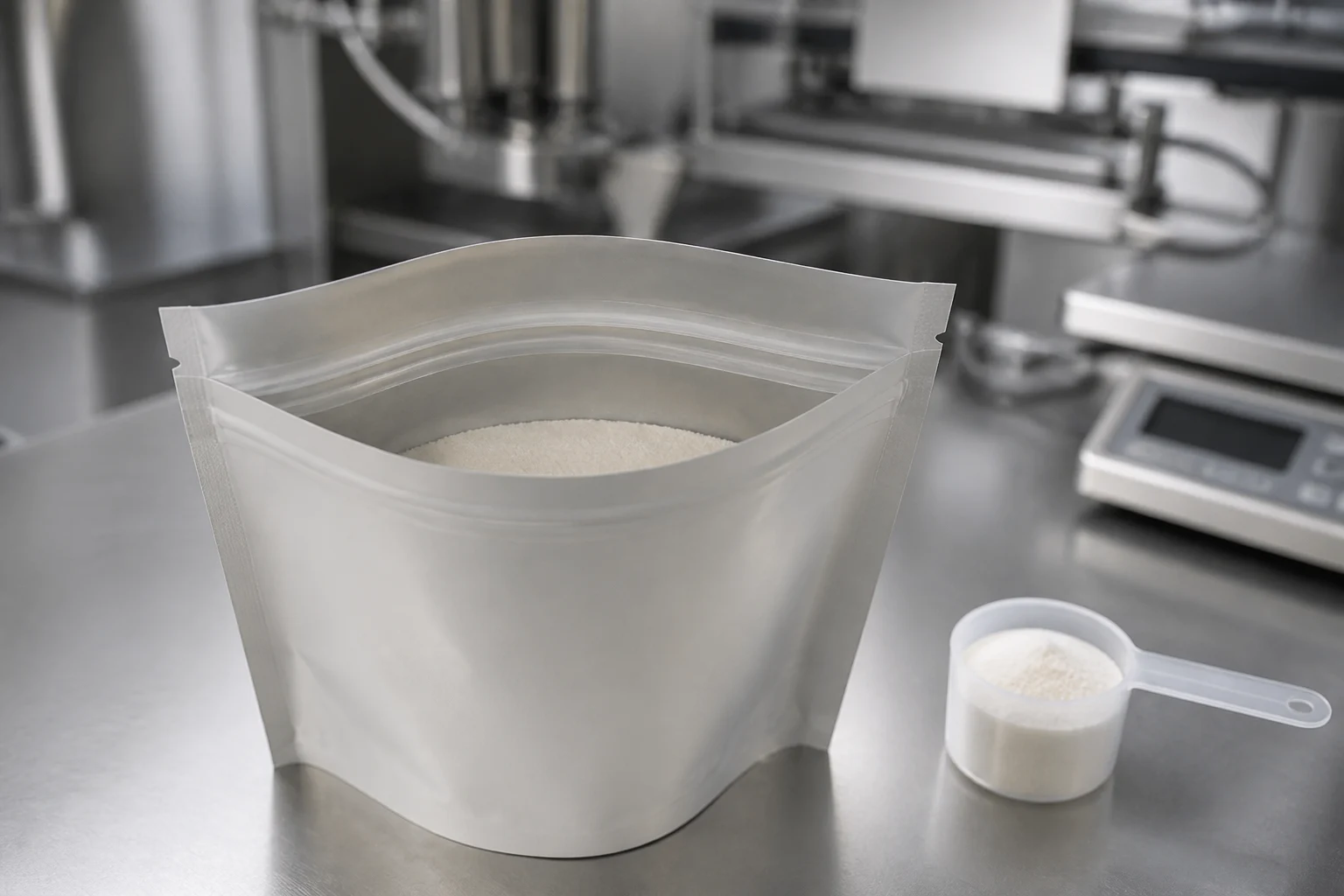
I ask the packer how cocoa enters the pouch, how the mouth stays open, and how the seal area is kept clear. I record fill mass, product lot, settling behaviour, pouch position, and any powder left near the zipper. I inspect samples from startup, normal running, and the end of a run. If the team changes equipment settings during the trial, I label the sample groups separately so the result has a clear meaning.
I also ask what happens after filling. Packs may stand, lie in a carton, move across a belt, or be handled during labelling. I observe the planned sequence rather than guess which event creates a dusty closure. The powder-contamination guide helps separate a filling problem from a mouth or zipper design problem. A supplier should explain which change addresses the actual observation.
I keep seal strength and usability as separate checks
ASTM F88/F88M is a seal-strength method for flexible barrier materials.4 I request the specimen width, support technique, speed, conditioning, sampled location, and failure mode with the result. I do not make up a pass value for all cocoa packs. The project must agree acceptance limits in advance. I then inspect finished seals for channels and trapped powder. A peel result alone does not show that the entire finished pouch is leak-free.
My purchase checklist names the cocoa product; fill mass and filled volume; pouch width, height, gusset, and tolerances; exact layer construction; zipper and notch positions; seal dimensions; line settings approved during the trial; test conditions; acceptance criteria; and artwork version. I retain images of the final pack and physical reference samples. I also name the date-code area and the ingredient owner's approved storage text, so commercial artwork cannot quietly change technical instructions.
I complete material assessment and the filled trial before asking for a specification-based quote. I request quantity and design assumptions in writing instead of presenting an unsupported price, MOQ, or delivery promise. I list the changes that reopen approval, including a new sealant, a different closure, or altered thickness. If a customer still needs to pour everything into a jar, I revisit the intended use rather than call the pack successful because it looks clean in a photograph.
Conclusion
I choose packaging through evidence, filled-pack testing, and clear specifications. That process protects the product, the launch, and the customer experience.
Sources and Further Reading
Need a pouch specification?
I can review your product, size, quantity, artwork, and target market.