A recyclable-looking pouch can still disappoint when its barrier, seals, product route, or recovery path were assumed instead of checked.
I evaluate a mono-material pouch by defining the product risk first, reviewing measured barrier and seal evidence for the exact structure, then validating filled packs and the real local recovery route.
I treat the pouch as a complete system. I confirm the product, material, filling, handling, and customer experience before I approve production.
What Does Mono-Material Mean in a Real Pouch?
A pouch can be called mono-material while its exact layers, coatings, zipper, and local recovery route still determine the practical result.
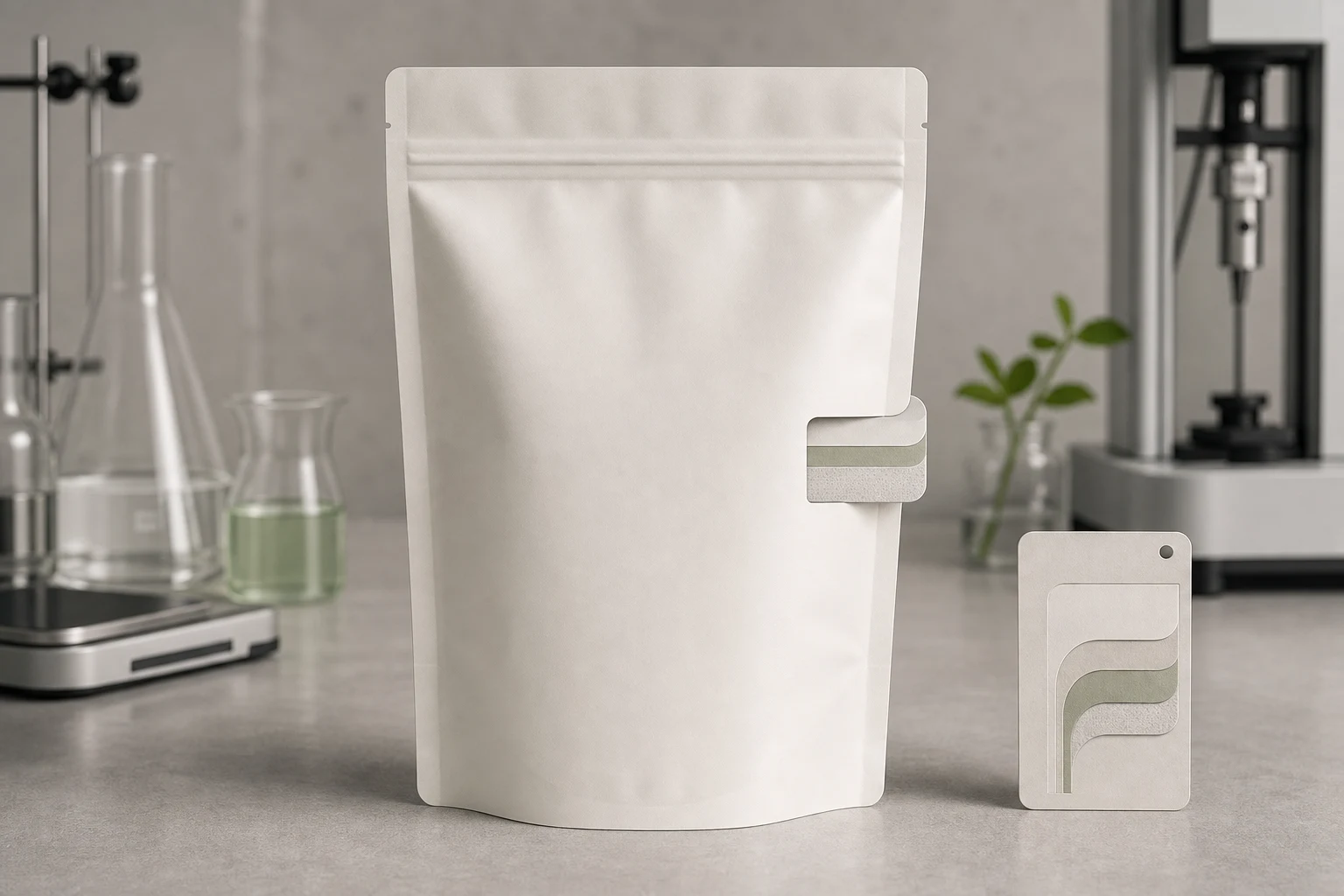
I use mono-material to describe a pouch designed around one polymer family, then verify every layer, closure, label, ink, and intended recovery route before I make a recycling-related decision.
I ask for a layer-by-layer construction rather than accepting a broad sales phrase. I identify the substrate, sealant, barrier treatment, adhesive or tie layers where applicable, zipper, spout, label, and print system. I also ask where the pouch will be collected and what that system accepts. The right question is not whether one part of the pouch sounds recyclable; it is whether the finished pack fits the intended product and the available recovery route.
How I make this decision specific
| Check | Why I ask | Evidence I retain |
|---|---|---|
| Layer map | It defines the actual structure. | Supplier specification. |
| Barrier data | It must match product risk. | Method and conditions. |
| Closure list | Features change the finished pack. | Component record. |
| Recovery route | Collection is location-specific. | Local-program check. |
For “What Does Mono-Material Mean in a Real Pouch?” in this can mono-material pouches deliver high barrier performance review, I define the actual product, pouch configuration, intended use, and decision owner before I ask a supplier or tester for evidence. I keep the selected structure, component details, sample condition, and any stated test method together, then compare the result with the buyer’s actual route rather than a catalogue promise. That record lets me use the mono-PE recyclable packaging guide as a decision aid and retain a specification that another team member can check.
For Can Mono-Material Pouches Deliver High Barrier Performance, I state what is known, the condition it applies to, and what must still be checked with the actual product. I do not transfer a number, a test result, or a feature choice from another product simply because its pouch looks similar. The result of “What Does Mono-Material Mean in a Real Pouch?” should give the buyer a clear next check, the supplier a precise request, and the project owner a record of the remaining uncertainty.
For Can Mono-Material Pouches Deliver High Barrier Performance, I request the exact pouch structure, component specification, and test conditions from the supplier. A broad material name or catalogue claim is not a production specification. The right next step is a representative filled sample, where relevant, with observations recorded before production is approved.
How Do I Match Barrier to the Product?
A high-barrier claim is not useful unless it names the gas or moisture risk, test method, conditions, and finished pouch configuration.
I define the product’s oxygen, moisture, aroma, light, oil, and handling risks first, then compare structure-specific barrier data and filled-pack results under relevant conditions.
I start with the food or product rather than the film. A dry snack, powdered supplement, oily food, and aroma-sensitive product do not create the same protection problem. I ask which transmission property matters, at what temperature and humidity, and for what intended shelf period. I then check whether the supplier data describes the same structure, thickness, coating, and test conditions. A value from a different laminate is only a lead for testing, not a release decision.
How I make this decision specific
For “How Do I Match Barrier to the Product?” in this can mono-material pouches deliver high barrier performance review, I define the actual product, pouch configuration, intended use, and decision owner before I ask a supplier or tester for evidence. I keep the selected structure, component details, sample condition, and any stated test method together, then compare the result with the buyer’s actual route rather than a catalogue promise. That record lets me use the mono-PE recyclable packaging guide as a decision aid and retain a specification that another team member can check.
For Can Mono-Material Pouches Deliver High Barrier Performance, I state what is known, the condition it applies to, and what must still be checked with the actual product. I do not transfer a number, a test result, or a feature choice from another product simply because its pouch looks similar. The result of “How Do I Match Barrier to the Product?” should give the buyer a clear next check, the supplier a precise request, and the project owner a record of the remaining uncertainty.
How Should I Check Recyclability and Trade-Offs?
A technically simpler structure may still fail commercially when collection is unavailable, components are omitted from the review, or the product protection trade-off is ignored.
I separate design intent from local recovery reality, document the full pouch configuration, and avoid environmental claims until the product, collection route, and evidence support them.
I review the full pouch, not only the web. A zipper, spout, valve, label, ink, and residue profile can all matter to a recovery discussion. I also ask the brand where the pack is sold and what the customer can actually do with it. If the existing route does not accept the format, I do not imply that a material choice alone solves end-of-life. I compare that constraint with the product-protection requirement before choosing a structure.
How I make this decision specific
For “How Should I Check Recyclability and Trade-Offs?” in this can mono-material pouches deliver high barrier performance review, I define the actual product, pouch configuration, intended use, and decision owner before I ask a supplier or tester for evidence. I keep the selected structure, component details, sample condition, and any stated test method together, then compare the result with the buyer’s actual route rather than a catalogue promise. That record lets me use the mono-PE recyclable packaging guide as a decision aid and retain a specification that another team member can check.
For Can Mono-Material Pouches Deliver High Barrier Performance, I state what is known, the condition it applies to, and what must still be checked with the actual product. I do not transfer a number, a test result, or a feature choice from another product simply because its pouch looks similar. The result of “How Should I Check Recyclability and Trade-Offs?” should give the buyer a clear next check, the supplier a precise request, and the project owner a record of the remaining uncertainty.
For Can Mono-Material Pouches Deliver High Barrier Performance, I treat the filled pack as a separate check from the material data. I record the fill condition, seal area, opening or closure behavior, carton arrangement, handling observations, and limits of the comparison. That prevents a favourable bench result from becoming an unsupported claim about shelf life, transport, or every product route.
What Should I Validate Before a Launch?
A lab value and an empty sample do not show how a pouch will stand, seal, ship, open, and protect the real product.
I validate filled mono-material pouches through sealing, handling, storage, opening, shelf presentation, and the agreed acceptance criteria before I approve the launch configuration.
I make production-style samples at the planned fill weight and use condition. I inspect seals, corners, zipper alignment, drop and compression response, pouch standing, and consumer opening. I keep samples from the start and end of the review so the team can compare a later change with a real reference. If a component or thickness changes, I repeat the checks that the change could affect. This keeps an environmental design objective connected to product protection.
How I make this decision specific
For “What Should I Validate Before a Launch?” in this can mono-material pouches deliver high barrier performance review, I define the actual product, pouch configuration, intended use, and decision owner before I ask a supplier or tester for evidence. I keep the selected structure, component details, sample condition, and any stated test method together, then compare the result with the buyer’s actual route rather than a catalogue promise. That record lets me use the mono-PE recyclable packaging guide as a decision aid and retain a specification that another team member can check.
For Can Mono-Material Pouches Deliver High Barrier Performance, I state what is known, the condition it applies to, and what must still be checked with the actual product. I do not transfer a number, a test result, or a feature choice from another product simply because its pouch looks similar. The result of “What Should I Validate Before a Launch?” should give the buyer a clear next check, the supplier a precise request, and the project owner a record of the remaining uncertainty.
For Can Mono-Material Pouches Deliver High Barrier Performance, I preserve the final decision in a written brief that names the approved sample, conditions, observations, open risks, and change triggers. I then use the pre-production packaging tests guide to keep the quotation tied to the evidence rather than to a remembered sample or a generic product name.
Conclusion
I choose packaging through evidence, filled-pack testing, and clear specifications. That process protects the product, the launch, and the customer experience.
Sources and Further Reading
- FDA, Food Packaging and Other Substances that Come in Contact with Food.
- Reddit r/Packaging, Packaging Pouches community discussion.
- ASTM F1927, oxygen transmission rate through plastic film.
- ASTM F88/F88M, seal strength of flexible barrier materials.
- Unique Packaging mono-PE guide.
- Unique Packaging quality tests guide.
Need a pouch specification?
I can review your product, size, quantity, artwork, and target market.