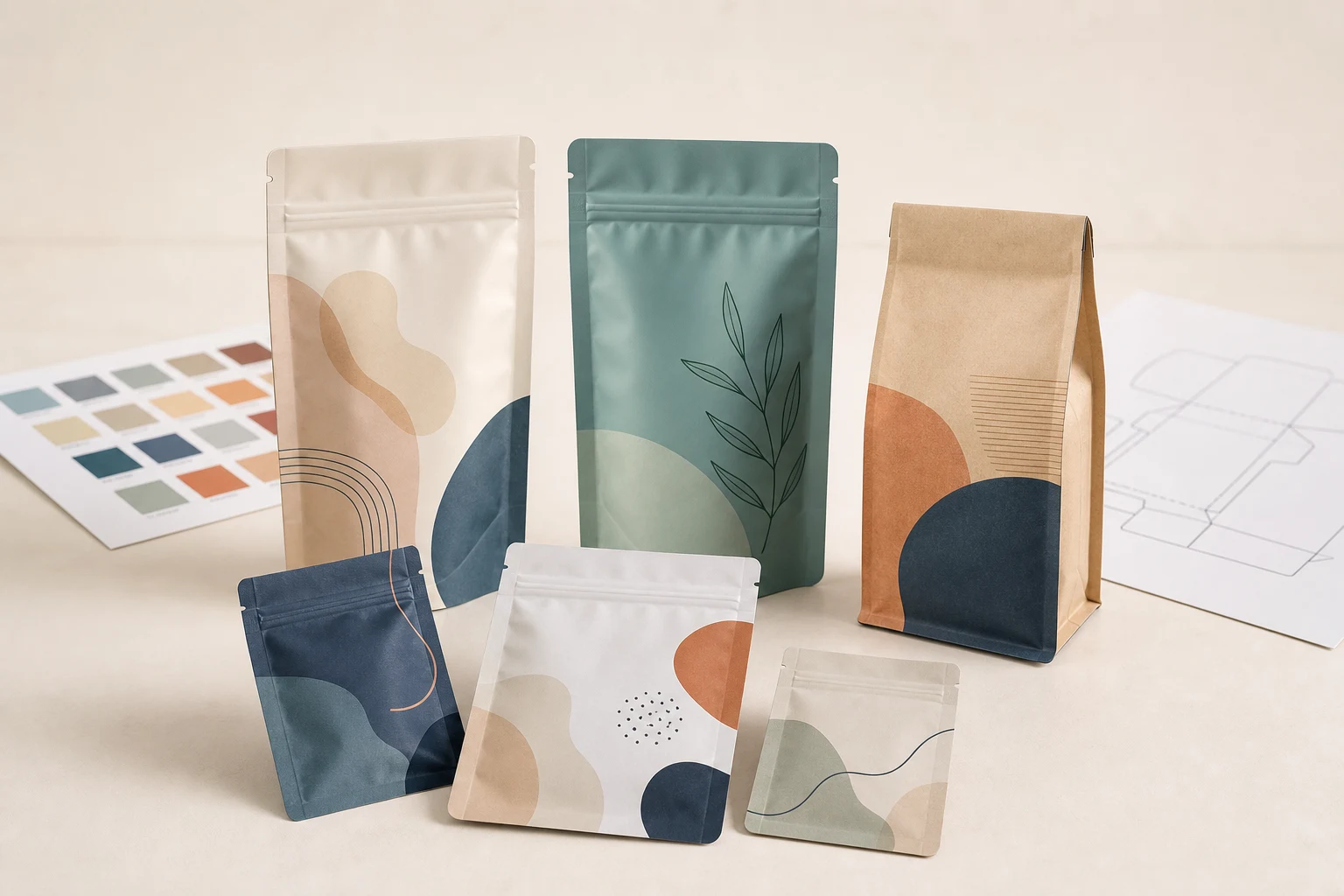
A low-MOQ pouch project is possible when the size, laminate, closure, finish and print route fit a current production path. Selected digitally printed structures may start from 100 pieces per design after specification review. Typical custom printed pouch MOQ starts from 500 pieces per design. The final minimum depends on the complete job, not one headline number.
We use low quantities to help a brand test fit, artwork and shelf response without buying excess inventory. The trade-off is a higher unit cost than a stable large gravure run. The right decision balances cash, SKU risk, launch learning and the cost of changing packaging later.
Which Pouches Can Start at 100 or 500 Pieces?
The fastest path is a proven size and material combination with standard zipper, tear notch and finish choices. A special film, unusual fitment, custom security closure, exact spot finish or difficult converting step can move the minimum higher. We confirm eligibility only after reviewing the product, fill weight, dimensions, artwork and destination.
| Project direction | Likely starting route | What can raise the MOQ |
|---|---|---|
| Launch test or one design | Selected digital structures; sometimes from 100 pieces | Special film, custom hardware, metallic effects or unproven size |
| Growing brand or several designs | Digital or shared-material planning; typical custom MOQ from 500 pieces per design | Different materials, sizes or finishes across SKUs |
| Stable repeat volume | Compare digital with gravure | Cylinder setup and inventory commitment |
These are planning directions, not a binding offer. We confirm the live route, capacity and price in the quotation.
How Can Multiple SKUs Share a Low-MOQ Plan?
Multi-SKU savings come from shared decisions. Designs that use the same pouch size, material, finish and closure can often be planned more efficiently than a group of unrelated structures. We still quote each design clearly because print quantity, setup and approval remain design-specific.
Start with the fewest packaging variables needed to test the market. Keep a common dieline and material where the product risk allows. Change graphics rather than construction. Use the packaging inventory risk guide to separate core, test and seasonal designs before ordering.
Which Sample Should Come Before a Low-MOQ Order?
A stock sample shows film feel, zipper quality, print finish and general workmanship. A blank size sample checks real fill, headspace, standing, case fit and sealing. An artwork proof checks the correct dieline, copy, barcode, white ink and feature clearance. A printed prototype is useful when color, finish or shelf presentation is critical.
Each sample answers a different question. A visual proof does not validate shelf life, and an empty pouch does not confirm fit. We connect the approval record to the purchase order so the production specification does not drift.
When Should a Brand Move From Digital to Gravure?
Move only when demand by SKU is stable, artwork changes are less frequent and the total savings exceed cylinders, extra inventory, storage and write-off risk. A growing company can keep launches digital while moving a proven core design to gravure.
Before switching, approve color and finish on the new route. Keep a physical reference. Confirm that the material, sealant, zipper and dimensions are unchanged unless the change is intentional. The digital versus gravure guide explains the decision in more detail.
What Should I Send for an Accurate Low-MOQ Quote?
- Product, fill weight or volume, and target market.
- Preferred pouch style, dimensions and number of designs.
- Quantity per design and expected reorder timing.
- Barrier, zipper, valve, window, spout and finish needs.
- Artwork status, target launch date and shipping destination.
If some details are unknown, send the product and target fill first. We can organize the missing questions before preparing a detailed quote.
Which Applications and Buying Situations Fit This Page?
The useful question is not whether a factory advertises a low minimum. It is whether the proposed short run can be made on a controlled material, print and converting route without weakening product protection or creating a specification that cannot be repeated.
Buyers looking for low MOQ custom pouches and small batch custom packaging can reach this guide through related searches such as the terms below. We use them as different entry points into one specification process rather than forcing one generic recommendation onto every search.
- low MOQ custom pouches
- small batch custom packaging
- custom packaging for startups
- short-run printed pouches
| Application or decision | Practical starting direction | Reason to evaluate it |
|---|---|---|
| First retail launch | A proven stand-up or flat pouch size with standard zipper and finish | Reduces the number of untested variables while the brand learns fill, shelf and reorder behavior |
| Multi-flavor range | One common dieline and structure with artwork changes by flavor | Keeps construction consistent and makes quantity per design visible |
| Subscription or ecommerce test | Digitally printed pouch sized from a filled sample | Tests parcel handling and consumer response before a larger inventory commitment |
| Seasonal or regional design | Short-run print on an approved core specification | Limits obsolete packaging when the campaign or market changes |
| Scale-up of a proven SKU | Compare digital and gravure using the same controlled specification | Separates real unit savings from tooling and inventory exposure |
For low MOQ custom pouches and small batch custom packaging, the table is a screening tool, not a material prescription. Product formulation, contact requirements, shelf life, filling equipment, destination rules and distribution can change the direction. The next step is to turn the promising route into a measurable sample and approval plan.
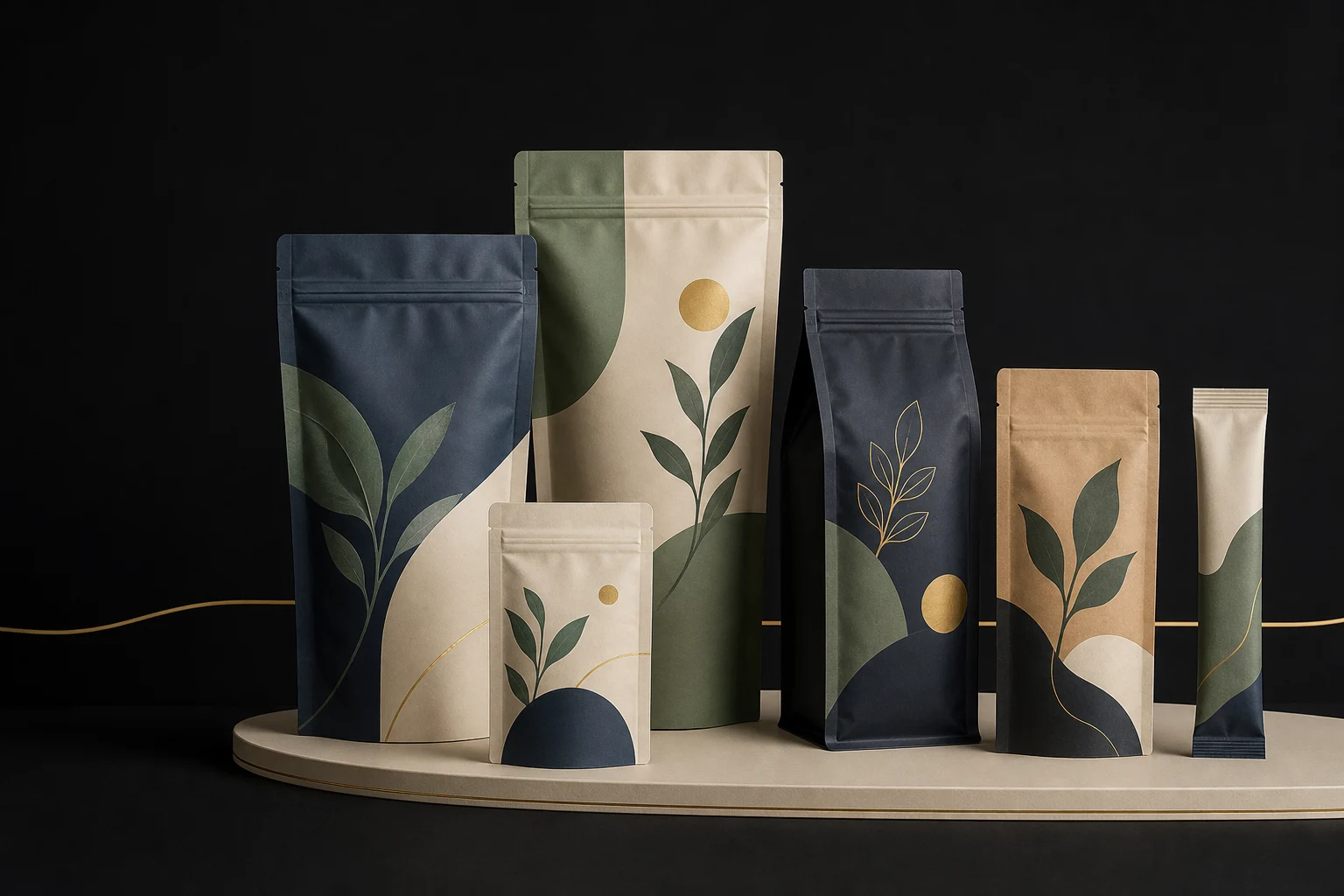
How Do Buyers Turn the Idea Into a Controlled Specification?
For low MOQ custom pouches and small batch custom packaging, a useful specification records decisions at the finished-pouch level. Marketing names can help teams communicate, but production needs measurable dimensions, an identified construction, feature positions, tolerances, an artwork version and acceptance criteria. Every alternative should be labeled clearly so a commercial comparison does not hide a technical change.
| Control point | Input needed | Approval record |
|---|---|---|
| Quantity | Pieces per design, number of designs, forecast and reorder interval | Quote and purchase order state quantity by SKU rather than one combined headline |
| Construction | Finished size, gusset, film structure, zipper and finish | Approved specification and blank filled sample |
| Print route | Artwork count, color expectations and change frequency | Digital or gravure route, proof method and setup scope |
| Fit | Product density, target fill and headspace | Filled sample stands, closes, seals and fits the shipping case |
| Launch timing | Artwork readiness, sample approvals and requested delivery | Milestones distinguish approval time from production and transit |
For low MOQ custom pouches and small batch custom packaging, start with the real product and its worst credible condition. That may be the sharpest piece, highest oil content, least dense recipe, hottest fill, longest distribution route or most demanding SKU. State which condition was used. Without that note, a sample can pass while the production range remains undefined.
In a low MOQ custom pouches and small batch custom packaging specification, dimensions should use a consistent measurement method and identify whether the value is inside or outside, finished or pre-conversion. Feature coordinates should reference a controlled dieline. Material descriptions should identify the full structure or the required performance basis, while test values should include units and conditions. The goal is not paperwork for its own sake; it is a repeatable reference for quotation, sampling, production and reorders.
What Can Fail, and How Should It Be Checked?
low MOQ custom pouches and small batch custom packaging development asks what can fail first and what evidence would reveal it before a commercial shipment. Visual inspection is necessary, but it cannot establish barrier, seal robustness, compatibility, closure performance or distribution durability. The checks below connect common failure modes to practical controls.
| Failure mode | Why it happens | Control or evidence |
|---|---|---|
| The quoted MOQ cannot be produced | The size, film or feature falls outside the short-run route | Confirm live production eligibility before artwork is finalized |
| Several SKUs are treated as one quantity | The buyer and supplier count totals differently | List quantity, size and construction for every design |
| The pouch fits empty but not filled | Density and headspace were estimated from weight alone | Fill a blank sample with the real product |
| A later reorder changes appearance | The print route or reference standard changed | Keep the approved route, proof and physical reference with the SKU record |
| Low unit commitment creates high launch cost | Proofs, freight and setup were ignored | Compare total cash outlay and usable inventory, not only price per pouch |
For low MOQ custom pouches and small batch custom packaging, an acceptance plan should name the sample stage, test owner, method or working instruction, sample count where appropriate, condition and decision rule. The scope can be simple for a low-risk launch, but it should never be invisible. If the brand is responsible for shelf-life validation or regulatory interpretation, that responsibility should be stated rather than implied to sit with a film or pouch supplier.
When a low MOQ custom pouches and small batch custom packaging trial fails, preserve the failed sample and record the lot, settings and observed location. A leak at a zipper end, bottom corner or fitment area tells a different story from random film puncture. Correct the cause, create a new controlled sample and repeat the relevant check instead of accepting an undocumented adjustment.
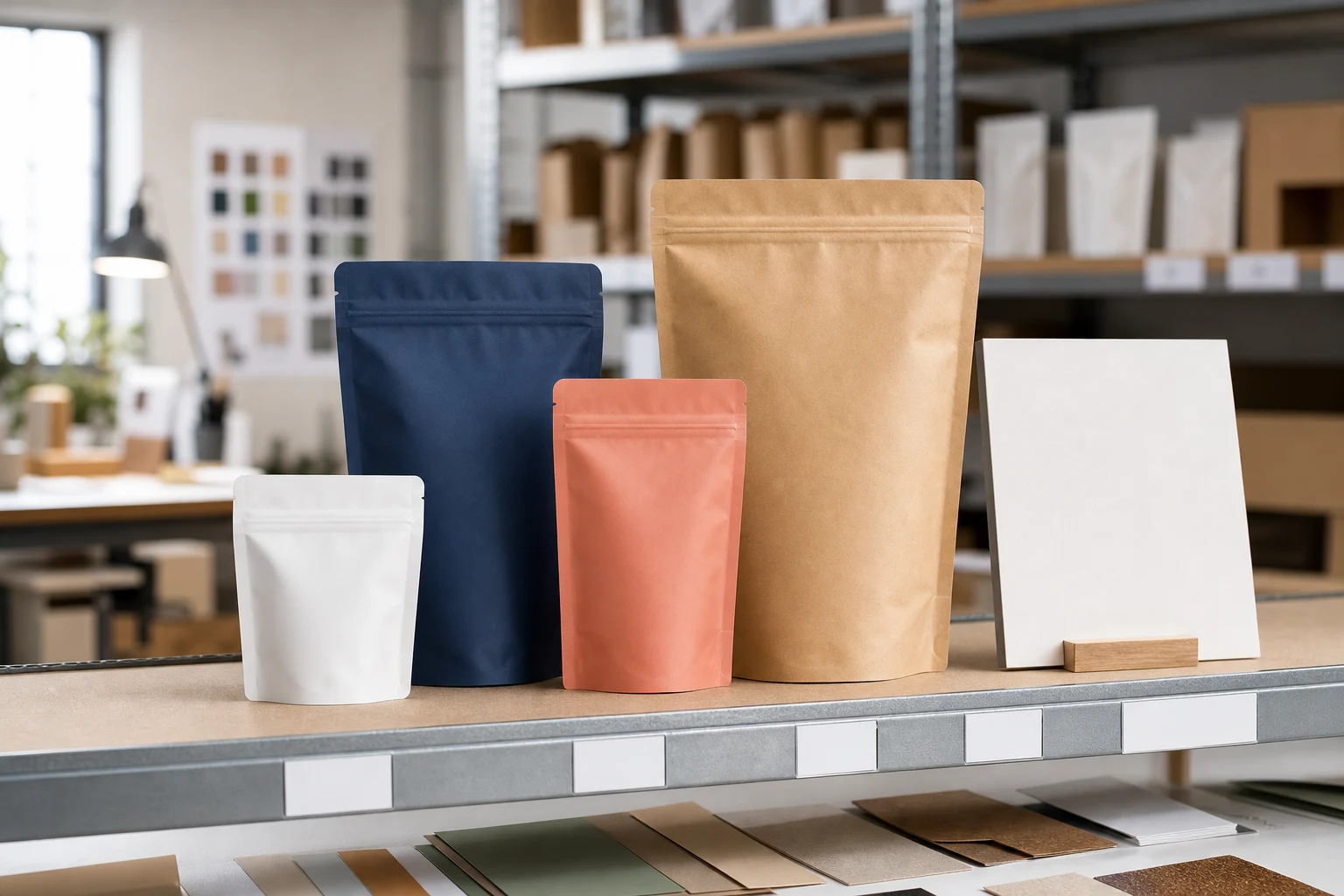
What Is the Sample-to-Production Workflow?
1. Define the question before ordering a sample
For low MOQ custom pouches and small batch custom packaging, a stock sample can demonstrate general film feel, finish and feature operation. A blank size sample can confirm volume, headspace, filling access, standing and case fit. A digital artwork proof can confirm copy, dieline version and placement. A printed prototype can support a color and presentation decision. A production proof can become a physical reference. None of these automatically replaces compatibility, distribution or shelf-life work.
For a startup or small business, the sample sequence should remove the expensive uncertainties first. Confirm volume and filling access with a blank size sample before spending time on final artwork. Confirm the dieline and safe zones before ordering a printed prototype. Use the prototype to judge color direction and finish, while reserving product compatibility and shelf-life approval for the filled package.
2. Trial the real filling and sealing process
Small-batch custom packaging still has to work on the real filling and sealing process. Record whether filling is manual or automated, the opening width operators need, the seal-bar width, expected contamination in the seal area and the coding method. A pouch that is easy to order but slow to fill can move cost from packaging into labor and scrap.
For low MOQ custom pouches and small batch custom packaging, use enough samples to see variation rather than judging one ideal pouch. Observe opening, filling, trapped product, web or pouch handling, seal appearance, cooling, coding and operator adjustments. Record the settings and keep representative filled packs. If production will run at more than one site or on several lines, identify which setup the approval covers.
3. Freeze the approved record
For low MOQ custom pouches and small batch custom packaging, the approval pack should include the quotation revision, signed specification, dieline, artwork version, material description, color reference, feature details, agreed tolerances, sample or proof reference, test records, carton requirements and shipping marks. Connect it to the purchase order and SKU. A supplier change, resin or film change, feature substitution, thickness change, new artwork or different filling condition should trigger a documented review.
4. Verify the first production and repeat orders
For low MOQ custom pouches and small batch custom packaging, first production should be checked against the approved record, not against memory or a sales image. Review critical dimensions, print content, feature placement, seals, appearance, packing and agreed functional evidence. For repeats, compare the new order with the controlled reference and record requested changes before production. This is how a successful trial becomes a stable packaging program.
How Should Performance, Compliance and Sustainability Claims Be Handled?
A low minimum is a commercial condition, not a quality grade. Do not imply that a 100-piece route is available for every film, feature or size. The quotation should state the approved construction, quantity per design, proof route, exclusions and the conditions that could change the minimum.
For low MOQ custom pouches and small batch custom packaging, separate supplier documentation from the brand’s final claim decision. A material declaration, component report or laboratory result can be useful evidence, but its scope must match the exact structure, test article, method, date and market. Do not extend a result from one film, size or component to a materially different finished pouch without review.
For low MOQ custom pouches and small batch custom packaging, artwork approval should include a claim checkpoint before printing. Keep claim wording, supporting documents and the approved structure in the same change-control record. If a film, closure, valve, spout, coating, adhesive, ink, dimension or opening path changes, ask whether the evidence and artwork remain valid.
What Belongs in the RFQ and Final Approval Checklist?
For low MOQ custom pouches and small batch custom packaging, a complete RFQ makes the quotation faster and more comparable. If a value is unknown, mark it as open rather than allowing an assumption to become an invisible requirement.
- Product name, formulation concerns, contact condition and worst-case SKU.
- Target fill weight or volume, product density, headspace and planned pouch format.
- Finished dimensions, gusset, opening method, closure and other functional features.
- Shelf-life target, storage, filling temperature, sealing process and distribution route.
- Material benchmark or performance needs, including relevant test units and conditions.
- Quantity per design, number of designs, annual forecast and expected reorder pattern.
- Artwork status, print route, color reference, finish, coding area and barcode needs.
- Sample and proof sequence, validation responsibilities and acceptance records.
- Carton, pallet, shipping marks, destination, Incoterm and requested delivery window.
- Destination-market claim language and supporting documentation required before print.
For low MOQ custom pouches and small batch custom packaging, before final approval, confirm that the quotation, specification, dieline, artwork and physical sample describe the same pouch. Resolve every “or equivalent,” provisional dimension and unapproved substitute. The resulting record should let purchasing, quality, production and the supplier reach the same conclusion without reconstructing the project from email history.
For low MOQ custom pouches and small batch custom packaging, place every supplier response in the same table and flag deviations instead of averaging them away. One supplier may propose a different sealant, thickness, zipper, proof route, inspection plan or delivery term. That may be a useful alternative, but it is not the same offer until the technical and commercial effects are reviewed. Keep one-time costs separate from repeat-order costs, and distinguish production time from approval, transit and customs time.
For low MOQ custom pouches and small batch custom packaging, assign an owner for each open item and a date by which it must be closed. Purchasing should know the approved commercial scope; quality should know the evidence and acceptance criteria; production should know filling and sealing assumptions; brand teams should know the current dieline and claim boundaries. A short, controlled record prevents later decisions from depending on who remembers the project. It also makes future value engineering safer because the team can compare a proposed change against a known baseline rather than against an undefined “same as last time” request.
Frequently Asked Questions
Can I order only 100 custom printed pouches?
Selected digitally printed structures may start from 100 pieces per design after size, material, artwork, finish and current production route are reviewed. Many projects start higher.
Why is a low-MOQ unit price higher?
The setup, proofing, material handling and converting work is spread over fewer pouches. The lower inventory commitment can still make the total launch decision better.
Can several designs be combined?
Designs can be planned together when they share size, material, finish and features, but each design still has its own printed quantity and approval.
Do low-MOQ pouches use the same materials as large runs?
Sometimes. The available digital-print material set is narrower than every possible gravure structure, so product protection must be reviewed before choosing the route.
Are low MOQ custom pouches suitable for startups?
They can be when a startup uses an approved size, material and feature set and understands the higher unit cost. A filled sample and clear reorder plan are more useful than choosing the lowest advertised minimum.
Can short-run pouches be used for ecommerce?
Yes, after the filled pouch and shipping case are checked for zipper opening, seal damage, puncture, abrasion and parcel handling.
Does one total order quantity cover every design?
Not automatically. Quote and approval records should show the quantity for each design, because printing and setup are design-specific.
What should stay unchanged when moving to a larger run?
Keep the approved dimensions, material intent, sealant, zipper and functional positions unless a controlled change is requested. Reapprove color and finish when the print route changes.