Too many pouch variants can turn a promising range into slow stock, obsolete artwork, urgent reprints, and a warehouse that nobody fully trusts.
I reduce packaging inventory risk by mapping every SKU, separating stable demand from volatile demand, controlling artwork revisions, using samples wisely, and ordering against a practical replenishment plan.
I treat the pouch as a complete system. I confirm the product, material, filling, handling, and customer experience before I approve production.
Which Packaging SKUs Create the Most Inventory Risk?
A large SKU count is not automatically a problem, but unmanaged size, artwork, finish, and market variants can hide costly exposure.
I identify risk by mapping each pouch’s demand pattern, shared structure, artwork revision, market, print route, MOQ, lead time, remaining stock, and realistic reorder point.
I build one visible list before I discuss a larger order. I separate true product differences from cosmetic variants, then group pouches that can share a size, structure, finish, or print route. A slow seasonal design, a regulated market version, and a core high-runner should not all follow the same buying rule. I also record open purchase orders, usable stock, approved artwork revision, and the exact point where a change would make inventory obsolete.
How I make this decision specific
For “Which Packaging SKUs Create the Most Inventory Risk?” in this how can i reduce packaging inventory risk across many skus review, I define the actual product, pouch configuration, intended use, and decision owner before I ask a supplier or tester for evidence. I keep the selected structure, component details, sample condition, and any stated test method together, then compare the result with the buyer’s actual route rather than a catalogue promise. That record lets me use the MOQ and total-cost guide as a decision aid and retain a specification that another team member can check.
For How Can I Reduce Packaging Inventory Risk Across Many SKUs, I state what is known, the condition it applies to, and what must still be checked with the actual product. I do not transfer a number, a test result, or a feature choice from another product simply because its pouch looks similar. The result of “Which Packaging SKUs Create the Most Inventory Risk?” should give the buyer a clear next check, the supplier a precise request, and the project owner a record of the remaining uncertainty.
For How Can I Reduce Packaging Inventory Risk Across Many SKUs, I request the exact pouch structure, component specification, and test conditions from the supplier. A broad material name or catalogue claim is not a production specification. The right next step is a representative filled sample, where relevant, with observations recorded before production is approved.
How Do I Simplify Variants Without Weakening the Brand?
Trying to make every product look unique can create small runs, fragmented stock, and costly decisions whenever demand changes.
I simplify only where the product, shelf role, and customer experience allow it, using shared pouch geometry and controlled artwork families while preserving the variants that earn their place.
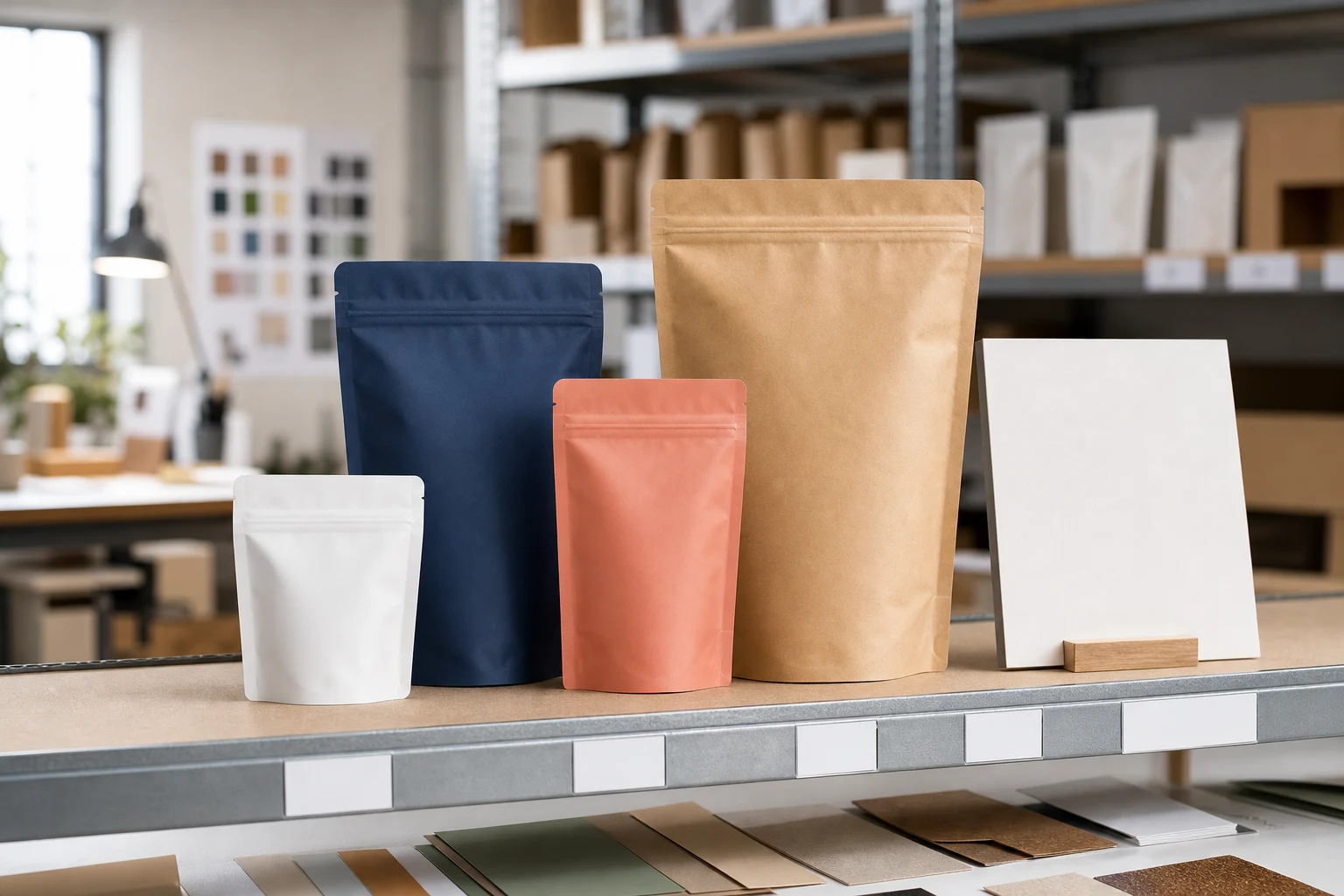
I first test whether several products can use one pouch size or a common laminate. Then I compare whether a single base design can carry a label, date code, sleeve, or short digital-print run instead of a separate deep inventory position. I do not merge variants that would confuse the customer, damage legal information, or create a filling issue. The useful question is whether a shared component keeps the same protection, line fit, and buying clarity.
How I make this decision specific
For “How Do I Simplify Variants Without Weakening the Brand?” in this how can i reduce packaging inventory risk across many skus review, I define the actual product, pouch configuration, intended use, and decision owner before I ask a supplier or tester for evidence. I keep the selected structure, component details, sample condition, and any stated test method together, then compare the result with the buyer’s actual route rather than a catalogue promise. That record lets me use the MOQ and total-cost guide as a decision aid and retain a specification that another team member can check.
For How Can I Reduce Packaging Inventory Risk Across Many SKUs, I state what is known, the condition it applies to, and what must still be checked with the actual product. I do not transfer a number, a test result, or a feature choice from another product simply because its pouch looks similar. The result of “How Do I Simplify Variants Without Weakening the Brand?” should give the buyer a clear next check, the supplier a precise request, and the project owner a record of the remaining uncertainty.
What Should I Lock Before I Reorder Packaging?
A reorder can quietly repeat an old error when the team relies on a file name, a photo, or a supplier’s memory instead of a controlled release record.
Before I reorder, I lock the approved revision, structure, dimensions, components, print route, fill condition, carton pack, quantity, delivery date, remaining stock, and change owner.
I compare the proposed reorder with the approved physical reference. I check what changed in artwork, film, sealant, zipper, size, pack count, market, and lead time. If a new variant or regulation shifts the artwork, I ask whether the old stock can still be used and how it will be separated. I prefer a simple written release record that lets sales, purchasing, operations, and the supplier see the same answer before production starts.
How I make this decision specific
For “What Should I Lock Before I Reorder Packaging?” in this how can i reduce packaging inventory risk across many skus review, I define the actual product, pouch configuration, intended use, and decision owner before I ask a supplier or tester for evidence. I keep the selected structure, component details, sample condition, and any stated test method together, then compare the result with the buyer’s actual route rather than a catalogue promise. That record lets me use the MOQ and total-cost guide as a decision aid and retain a specification that another team member can check.
For How Can I Reduce Packaging Inventory Risk Across Many SKUs, I state what is known, the condition it applies to, and what must still be checked with the actual product. I do not transfer a number, a test result, or a feature choice from another product simply because its pouch looks similar. The result of “What Should I Lock Before I Reorder Packaging?” should give the buyer a clear next check, the supplier a precise request, and the project owner a record of the remaining uncertainty.
For How Can I Reduce Packaging Inventory Risk Across Many SKUs, I treat the filled pack as a separate check from the material data. I record the fill condition, seal area, opening or closure behavior, carton arrangement, handling observations, and limits of the comparison. That prevents a favourable bench result from becoming an unsupported claim about shelf life, transport, or every product route.
Conclusion
I choose packaging through evidence, filled-pack testing, and clear specifications. That process protects the product, the launch, and the customer experience.
Sources and Further Reading
- GS1, GTIN Management Standard.
- Reddit r/Packaging, packaging automation and SKU variation community discussion.
- GS1, General Specifications.
- FDA, food packaging and food-contact substances.
- Unique Packaging MOQ and total cost guide.
- Unique Packaging digital printing versus rotogravure guide.
- Unique Packaging supplier checklist.
Need a pouch specification?
I can review your product, size, quantity, artwork, and target market.