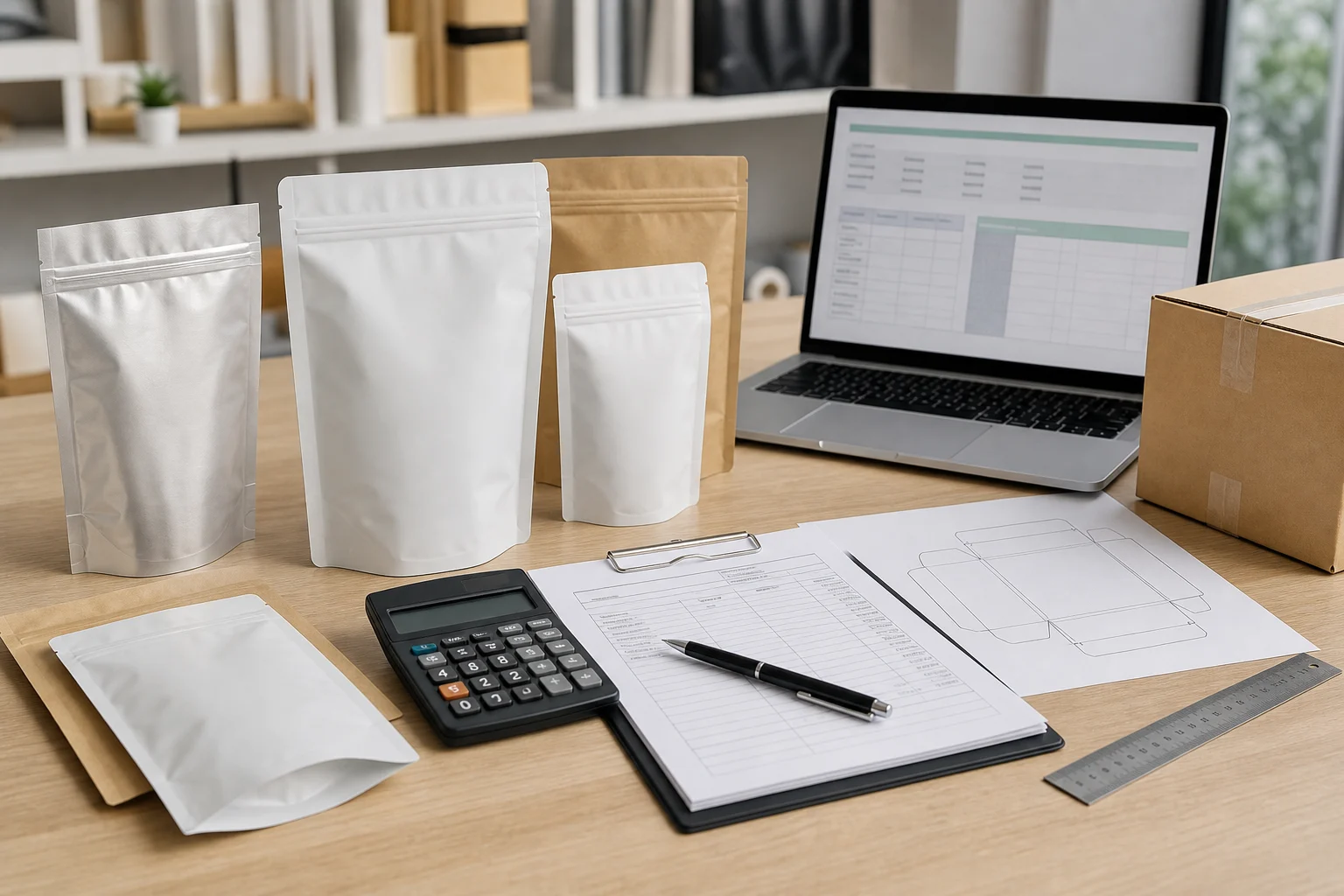
A pouch can look right in a supplier sample yet fail when it meets a co-packer’s filler, seal jaws, handling route, or product.
I match a pouch to a contract packer by confirming the real machine, product, format, material, seals, quality checks, sample trial, and written release specification together.
I treat the pouch as a complete system. I confirm the product, material, filling, handling, and customer experience before I approve production.
What Must I Ask the Contract Packer First?
A converter can quote a pouch quickly, but a co-packer may have different equipment, seal requirements, material limits, or handling constraints.
I ask the contract packer for the actual filling and sealing route, approved pouch formats, film or pouch constraints, product conditions, target speed, quality checks, and change-control process.
I begin with a concise technical brief, not a catalogue request. I identify the food or powder, target fill, temperature at filling, product dust or oil risk, pouch orientation, format, closure, distribution route, and target market. Then I ask who owns the filler, sealing equipment, coding, inspection, cartoning, and release decision. The Reddit thread is valuable because the reply makes the dependency explicit: a contract packer’s supply chain and operating knowledge should influence the first packaging conversation.2 I do not treat the comment as technical qualification. I use it to make sure the project starts with the packer’s real constraints. I link the brief to the specification-sheet guide so the inquiry includes details that can be reviewed rather than assumptions.
How I make this decision specific
For “What Must I Ask the Contract Packer First?” in this how do i match a pouch specification to my contract packer review, I define the actual product, pouch configuration, intended use, and decision owner before I ask a supplier or tester for evidence. I keep the selected structure, component details, sample condition, and any stated test method together, then compare the result with the buyer’s actual route rather than a catalogue promise. That record lets me use the flexible packaging specification-sheet guide as a decision aid and retain a specification that another team member can check.
For How Do I Match a Pouch Specification to My Contract Packer, I state what is known, the condition it applies to, and what must still be checked with the actual product. I do not transfer a number, a test result, or a feature choice from another product simply because its pouch looks similar. The result of “What Must I Ask the Contract Packer First?” should give the buyer a clear next check, the supplier a precise request, and the project owner a record of the remaining uncertainty.
For How Do I Match a Pouch Specification to My Contract Packer, I request the exact pouch structure, component specification, and test conditions from the supplier. A broad material name or catalogue claim is not a production specification. The right next step is a representative filled sample, where relevant, with observations recorded before production is approved.
Which Pouch Details Must Match the Line?
A material name alone does not tell a packer whether the pouch will seal, clear a zipper, tolerate product contamination, or run through downstream handling.
I match finished dimensions, structure, sealant, seal zones, zipper or valve, fill profile, headspace, machine contact points, and downstream handling to the packer’s documented route.
I request a drawing or current pouch sample that identifies the finished width, height, gusset, seal widths, tear feature, zipper or valve location, and intended seal area. I pair it with the actual proposed structure rather than shorthand such as “high barrier.” For a dry powder, I ask how product will be kept out of the top seal. For an oily or hot-filled product, I ask which material and process evidence the packer requires. ASTM F88/F88M measures force required to separate a seal strip and identifies failure mode; it does not choose the pouch for us.1 I use the seal-leak prevention guide to separate seal design from generic barrier language, then require a filled sample on the actual route.
How I make this decision specific
For “Which Pouch Details Must Match the Line?” in this how do i match a pouch specification to my contract packer review, I define the actual product, pouch configuration, intended use, and decision owner before I ask a supplier or tester for evidence. I keep the selected structure, component details, sample condition, and any stated test method together, then compare the result with the buyer’s actual route rather than a catalogue promise. That record gives the buyer a decision aid and a specification that another team member can check.
For How Do I Match a Pouch Specification to My Contract Packer, I state what is known, the condition it applies to, and what must still be checked with the actual product. I do not transfer a number, a test result, or a feature choice from another product simply because its pouch looks similar. The result of “Which Pouch Details Must Match the Line?” should give the buyer a clear next check, the supplier a precise request, and the project owner a record of the remaining uncertainty.
How Do I Turn a Sample into Release Evidence?
An empty pouch approval can hide fill, settling, seal, transport, and opening failures that only appear after the real product is packed.
I use representative filled packs to check sealing, dimensions, appearance, handling, carton fit, opening, and any project-specific test method before I release the specification.
I agree the trial objective in advance. The first sample may only establish fit and fill geometry. A later sample may examine seal strength, leak risk, handling, or product protection under defined conditions. I record the product, fill weight, headspace, pouch structure, seal settings, sample timing, observations, and pass or rework decision. ISTA distinguishes screening tests from general-simulation procedures, so I do not call a simple bench check a transport prediction.3 I compare the appropriate result with the quality-test guide and retain a signed sample record. If the packer changes line, film, zipper, fill, or carton configuration, I review whether the old result still represents the commercial pack.
How I make this decision specific
For “How Do I Turn a Sample into Release Evidence?” in this how do i match a pouch specification to my contract packer review, I define the actual product, pouch configuration, intended use, and decision owner before I ask a supplier or tester for evidence. I keep the selected structure, component details, sample condition, and any stated test method together, then compare the result with the buyer’s actual route rather than a catalogue promise. That record gives the buyer a decision aid and a specification that another team member can check.
For How Do I Match a Pouch Specification to My Contract Packer, I state what is known, the condition it applies to, and what must still be checked with the actual product. I do not transfer a number, a test result, or a feature choice from another product simply because its pouch looks similar. The result of “How Do I Turn a Sample into Release Evidence?” should give the buyer a clear next check, the supplier a precise request, and the project owner a record of the remaining uncertainty.
For How Do I Match a Pouch Specification to My Contract Packer, I treat the filled pack as a separate check from the material data. I record the fill condition, seal area, opening or closure behavior, carton arrangement, handling observations, and limits of the comparison. That prevents a favourable bench result from becoming an unsupported claim about shelf life, transport, or every product route.
What Belongs in the Final Packer-Ready Specification?
A quotation becomes hard to compare when the brand, converter, and packer are each working from a different version of the pouch brief.
I issue one written specification that names the product, pouch construction, dimensions, features, fill condition, line constraints, test evidence, carton arrangement, acceptance criteria, and revision trigger.
I make the final document usable at the line. It contains the product and intended market, approved pouch format and dimensions, material and component list, food-contact documentation request, fill and headspace condition, seal and feature zones, artwork version, coding space, packer equipment constraints, inspection points, carton layout, retained samples, and sign-off owners. I list common failure modes beside the controls: contaminated seal area, zipper interference, wrong pouch pitch, poor carton infeed, panel distortion, and untraceable changes. This is where I connect material evaluation, a representative filled-pack trial, written confirmation, and a specification-based quote. I do not infer MOQ, lead time, certification, shelf life, or a performance claim that has not been documented for this configuration.
How I make this decision specific
| Specification field | What I confirm | Failure it helps prevent |
|---|---|---|
| Product and fill condition | Actual product, fill, temperature, dust or oil risk. | Choosing a pouch from an empty sample. |
| Pouch and machine geometry | Dimensions, seal zones, features, contact points. | Jams, missed seals, or feature interference. |
| Trial evidence | Method, samples, observations, decision. | Unrepeatable approval. |
| Revision control | Who approves changes to film, line, or carton. | Silent substitution after sign-off. |
For “What Belongs in the Final Packer-Ready Specification?” in this how do i match a pouch specification to my contract packer review, I define the actual product, pouch configuration, intended use, and decision owner before I ask a supplier or tester for evidence. I keep the selected structure, component details, sample condition, and any stated test method together, then compare the result with the buyer’s actual route rather than a catalogue promise. That record gives the buyer a decision aid and a specification that another team member can check.
For How Do I Match a Pouch Specification to My Contract Packer, I state what is known, the condition it applies to, and what must still be checked with the actual product. I do not transfer a number, a test result, or a feature choice from another product simply because its pouch looks similar. The result of “What Belongs in the Final Packer-Ready Specification?” should give the buyer a clear next check, the supplier a precise request, and the project owner a record of the remaining uncertainty.
For How Do I Match a Pouch Specification to My Contract Packer, I preserve the final decision in a written brief that names the approved sample, conditions, observations, open risks, and change triggers. I then use the flexible-packaging quality-test guide to keep the quotation tied to the evidence rather than to a remembered sample or a generic product name.
Conclusion
I choose packaging through evidence, filled-pack testing, and clear specifications. That process protects the product, the launch, and the customer experience.
Sources and Further Reading
- ASTM F88/F88M, Seal Strength of Flexible Barrier Materials.
- Reddit r/foodscience, oxygen-barrier packaging and contract-packer community discussion.
- ISTA, packaged-product test procedure categories.
- FDA, Food Packaging and Other Substances that Come in Contact with Food.
- Unique Packaging specification-sheet guide.
- Unique Packaging quality-test guide.
Need a pouch specification?
I can review your product, size, quantity, artwork, and target market.