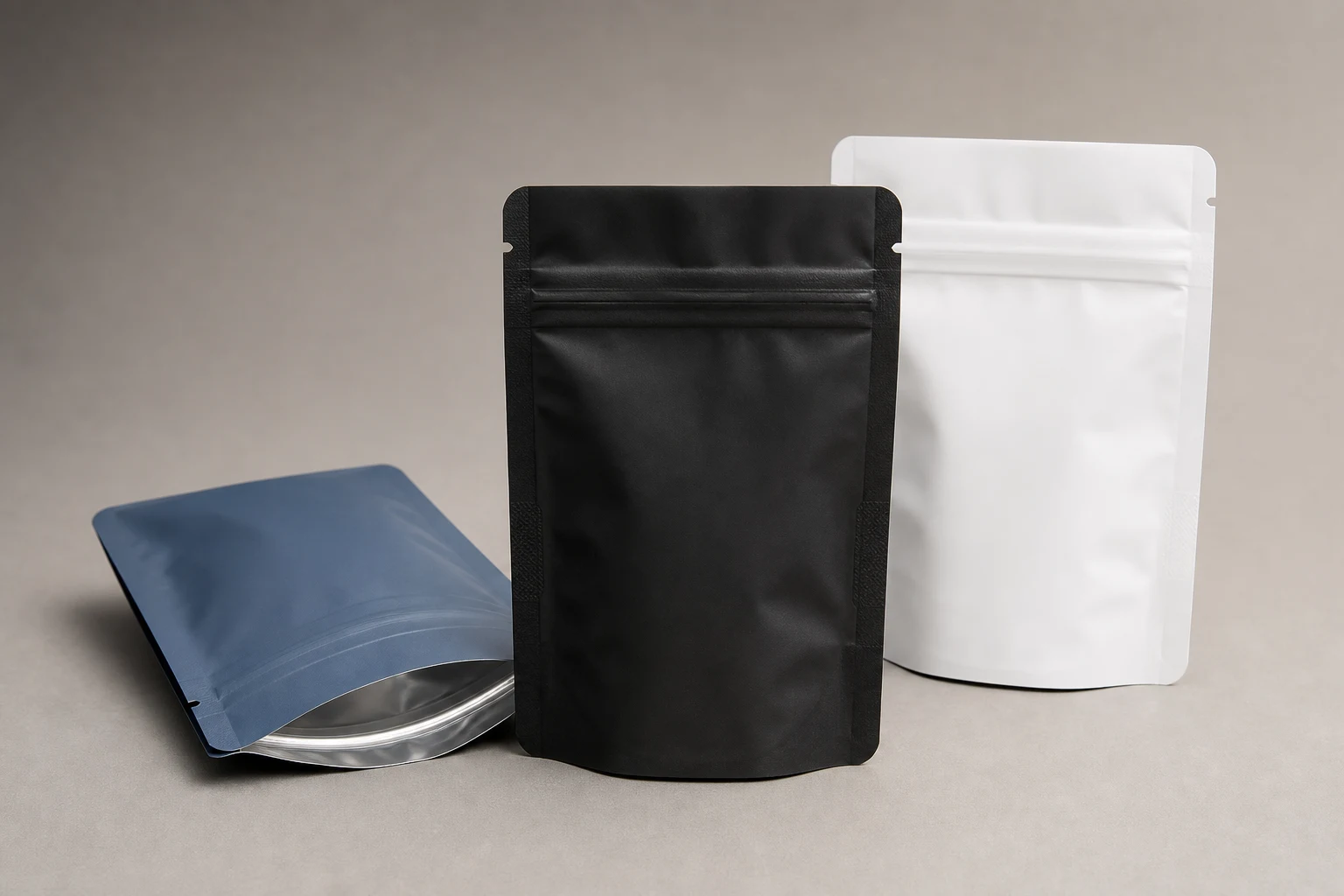
A child-resistant closure is not a universal certification for every finished pouch. Buyers must confirm the target market, product, closure design, pouch dimensions, material, fill and evidence that applies to the final configuration. We separate a supplier capability statement from a legal or certification claim.
“Mylar” is a market term often used for barrier pouches. The actual structure may use PET, metallized PET, aluminum foil, PE or other layers. The closure and the laminate must be specified independently.
What Evidence Should a Buyer Request?
Request the exact test or certificate, issuing body, tested closure, pouch size, material, product or fill condition, market and validity. Compare the tested sample with the production specification. A report for one closure or pouch size does not automatically cover a different film, zipper, laser score or finished dimension.
The brand or responsible importer should obtain market-specific regulatory advice. We provide construction and available evidence for review; we do not replace the buyer's legal determination.
Which Changes Can Affect the Finished Package?
| Change | Why it matters | Approval action |
|---|---|---|
| Pouch width or film stiffness | Changes grip, opening force and deformation | Compare with the tested configuration |
| Closure or score | Changes the opening sequence | Reconfirm evidence and finished-pack behavior |
| Fill product or headspace | Changes leverage and how the pouch is held | Use representative filled samples |
| Artwork or instructions | Can help or confuse adult operation | Run usability review |
How Do We Balance Child Resistance and Adult Use?
A difficult closure can also frustrate intended adult users. Review opening instructions, grip area, pouch stiffness, hand strength, reseal behavior and repeated use. The result must still protect the product after opening when repeated closure is part of the design.
Use clear on-pack instructions that match the actual opening sequence. Do not let artwork cover grip or directional cues.
Which Production Controls Matter?
- Incoming closure and film identification.
- Dimension, zipper position, seal width and opening feature checks.
- Seal strength, leak, puncture and closure-cycle checks.
- Change control for resin, film, zipper, supplier or equipment settings.
- Retention of an approved physical reference and batch records.
The child-resistant bag guide provides a longer buyer checklist.
What Should I Send Before Requesting a Quote?
Send the target market, intended general product category, fill weight, pouch size, material or barrier need, closure direction, quantity per design, artwork, distribution and the evidence your compliance adviser expects. We will identify what is known, what is available and what still requires third-party validation.
Which Applications and Buying Situations Fit This Page?
“Mylar” is a market term and “child resistant” is a performance claim. Neither phrase is a complete specification. The buyer must define the actual laminate, closure system, intended contents, package size, use conditions, destination market and evidence required for the finished package.
Buyers looking for child resistant Mylar bags and child resistant stand up pouches can reach this guide through related searches such as the terms below. We use them as different entry points into one specification process rather than forcing one generic recommendation onto every search.
- child resistant Mylar bags
- child resistant stand up pouches
- certified child resistant zipper pouch
- custom CR packaging
| Application or decision | Practical starting direction | Reason to evaluate it |
|---|---|---|
| Regulated or controlled consumer product | Purpose-designed child-resistant closure and pouch construction | Keeps opening performance and evidence in the core specification |
| Odor-sensitive dry contents | Reviewed barrier structure plus qualified child-resistant zipper | Treats odor control and opening resistance as separate requirements |
| Powders or small pieces | Stand-up pouch with controlled fill area and closure clearance | Reduces contamination that could affect sealing or closure operation |
| Ecommerce shipment | Tamper feature, CR closure and distribution-tested outer pack | Addresses damage and accidental opening before consumer use |
| Multi-use household pack | Reclosable CR system with instructions and repeat-use review | Considers how the closure performs after the first opening |
For child resistant Mylar bags and child resistant stand up pouches, the table is a screening tool, not a material prescription. Product formulation, contact requirements, shelf life, filling equipment, destination rules and distribution can change the direction. The next step is to turn the promising route into a measurable sample and approval plan.
How Do Buyers Turn the Idea Into a Controlled Specification?
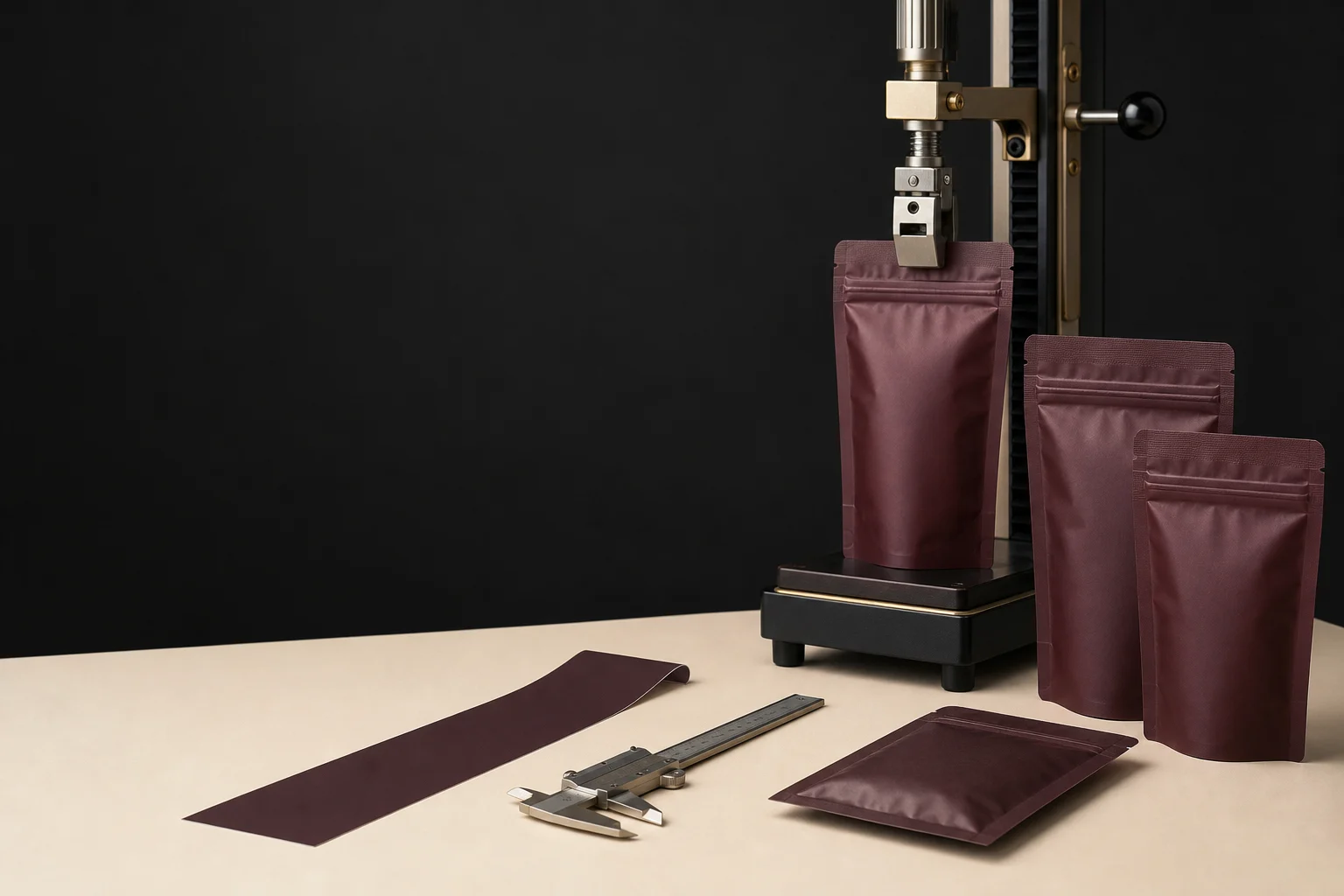
For child resistant Mylar bags and child resistant stand up pouches, a useful specification records decisions at the finished-pouch level. Marketing names can help teams communicate, but production needs measurable dimensions, an identified construction, feature positions, tolerances, an artwork version and acceptance criteria. Every alternative should be labeled clearly so a commercial comparison does not hide a technical change.
| Control point | Input needed | Approval record |
|---|---|---|
| Market and rule | Destination, product category, pack type and responsible-party interpretation | Required protocol, scope and current evidence are identified before artwork |
| Closure identity | Supplier, design, orientation and operating instructions | Closure is locked to the approved finished-pouch specification |
| Laminate | Actual layer sequence, thickness, sealant and barrier need | “Mylar” is replaced by a controlled material description |
| Opening performance | First opening, reclosing, user instructions and filled condition | Testing scope reflects the marketed configuration |
| Change control | Film, zipper, dimensions, score, notch, seal and process | Any relevant change triggers review before repeat production |
For child resistant Mylar bags and child resistant stand up pouches, start with the real product and its worst credible condition. That may be the sharpest piece, highest oil content, least dense recipe, hottest fill, longest distribution route or most demanding SKU. State which condition was used. Without that note, a sample can pass while the production range remains undefined.
In a child resistant Mylar bags and child resistant stand up pouches specification, dimensions should use a consistent measurement method and identify whether the value is inside or outside, finished or pre-conversion. Feature coordinates should reference a controlled dieline. Material descriptions should identify the full structure or the required performance basis, while test values should include units and conditions. The goal is not paperwork for its own sake; it is a repeatable reference for quotation, sampling, production and reorders.
What Can Fail, and How Should It Be Checked?
child resistant Mylar bags and child resistant stand up pouches development asks what can fail first and what evidence would reveal it before a commercial shipment. Visual inspection is necessary, but it cannot establish barrier, seal robustness, compatibility, closure performance or distribution durability. The checks below connect common failure modes to practical controls.
| Failure mode | Why it happens | Control or evidence |
|---|---|---|
| A component certificate is mistaken for package approval | Evidence does not cover the final converted and filled configuration | Confirm the tested article, protocol, laboratory, size and closure match |
| The closure is bypassed after first use | Reclosing instructions or repeated operation were not considered | Evaluate marketed use and instruction clarity |
| Tear features defeat the CR design | Notch, score or top removal changes access | Review every opening path on the final dieline and sample |
| Artwork implies unsupported certification | Logo or wording exceeds available evidence | Complete evidence review before claim placement |
| Repeat production drifts from the tested design | Material, dimensions or sealing process changed | Use controlled specifications and reopen validation after change |
For child resistant Mylar bags and child resistant stand up pouches, an acceptance plan should name the sample stage, test owner, method or working instruction, sample count where appropriate, condition and decision rule. The scope can be simple for a low-risk launch, but it should never be invisible. If the brand is responsible for shelf-life validation or regulatory interpretation, that responsibility should be stated rather than implied to sit with a film or pouch supplier.
When a child resistant Mylar bags and child resistant stand up pouches trial fails, preserve the failed sample and record the lot, settings and observed location. A leak at a zipper end, bottom corner or fitment area tells a different story from random film puncture. Correct the cause, create a new controlled sample and repeat the relevant check instead of accepting an undocumented adjustment.
What Is the Sample-to-Production Workflow?
1. Define the question before ordering a sample
For child resistant Mylar bags and child resistant stand up pouches, a stock sample can demonstrate general film feel, finish and feature operation. A blank size sample can confirm volume, headspace, filling access, standing and case fit. A digital artwork proof can confirm copy, dieline version and placement. A printed prototype can support a color and presentation decision. A production proof can become a physical reference. None of these automatically replaces compatibility, distribution or shelf-life work.
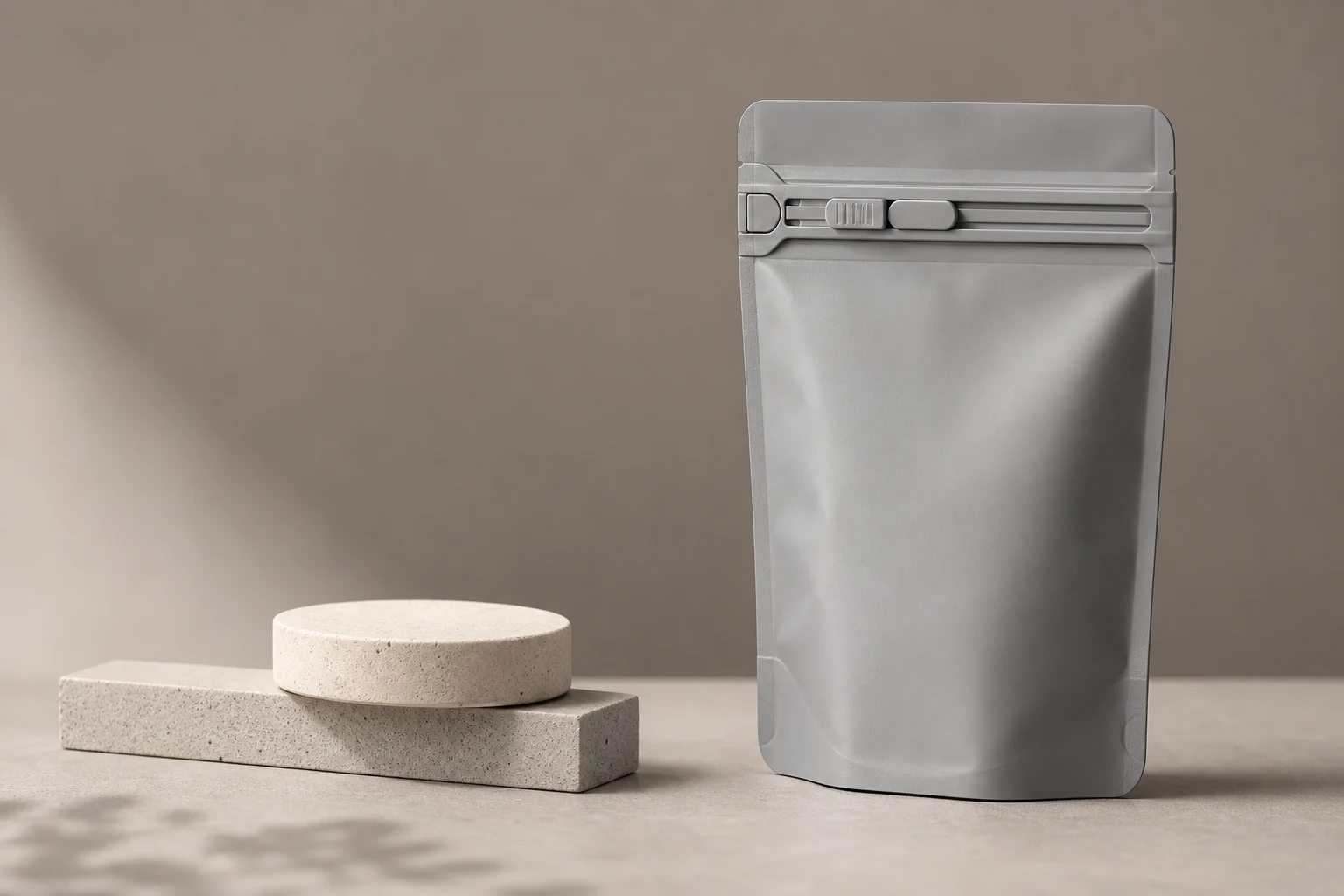
Samples for child-resistant stand-up pouches should represent the finished dimensions, material, closure, tear path and relevant instructions. A generic stock sample can demonstrate the operating concept, but it cannot prove that a different size or construction has the same status. The approval record should identify exactly what the available evidence covers.
2. Trial the real filling and sealing process
The filling process must preserve the closure and final top seal. Record whether the pouch arrives open, how operators avoid product in the zipper, the seal location, any top portion removed by the consumer and the instructions printed near the opening. Distribution damage can also create an unintended access path, so the outer packing plan matters.
For child resistant Mylar bags and child resistant stand up pouches, use enough samples to see variation rather than judging one ideal pouch. Observe opening, filling, trapped product, web or pouch handling, seal appearance, cooling, coding and operator adjustments. Record the settings and keep representative filled packs. If production will run at more than one site or on several lines, identify which setup the approval covers.
3. Freeze the approved record
For child resistant Mylar bags and child resistant stand up pouches, the approval pack should include the quotation revision, signed specification, dieline, artwork version, material description, color reference, feature details, agreed tolerances, sample or proof reference, test records, carton requirements and shipping marks. Connect it to the purchase order and SKU. A supplier change, resin or film change, feature substitution, thickness change, new artwork or different filling condition should trigger a documented review.
4. Verify the first production and repeat orders
For child resistant Mylar bags and child resistant stand up pouches, first production should be checked against the approved record, not against memory or a sales image. Review critical dimensions, print content, feature placement, seals, appearance, packing and agreed functional evidence. For repeats, compare the new order with the controlled reference and record requested changes before production. This is how a successful trial becomes a stable packaging program.
How Should Performance, Compliance and Sustainability Claims Be Handled?
Avoid broad phrases such as “certified packaging” without naming the tested configuration and applicable scope. Unique Packaging does not decide the brand’s legal obligations. The responsible party should obtain current market-specific advice and confirm that evidence, labeling and use conditions support the final claim.
For child resistant Mylar bags and child resistant stand up pouches, separate supplier documentation from the brand’s final claim decision. A material declaration, component report or laboratory result can be useful evidence, but its scope must match the exact structure, test article, method, date and market. Do not extend a result from one film, size or component to a materially different finished pouch without review.
For child resistant Mylar bags and child resistant stand up pouches, artwork approval should include a claim checkpoint before printing. Keep claim wording, supporting documents and the approved structure in the same change-control record. If a film, closure, valve, spout, coating, adhesive, ink, dimension or opening path changes, ask whether the evidence and artwork remain valid.
What Belongs in the RFQ and Final Approval Checklist?
For child resistant Mylar bags and child resistant stand up pouches, a complete RFQ makes the quotation faster and more comparable. If a value is unknown, mark it as open rather than allowing an assumption to become an invisible requirement.
- Product name, formulation concerns, contact condition and worst-case SKU.
- Target fill weight or volume, product density, headspace and planned pouch format.
- Finished dimensions, gusset, opening method, closure and other functional features.
- Shelf-life target, storage, filling temperature, sealing process and distribution route.
- Material benchmark or performance needs, including relevant test units and conditions.
- Quantity per design, number of designs, annual forecast and expected reorder pattern.
- Artwork status, print route, color reference, finish, coding area and barcode needs.
- Sample and proof sequence, validation responsibilities and acceptance records.
- Carton, pallet, shipping marks, destination, Incoterm and requested delivery window.
- Destination-market claim language and supporting documentation required before print.
For child resistant Mylar bags and child resistant stand up pouches, before final approval, confirm that the quotation, specification, dieline, artwork and physical sample describe the same pouch. Resolve every “or equivalent,” provisional dimension and unapproved substitute. The resulting record should let purchasing, quality, production and the supplier reach the same conclusion without reconstructing the project from email history.
For child resistant Mylar bags and child resistant stand up pouches, place every supplier response in the same table and flag deviations instead of averaging them away. One supplier may propose a different sealant, thickness, zipper, proof route, inspection plan or delivery term. That may be a useful alternative, but it is not the same offer until the technical and commercial effects are reviewed. Keep one-time costs separate from repeat-order costs, and distinguish production time from approval, transit and customs time.
For child resistant Mylar bags and child resistant stand up pouches, assign an owner for each open item and a date by which it must be closed. Purchasing should know the approved commercial scope; quality should know the evidence and acceptance criteria; production should know filling and sealing assumptions; brand teams should know the current dieline and claim boundaries. A short, controlled record prevents later decisions from depending on who remembers the project. It also makes future value engineering safer because the team can compare a proposed change against a known baseline rather than against an undefined “same as last time” request.
Frequently Asked Questions
Does a child-resistant zipper make every pouch certified?
No. Evidence applies to a tested configuration and scope. The final pouch, product and market must be checked against that scope.
Are metallized film and aluminum foil the same?
No. They can look similar but use different constructions and may provide different barrier and converting behavior.
Can the pouch still be easy for adults to open?
That is an important design and usability requirement. Opening instructions, grip, stiffness and repeated closure should be reviewed with intended users.
Can you guarantee compliance in every market?
No. We can provide construction details and available evidence; the responsible brand or importer must confirm market-specific requirements.
What makes a Mylar-style bag child resistant?
A purpose-designed package and closure must meet the applicable performance and evidence requirements for the marketed configuration. Film appearance alone does not make a pouch child resistant.
Is a child-resistant zipper component certificate enough?
Not necessarily. Confirm whether the evidence applies to the final pouch size, material, closure installation, opening path and intended use.
Can I add a tear notch to a child-resistant pouch?
Only after reviewing whether it creates an unintended opening path or changes the tested configuration. Opening features must be considered as one system.
Can child-resistant pouches be resealable?
Some systems are designed for repeated closing. The operating instructions, user behavior and relevant performance scope should match the final marketed pack.