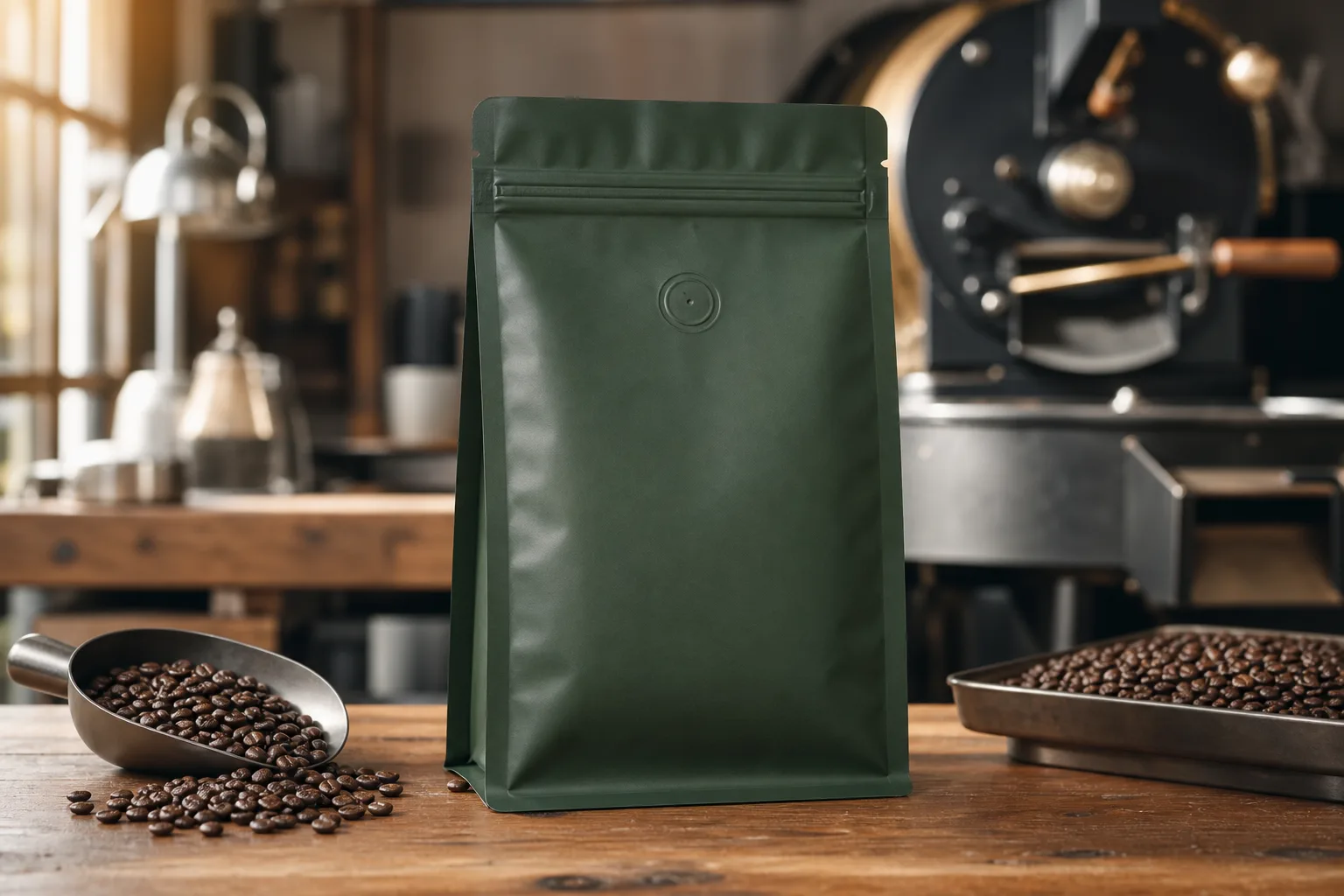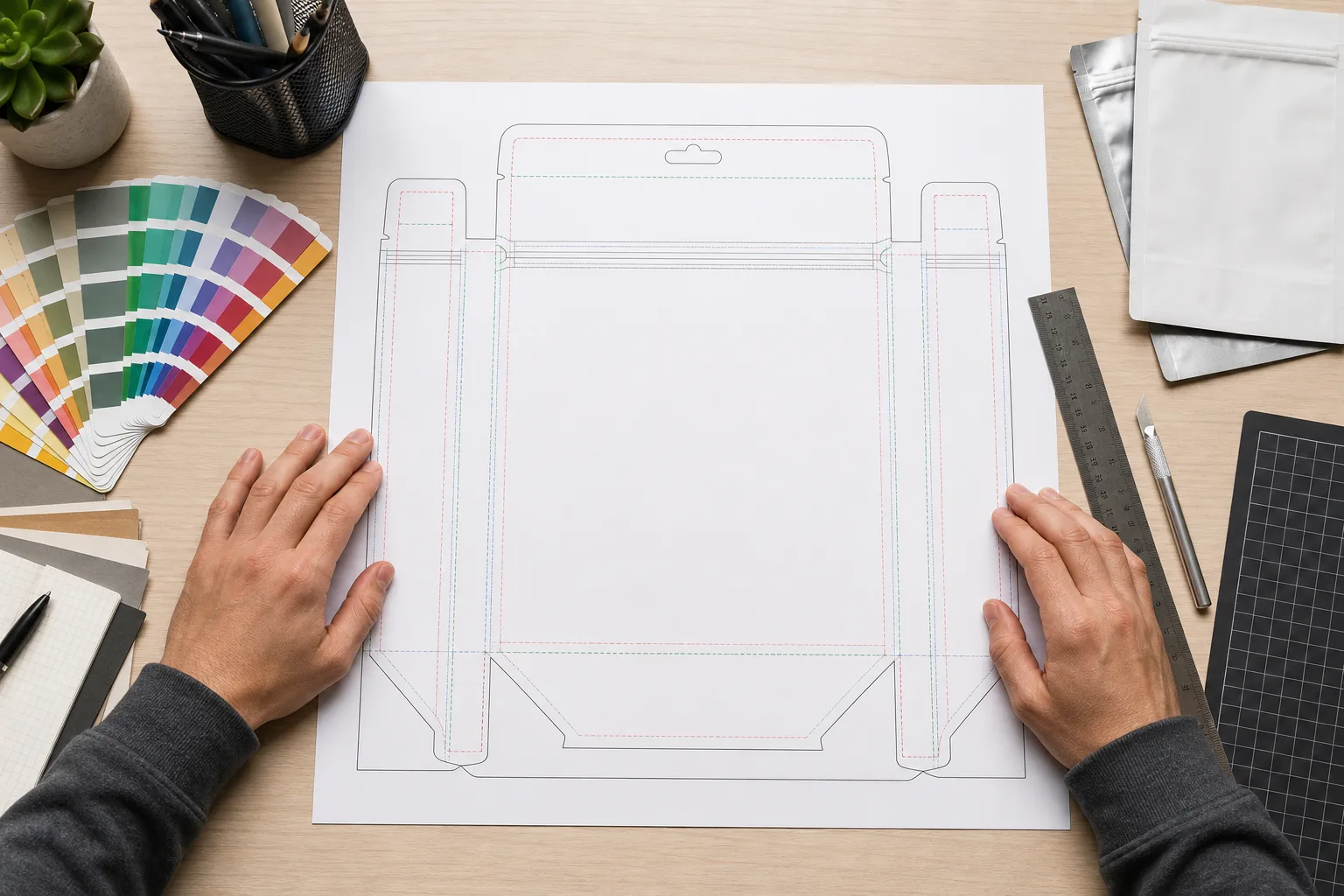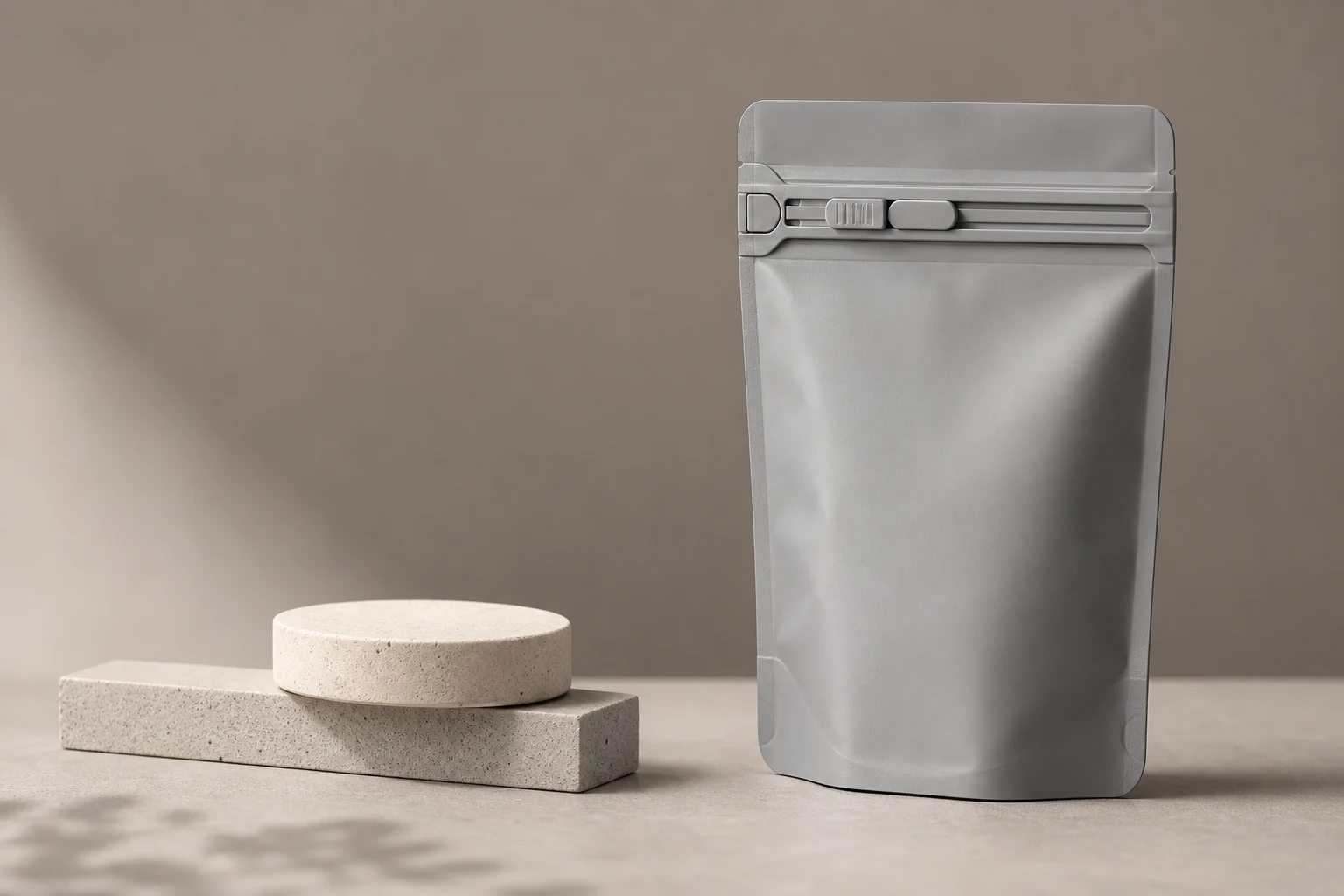
A pouch can look secure while the closure is unverified, hard for adults to use, wrong for the product, or changed after the evidence was created.
I choose a child-resistant Mylar-style bag by confirming the applicable product and market requirements, reviewing closure evidence for the finished configuration, testing adult use, and controlling every approved change.
I treat the pouch as a complete system. I confirm the product, material, filling, handling, and customer experience before I approve production.
When Does a Child-Resistant Bag Need a Formal Review?
Calling a zipper child-resistant does not establish that a particular product, bag size, fill, or market has the evidence it needs.
I begin with the contained product, destination market, applicable rules, closure type, pouch size, fill configuration, and required evidence before I make any child-resistant packaging claim.
I do not choose the closure from a catalogue image. I identify the product category, market, foreseeable user, and package configuration first. I ask what regulation, customer requirement, or risk policy applies and who owns the compliance decision. I then request evidence that identifies the actual closure and relevant package configuration. A material name such as Mylar is not a performance specification; the exact laminate, pouch geometry, closure, opening instruction, and fill all matter.
How I make this decision specific
For “When Does a Child-Resistant Bag Need a Formal Review?” in this how do i choose a child-resistant mylar bag review, I define the actual product, pouch configuration, intended use, and decision owner before I ask a supplier or tester for evidence. I keep the selected structure, component details, sample condition, and any stated test method together, then compare the result with the buyer’s actual route rather than a catalogue promise. That record lets me use the custom printed Mylar-style bags page as a decision aid and retain a specification that another team member can check.
For How Do I Choose a Child-Resistant Mylar Bag, I state what is known, the condition it applies to, and what must still be checked with the actual product. I do not transfer a number, a test result, or a feature choice from another product simply because its pouch looks similar. The result of “When Does a Child-Resistant Bag Need a Formal Review?” should give the buyer a clear next check, the supplier a precise request, and the project owner a record of the remaining uncertainty.
For How Do I Choose a Child-Resistant Mylar Bag, I request the exact pouch structure, component specification, and test conditions from the supplier. A broad material name or catalogue claim is not a production specification. The right next step is a representative filled sample, where relevant, with observations recorded before production is approved.
Which Closure and Pouch Features Should I Compare?
A child-resistant closure changes opening force, usable pouch height, filling access, graphics, and repeat use, so it cannot be added as a late artwork detail.
I compare the verified closure mechanism, adult opening experience, pouch dimensions, seal zones, headspace, product residue risk, barrier need, tear feature, instructions, and repeat-use behavior as one system.
I inspect how the user finds and operates the opening motion. I check whether the closure has enough pouch height above and below it for a reliable top seal and clear instructions. I also consider whether powder, granules, oil, or a filled product can interfere with repeat closure. A window, zipper, or laser score can change the available geometry. I ask for samples and evaluate the finished package rather than assuming a familiar closure will behave the same in another size or material.
How I make this decision specific
For “Which Closure and Pouch Features Should I Compare?” in this how do i choose a child-resistant mylar bag review, I define the actual product, pouch configuration, intended use, and decision owner before I ask a supplier or tester for evidence. I keep the selected structure, component details, sample condition, and any stated test method together, then compare the result with the buyer’s actual route rather than a catalogue promise. That record lets me use the custom printed Mylar-style bags page as a decision aid and retain a specification that another team member can check.
For How Do I Choose a Child-Resistant Mylar Bag, I state what is known, the condition it applies to, and what must still be checked with the actual product. I do not transfer a number, a test result, or a feature choice from another product simply because its pouch looks similar. The result of “Which Closure and Pouch Features Should I Compare?” should give the buyer a clear next check, the supplier a precise request, and the project owner a record of the remaining uncertainty.
How Do I Validate and Control the Final Bag?
A passed test loses value if the material, closure, print, fill, or instructions change later without checking whether the evidence still applies.
I retain the approved package evidence, inspect filled production-style samples, document adult-use and handling observations, lock the exact configuration, and review every material, closure, size, artwork, or filling change.
I keep the configuration traceable: supplier, closure model, pouch dimensions, laminate, thickness, color, opening instructions, fill condition, and test record. I also verify practical quality points such as seal integrity, closure alignment, opening instruction placement, pouch standing, carton protection, and sample traceability. If a supplier substitutes a component or a brand changes the pouch size, I pause before assuming a prior result transfers. The evidence must match the package that will reach the user.
How I make this decision specific
For “How Do I Validate and Control the Final Bag?” in this how do i choose a child-resistant mylar bag review, I define the actual product, pouch configuration, intended use, and decision owner before I ask a supplier or tester for evidence. I keep the selected structure, component details, sample condition, and any stated test method together, then compare the result with the buyer’s actual route rather than a catalogue promise. That record lets me use the custom printed Mylar-style bags page as a decision aid and retain a specification that another team member can check.
For How Do I Choose a Child-Resistant Mylar Bag, I state what is known, the condition it applies to, and what must still be checked with the actual product. I do not transfer a number, a test result, or a feature choice from another product simply because its pouch looks similar. The result of “How Do I Validate and Control the Final Bag?” should give the buyer a clear next check, the supplier a precise request, and the project owner a record of the remaining uncertainty.
For How Do I Choose a Child-Resistant Mylar Bag, I treat the filled pack as a separate check from the material data. I record the fill condition, seal area, opening or closure behavior, carton arrangement, handling observations, and limits of the comparison. That prevents a favourable bench result from becoming an unsupported claim about shelf life, transport, or every product route.
Conclusion
I choose packaging through evidence, filled-pack testing, and clear specifications. That process protects the product, the launch, and the customer experience.
Sources and Further Reading
- CPSC, Special Packaging and PPPA FAQs.
- Reddit r/PackagingDesign, stand-up pouch community discussion.
- Electronic Code of Federal Regulations, 16 CFR 1700.20 special-packaging testing procedure.
- ASTM D3475, classification of child-resistant packages.
- EPA, child-resistant packaging for pesticides.
- Unique Packaging custom Mylar-style bags.
- Unique Packaging quality control.
Need a pouch specification?
I can review your product, size, quantity, artwork, and target market.