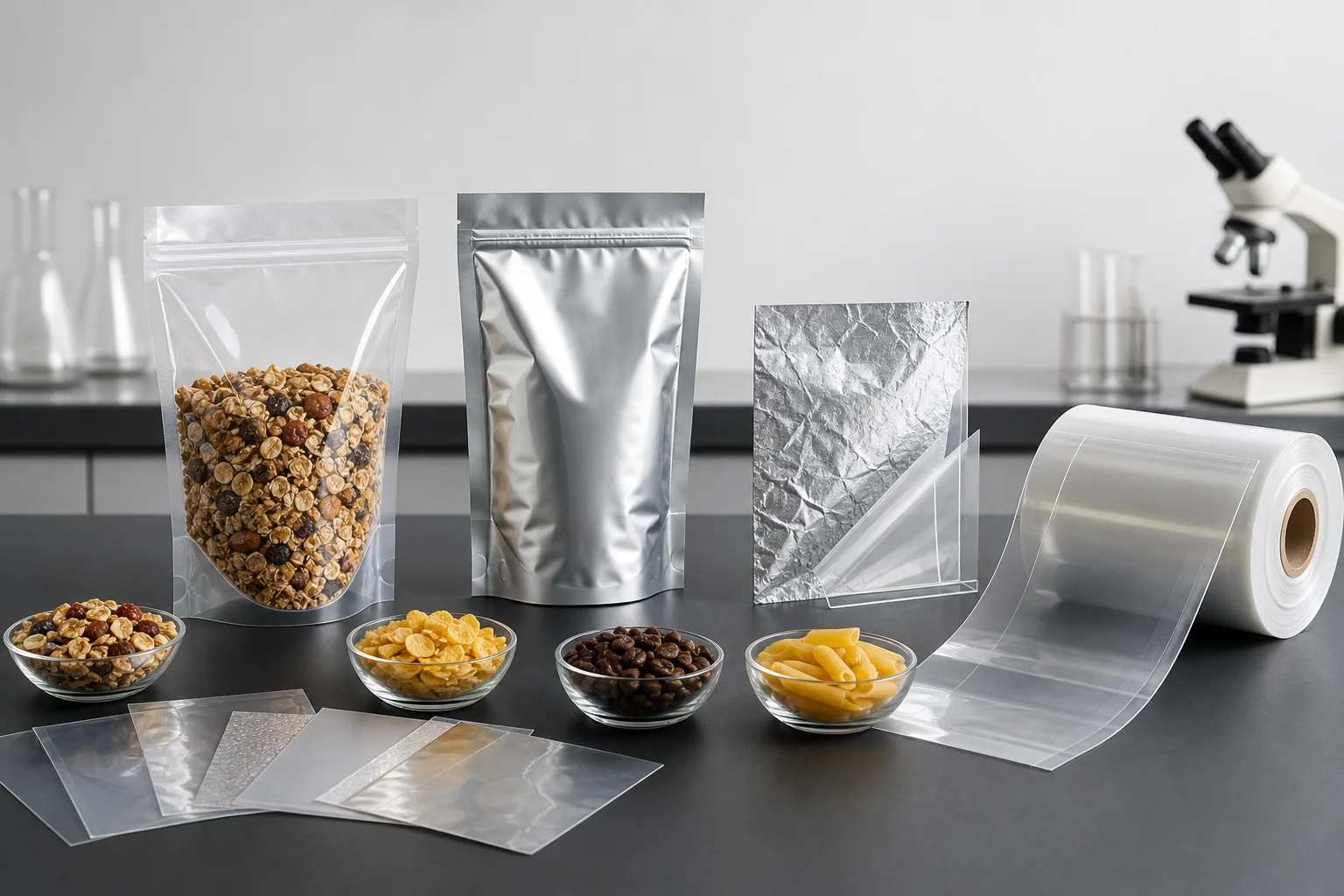
Reducing pouch gauge can cut material use, but an unmeasured barrier or seal change can move risk straight into shelf life and distribution.
I downgrade a pouch only after I compare a defined baseline with the proposed structure under named barrier, seal, filled-pack, distribution, and product-quality conditions.
I treat the pouch as a complete system. I confirm the product, material, filling, handling, and customer experience before I approve production.
What Is the Real Baseline for a Downgauging Decision?
A gauge reduction cannot be evaluated when the original construction, product, and use conditions have never been recorded clearly.
I define the current pouch and proposed alternative by layer structure, gauge, dimensions, sealant, components, product, fill, storage, carton, and acceptance criteria before comparing them.
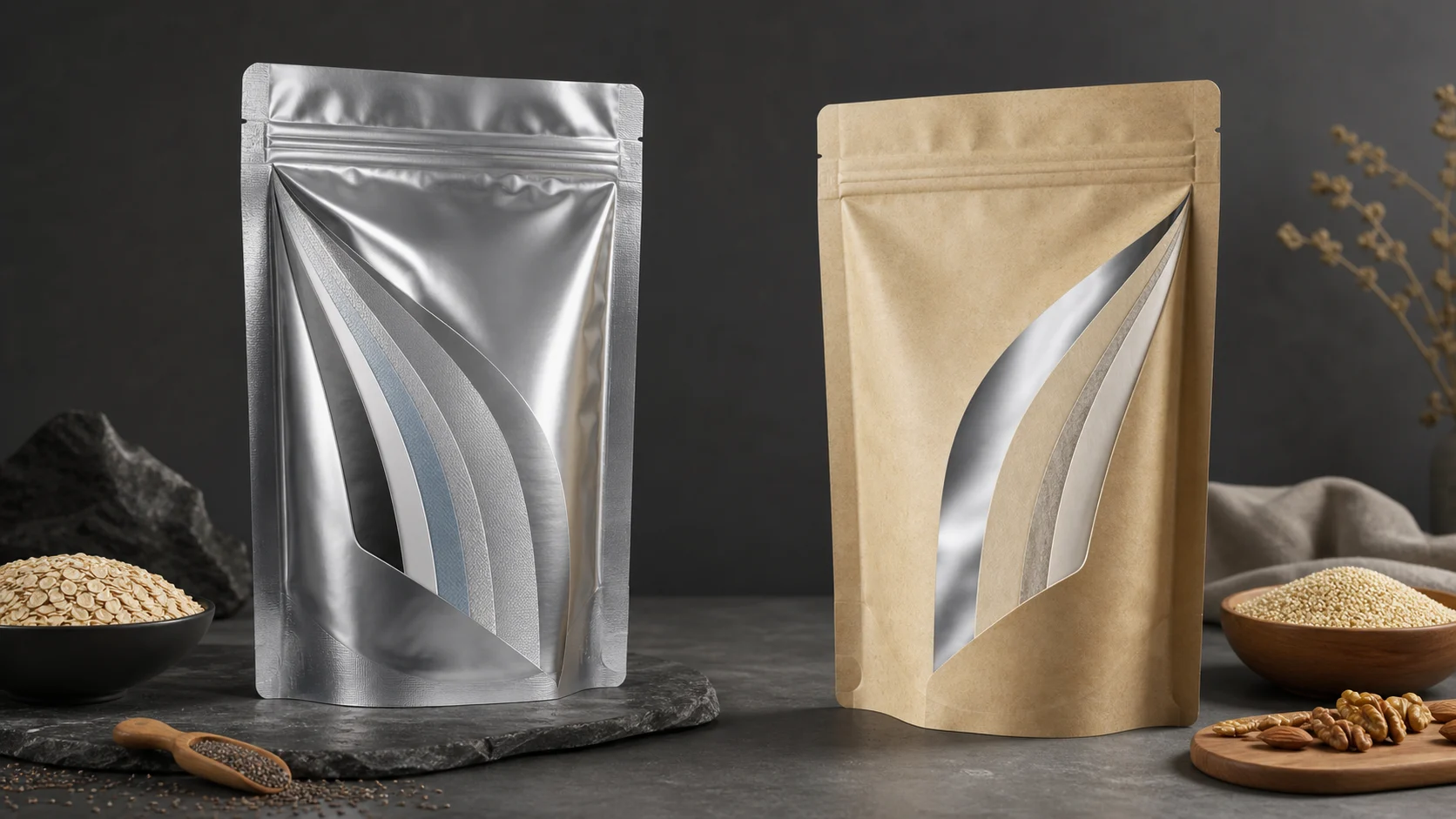
I begin with the existing commercial configuration. I request the full laminate description, not simply a total thickness: outside web, print or coating, adhesive, barrier layer, tie layer, sealant, zipper, valve, and any paper or metallized component. I record width, height, gusset, filled weight, headspace, storage, shipping route, and the product change that matters. Then I name the intended reduction and the comparison basis. The FTC advises that source-reduction claims should clearly and prominently identify the amount and basis of comparison, so I do not call a pouch “less waste” without a defined baseline.3 I treat gauge as one design input, not a performance guarantee.
How I make this decision specific
| Comparison item | Why I lock it | Failure if omitted |
|---|---|---|
| Layer-by-layer structure | Barrier and sealing may move with construction. | Same gauge, different protection. |
| Product and fill | Real load and headspace affect seals and flexing. | Empty-pouch false pass. |
| Test conditions | Transmission data depend on stated conditions. | Unusable material comparison. |
| Carton and route | Mechanical damage often appears after packing. | Late distribution failure. |
For “What Is the Real Baseline for a Downgauging Decision?” in this can i downgauge a pouch without shortening shelf life review, I define the actual product, pouch configuration, intended use, and decision owner before I ask a supplier or tester for evidence. I keep the selected structure, component details, sample condition, and any stated test method together, then compare the result with the buyer’s actual route rather than a catalogue promise. That record lets me use the food barrier-film guide as a decision aid and retain a specification that another team member can check.
For Can I Downgauge a Pouch Without Shortening Shelf Life, I state what is known, the condition it applies to, and what must still be checked with the actual product. I do not transfer a number, a test result, or a feature choice from another product simply because its pouch looks similar. The result of “What Is the Real Baseline for a Downgauging Decision?” should give the buyer a clear next check, the supplier a precise request, and the project owner a record of the remaining uncertainty.
For Can I Downgauge a Pouch Without Shortening Shelf Life, I request the exact pouch structure, component specification, and test conditions from the supplier. A broad material name or catalogue claim is not a production specification. The right next step is a representative filled sample, where relevant, with observations recorded before production is approved.
Which Barrier Tests Should I Request?
A barrier number is easy to misuse when the method, temperature, humidity, specimen, and intended product risk are not named.
I request oxygen and water-vapor transmission data with the exact method and conditions, then use the results to select filled-pack comparisons instead of claiming shelf life from film data alone.
For oxygen-sensitive products, I ask whether an oxygen-transmission comparison is appropriate and request the method, specimen, temperature, humidity, direction, and units. ASTM D3985 is the standard test method for oxygen gas transmission through plastic film and sheeting using a coulometric sensor.1 For moisture-sensitive products, ASTM F1249 covers water-vapor transmission through plastic film and sheeting and notes that its data are suitable as a referee method when purchaser and seller agree on sampling, standardization, conditions, and acceptance criteria.2 I tie these data to the barrier-film guide, but I do not imply that a lower transmission value automatically proves a specified shelf life. A pouch is a sealed package with product, seals, folds, and handling history.
How I make this decision specific
For “Which Barrier Tests Should I Request?” in this can i downgauge a pouch without shortening shelf life review, I define the actual product, pouch configuration, intended use, and decision owner before I ask a supplier or tester for evidence. I keep the selected structure, component details, sample condition, and any stated test method together, then compare the result with the buyer’s actual route rather than a catalogue promise. That record gives the buyer a decision aid and a specification that another team member can check.
For Can I Downgauge a Pouch Without Shortening Shelf Life, I state what is known, the condition it applies to, and what must still be checked with the actual product. I do not transfer a number, a test result, or a feature choice from another product simply because its pouch looks similar. The result of “Which Barrier Tests Should I Request?” should give the buyer a clear next check, the supplier a precise request, and the project owner a record of the remaining uncertainty.
How Do I Check Mechanical and Seal Risks?
A lighter structure can pass a flat-film test while its corners, gussets, seals, or carton interface fail after real filling and transit.
I run filled candidate pouches through sealing, settling, carton packing, handling, drops, compression, opening, and inspection before I approve a downgauged structure.
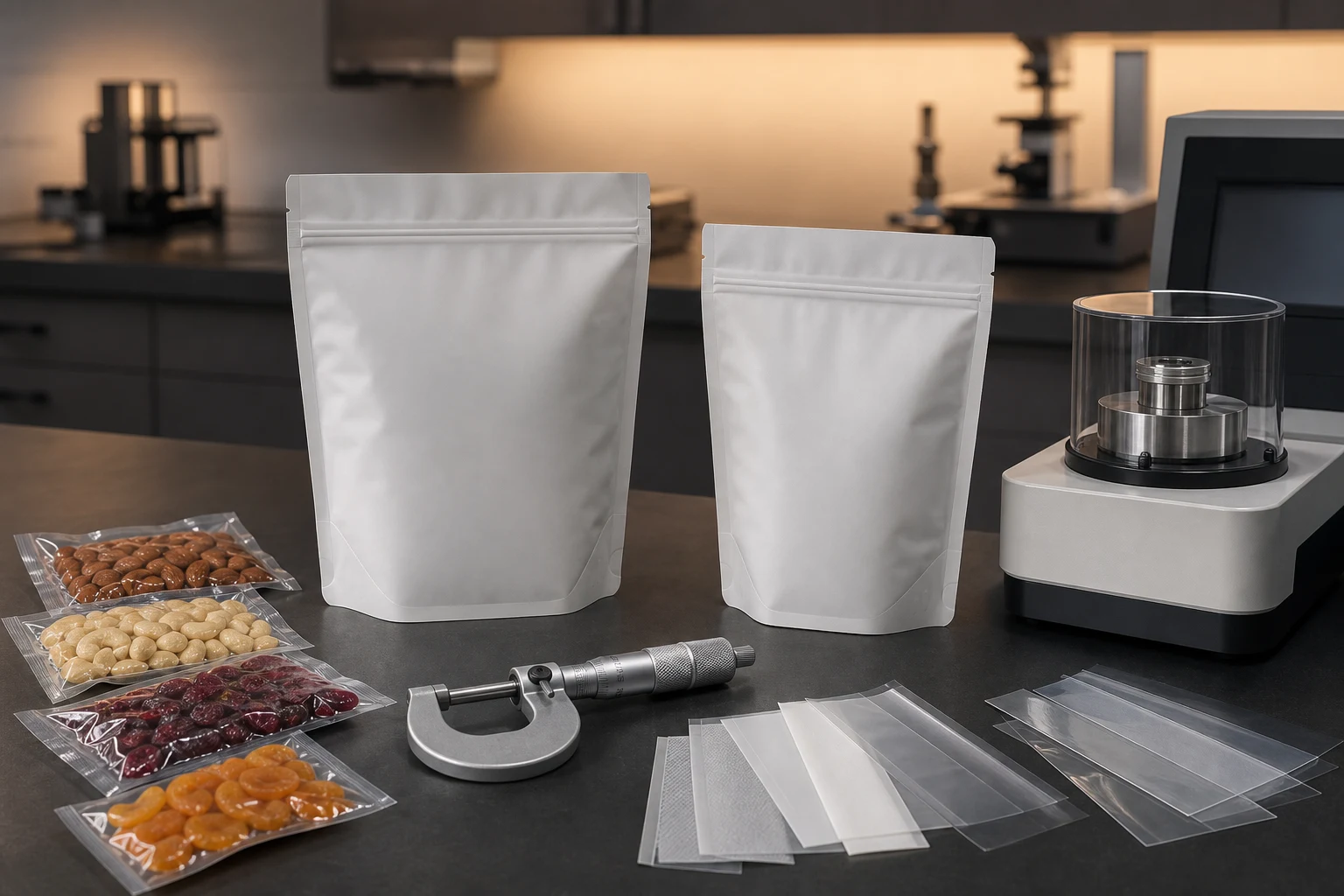
I use representative product at the intended fill and the intended pouch geometry. I inspect seal width, wrinkles, channel risk, zipper and valve clearance, side-gusset folds, puncture-prone corners, stand-up stability, scuffing, and carton fit. If the product is sharp, oily, frozen, powdered, or oxygen-sensitive, I make that risk explicit instead of using a generic “durable” claim. ASTM F88/F88M provides a seal-strength test method for flexible barrier materials; I use it when the project needs a defined seal comparison.4 I then retain samples after distribution-style handling. The relevant Reddit discussion is useful as a reminder that operators want sustainable formats to preserve freshness, but only a project-specific filled-pack trial can answer whether this candidate does so.5
How I make this decision specific
For “How Do I Check Mechanical and Seal Risks?” in this can i downgauge a pouch without shortening shelf life review, I define the actual product, pouch configuration, intended use, and decision owner before I ask a supplier or tester for evidence. I keep the selected structure, component details, sample condition, and any stated test method together, then compare the result with the buyer’s actual route rather than a catalogue promise. That record gives the buyer a decision aid and a specification that another team member can check.
For Can I Downgauge a Pouch Without Shortening Shelf Life, I state what is known, the condition it applies to, and what must still be checked with the actual product. I do not transfer a number, a test result, or a feature choice from another product simply because its pouch looks similar. The result of “How Do I Check Mechanical and Seal Risks?” should give the buyer a clear next check, the supplier a precise request, and the project owner a record of the remaining uncertainty.
For Can I Downgauge a Pouch Without Shortening Shelf Life, I treat the filled pack as a separate check from the material data. I record the fill condition, seal area, opening or closure behavior, carton arrangement, handling observations, and limits of the comparison. That prevents a favourable bench result from becoming an unsupported claim about shelf life, transport, or every product route.
How Do I Prove Shelf Life Before Release?
A launch decision becomes fragile when a material test is mistaken for a completed shelf-life study or when the final structure is not frozen in writing.
I support release with a product-specific shelf-life plan, retained filled samples, defined storage and quality checks, final specification confirmation, and a re-test rule for meaningful changes.
I set the study around the real product quality attributes: moisture change, oxidation, aroma, texture, appearance, seal integrity, and other product-specific measures. I retain baseline and candidate pouches under defined storage conditions and inspect them at scheduled checkpoints. I keep the final decision narrow: it applies to the exact product, pouch structure, fill, seal process, storage, carton pack, and route studied. I then confirm the written specification with the supplier and request a quote based on that specification. If film layers, gauge, sealant, product, fill, storage, or transport change, I revisit the relevant material assessment or filled-pack trial. That is how I pursue source reduction without quietly moving shelf-life risk downstream.
How I make this decision specific
For “How Do I Prove Shelf Life Before Release?” in this can i downgauge a pouch without shortening shelf life review, I define the actual product, pouch configuration, intended use, and decision owner before I ask a supplier or tester for evidence. I keep the selected structure, component details, sample condition, and any stated test method together, then compare the result with the buyer’s actual route rather than a catalogue promise. That record gives the buyer a decision aid and a specification that another team member can check.
For Can I Downgauge a Pouch Without Shortening Shelf Life, I state what is known, the condition it applies to, and what must still be checked with the actual product. I do not transfer a number, a test result, or a feature choice from another product simply because its pouch looks similar. The result of “How Do I Prove Shelf Life Before Release?” should give the buyer a clear next check, the supplier a precise request, and the project owner a record of the remaining uncertainty.
For Can I Downgauge a Pouch Without Shortening Shelf Life, I preserve the final decision in a written brief that names the approved sample, conditions, observations, open risks, and change triggers. I then use the flexible packaging quality-test guide to keep the quotation tied to the evidence rather than to a remembered sample or a generic product name.
Conclusion
I choose packaging through evidence, filled-pack testing, and clear specifications. That process protects the product, the launch, and the customer experience.
Sources and Further Reading
- ASTM D3985, oxygen transmission rate through plastic film.
- ASTM F1249, water-vapor transmission rate through plastic film.
- FTC, Environmental Claims Summary of the Green Guides.
- ASTM F88/F88M, seal strength of flexible barrier materials.
- Reddit r/roasting, sustainable packaging community discussion.
- Unique Packaging barrier-film guide.
- Unique Packaging quality-test guide.
Need a pouch specification?
I can review your product, size, quantity, artwork, and target market.