A vague sustainability message can send a clean, recyclable pouch to the wrong bin or make a facility-only composting claim look universal.
I print disposal instructions only after I verify the finished components, market, collection route, preparation steps, and any limitations that need clear qualification.
I treat the pouch as a complete system. I confirm the product, material, filling, handling, and customer experience before I approve production.
Which Pouch Components Need Their Own Instructions?
One line of artwork can fail when it treats a pouch, zipper, label, cap, and product residue as if they all have the same destination.
I list every consumer-facing component and write an instruction only after I know whether it stays attached, is removable, and is accepted through the relevant route.
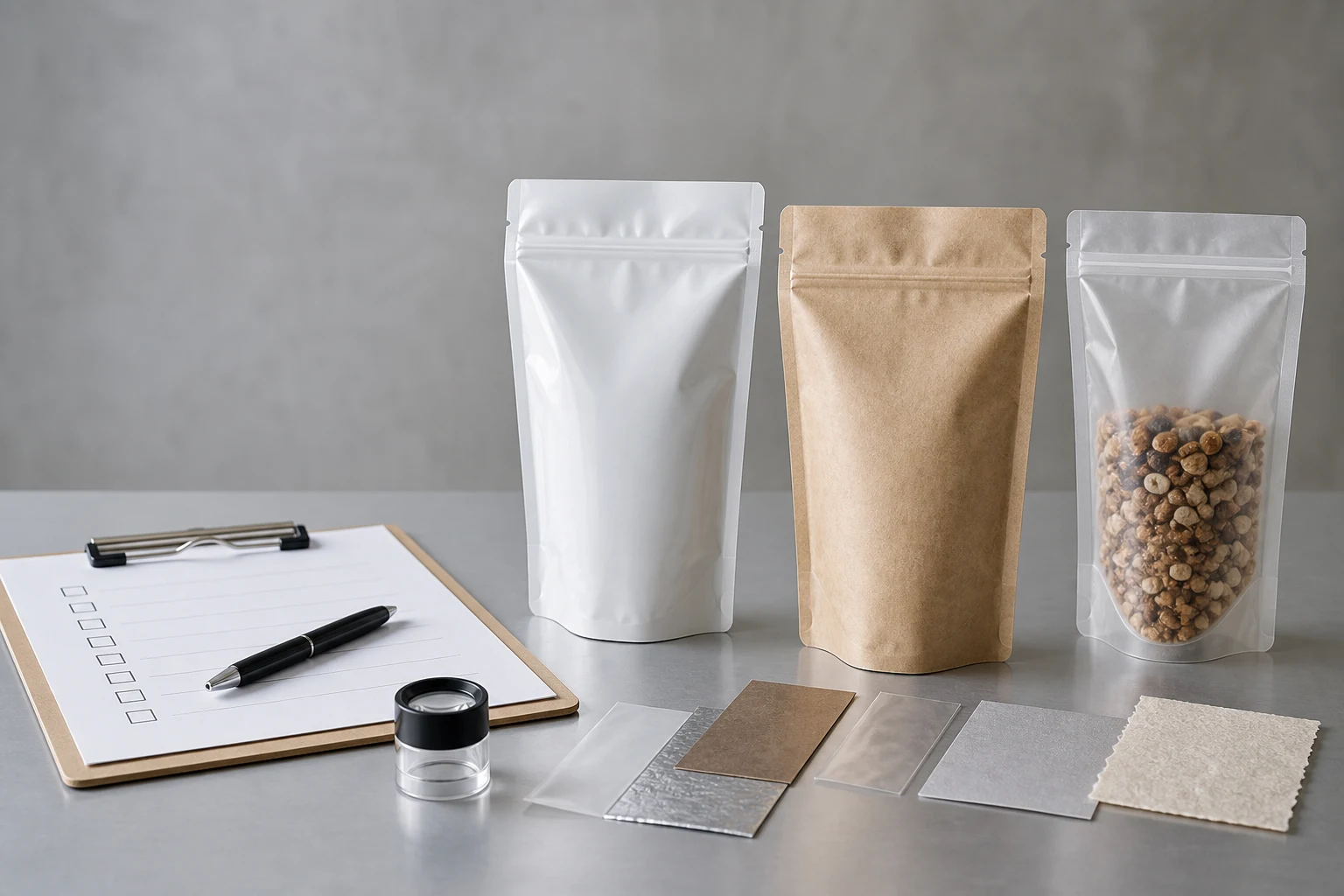
I start with a component map. A stand-up pouch may include the flexible body, zipper, tear strip, spout, cap, valve, pressure-sensitive label, paper sleeve, and product residue. I do not write “recycle pouch” if the user must remove a component, empty the pack, or use a different destination. How2Recycle’s label system identifies the packaging item and material, then pairs them with special preparation instructions and a recyclability designation.1 Its frequently asked questions also state that local guidance should take precedence and that food residue can change whether a technically recyclable material is accepted.3 I put the component review in the specification before artwork begins.
How I make this decision specific
| Component | Decision I need | Artwork consequence |
|---|---|---|
| Pouch body | Relevant collection or composting route. | Primary instruction and geographic qualifier. |
| Cap, spout, valve, zipper | Attached, removable, or separately handled? | Separate component direction if needed. |
| Food residue | Clean-and-dry or empty requirement? | Preparation language where supported. |
| Paper label or sleeve | Does it affect the route? | Removal or component-specific note. |
For “Which Pouch Components Need Their Own Instructions?” in this what disposal instructions should i print on a sustainable pouch review, I define the actual product, pouch configuration, intended use, and decision owner before I ask a supplier or tester for evidence. I keep the selected structure, component details, sample condition, and any stated test method together, then compare the result with the buyer’s actual route rather than a catalogue promise. That record lets me use the mono-PE recyclable packaging guide as a decision aid and retain a specification that another team member can check.
For What Disposal Instructions Should I Print on a Sustainable Pouch, I state what is known, the condition it applies to, and what must still be checked with the actual product. I do not transfer a number, a test result, or a feature choice from another product simply because its pouch looks similar. The result of “Which Pouch Components Need Their Own Instructions?” should give the buyer a clear next check, the supplier a precise request, and the project owner a record of the remaining uncertainty.
For What Disposal Instructions Should I Print on a Sustainable Pouch, I request the exact pouch structure, component specification, and test conditions from the supplier. A broad material name or catalogue claim is not a production specification. The right next step is a representative filled sample, where relevant, with observations recorded before production is approved.
How Should I Write Recycling Instructions Clearly?
A recycling direction is not clear when it omits location, preparation, or the limits of the collection route.
I use a short verb-led instruction that names the component, preparation, and applicable local route, then I place the qualifier beside the claim rather than hiding it elsewhere.
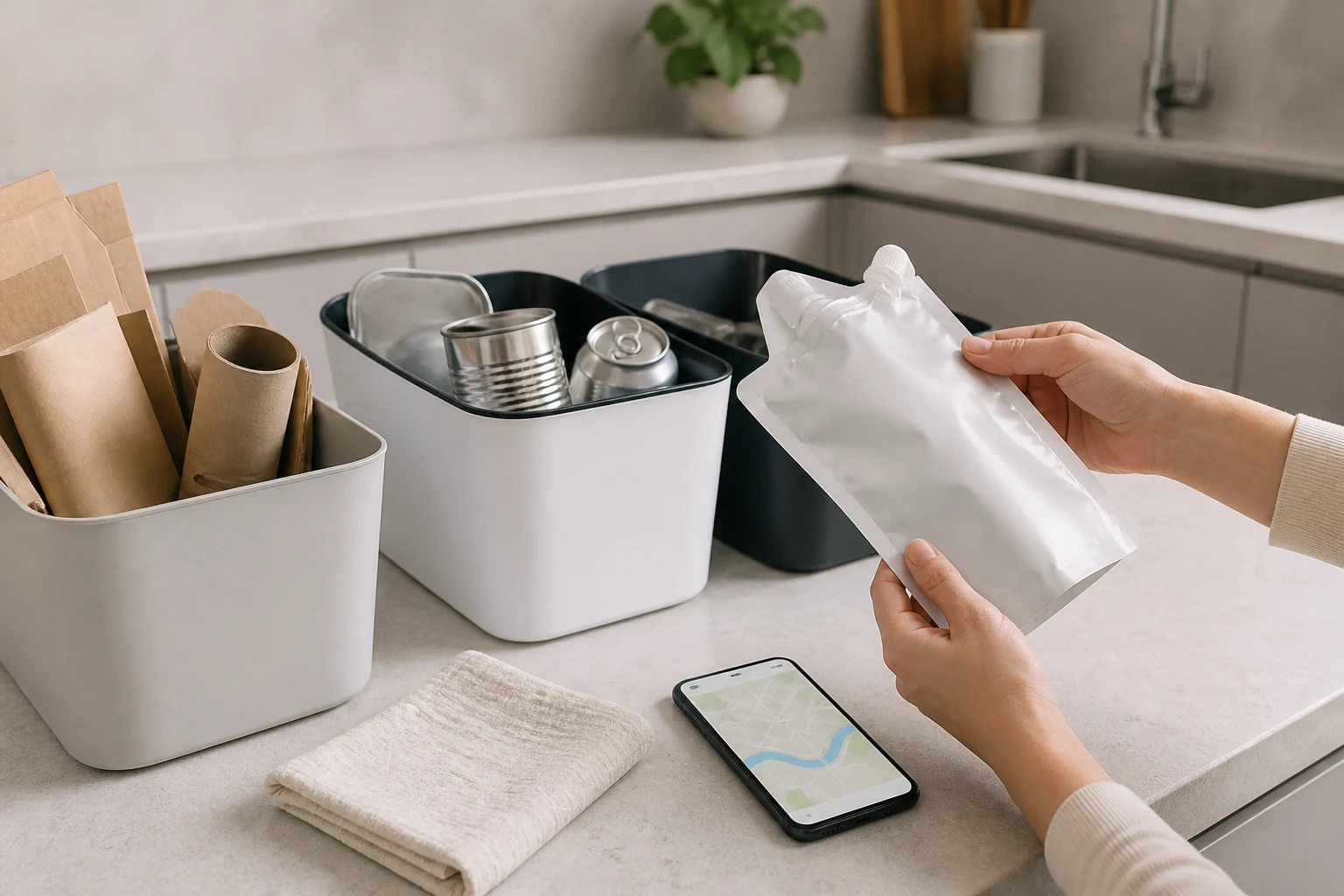
I avoid telling people to put flexible packaging in curbside recycling unless that exact local route supports it. For example, How2Recycle states that many polyethylene-based film packages in the United States may use a Store Drop-off route only when the package carries that label and is clean and dry; it also says most bags, wraps, and films are not accepted in most curbside programs.4 That does not turn every pouch into a store-drop-off pouch. It tells me to identify the actual assessed structure and market first. I use the mono-PE guide to discuss construction, then ask for a representative pouch and a written structure statement before I freeze the label. The printed direction should remain legible after the pouch is filled, folded, and handled.
How I make this decision specific
For “How Should I Write Recycling Instructions Clearly?” in this what disposal instructions should i print on a sustainable pouch review, I define the actual product, pouch configuration, intended use, and decision owner before I ask a supplier or tester for evidence. I keep the selected structure, component details, sample condition, and any stated test method together, then compare the result with the buyer’s actual route rather than a catalogue promise. That record gives the buyer a decision aid and a specification that another team member can check.
For What Disposal Instructions Should I Print on a Sustainable Pouch, I state what is known, the condition it applies to, and what must still be checked with the actual product. I do not transfer a number, a test result, or a feature choice from another product simply because its pouch looks similar. The result of “How Should I Write Recycling Instructions Clearly?” should give the buyer a clear next check, the supplier a precise request, and the project owner a record of the remaining uncertainty.
How Do I Explain Composting Without Overpromising?
A large compostable word can mislead when the pouch needs a managed facility or when local access is uncertain.
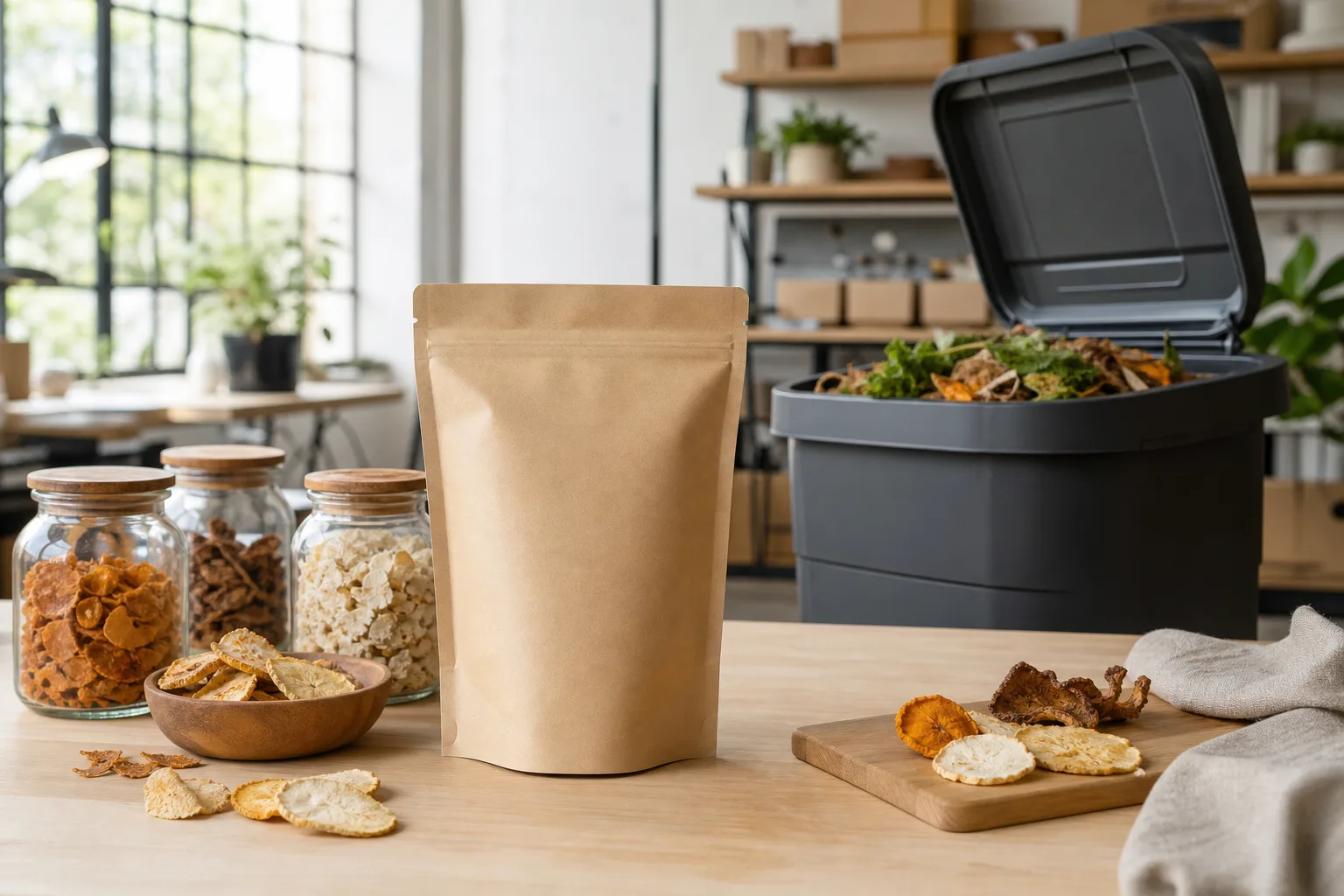
I identify whether the complete pouch is home-compostable or facility-compostable, state the limitation clearly, and avoid a general composting instruction when the evidence or access does not support it.
I distinguish certification evidence from the actual consumer instruction. The FTC says marketers should clearly and prominently qualify compostable claims when the package cannot be composted safely or promptly at home, or when municipal or institutional composting facilities are not available to a substantial majority of the relevant consumers.5 I therefore do not use “compostable” as a substitute for a disposal route. I check the specific pouch body, zipper, adhesive, ink, and label scope, and I ask whether the product market has a compatible collection system. The Reddit discussion linked in the sources is useful because it shows how easily documentation and consumer copy can be confused; I keep that as community insight, not as a legal interpretation.2 The final direction must fit the certificate scope and local program, not the desired brand aesthetic.
How I make this decision specific
For “How Do I Explain Composting Without Overpromising?” in this what disposal instructions should i print on a sustainable pouch review, I define the actual product, pouch configuration, intended use, and decision owner before I ask a supplier or tester for evidence. I keep the selected structure, component details, sample condition, and any stated test method together, then compare the result with the buyer’s actual route rather than a catalogue promise. That record gives the buyer a decision aid and a specification that another team member can check.
For What Disposal Instructions Should I Print on a Sustainable Pouch, I state what is known, the condition it applies to, and what must still be checked with the actual product. I do not transfer a number, a test result, or a feature choice from another product simply because its pouch looks similar. The result of “How Do I Explain Composting Without Overpromising?” should give the buyer a clear next check, the supplier a precise request, and the project owner a record of the remaining uncertainty.
For What Disposal Instructions Should I Print on a Sustainable Pouch, I treat the filled pack as a separate check from the material data. I record the fill condition, seal area, opening or closure behavior, carton arrangement, handling observations, and limits of the comparison. That prevents a favourable bench result from becoming an unsupported claim about shelf life, transport, or every product route.
What Should I Test Before I Release the Artwork?
Good wording still fails when it is buried near a gusset, separated from the relevant component, or contradicted by a later material change.
I test artwork clarity on a filled sample, verify its link to the current structure and market, then release a written record that identifies reapproval triggers.
I print the proposed instruction on a representative filled pouch and ask people who did not write it what they believe they should do. I check font size, contrast, panel position, language, component association, and whether a fold, zipper, or scuff makes the instruction unclear. I confirm that the artwork revision matches the final bill of materials and disposal-route decision. Then I keep the evidence with the purchaser’s material assessment, representative sample, filled-pack trial, written specification confirmation, and quote. Any changed laminate, label, cap, market, or collection rule triggers a review. That narrow change-control step prevents an instruction from becoming stale while the product keeps selling.
How I make this decision specific
For “What Should I Test Before I Release the Artwork?” in this what disposal instructions should i print on a sustainable pouch review, I define the actual product, pouch configuration, intended use, and decision owner before I ask a supplier or tester for evidence. I keep the selected structure, component details, sample condition, and any stated test method together, then compare the result with the buyer’s actual route rather than a catalogue promise. That record gives the buyer a decision aid and a specification that another team member can check.
For What Disposal Instructions Should I Print on a Sustainable Pouch, I state what is known, the condition it applies to, and what must still be checked with the actual product. I do not transfer a number, a test result, or a feature choice from another product simply because its pouch looks similar. The result of “What Should I Test Before I Release the Artwork?” should give the buyer a clear next check, the supplier a precise request, and the project owner a record of the remaining uncertainty.
For What Disposal Instructions Should I Print on a Sustainable Pouch, I preserve the final decision in a written brief that names the approved sample, conditions, observations, open risks, and change triggers. I then use the custom pouch dieline guide to keep the quotation tied to the evidence rather than to a remembered sample or a generic product name.
Conclusion
I choose packaging through evidence, filled-pack testing, and clear specifications. That process protects the product, the launch, and the customer experience.
Sources and Further Reading
Need a pouch specification?
I can review your product, size, quantity, artwork, and target market.