A pouch can look sustainable while its claim, components, collection route, and protection performance remain unverified.
I verify a recyclable or compostable pouch claim by checking the exact finished structure, relevant collection or composting route, evidence scope, qualified wording, and filled-pack results.
I treat the pouch as a complete system. I confirm the product, material, filling, handling, and customer experience before I approve production.
What Exactly Is the Pouch Claiming?
A broad environmental word can imply more than a material test or a supplier brochure actually supports.
I write the exact consumer-facing claim first, then match it to the finished pouch structure, component list, geography, collection route, evidence, and clear qualification.
I separate recyclable, compostable, recycled-content, renewable-material, and source-reduction statements. They answer different questions. I also separate a material layer from the complete pouch: films, inks, adhesives, zippers, valves, spouts, labels, coatings, and food residue can change the practical result. The FTC says general environmental claims need clear, prominent, specific qualifications, and it says a certification does not remove the marketer’s responsibility to substantiate expressed and implied claims.1 I therefore ask what exact claim is proposed, which country it will appear in, and which component it covers. I do not replace this review with a kraft appearance or a resin-identification mark.
How I make this decision specific
| Claim type | Question I ask | Evidence I retain |
|---|---|---|
| Recyclable | Which finished components and collection route are relevant? | Structure, assessment, geographic qualification. |
| Compostable | Home or managed facility, and for the whole pouch? | Applicable certification scope and disposal limitation. |
| Recycled content | Which component and percentage? | Supplier declaration and calculation basis. |
| Downgauged | Compared with which previous pack? | Baseline structure and stated reduction. |
For “What Exactly Is the Pouch Claiming?” in this how do i verify recyclable or compostable pouch claims review, I define the actual product, pouch configuration, intended use, and decision owner before I ask a supplier or tester for evidence. I keep the selected structure, component details, sample condition, and any stated test method together, then compare the result with the buyer’s actual route rather than a catalogue promise. That record lets me use the mono-PE recyclable packaging guide as a decision aid and retain a specification that another team member can check.
For How Do I Verify Recyclable or Compostable Pouch Claims, I state what is known, the condition it applies to, and what must still be checked with the actual product. I do not transfer a number, a test result, or a feature choice from another product simply because its pouch looks similar. The result of “What Exactly Is the Pouch Claiming?” should give the buyer a clear next check, the supplier a precise request, and the project owner a record of the remaining uncertainty.
For How Do I Verify Recyclable or Compostable Pouch Claims, I request the exact pouch structure, component specification, and test conditions from the supplier. A broad material name or catalogue claim is not a production specification. The right next step is a representative filled sample, where relevant, with observations recorded before production is approved.
How Do I Check Recyclability Without Guessing?
A resin name does not establish that a finished pouch is accepted, sorted, or suitable for a particular collection stream.
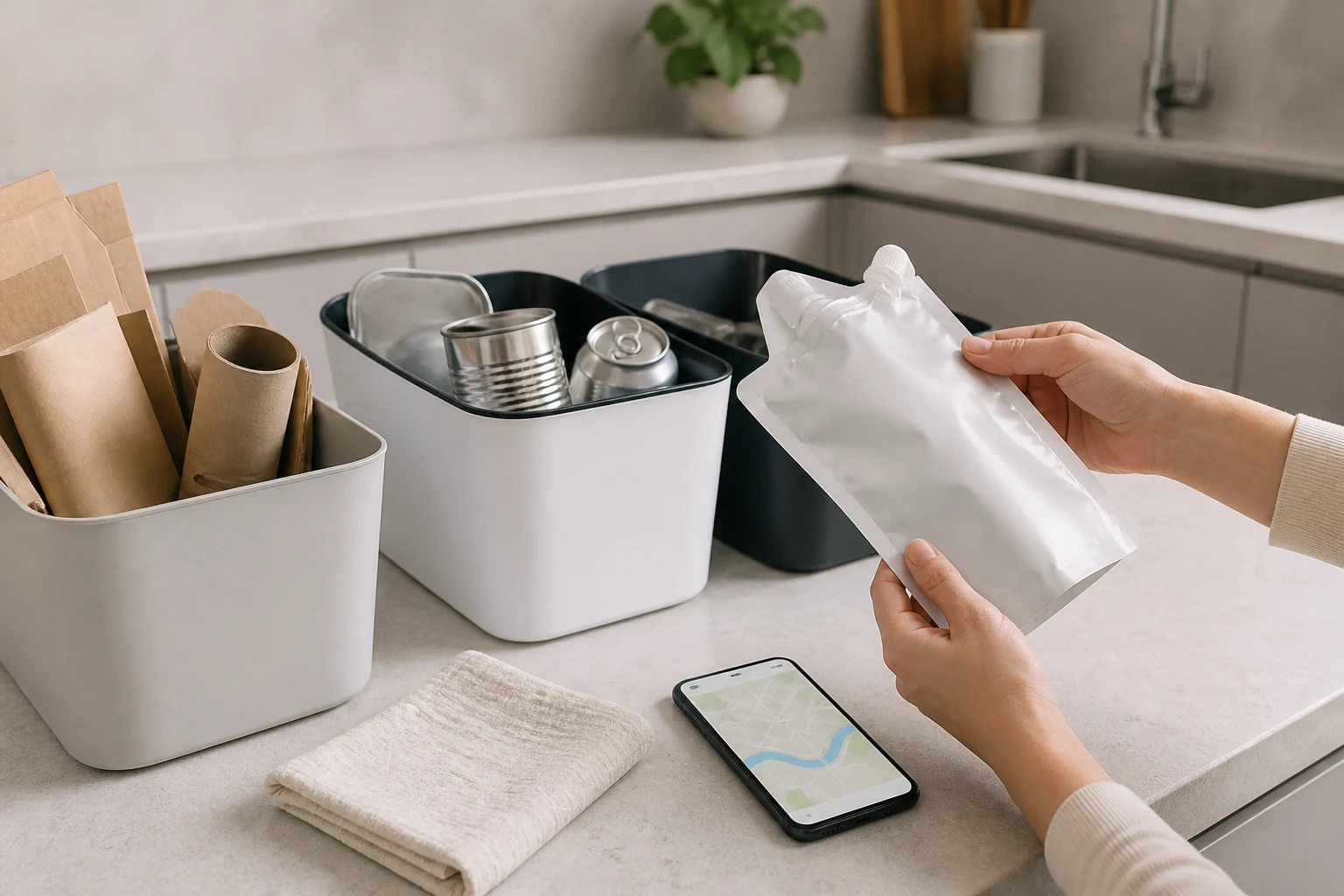
I check the full construction against the intended market’s collection and assessment route, then qualify the claim when access, components, contamination, or acceptance are limited.
I request a complete bill of materials: outer and sealant films, barrier layers, coating, ink system, adhesive, zipper, valve, spout, label, and any paper or metal component. For a polyethylene-film route, I do not assume that every pouch or every PE-marked component belongs in the same stream. How2Recycle says its labels are package-specific and its assessments consider every part of the package; its guidance also says local instructions take precedence.3 I confirm the chosen route before artwork release. Then I use a qualified statement that identifies the component and instruction instead of a universal recycling promise. The food barrier-film guide helps keep any barrier decision connected to protection needs, while the custom pouch dieline guide helps reserve space for clear, stable information.
How I make this decision specific
For “How Do I Check Recyclability Without Guessing?” in this how do i verify recyclable or compostable pouch claims review, I define the actual product, pouch configuration, intended use, and decision owner before I ask a supplier or tester for evidence. I keep the selected structure, component details, sample condition, and any stated test method together, then compare the result with the buyer’s actual route rather than a catalogue promise. That record gives the buyer a decision aid and a specification that another team member can check.
For How Do I Verify Recyclable or Compostable Pouch Claims, I state what is known, the condition it applies to, and what must still be checked with the actual product. I do not transfer a number, a test result, or a feature choice from another product simply because its pouch looks similar. The result of “How Do I Check Recyclability Without Guessing?” should give the buyer a clear next check, the supplier a precise request, and the project owner a record of the remaining uncertainty.
When Is Compostable the More Defensible Claim?
A compostable material claim can mislead when it hides whether the complete pouch fits home composting or a real managed facility.
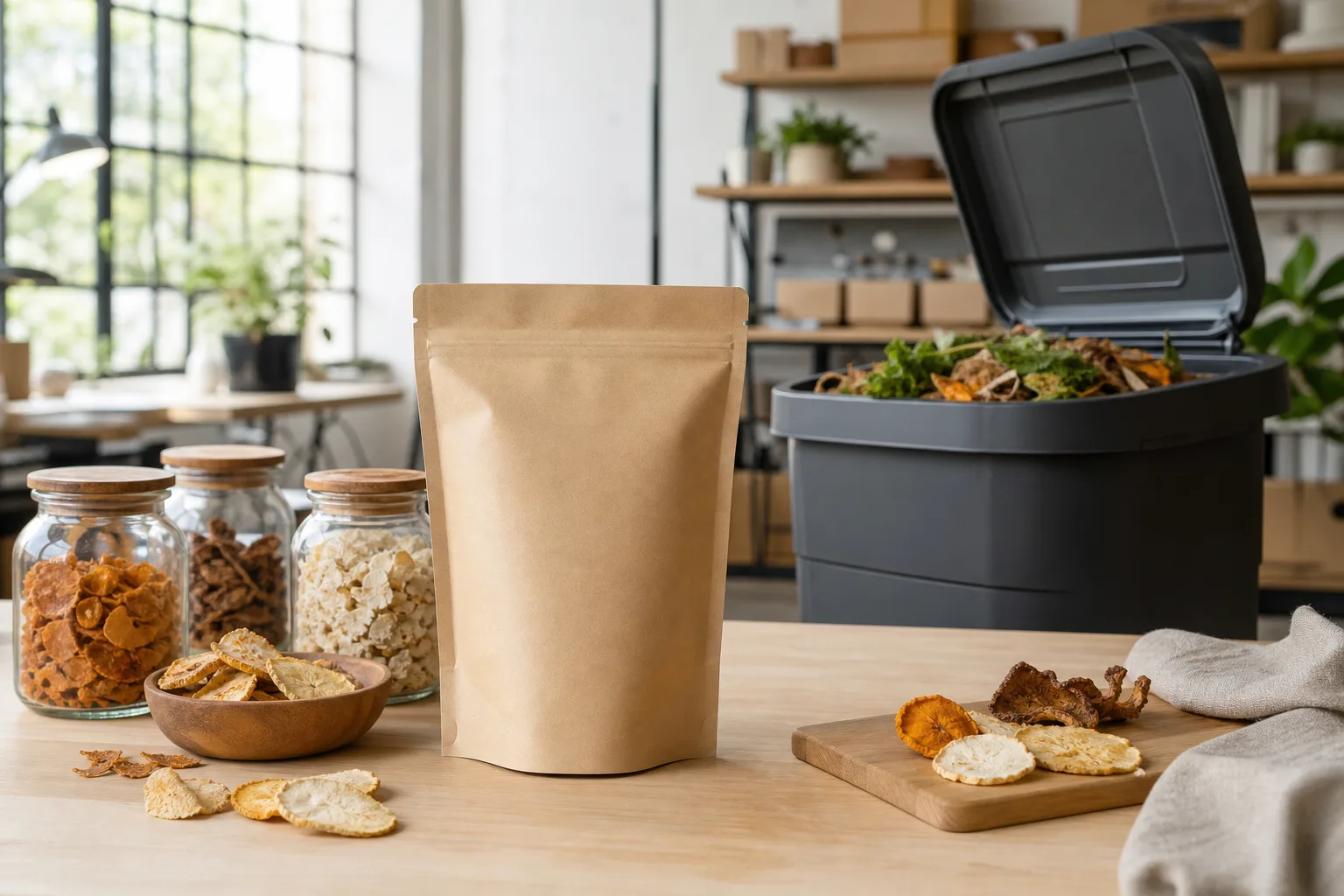
I use a compostable claim only when evidence covers the complete intended package and I clearly state the applicable composting environment and any access limitation.
I do not treat compostable and biodegradable as interchangeable. The FTC says a compostable claim needs competent and reliable scientific evidence that all materials in the product or package safely become usable compost in a timely way; it also says marketers should qualify claims when home composting is not suitable or facility access is not available to a substantial majority.1 In North America, BPI describes its certification as third-party verification of applicable ASTM standards for compostable products, but the certificate, the exact components, and the intended disposal system still need to match the item actually sold.4 I run filled samples because a claim does not prove that a lighter or alternative structure protects the product. I check the pouch at target fill, sealing conditions, handling, storage, carton packing, and opening. A community packaging thread raises the same practical tension between claims, shelf life, and feasible pouch features; I treat it as a testing prompt, not a technical conclusion.2
How I make this decision specific
For “When Is Compostable the More Defensible Claim?” in this how do i verify recyclable or compostable pouch claims review, I define the actual product, pouch configuration, intended use, and decision owner before I ask a supplier or tester for evidence. I keep the selected structure, component details, sample condition, and any stated test method together, then compare the result with the buyer’s actual route rather than a catalogue promise. That record gives the buyer a decision aid and a specification that another team member can check.
For How Do I Verify Recyclable or Compostable Pouch Claims, I state what is known, the condition it applies to, and what must still be checked with the actual product. I do not transfer a number, a test result, or a feature choice from another product simply because its pouch looks similar. The result of “When Is Compostable the More Defensible Claim?” should give the buyer a clear next check, the supplier a precise request, and the project owner a record of the remaining uncertainty.
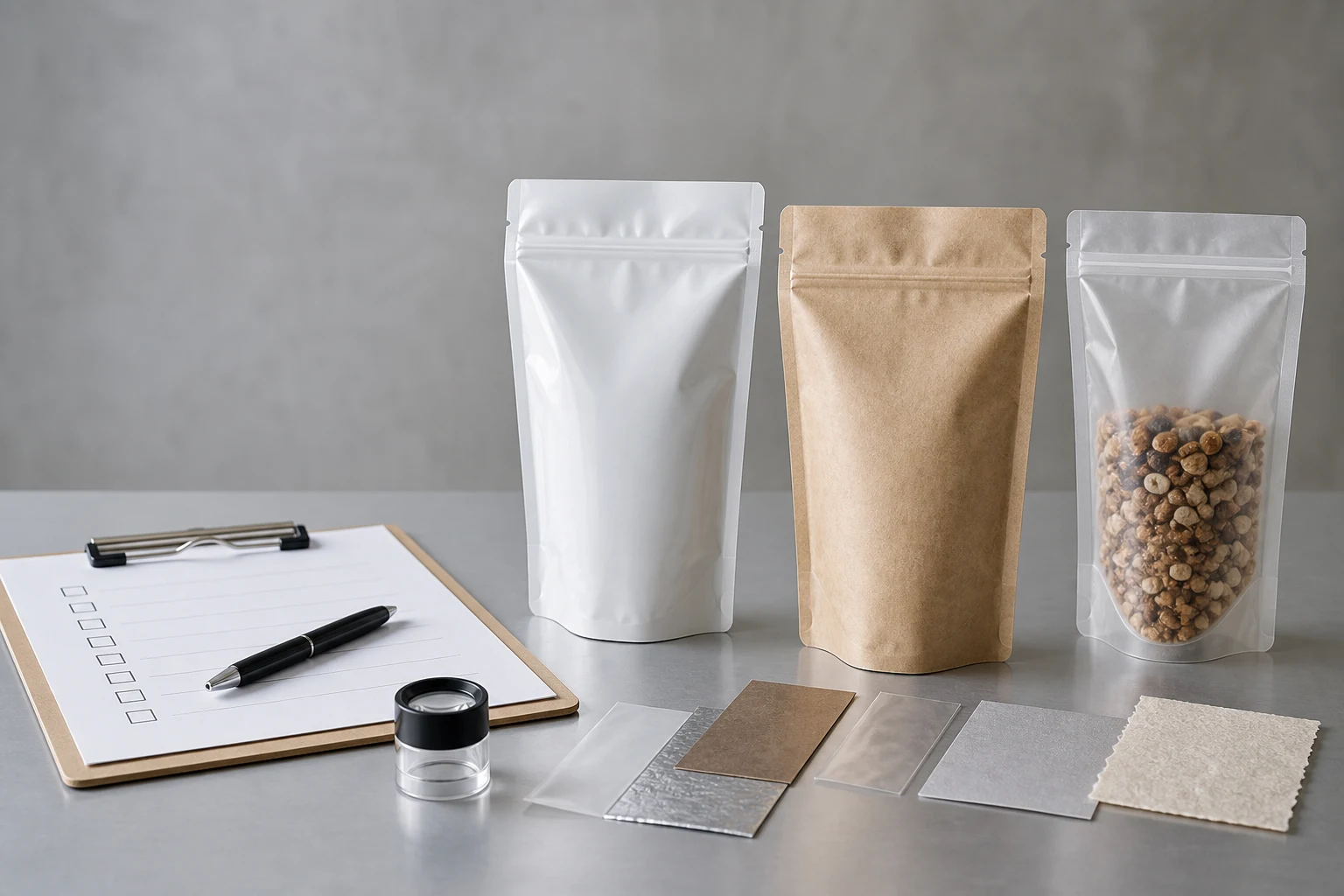
For How Do I Verify Recyclable or Compostable Pouch Claims, I treat the filled pack as a separate check from the material data. I record the fill condition, seal area, opening or closure behavior, carton arrangement, handling observations, and limits of the comparison. That prevents a favourable bench result from becoming an unsupported claim about shelf life, transport, or every product route.
What Should I Approve Before Printing the Claim?
A claim can become unsafe to repeat when it is approved verbally without a traceable structure, route, wording, and reapproval rule.
Before printing, I approve the exact pouch specification, claim wording, component scope, geography, evidence, qualified disposal instruction, filled-pack result, and change-control trigger.
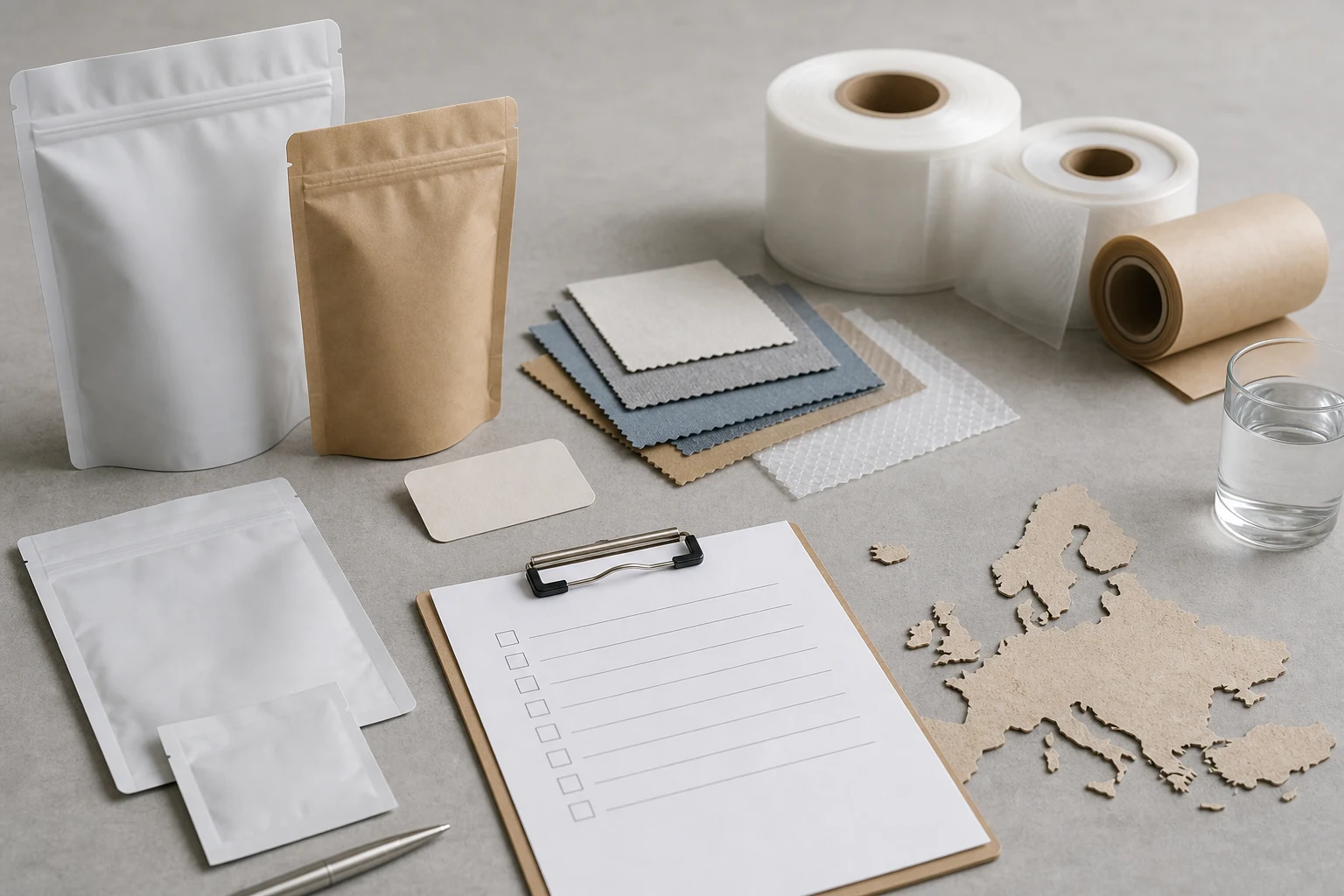
I make the release record usable by procurement, marketing, and operations. It names the pouch format, dimensions, full structure, components, product, target fill, packing route, market, claim text, source documents, artwork revision, and retained sample. I specify what will force review again: a barrier layer, adhesive, ink, zipper, valve, label, material gauge, market, or collection instruction change. I request representative samples, then run the filled-pack trial before I ask for a specification-based quote. I confirm the final written specification with the supplier, not only a marketing description. That sequence lets me connect a sustainability statement with an actual protected product rather than choosing a claim first and trying to defend it later.
How I make this decision specific
For “What Should I Approve Before Printing the Claim?” in this how do i verify recyclable or compostable pouch claims review, I define the actual product, pouch configuration, intended use, and decision owner before I ask a supplier or tester for evidence. I keep the selected structure, component details, sample condition, and any stated test method together, then compare the result with the buyer’s actual route rather than a catalogue promise. That record gives the buyer a decision aid and a specification that another team member can check.
For How Do I Verify Recyclable or Compostable Pouch Claims, I state what is known, the condition it applies to, and what must still be checked with the actual product. I do not transfer a number, a test result, or a feature choice from another product simply because its pouch looks similar. The result of “What Should I Approve Before Printing the Claim?” should give the buyer a clear next check, the supplier a precise request, and the project owner a record of the remaining uncertainty.
For How Do I Verify Recyclable or Compostable Pouch Claims, I preserve the final decision in a written brief that names the approved sample, conditions, observations, open risks, and change triggers. I then use the flexible packaging specification-sheet guide to keep the quotation tied to the evidence rather than to a remembered sample or a generic product name.
Conclusion
I choose packaging through evidence, filled-pack testing, and clear specifications. That process protects the product, the launch, and the customer experience.
Sources and Further Reading
Need a pouch specification?
I can review your product, size, quantity, artwork, and target market.