White ink can look solid in a file yet turn grey, translucent, or uneven when clear or metallized film changes the background beneath it.
I approve white-ink opacity with the exact substrate, ink build, backing, viewing condition, artwork, filled pouch, and written reference—not from a digital mockup alone.
I treat the pouch as a complete system. I confirm the product, material, filling, handling, and customer experience before I approve production.
What Must the White Ink Hide or Reveal?
White ink approval starts in the wrong place when no one has decided whether it should block a metallic background, support color, or leave a product window clear.
I define each white area by function, then approve it on the selected clear or metallized film with the proposed ink sequence, artwork, and backing condition.
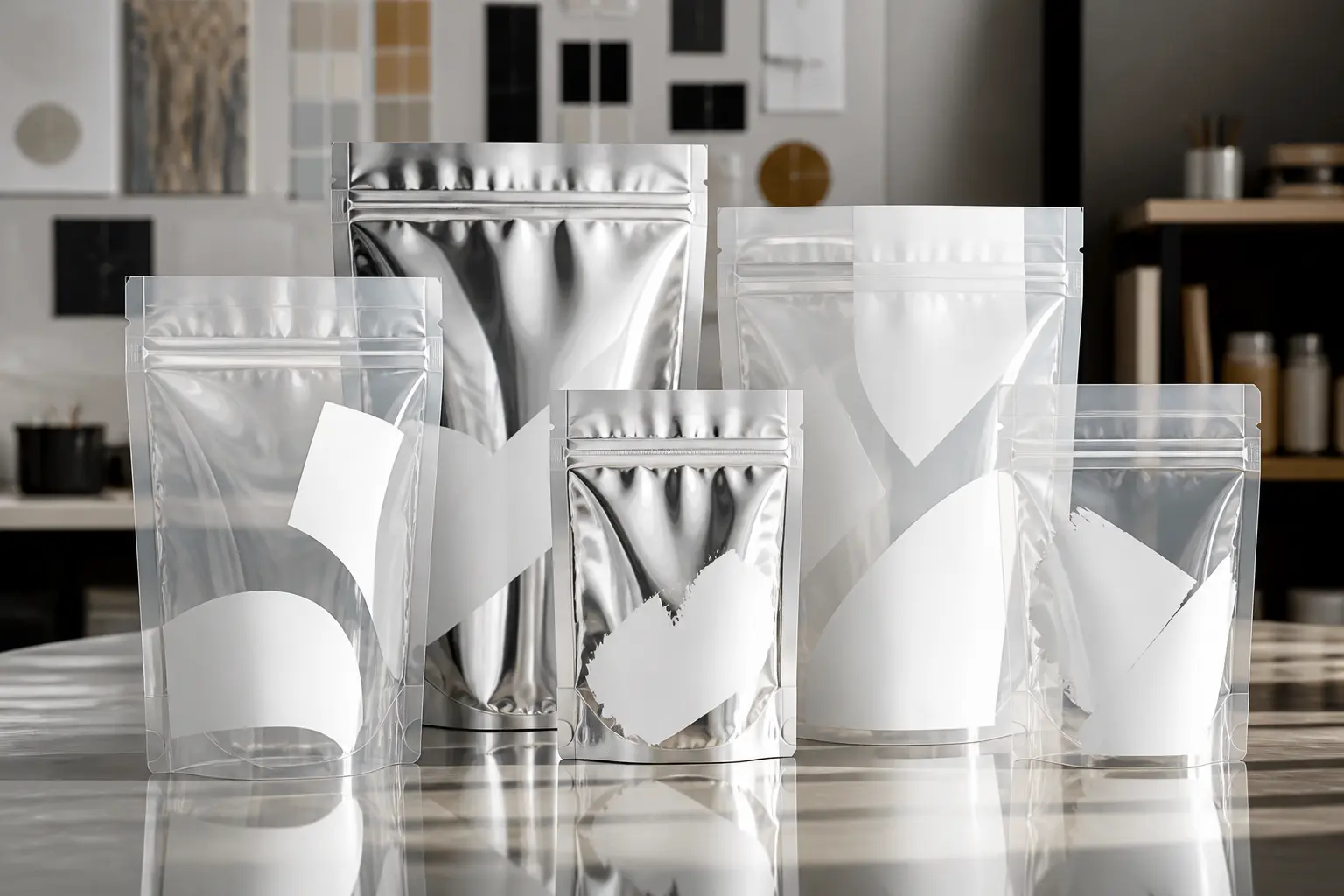
I map the front panel before I request a proof. Some white is an opaque background for brand color. Some supports process inks over metallized film. Some creates contrast for small information. Some must stop precisely to preserve a clear product window. These are different visual jobs. I use the dieline guide to keep white areas clear of seals, folds, gussets, zippers, and required clear zones. Then I request the exact film and intended ink build. A white patch on paper or a generic plastic sheet does not predict how the finished pouch will appear over a metallic substrate or in front of a filled product.
How I make this decision specific
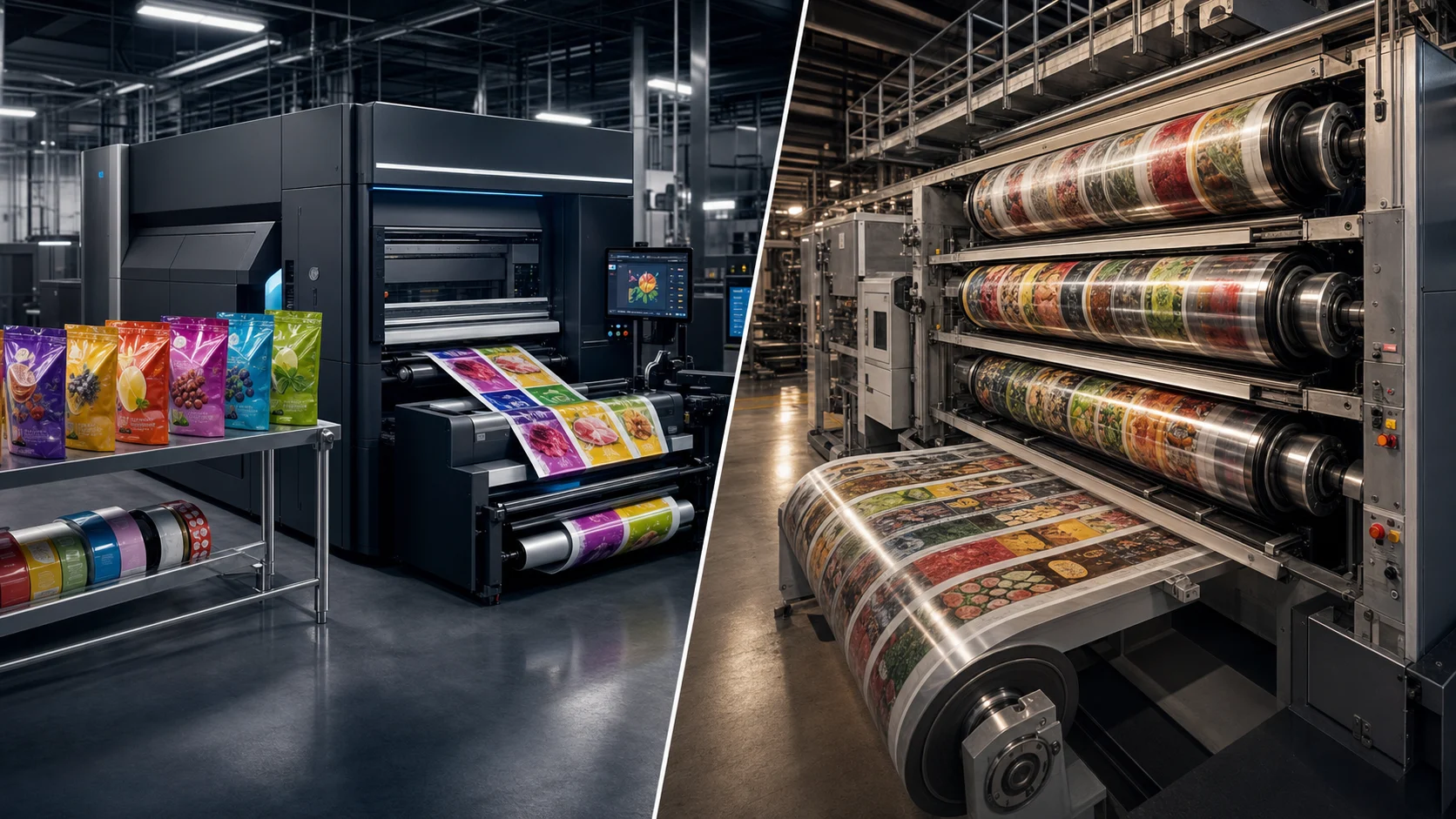
For “What Must the White Ink Hide or Reveal?” in this how do i approve white-ink opacity on clear or metallized film review, I define the actual product, pouch configuration, intended use, and decision owner before I ask a supplier or tester for evidence. I keep the selected structure, component details, sample condition, and any stated test method together, then compare the result with the buyer’s actual route rather than a catalogue promise. That record lets me use the digital printing versus rotogravure guide as a decision aid and retain a specification that another team member can check.
For How Do I Approve White-Ink Opacity on Clear or Metallized Film, I state what is known, the condition it applies to, and what must still be checked with the actual product. I do not transfer a number, a test result, or a feature choice from another product simply because its pouch looks similar. The result of “What Must the White Ink Hide or Reveal?” should give the buyer a clear next check, the supplier a precise request, and the project owner a record of the remaining uncertainty.
For How Do I Approve White-Ink Opacity on Clear or Metallized Film, I request the exact pouch structure, component specification, and test conditions from the supplier. A broad material name or catalogue claim is not a production specification. The right next step is a representative filled sample, where relevant, with observations recorded before production is approved.
How Should I Compare White-Ink Samples?
A white panel can be approved by eye one day and rejected later when the light, backing, sample, or measurement method changes without being stated.
I compare white-ink samples under one defined viewing condition and record the substrate, backing, ink sequence, cure, artwork revision, and any measurement method used.
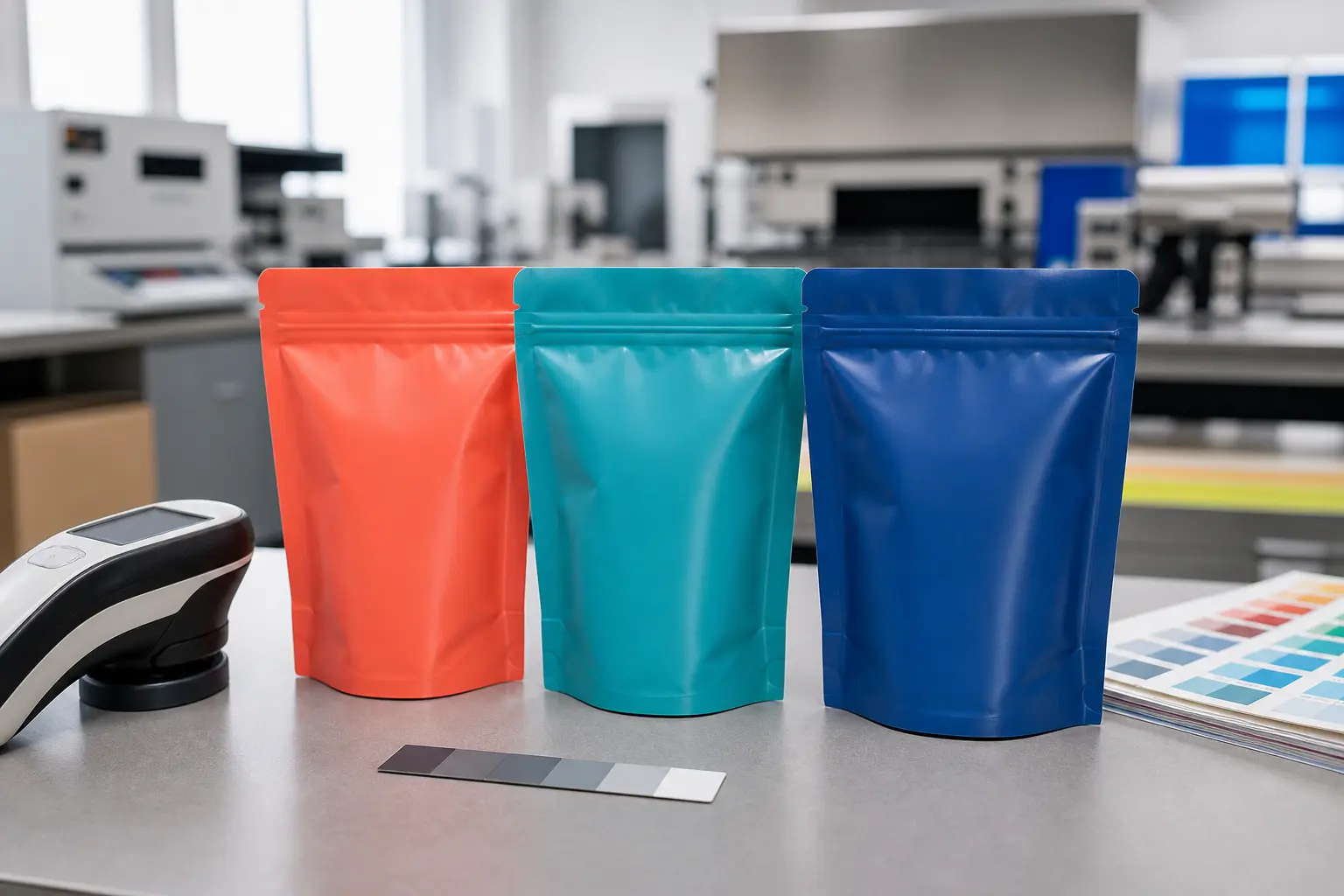
I set out the candidate and approved samples together and state what sits behind the film: open air, a black backing, a white backing, the actual product, or metallized film. That matters because white opacity is perceived through the entire construction. ISO 13655 covers spectral measurement and colorimetric calculations in graphic-arts workflows.1 I use that fact to insist on traceable conditions, not to claim a standard opacity number. I inspect evenness, pinholes, edge definition, color support, and contrast on the finished pouch. If the brand has a critical color above white, I judge the combined ink sequence, not the white layer alone.
How I make this decision specific
For “How Should I Compare White-Ink Samples?” in this how do i approve white-ink opacity on clear or metallized film review, I define the actual product, pouch configuration, intended use, and decision owner before I ask a supplier or tester for evidence. I keep the selected structure, component details, sample condition, and any stated test method together, then compare the result with the buyer’s actual route rather than a catalogue promise. That record gives the buyer a decision aid and a specification that another team member can check.
For How Do I Approve White-Ink Opacity on Clear or Metallized Film, I state what is known, the condition it applies to, and what must still be checked with the actual product. I do not transfer a number, a test result, or a feature choice from another product simply because its pouch looks similar. The result of “How Should I Compare White-Ink Samples?” should give the buyer a clear next check, the supplier a precise request, and the project owner a record of the remaining uncertainty.
Why Must I Check the Filled Pouch?
A flat sample can look opaque while a filled pouch reveals show-through, wrinkles, panel distortion, or a color shift at the retail viewing angle.
I inspect the filled pouch at the intended weight and viewing angle, then check white areas beside clear windows, folds, seals, and any metallized or colored panel.
I fill the actual pouch because contents, headspace, gussets, and tension can change how a panel reads. I look for show-through, thin-looking white, registration drift, streaks, wrinkles, and edges that fall too near a seal. I compare the same artwork on the intended clear or metallized structure, because substrate changes can alter reflectance and the apparent strength of every color above the white. The community discussion in the sources shows a launch buyer considering vibrancy and finish; I treat that as a reason to judge the customer-facing pack under realistic light, not as a technical conclusion.2 For a new project, I use a representative sample or short filled-pack trial before I scale.
How I make this decision specific
For “Why Must I Check the Filled Pouch?” in this how do i approve white-ink opacity on clear or metallized film review, I define the actual product, pouch configuration, intended use, and decision owner before I ask a supplier or tester for evidence. I keep the selected structure, component details, sample condition, and any stated test method together, then compare the result with the buyer’s actual route rather than a catalogue promise. That record gives the buyer a decision aid and a specification that another team member can check.
For How Do I Approve White-Ink Opacity on Clear or Metallized Film, I state what is known, the condition it applies to, and what must still be checked with the actual product. I do not transfer a number, a test result, or a feature choice from another product simply because its pouch looks similar. The result of “Why Must I Check the Filled Pouch?” should give the buyer a clear next check, the supplier a precise request, and the project owner a record of the remaining uncertainty.
For How Do I Approve White-Ink Opacity on Clear or Metallized Film, I treat the filled pack as a separate check from the material data. I record the fill condition, seal area, opening or closure behavior, carton arrangement, handling observations, and limits of the comparison. That prevents a favourable bench result from becoming an unsupported claim about shelf life, transport, or every product route.
What Belongs in the Final White-Ink Approval?
A white-ink match cannot be repeated when approval is verbal and the purchase record omits the film, ink sequence, proof, finished sample, and change triggers.
I release the white ink only with an approved physical pouch, exact substrate, artwork revision, ink sequence, backing and viewing conditions, filled-pack check, and reapproval rule.
I write the white layer into the production specification: where it prints, how it supports other colors, which areas remain clear, the selected film, intended finish, and approved artwork version. I retain the physical sample and record the visual decision and limits. I also connect the project to the print-process guide, because a process change may require a fresh proof and comparison. If the supplier changes the film, metallization, ink, press route, white build, varnish, or pouch geometry, I trigger review. The procurement sequence remains practical: assess the exact material, approve a representative and filled pouch, confirm the written specification, and base the quote on that locked configuration.
How I make this decision specific
For “What Belongs in the Final White-Ink Approval?” in this how do i approve white-ink opacity on clear or metallized film review, I define the actual product, pouch configuration, intended use, and decision owner before I ask a supplier or tester for evidence. I keep the selected structure, component details, sample condition, and any stated test method together, then compare the result with the buyer’s actual route rather than a catalogue promise. That record gives the buyer a decision aid and a specification that another team member can check.
For How Do I Approve White-Ink Opacity on Clear or Metallized Film, I state what is known, the condition it applies to, and what must still be checked with the actual product. I do not transfer a number, a test result, or a feature choice from another product simply because its pouch looks similar. The result of “What Belongs in the Final White-Ink Approval?” should give the buyer a clear next check, the supplier a precise request, and the project owner a record of the remaining uncertainty.
For How Do I Approve White-Ink Opacity on Clear or Metallized Film, I preserve the final decision in a written brief that names the approved sample, conditions, observations, open risks, and change triggers. I then use the custom pouch dieline guide to keep the quotation tied to the evidence rather than to a remembered sample or a generic product name.
Conclusion
I choose packaging through evidence, filled-pack testing, and clear specifications. That process protects the product, the launch, and the customer experience.
Sources and Further Reading
Need a pouch specification?
I can review your product, size, quantity, artwork, and target market.