A strong pouch color can drift on a reorder when the approved target, substrate, light, and press conditions were never documented together.
I control reorder color by approving a physical target, recording the substrate and process, measuring under stated conditions, checking production samples, and freezing changes in writing.
I treat the pouch as a complete system. I confirm the product, material, filling, handling, and customer experience before I approve production.
What Is the Right Color Baseline for a Reorder?
A screen image or a remembered pouch is not a reliable baseline when another print run starts months later.
I approve a physical pouch or controlled proof, identify critical colors and substrate, state the viewing condition, and keep that reference with the job record.
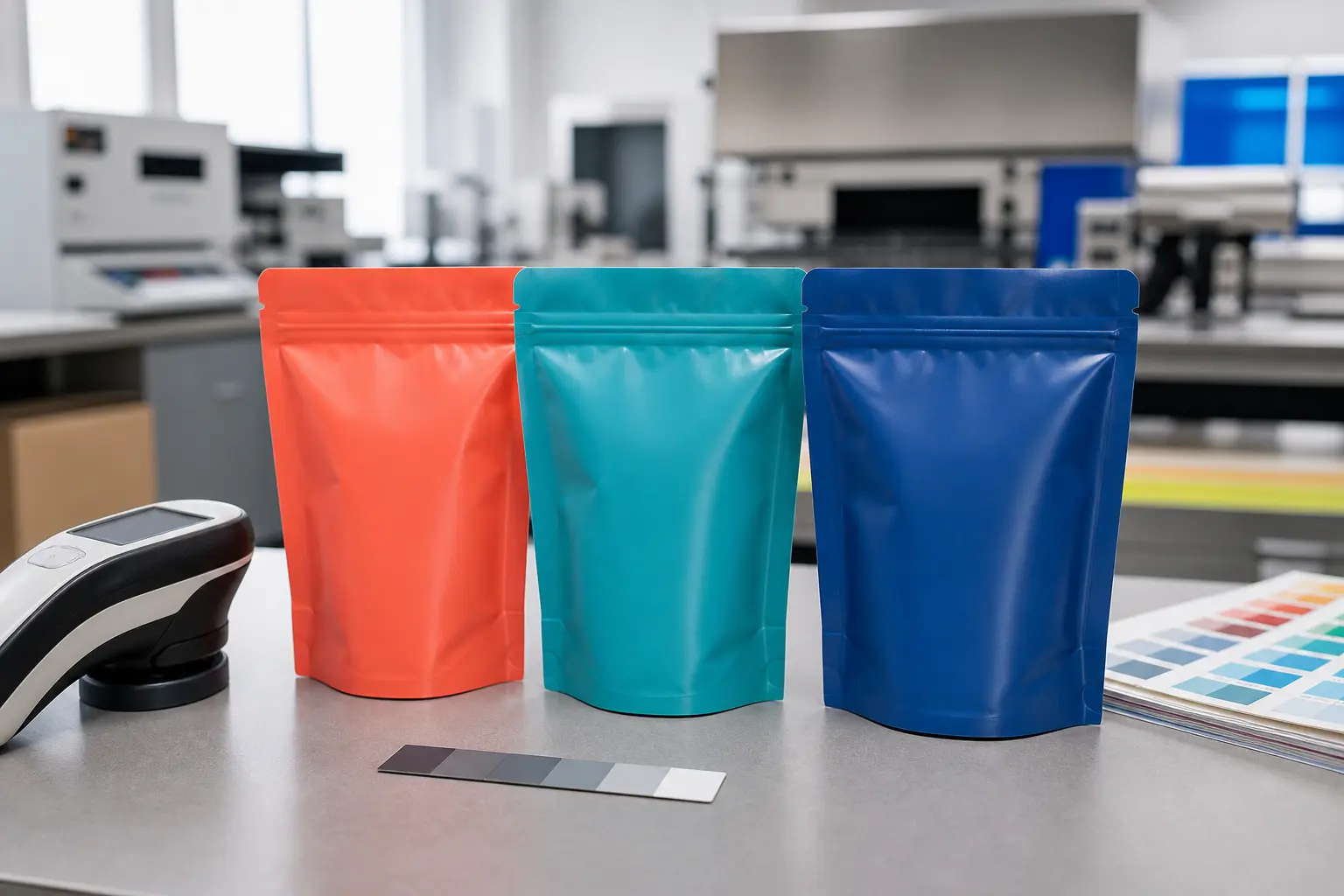
I begin by naming what actually must match: a spot-color panel, a logo, a process build, a white base, a varnished area, or a color next to metallized film. I retain an approved physical sample because a monitor, phone, and press proof do not present the same surface. ISO 12647-1 describes the minimum process-control parameters needed to specify the visual and technical properties of a printing condition.1 I record the pouch construction, outside web, finish, ink system, proof version, target color, and the light used for approval. The dieline guide keeps artwork zones and substrate choices traceable, while the physical sample keeps the decision connected to the material customers will see.
How I make this decision specific
| Record | Why I retain it | Risk if missing |
|---|---|---|
| Approved pouch or proof | Creates a real visual target. | Approval by memory. |
| Substrate and finish | They change perceived color. | Wrong comparison surface. |
| Viewing condition | Controls visual assessment. | Disputed appearance. |
| Artwork revision | Connects color to the correct file. | Old design reused. |
For “What Is the Right Color Baseline for a Reorder?” in this how do i keep pouch colors consistent across reorders review, I define the actual product, pouch configuration, intended use, and decision owner before I ask a supplier or tester for evidence. I keep the selected structure, component details, sample condition, and any stated test method together, then compare the result with the buyer’s actual route rather than a catalogue promise. That record lets me use the custom pouch dieline guide as a decision aid and retain a specification that another team member can check.
For How Do I Keep Pouch Colors Consistent Across Reorders, I state what is known, the condition it applies to, and what must still be checked with the actual product. I do not transfer a number, a test result, or a feature choice from another product simply because its pouch looks similar. The result of “What Is the Right Color Baseline for a Reorder?” should give the buyer a clear next check, the supplier a precise request, and the project owner a record of the remaining uncertainty.
For How Do I Keep Pouch Colors Consistent Across Reorders, I request the exact pouch structure, component specification, and test conditions from the supplier. A broad material name or catalogue claim is not a production specification. The right next step is a representative filled sample, where relevant, with observations recorded before production is approved.
How Should I Measure and View the Color?
A color check becomes weak when one team judges it under warm office light and another uses a different sample or instrument setting.
I compare samples under one stated viewing condition and, when measurement is required, record the instrument, method, geometry, backing, and result against the approved target.
I separate visual approval from instrumental measurement, then make both repeatable. ISO 13655 covers spectral measurement and colorimetric computations for graphic arts images, including flexography, gravure, and digital printing.2 I do not cite that standard as a pass mark by itself. Instead, I ask the converter to state how the sample was measured and to compare like with like: the same substrate, surface, backing, ink build, and reading location. Matte varnish, clear film, metallic film, and white underprint can change appearance even when a digital artwork value is unchanged. I inspect critical solids, small reverses, gradients, and brand-color edges on a finished pouch, not only on a flat swatch.
How I make this decision specific
For “How Should I Measure and View the Color?” in this how do i keep pouch colors consistent across reorders review, I define the actual product, pouch configuration, intended use, and decision owner before I ask a supplier or tester for evidence. I keep the selected structure, component details, sample condition, and any stated test method together, then compare the result with the buyer’s actual route rather than a catalogue promise. That record gives the buyer a decision aid and a specification that another team member can check.
For How Do I Keep Pouch Colors Consistent Across Reorders, I state what is known, the condition it applies to, and what must still be checked with the actual product. I do not transfer a number, a test result, or a feature choice from another product simply because its pouch looks similar. The result of “How Should I Measure and View the Color?” should give the buyer a clear next check, the supplier a precise request, and the project owner a record of the remaining uncertainty.
Which Press Checks Prevent Drift During Production?
A reorder can drift before anyone notices when color is checked only after the full roll has been converted into pouches.
I require a defined startup check, representative press samples, comparison to the approved target, and a hold-or-correct decision before the run proceeds.
I ask for a first-off sample from the actual film, ink sequence, and finish. Then I compare it with the retained target before the order is treated as approved. I identify who can accept a deviation and what evidence they keep. That matters because color can vary across runs when substrates, inks, viscosity, anilox selection, drying, pressure, or proof conditions change. ISO guidance for print-production standards explains that shared process aims and characterization data support consistency, while critical jobs need more than a casual visual comparison.3 I also check white ink, registration, barcode contrast, seal-zone artwork, and any metallic or clear area as a complete printed pouch. A good-looking roll is not enough if converting changes the panel customers see.
How I make this decision specific
For “Which Press Checks Prevent Drift During Production?” in this how do i keep pouch colors consistent across reorders review, I define the actual product, pouch configuration, intended use, and decision owner before I ask a supplier or tester for evidence. I keep the selected structure, component details, sample condition, and any stated test method together, then compare the result with the buyer’s actual route rather than a catalogue promise. That record gives the buyer a decision aid and a specification that another team member can check.
For How Do I Keep Pouch Colors Consistent Across Reorders, I state what is known, the condition it applies to, and what must still be checked with the actual product. I do not transfer a number, a test result, or a feature choice from another product simply because its pouch looks similar. The result of “Which Press Checks Prevent Drift During Production?” should give the buyer a clear next check, the supplier a precise request, and the project owner a record of the remaining uncertainty.
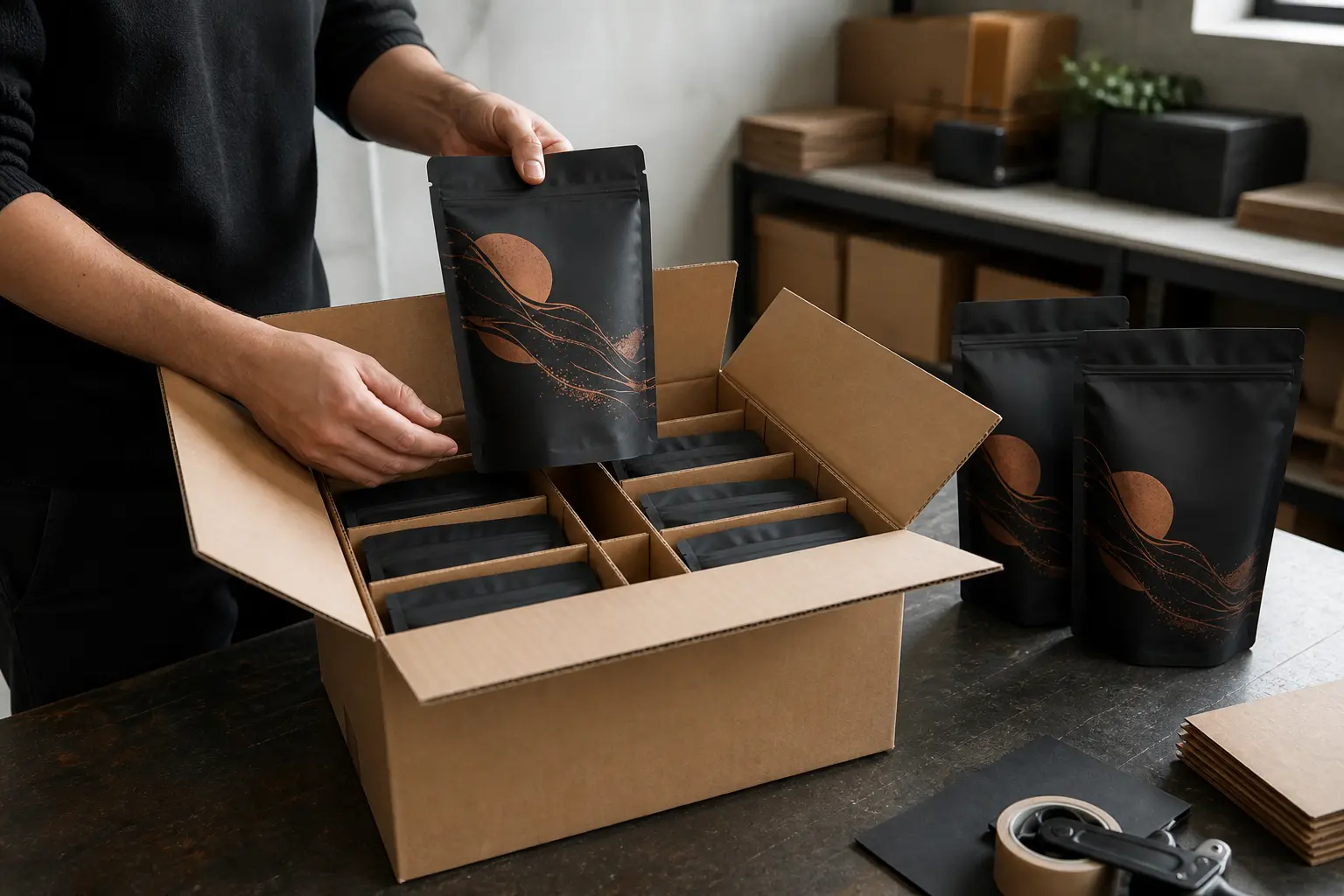
For How Do I Keep Pouch Colors Consistent Across Reorders, I treat the filled pack as a separate check from the material data. I record the fill condition, seal area, opening or closure behavior, carton arrangement, handling observations, and limits of the comparison. That prevents a favourable bench result from becoming an unsupported claim about shelf life, transport, or every product route.
What Must I Freeze Before the Next Reorder?
A color match can be lost on the next order when a substitute film, coating, ink, or artwork change is accepted informally.
I release a reorder only with the approved sample, material and finish specification, artwork revision, measurement record, allowed tolerance decision, and reapproval triggers documented together.
I treat every material or process change as a question, not a minor production detail. A new outside web, a different metallization, revised varnish, alternate ink supplier, changed white base, or altered artwork can require a new comparison. I retain the approved pouch with the specification sheet, then use that record when I request a quote or a representative sample. The community discussion in the sources is useful because it shows why a brand owner cares about color continuity, but the finished-pack comparison and written specification are the proof for this project.4 I repeat that process before a large repeat order, especially when a color is central to shelf recognition.
How I make this decision specific
For “What Must I Freeze Before the Next Reorder?” in this how do i keep pouch colors consistent across reorders review, I define the actual product, pouch configuration, intended use, and decision owner before I ask a supplier or tester for evidence. I keep the selected structure, component details, sample condition, and any stated test method together, then compare the result with the buyer’s actual route rather than a catalogue promise. That record gives the buyer a decision aid and a specification that another team member can check.
For How Do I Keep Pouch Colors Consistent Across Reorders, I state what is known, the condition it applies to, and what must still be checked with the actual product. I do not transfer a number, a test result, or a feature choice from another product simply because its pouch looks similar. The result of “What Must I Freeze Before the Next Reorder?” should give the buyer a clear next check, the supplier a precise request, and the project owner a record of the remaining uncertainty.
For How Do I Keep Pouch Colors Consistent Across Reorders, I preserve the final decision in a written brief that names the approved sample, conditions, observations, open risks, and change triggers. I then use the flexible packaging specification-sheet guide to keep the quotation tied to the evidence rather than to a remembered sample or a generic product name.
Conclusion
I choose packaging through evidence, filled-pack testing, and clear specifications. That process protects the product, the launch, and the customer experience.
Sources and Further Reading
- ISO 12647-1, graphic-arts process control parameters.
- ISO 13655:2017, spectral measurement and colorimetric computation.
- ISO TC 130, Guidelines for using print production standards.
- Reddit r/coffee_roasters, coffee bag packaging community discussion.
- Unique Packaging custom pouch dieline guide.
- Unique Packaging packaging specification-sheet guide.
Need a pouch specification?
I can review your product, size, quantity, artwork, and target market.