A polished pouch can look worn before launch when ink, coating, carton contact, and handling were not validated as one distribution system.
I reduce scuff risk by defining the handling route, selecting and testing the combined substrate, ink and finish, checking packed pouches, and approving a written release condition.
I treat the pouch as a complete system. I confirm the product, material, filling, handling, and customer experience before I approve production.
What Is Actually Rubbing Against the Pouch?
Scuff control fails when a buyer asks for a tougher pouch without identifying where, how, and against what the printed surface will rub.
I map pouch-to-pouch, pouch-to-carton, conveyor, case-pack, shelf, and consumer handling contact before I choose a print or finish solution.
I begin with the real route: production handling, settling, case packing, pallet movement, freight vibration, retail stocking, and customer use. Each contact can create a different mark. A dark matte panel can show a light scratch differently from a gloss panel; a metallized area can show a change differently from a clear film. ASTM D5264 states that abrasion damage can arise in shipment, storage, handling, and end use, and that laboratory comparison can evaluate inks, coatings, laminates, and substrates.1 I turn that into a project question: which surfaces contact, under what load, for how long, at what humidity or temperature, and what appearance is acceptable? I do not call a finish scuff-resistant without a defined comparison.
How I make this decision specific
For “What Is Actually Rubbing Against the Pouch?” in this how do i prevent printed pouches from scuffing in distribution review, I define the actual product, pouch configuration, intended use, and decision owner before I ask a supplier or tester for evidence. I keep the selected structure, component details, sample condition, and any stated test method together, then compare the result with the buyer’s actual route rather than a catalogue promise. That record lets me use the flexible packaging quality-test guide as a decision aid and retain a specification that another team member can check.
For How Do I Prevent Printed Pouches from Scuffing in Distribution, I state what is known, the condition it applies to, and what must still be checked with the actual product. I do not transfer a number, a test result, or a feature choice from another product simply because its pouch looks similar. The result of “What Is Actually Rubbing Against the Pouch?” should give the buyer a clear next check, the supplier a precise request, and the project owner a record of the remaining uncertainty.
For How Do I Prevent Printed Pouches from Scuffing in Distribution, I request the exact pouch structure, component specification, and test conditions from the supplier. A broad material name or catalogue claim is not a production specification. The right next step is a representative filled sample, where relevant, with observations recorded before production is approved.
Which Material and Finish Choices Need Comparison?
A finish choice can create a new risk when it is approved from a swatch rather than on the actual ink, film, folds, and pouch geometry.
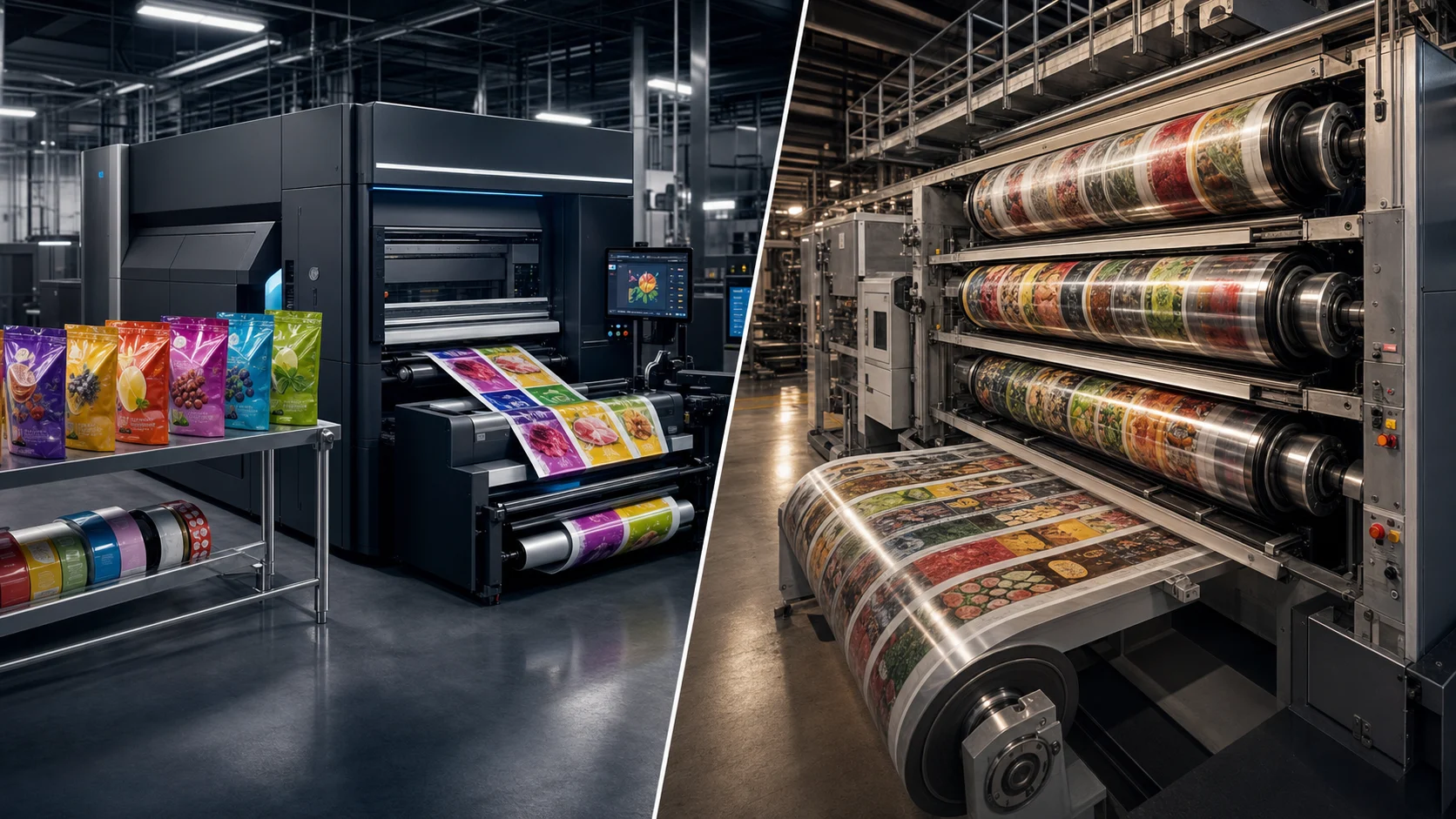
I compare the proposed film, ink, white base, varnish or laminate, curing route, and pouch construction on representative samples before I approve a finish.
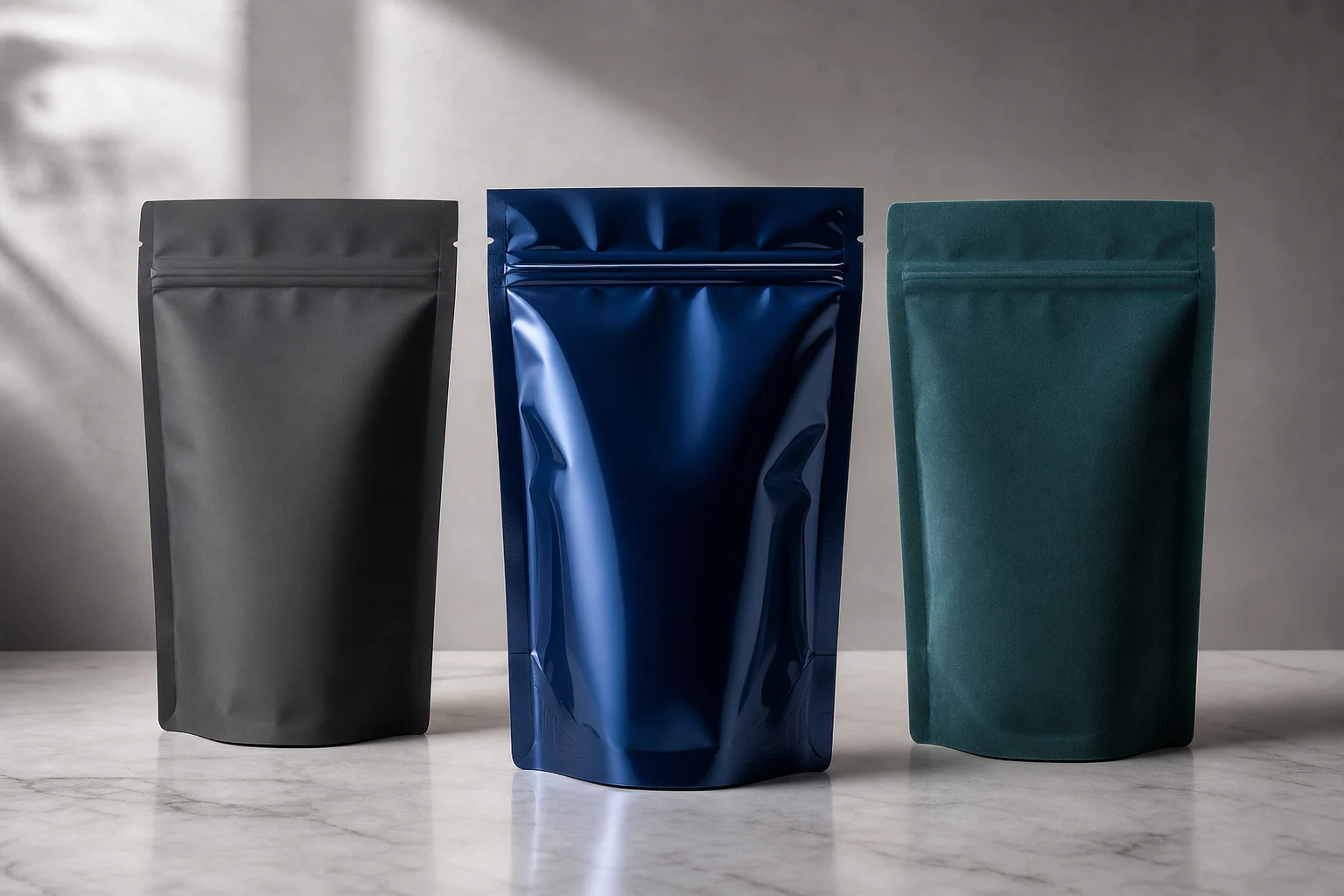
I review the combination, not a single ingredient. The print surface, ink adhesion, varnish, laminate, sealing heat, fold line, zipper position, and pouch stiffness all interact. I ask the converter which layer will face outward and whether the proposed coating is compatible with the ink and film. Then I compare samples after making actual pouches. A cosmetic surface change can affect color, gloss, fingerprint visibility, rub behavior, and how a pouch looks after flexing. I connect this decision to the quality-test guide so the comparison is tied to samples and conditions instead of to a catalogue adjective. I also keep any claimed performance specific to the approved construction; a successful matte black pouch does not prove the same result for another film, color, or route.
How I make this decision specific
For “Which Material and Finish Choices Need Comparison?” in this how do i prevent printed pouches from scuffing in distribution review, I define the actual product, pouch configuration, intended use, and decision owner before I ask a supplier or tester for evidence. I keep the selected structure, component details, sample condition, and any stated test method together, then compare the result with the buyer’s actual route rather than a catalogue promise. That record gives the buyer a decision aid and a specification that another team member can check.
For How Do I Prevent Printed Pouches from Scuffing in Distribution, I state what is known, the condition it applies to, and what must still be checked with the actual product. I do not transfer a number, a test result, or a feature choice from another product simply because its pouch looks similar. The result of “Which Material and Finish Choices Need Comparison?” should give the buyer a clear next check, the supplier a precise request, and the project owner a record of the remaining uncertainty.
How Do I Test a Packed Pouch Before Launch?
A desk sample can hide the marks that appear when filled pouches settle, press together in cartons, and travel through the planned route.
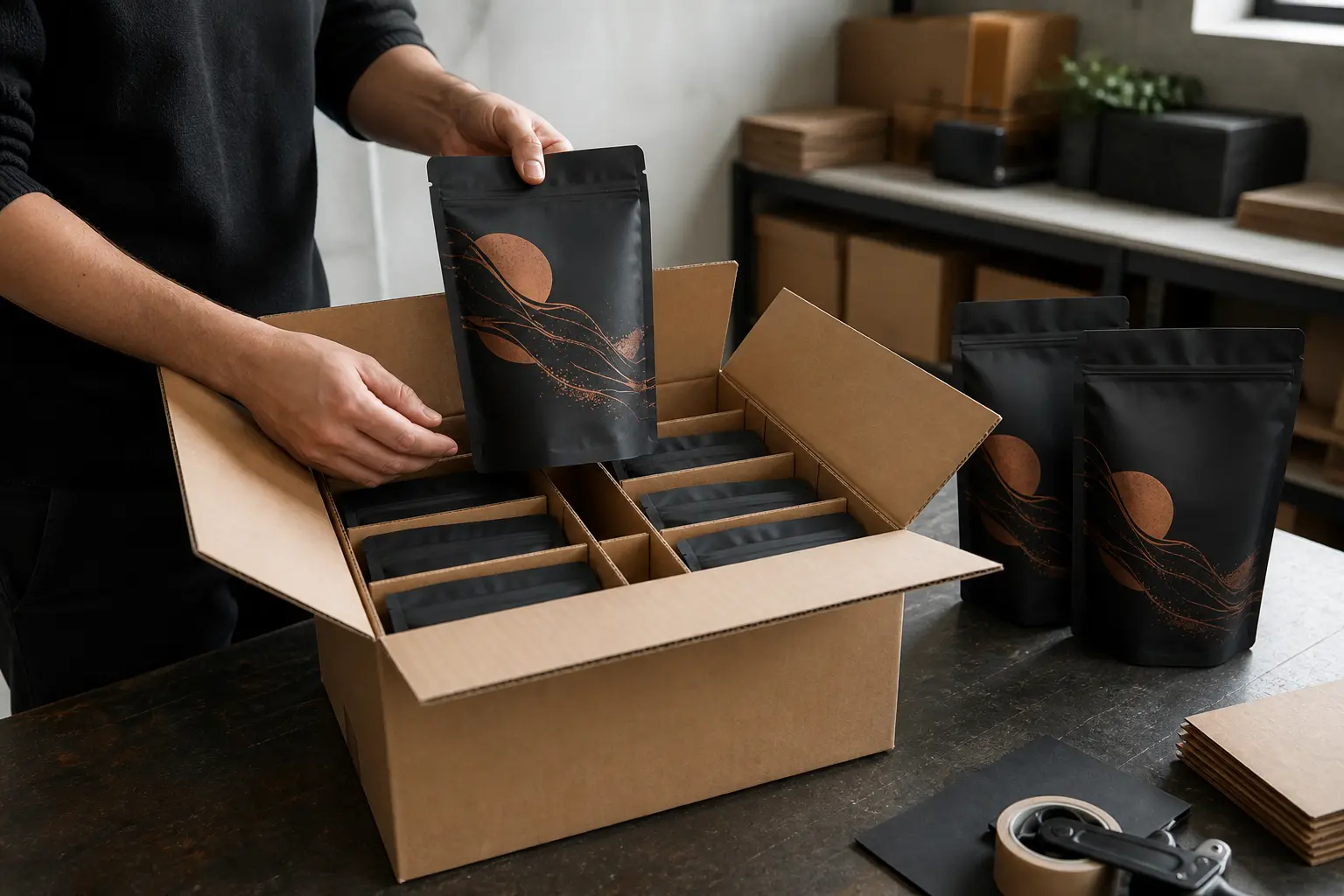
I test filled pouches in the intended carton and handling sequence, inspect contact points after each step, and compare them with the approved visual reference.
I fill representative pouches at the target weight and pack them using the intended carton, divider, orientation, and count. I inspect front panels, gussets, corners, seals, zippers, and high-contact edges after handling. I document where marks occur and whether they are ink loss, coating change, transfer, crease whitening, or contact damage. If a formal laboratory comparison is needed, I agree on the method, sample preparation, receptor, cycle count, and acceptance criteria before testing; ASTM D5264 is a useful source for that discussion.1 I also use the Reddit thread as a community prompt to look at store handling, but not as evidence that a specific black ink will fail.2 That distinction protects the buyer from turning an anecdote into a specification.
How I make this decision specific
For “How Do I Test a Packed Pouch Before Launch?” in this how do i prevent printed pouches from scuffing in distribution review, I define the actual product, pouch configuration, intended use, and decision owner before I ask a supplier or tester for evidence. I keep the selected structure, component details, sample condition, and any stated test method together, then compare the result with the buyer’s actual route rather than a catalogue promise. That record gives the buyer a decision aid and a specification that another team member can check.
For How Do I Prevent Printed Pouches from Scuffing in Distribution, I state what is known, the condition it applies to, and what must still be checked with the actual product. I do not transfer a number, a test result, or a feature choice from another product simply because its pouch looks similar. The result of “How Do I Test a Packed Pouch Before Launch?” should give the buyer a clear next check, the supplier a precise request, and the project owner a record of the remaining uncertainty.
For How Do I Prevent Printed Pouches from Scuffing in Distribution, I treat the filled pack as a separate check from the material data. I record the fill condition, seal area, opening or closure behavior, carton arrangement, handling observations, and limits of the comparison. That prevents a favourable bench result from becoming an unsupported claim about shelf life, transport, or every product route.
What Should the Release Specification Include?
A scuff-control improvement disappears on the next order when the approved finish and packed-sample evidence are not captured in the purchase record.
I release the pouch with its full construction, outward surface, ink and finish, approved reference, test conditions, carton pack, acceptance decision, and change-control triggers.
I retain a reference pouch and list the construction, outside web, ink system, protective finish, artwork version, pouch dimensions, fill condition, carton packing, and inspection outcome. I include the route that was represented and what the test did not cover. Then I connect the record to the seal-leak guide, because a protective change must not quietly reduce seal performance or interfere with converting. If the supplier changes the film, ink, varnish, cure, pouch format, carton, or load, I request another representative sample. The practical buying path is simple: compare materials, test a representative filled pack, confirm the written specification, and request the quote on that same basis.
How I make this decision specific
For “What Should the Release Specification Include?” in this how do i prevent printed pouches from scuffing in distribution review, I define the actual product, pouch configuration, intended use, and decision owner before I ask a supplier or tester for evidence. I keep the selected structure, component details, sample condition, and any stated test method together, then compare the result with the buyer’s actual route rather than a catalogue promise. That record gives the buyer a decision aid and a specification that another team member can check.
For How Do I Prevent Printed Pouches from Scuffing in Distribution, I state what is known, the condition it applies to, and what must still be checked with the actual product. I do not transfer a number, a test result, or a feature choice from another product simply because its pouch looks similar. The result of “What Should the Release Specification Include?” should give the buyer a clear next check, the supplier a precise request, and the project owner a record of the remaining uncertainty.
For How Do I Prevent Printed Pouches from Scuffing in Distribution, I preserve the final decision in a written brief that names the approved sample, conditions, observations, open risks, and change triggers. I then use the seal-leak prevention guide to keep the quotation tied to the evidence rather than to a remembered sample or a generic product name.
Conclusion
I choose packaging through evidence, filled-pack testing, and clear specifications. That process protects the product, the launch, and the customer experience.
Sources and Further Reading
Need a pouch specification?
I can review your product, size, quantity, artwork, and target market.