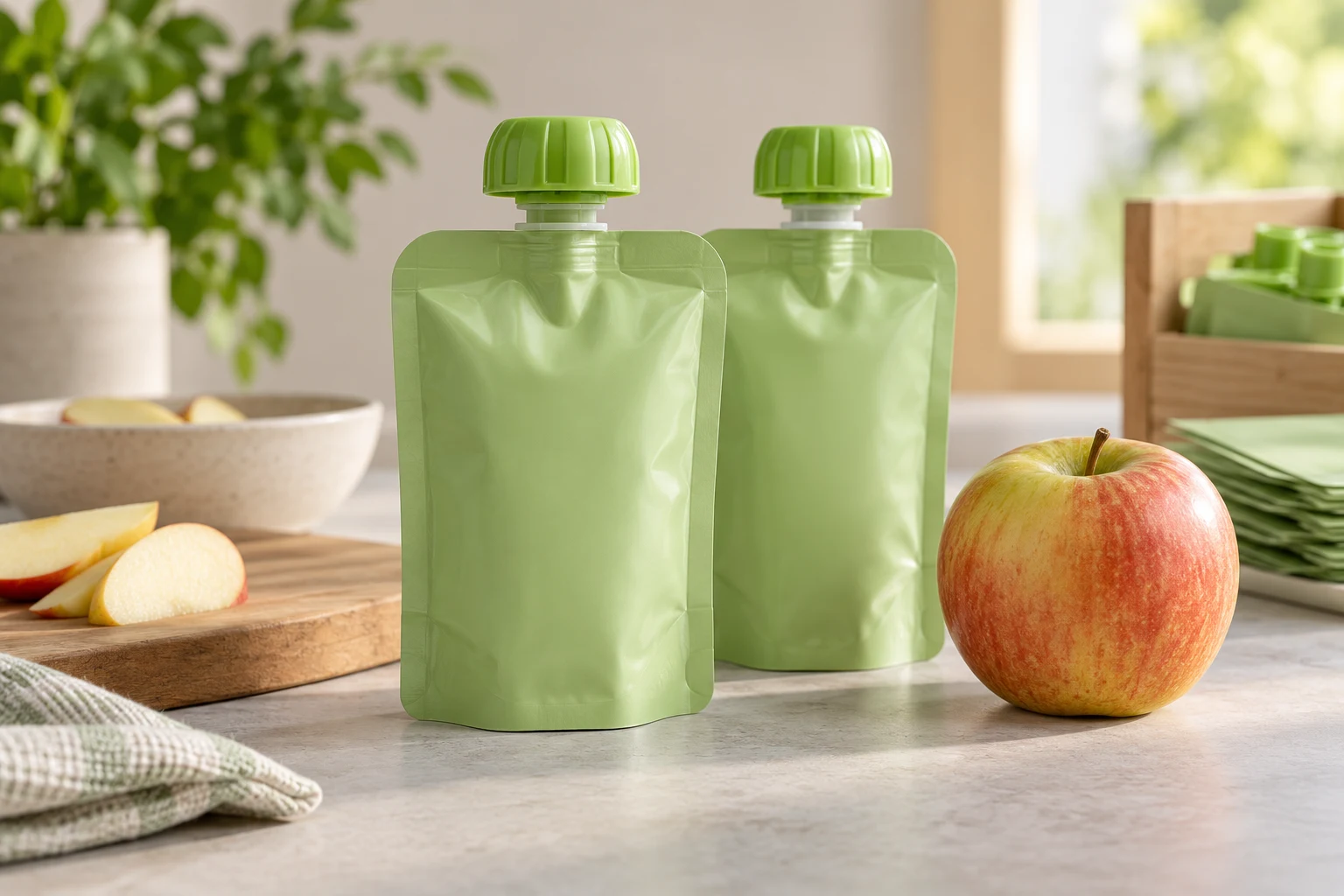
A baby food pouch can create a poor user experience when the cap, fitment, food process, and optional accessories are reviewed separately.
I check the complete cap and fitment assembly, adult opening sequence, attachment integrity, intended food process, and documented use conditions. I require qualified safety review and representative filled-pack evidence before approving a commercial specification.
I write this guide for packaging buyers. My focus is the evidence needed for a purchasing decision, with clear limits on what a convenient opening feature can establish.
Why Should I Review the Whole Pouch Opening System?
A broad cap or a convenient topper can look reassuring while leaving attachment, removal, and actual household use unexplored.
I review the cap, spout, fitment attachment, tamper feature, and any accessory together. I map adult opening and dispensing before asking qualified specialists which safety assessments apply to the exact product and market.
I begin with the intended use. Is an adult squeezing puree onto a spoon, transferring food to a bowl, or supervising use from the pouch? Is the pouch single-use? Does the brand sell an accessory or suggest a particular attachment? I ask the product owner to answer these questions before selecting a cap from a catalogue. I do not assume all possible household routines are approved uses.
In r/foodbutforbabies, a parent described puree being squeezed out of a pouch and reported trying a silicone topper to reduce the mess. A commenter then asked how to keep the child from removing the topper.1 I use those observations to identify two separate questions: dispensing control and attachment retention. The thread does not validate an accessory, establish safe feeding practice, or prove that one fitment works with another.
What can a specific recall teach a buyer?
CPSC recalled the PouchPop topper in February 2015 because its tube could separate from its base and pose a choking hazard.2 This was a named attachment and a historical recall. I do not apply its findings to every food pouch or describe today’s products as recalled. I use it as a reason to request evidence for the exact accessory and attachment design under review.
I map every component in the proposed assembly, including pieces removed before use. I ask the supplier to identify the drawing revision and supplied parts. I take the same assembly to the qualified safety reviewer rather than showing only the outer pouch. If an accessory is outside the supplier’s approved scope, I record that limit clearly and avoid describing it as compatible.
I use the spout-pouch selection guide to organize geometry and assembly questions. I also check the tamper-feature guide when planning first opening. A visible break feature, an easy grip, and a component-retention assessment answer different questions. I keep their evidence separate, even when the customer experiences them in one short opening sequence.
Which Food and Component Conditions Must the Brief Define?
An attractive cap sample cannot establish that a full pouch system fits the puree, production process, or intended market.
I define the food, fill range, process, storage route, market, component drawings, and contact materials. I request documentation for that exact assembly and ask the responsible technical team to set applicable test methods and acceptance criteria.
I identify the puree before comparing packages. I record its ingredient category, physical texture, intended fill range, and whether the manufacturing team plans a chilled or shelf-stable route. I ask the responsible process specialist for the actual filling and processing conditions. I do not choose a preservation process from a pouch photograph or prescribe a heat treatment in a packaging article.
FDA’s food-contact tables distinguish food types and conditions such as hot filling, room-temperature storage, refrigeration, and sterilization.3 I use that distinction when requesting contact-material evidence for the film, spout, cap, and any sealing component. A supplier statement needs to fit the intended use. It does not independently approve the finished food or prove that a process is adequate.
How do I keep the evidence questions separate?
| Review item | Question for the responsible team | Record to retain |
|---|---|---|
| Cap and fitment | Which exact assembly is being assessed? | Drawings, component revisions, sample identity. |
| Food contact | Does evidence cover food and process conditions? | Material documentation and scope review. |
| Opening and attachment | Which assessments and limits apply? | Qualified test plan and findings. |
| Food process | Who owns validation for the actual puree? | Authorized process and release records. |
I ask the technical reviewer to state conditioning, sample preparation, opening or removal measurement, equipment, sample numbers, and acceptance criteria before testing. I do not invent a universal cap torque or component size that would supposedly make every baby food pouch safe. Those decisions need the exact design, intended users, market requirements, and professional assessment.
I inspect fitment placement against pouch seals, artwork, and the intended filling line. I list the failure modes the team must address: an incorrect cap-fitment pair, damaged threads, incomplete closure, a compromised fitment seal, an unintended loose piece, and unclear use instructions. The food-contact document guide helps purchasing retain scope information. It is an administrative aid, not a product-safety certificate.
How Do I Document Opening and Filled-Pack Trials?
A trial produces weak evidence when no one records which assembly, puree, process, handling conditions, and user instructions were evaluated.
I run adult handling trials with identified filled packs, retain process and component records, and resolve observed opening or dispensing problems. Qualified technical reviewers approve safety and process evidence before the written specification is released for quotation.
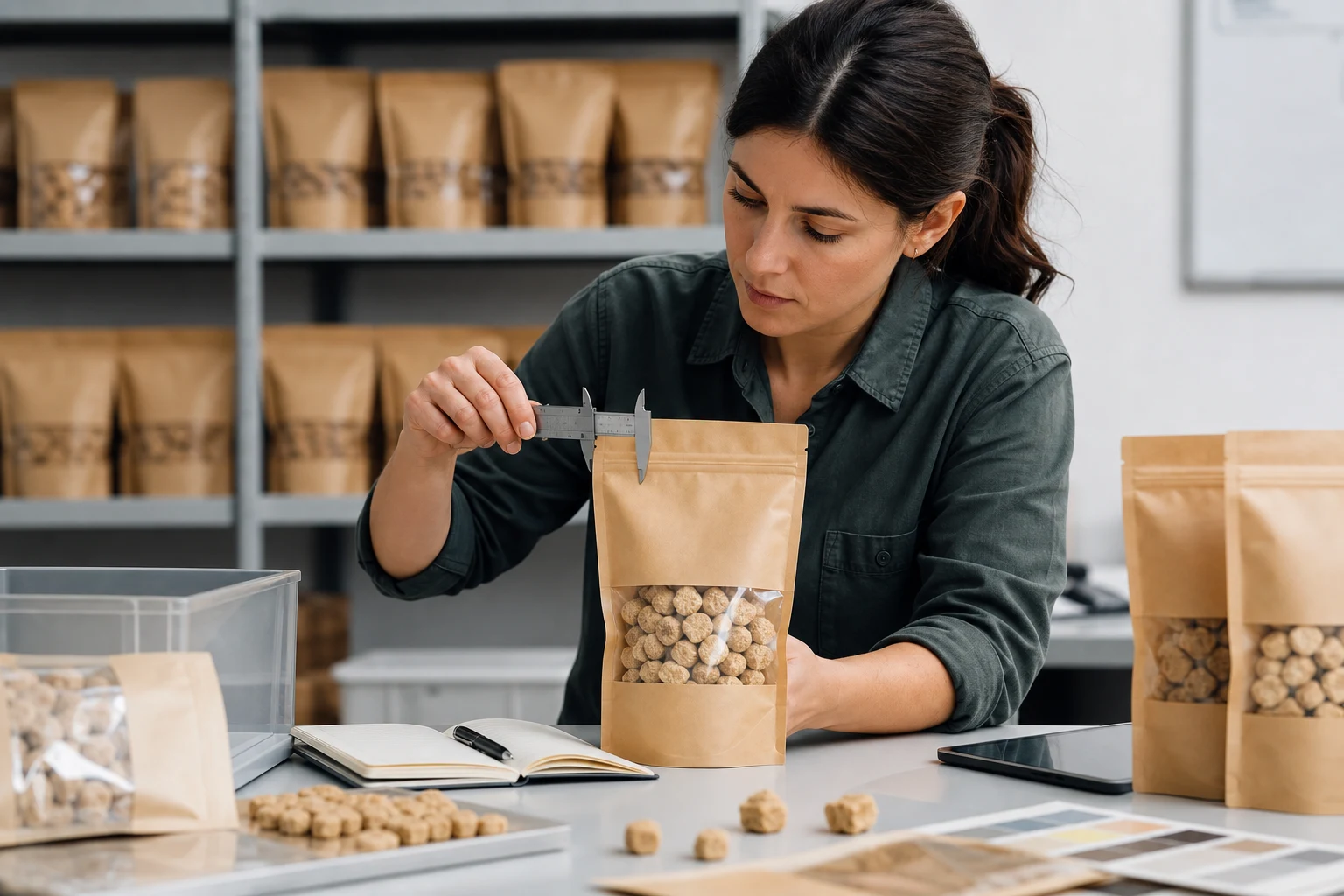
I use representative filled packs produced through the intended process. I record the food lot, pouch material, cap and spout revisions, filling settings, and approved processing record. I ask the team to examine the unopened assembly after the planned handling review. I do not treat an empty fitment sample as a substitute for this work. Changes to the food, material, assembly, or process return to the responsible reviewer.
My usability review involves adults and a defined task. An evaluator opens the pouch, manages the removed cap, and dispenses into the intended spoon or bowl. I record grip difficulty, unexpected tearing, dispensing control, and whether the instructions match the actual sequence. I do not use this informal review to certify safety or recommend unsupervised feeding. FDA advises watchfulness while babies and young children eat.4 The product owner must provide appropriate, reviewed instructions for its own package.
What belongs in the release checklist?
- Exact puree, intended use, market, fill range, process owner, and storage route.
- Pouch, cap, spout, seal, and accessory drawings with approved revisions.
- Food-contact evidence matched to the defined conditions.
- Qualified safety assessments, test conditions, findings, and unresolved items.
- Adult opening and dispensing observations, label review, and retained samples.
- Written change controls and named release responsibilities.
I investigate an opening complaint against the retained assembly, not against a generic picture. If the cap is hard to remove, I ask the team to evaluate the cause before changing the closure setting. If dispensing is abrupt, I compare the opening geometry and actual puree under recorded conditions. A change intended to improve convenience may affect another part of the system, so I request a documented review rather than making an isolated adjustment.
I connect the accepted trial to the pouch specification sheet and sample approval checklist. The quotation should identify the approved components, review scope, and any conditional items. I omit unsupported shelf-life, certification, price, and production-timing claims. My goal is a traceable procurement decision with clearly assigned technical approvals.
I keep an explicit list of open technical questions with an owner and a required evidence item. Purchasing should not convert an unresolved assessment into an implied approval by issuing an order. I ask the release owner to close those items or document a limited next trial before supplier selection proceeds.
Conclusion
I approve a baby food pouch through identified components, qualified safety and process reviews, adult handling evidence, and a traceable specification.
Sources and Further Reading
Need a pouch specification?
I can review your product, size, quantity, artwork, and target market.